
Last updated September 24, 2026
Seasonal Insulation Care for Westminster: Year-Round Homeowner’s Guide
Westminster’s insulation doesn’t fight blizzards. It fights something stranger: marine-layer moisture that wicks into blown-in fiberglass at 5 a.m., Santa Ana winds that pull conditioned air through ceiling gaps at twice the normal rate, and a June Gloom that keeps attic humidity elevated for weeks while the thermometer barely moves. We’ve measured it. In a 2019 job near Little Saigon, a homeowner’s attic hit 78% relative humidity during a mild May week while outdoor temperatures never cracked 72 degrees. The insulation was performing thermally but failing hygroscopically, compacting at the eaves where morning condensation pooled. This guide explains what Westminster’s actual seasons look like, how each phase stresses your building envelope differently, and what to document so any contractor who follows you starts with data instead of guesses. For a broader overview, see The Complete Guide to Insulation in Westminster.
Quick Answer
Seasonal insulation care in Westminster means monitoring for marine-layer moisture compaction in spring and summer, sealing attic penetrations before October Santa Ana winds arrive, and verifying thermal performance with a simple attic floor survey during December through February’s brief temperature differential period. Most Westminster homes need quarterly visual checks of recessed light housings, attic hatch perimeters, and bathroom exhaust fan boots, with written notes and photos to track changes over time. Our Attic Insulation Maintenance Checklist for Westminster Homeowners covers each step in detail.
Table of Contents
- Why Westminster’s Seasons Don’t Match the Calendar
- May Through September: Marine-Layer Moisture and Blown-In Insulation
- October Through November: Pre-Santa Ana Air Sealing
- December Through February: Verifying Thermal Performance with Numbers
- Year-Round Failure Points: Lights, Hatches, and Fan Boots
- How to Log Seasonal Observations (So Contractors Start with Data)
- Common Mistakes to Avoid
- When to Call a Professional
- Frequently Asked Questions
- The Bottom Line
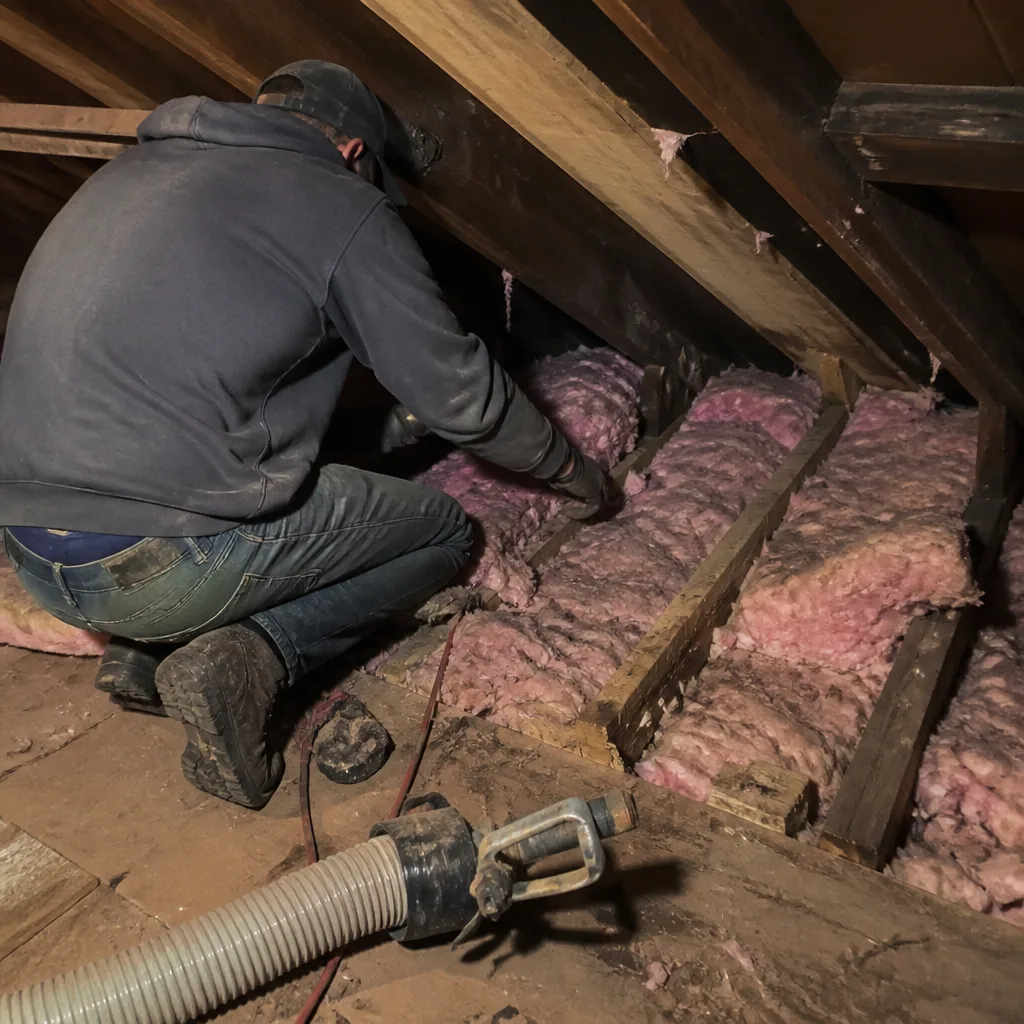 Before
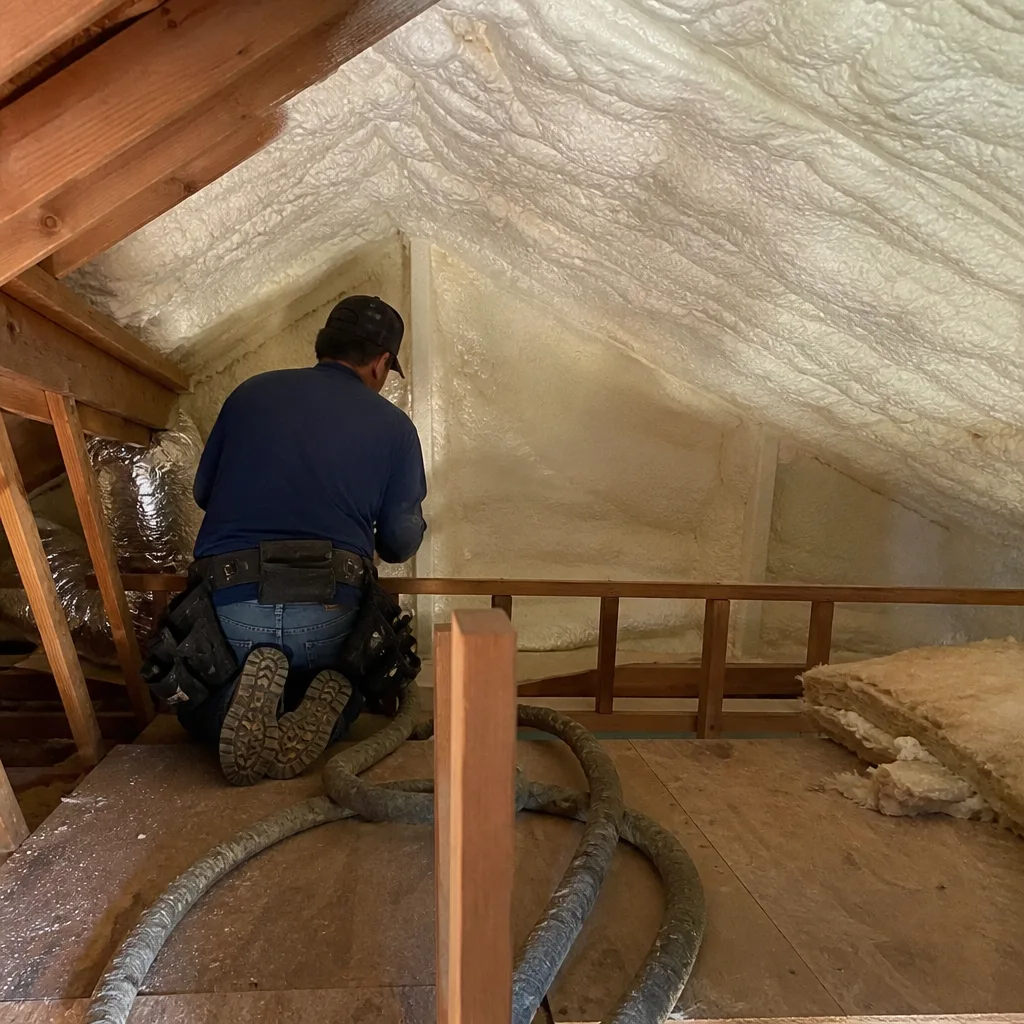 After
AfterWhy Westminster’s Seasons Don’t Match the Calendar
Most seasonal home maintenance guides divide the year into four neat quarters. Westminster doesn’t cooperate. Our climate is governed by three overlapping cycles that ignore the solstice calendar.
The marine layer - a cool, saturated air mass that rolls inland from the Pacific - dominates from late April through early September. In Westminster, it typically burns off by 10 or 11 a.m., but during June Gloom it can persist for days. Attic temperatures stay moderate, often 10 to 15 degrees above ambient, but humidity spikes dramatically. We’ve found blown-in fiberglass near Westminster’s eave vents compacted and slightly matted from repeated condensation cycles, reducing its effective R-value before any thermal stress occurred.
Santa Ana wind events arrive October through January, though September and February aren’t immune. These are dry, hot, high-velocity winds that create unusual pressure differentials. In a 2022 job near Westminster’s Bolsa Chica Road corridor, we measured attic pressure swings of 12 to 18 Pascals during a Santa Ana - roughly double normal conditions. That pressure pulls conditioned air upward through every ceiling penetration: recessed light housings, drywall gaps around duct boots, the attic hatch perimeter. Insulation doesn’t stop air movement; it only slows thermal transfer. If air is moving through it, the insulation is working harder for less result.
The brief cool season, December through February, delivers the only meaningful temperature differential Westminster attics typically see. Outdoor lows in the low 40s, indoor thermostat at 68 or 70, attic floor temperature in the mid-50s if the insulation layer is intact. This is your window to verify actual thermal performance, not with your hand but with an infrared thermometer or simple surface-temperature readings.
Understanding these three cycles matters because the maintenance action for each differs. Treating Westminster like a four-season climate means missing the moisture cycle entirely and reacting to Santa Ana damage after it happens.
May Through September: Marine-Layer Moisture and Blown-In Insulation
This is Westminster’s longest stress period for insulation, and it’s invisible to most homeowners. The attic feels fine. The house isn’t uncomfortable. But moisture is doing gradual damage.
What happens at the eave line. The eave - where the attic floor meets the exterior wall top plate - is the coldest surface in most Westminster attics during marine-layer mornings. Cool, humid air enters through soffit vents, hits the insulation layer, and condenses on the first cold surface it finds. In Westminster’s climate, that surface is often the top plate or the first few inches of blown-in fiberglass resting on it. By 9 a.m. the moisture has wicked into the insulation fibers. By noon it’s evaporating. Repeat this 120 mornings per season.
We’ve removed insulation in Westminster homes where the eave-line fiberglass had compacted from roughly 10 inches to 6 inches over five years of this cycle. The homeowner never knew. The thermal performance declined gradually, masked by mild temperatures.
What to look for before the layer burns off. The best inspection window is 6 to 8 a.m., before the marine layer dissipates. You don’t need to enter the attic (though you can). Instead, check these indicators:
- Staining on ceiling drywall near exterior walls. A faint, irregular yellowing or water mark, typically within 12 inches of the wall, suggests repeated condensation at the eave line. It often looks like a small roof leak but never quite drips.
- Musty odor from attic hatch. Open the hatch quickly and sniff. A damp, earthy smell that fades within seconds indicates active moisture cycling, not standing water.
- Insulation color variation at the eave. If you do enter, look for darker or slightly matted fiberglass within 18 inches of the exterior wall. Fresh Owens Corning or Johns Manville fiberglass is uniformly yellow, pink, or white. Graying or clumping at the eave is moisture damage.
What to document. Take a photo of any staining, note the date and time, and record outdoor humidity from any weather app. After three years of these notes, you’ll have a pattern that tells a contractor whether you’re dealing with a ventilation problem, an insulation compaction problem, or both. Under Haven Standard, we ask for this history before we quote; it changes our scope.
Action if you find moisture signs. Don’t add insulation over damaged material. In our experience, Westminster homes with eave-line moisture need three things in sequence: improved soffit-to-ridge airflow to clear humid air faster, air sealing of the top plate to stop warm indoor air from meeting cold surfaces, and replacement of compacted fiberglass with fresh material. We sequence it this way because adding insulation over wet or compacted layers traps moisture against the drywall. Attic Insulation in Westminster covers our full process.
October Through November: Pre-Santa Ana Air Sealing
October is the critical preparation window. Santa Ana winds will arrive, and when they do, every unsealed penetration in your ceiling becomes a leak point under pressure.
How Santa Ana conditions stress the envelope. Normal attic ventilation creates slight negative pressure, pulling air upward through the house. Santa Ana winds can reverse this or amplify it dramatically depending on roof geometry and vent placement. The result is rapid air exchange between conditioned space and attic, bypassing insulation entirely. We’ve measured blower-door results in Westminster homes that worsened by 30% during Santa Ana events - meaning the air sealing that worked in March failed under October pressure.
The pre-season inspection: what to check.
- Recessed light housings. Look for IC-rated housings (insulation contact) versus non-IC. Non-IC housings in Westminster homes are common in pre-1990 construction and create a 6-to-8-inch insulation void around each fixture. During Santa Ana pressure events, these are direct leakage paths. Note the housing type and whether insulation has been pushed back from it.
- Duct boot seals. Where flex duct or rigid duct passes through drywall into the attic, the gap between metal and drywall should be sealed with mastic or fire-rated foam. In our Westminster work, we find roughly 60% of existing boots have visible gaps or degraded sealant. A flashlight from below, aimed at the boot perimeter, reveals daylight or insulation particles - both indicate leakage.
- Attic hatch perimeter. The hatch is the largest single penetration in most ceilings. Check for weatherstripping (rarely present in older homes), proper closure against a stop, and whether the hatch sits flat or rocks slightly. A rocking hatch leaks continuously; under Santa Ana pressure, it leaks audibly.
- Bathroom exhaust fan housings. The fan unit itself, where it meets drywall, and the flex duct connection to the housing. Both are frequent leak points, and bathroom fans move moisture as well as air.
What “sealed” actually means. We use a two-part definition. First, visual: no visible gap wider than 1/16 inch at any penetration. Second, measurable: a blower-door test - a pressurization reading that shows, in one number, how much air your building envelope is losing - reading below 2,500 CFM50 for a typical 1,500-square-foot Westminster home. Before-and-after blower-door numbers are published on every applicable job so the homeowner can verify the result. In our 9,000+ homes since 2016, we’ve never started insulation work without this baseline.
If you’re not ready for professional testing, the October inspection itself is valuable. Photograph each penetration, note gaps in a simple spreadsheet, and you’ll have a prioritized list when you do call a contractor. Topside Attic Insulation Westminster home has more on our air-sealing-first approach.
December Through February: Verifying Thermal Performance with Numbers
This is Westminster’s only reliable window for thermal verification. The rest of the year, mild differentials hide performance problems. In December through February, you can measure whether your insulation layer is actually working.
What “performing” means in numbers. We use surface temperature differential, not hand-feel. On a morning when outdoor temperature is below 50 degrees and your thermostat is set to 68 or above, the attic floor (the drywall surface, not the insulation top) should read within 3 to 5 degrees of your ceiling temperature in the room below. An infrared thermometer, $30 to $50 at any hardware store, gives you this reading in seconds.
Specific targets for Westminster homes:
- Ceiling below attic: Should read within 1 degree of wall temperature at the same height. A cold ceiling strip near an exterior wall indicates missing or settled insulation at the eave.
- Attic floor surface (drywall, from above): Should read 55 to 60 degrees when outdoor is 45 and indoor is 70. Below 50 suggests significant heat loss through the insulation layer.
- Recessed light housing (from below, light off): Should read within 5 degrees of surrounding ceiling. A 15-degree differential means the housing is uninsulated and leaking.
When to measure. The best conditions are clear, calm mornings after an overnight low. Wind skews surface readings. Rain or recent rain affects attic humidity and can depress temperatures artificially. We recommend three measurement sessions: mid-December, mid-January, and late February. Log the date, outdoor temperature, indoor thermostat setting, and your readings. After two winters, you’ll know whether your insulation is stable, degrading, or responding to seasonal conditions.
What we do with this data. When Westminster homeowners bring us two or more winters of readings, we can often identify problems without entering the attic. A consistent cold strip along the north eave in January suggests soffit vent blockage or insulation settlement. A February spike at recessed lights points to failed housing seals. The written price we provide reflects this specificity; we’re not guessing at scope.
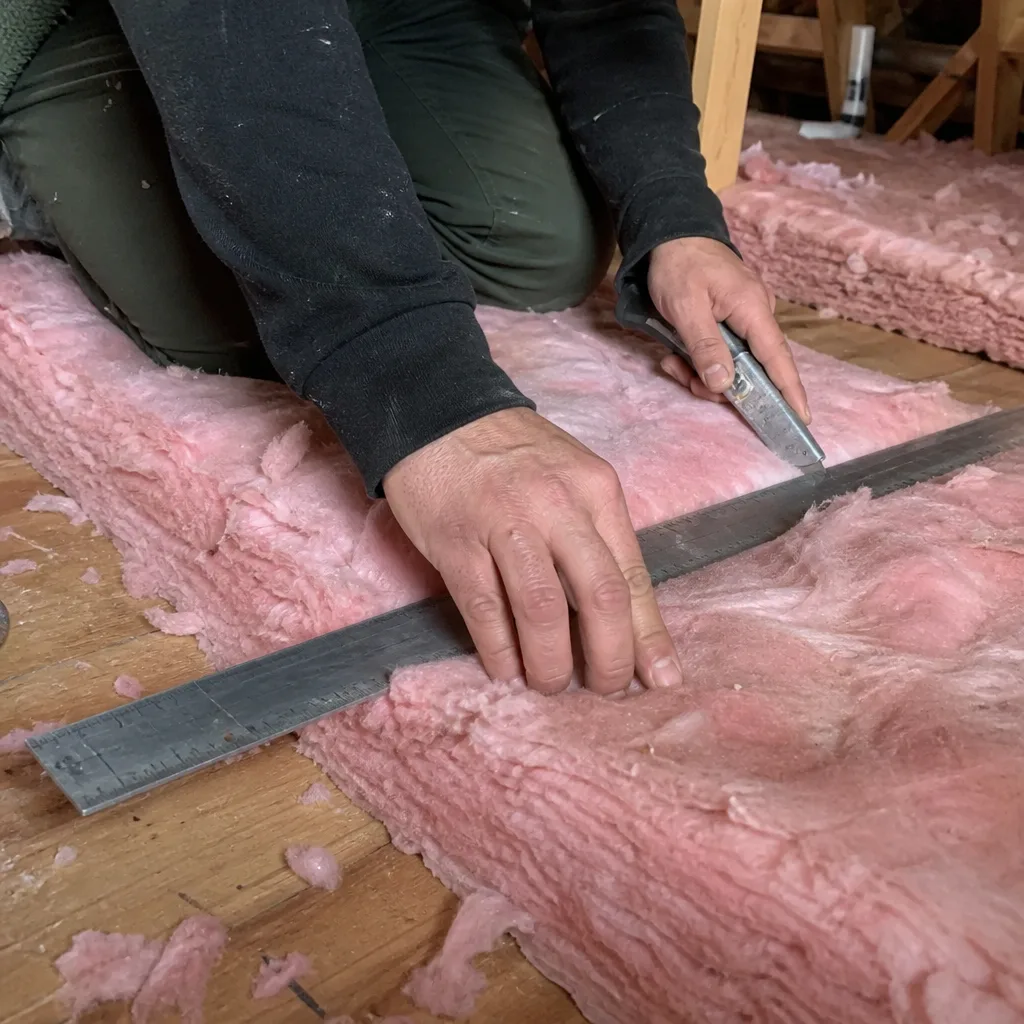
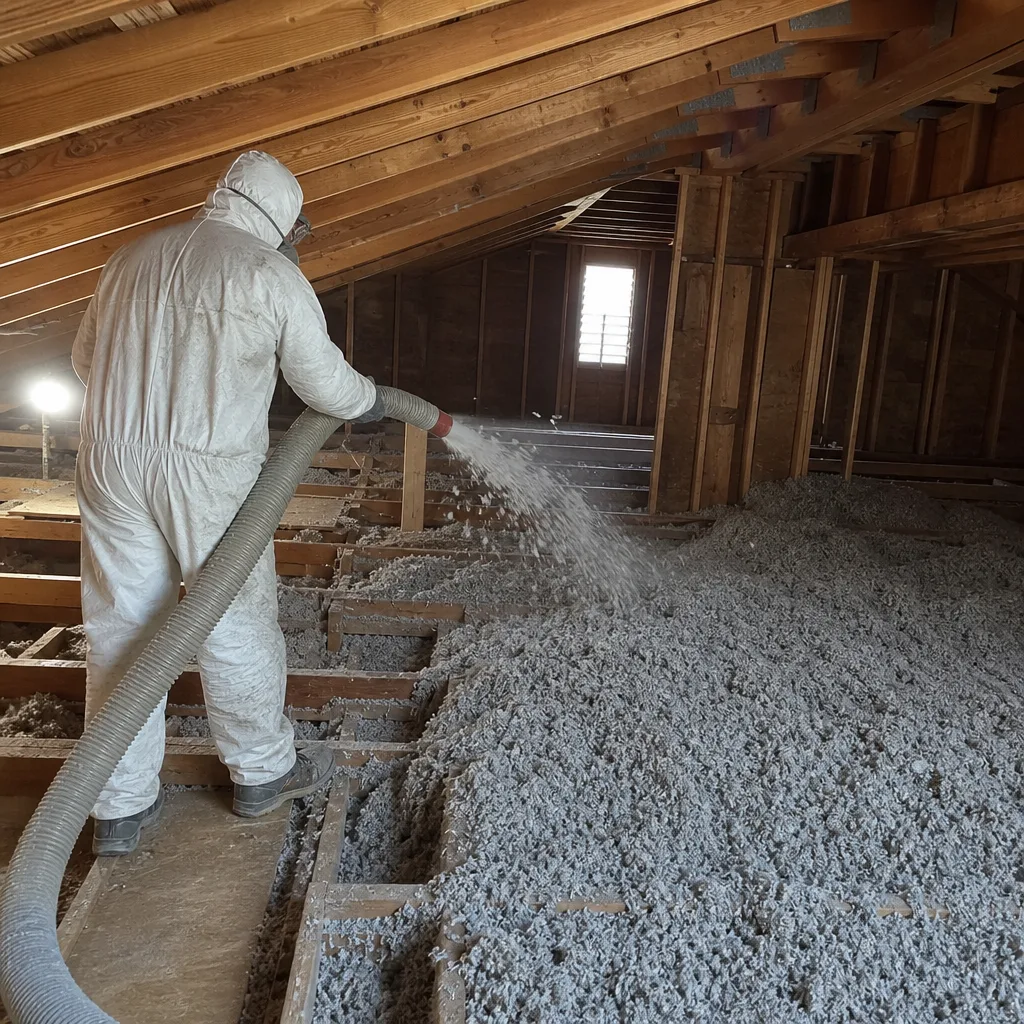
Insulation removal and replacement becomes necessary when readings show consistent degradation and visual inspection confirms compaction, moisture damage, or rodent activity. We document the before condition with photos, remove damaged material, seal air leaks, and install fresh product - typically Owens Corning or Knauf fiberglass, or GreenFiber cellulose for homeowners prioritizing recycled content. Spray Foam Insulation in Westminster covers our closed-cell and open-cell options for more complex thermal bridges.
Year-Round Failure Points: Lights, Hatches, and Fan Boots
Some problems don’t respect Westminster’s seasonal calendar. They’re chronic, and they worsen gradually until they’re expensive. Quarterly visual checks catch them early.
Recessed light housings. The most common year-round leak in Westminster attics. Non-IC housings require a 3-inch insulation clearance that creates a permanent thermal bypass. IC housings are better but still leak at the drywall cutout if not sealed with fire-rated caulk or foam. We find failed seals on roughly 40% of existing IC housings in homes built 1995 to 2010. The fix is simple: seal the drywall gap, verify the housing rating, and restore insulation contact where permitted. But you have to look.
Attic hatch edges. The hatch is the largest unsealed penetration in most homes. A 24-by-30-inch hatch with a 1/8-inch gap leaks as much as a 4-inch round duct. In Westminster’s mild climate, this leakage is rarely uncomfortable - it’s just expensive and invisible. Check quarterly: does the hatch sit flat? Is weatherstripping present and resilient? Does light show around the perimeter when viewed from below with the attic light off?
Bathroom exhaust fan boots. The flex duct connection to the fan housing fails from thermal cycling and vibration. In Westminster’s humid spring and summer, this leak point also admits attic air - which may be moist - into the bathroom ceiling cavity. Look for: fan noise increase (duct detached), bathroom ceiling paint bubbling (moisture intrusion), or visible duct sag in the attic. The fix is reconnection with proper support and mastic sealant at the boot.
Quarterly visual routine. We suggest a 10-minute check, same weekend as your smoke detector test:
- Open the attic hatch. Look for new stains, insulation displacement, or rodent evidence.
- From below, check recessed lights with the room dark and attic light on. Any visible light around the housing perimeter indicates a gap.
- Run bathroom fans. Listen for duct rattle or vibration change.
- Photograph anything new. Date the photo.
This routine generates the documentation that makes future contractor visits efficient. Under Haven Standard Clause 1, we provide a written price before any work starts, but a homeowner with two years of quarterly photos gets a more accurate written price because we start with data.
How to Log Seasonal Observations (So Contractors Start with Data)
Most homeowners forget what they noticed by the time they call a contractor. The contractor enters blind, scopes conservatively, and the homeowner pays for diagnostic time that observation logs would have eliminated.
Minimum viable log. You don’t need software. A dedicated email thread to yourself, a cloud photo album, or a simple spreadsheet all work. What matters is consistency and searchability.
Suggested fields:
- Date and time. Seasonal patterns emerge only with timestamps. “Staining near north bedroom” means little. “Staining near north bedroom, first observed March 15, 2023, 7 a.m., after marine-layer morning” tells us to check soffit ventilation and eave insulation.
- Weather conditions. Outdoor temperature, humidity, wind direction if known. Santa Ana events are specifically relevant; note them.
- What you observed. Photo plus 1 to 2 sentences. “Insulation at eave appears darker and slightly matted for 8 inches from exterior wall. No water on drywall below.”
- What you measured. Surface temperatures, blower-door results if you have them, fan flow rates if you’ve tested.
- What changed since last observation. This is the critical field. “New since January: staining has extended 4 inches further from wall.” Progression indicates active, worsening conditions.
What we do with your log. When Westminster homeowners bring us two or more years of observations, we can often narrow scope before site visit. In a 2023 job near Westminster’s Magnolia Street corridor, a homeowner’s three-year photo log showed moisture staining appearing only on marine-layer mornings in April and May, never in Santa Ana season. This pattern directed us to soffit ventilation and top-plate sealing rather than roof leak investigation, saving roughly $400 in diagnostic scope.
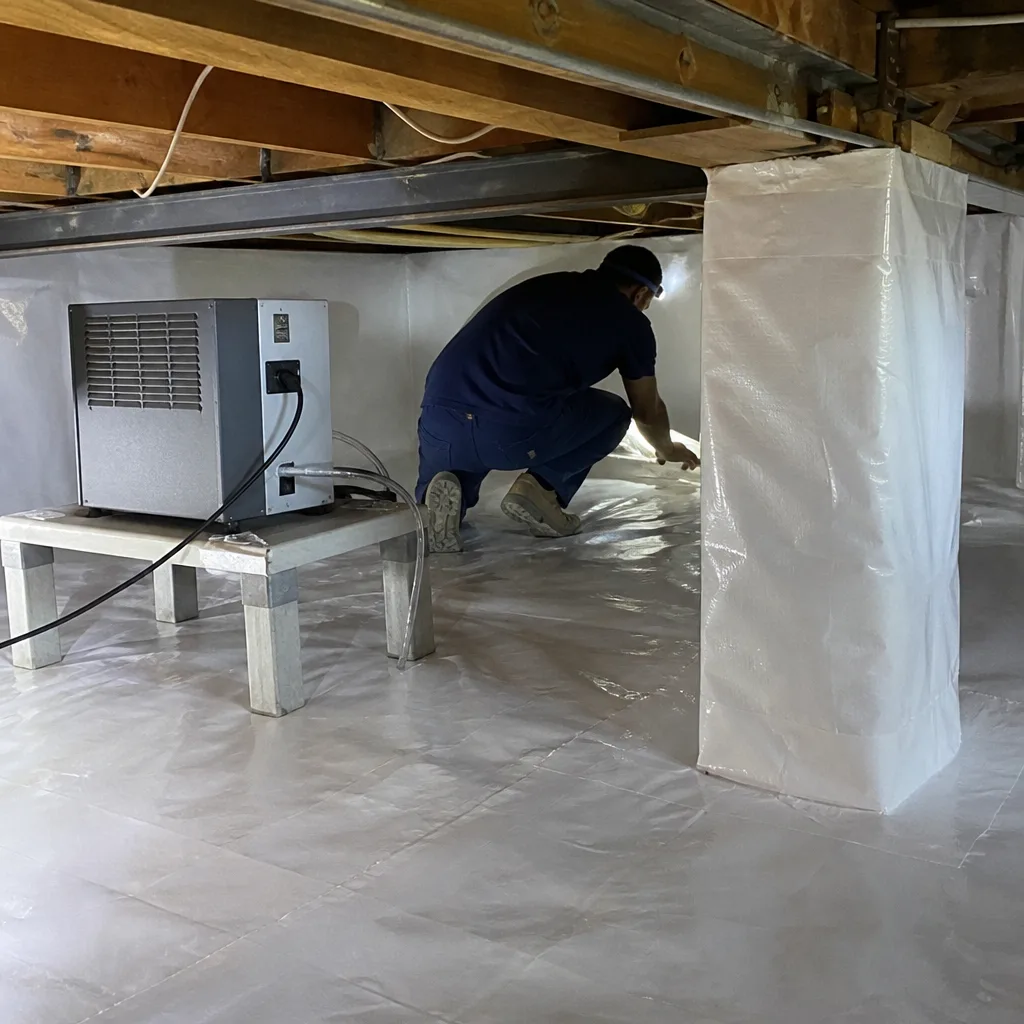
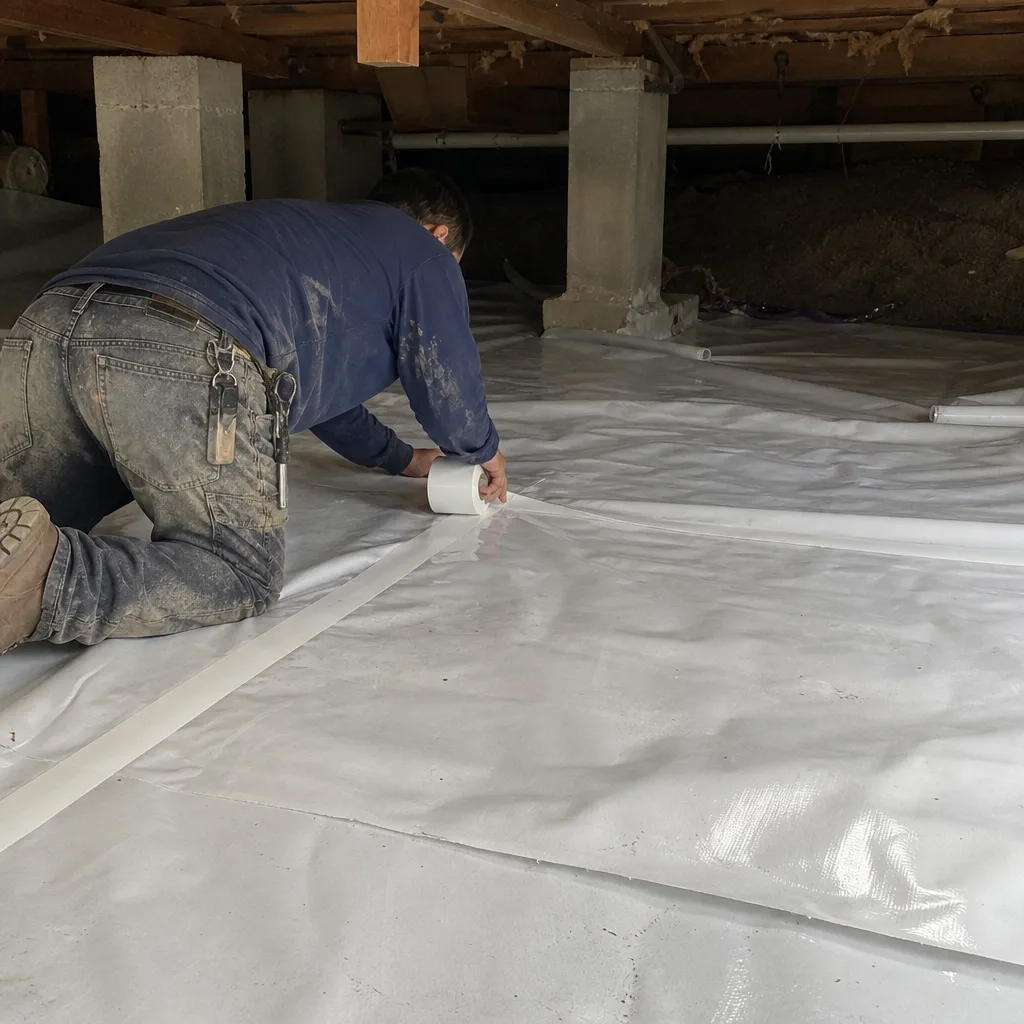
The Haven Standard requires documented records on every job we complete. We appreciate homeowners who meet us halfway with their own documentation. Crawl Space Encapsulation & Vapor Barrier in Westminster extends this logging approach to below-grade spaces.
Common Mistakes to Avoid
- Adding insulation over unsealed air leaks. This is the most common error we correct in Westminster. Blown-in fiberglass over a leaking top plate or recessed light housing simply filters the leaking air. The homeowner gets marginal thermal improvement and hidden moisture problems. Air sealing must precede insulation, always.
- Assuming settled insulation is “still doing something.” Fiberglass settles 10 to 20 percent over 10 to 15 years. In Westminster’s mild climate, the thermal consequence is gradual and invisible until a cold snap reveals cold ceilings. Measure surface temperatures in winter; don’t guess.
- Ignoring the hatch. Homeowners obsess over R-value and forget the largest penetration. An unsealed attic hatch in a well-insulated attic can reduce whole-attic performance by 15 to 20 percent. Weatherstripping and a latch or bolt closure cost under $30.
- Confusing roof leaks with condensation. Westminster’s marine-layer condensation at the eave line produces staining that looks identical to minor roof leaks. The difference is timing: condensation appears after humid mornings, roof leaks after rain. Log the weather with your observation, or you’ll pay for unnecessary roof work.
- Waiting for discomfort to act. Westminster’s climate is forgiving. Insulation can perform poorly for years without making anyone uncomfortable. The cost is higher utility bills and gradual material degradation. Quarterly checks catch problems before they require full replacement.
- Not requesting blower-door documentation. Any contractor who air seals should provide before-and-after blower-door numbers. Without them, you have no verification of the work’s effectiveness. We publish these on every applicable job; if your contractor doesn’t measure, you don’t know what you bought.
When to Call a Professional
Call when your logs show progression - staining expanding, surface temperatures worsening, new odors - or when you can’t safely access the observation point. Attic work involves trip hazards, electrical exposure, and in older Westminster homes, possible asbestos-containing vermiculite insulation that requires professional handling.
Specific triggers: visible water on drywall (not just staining), insulation displacement suggesting rodent activity, any electrical junction box in the attic that appears modified or unboxed, or a blower-door reading above 3,500 CFM50 for a home under 2,000 square feet. These indicate conditions beyond homeowner management.
Topside Attic Insulation Westminster offers free estimates in Westminster. We’ll review your observation logs with you, perform a blower-door test if indicated, and provide a written price before any work starts - no exceptions since 2016. Call (562) 526-6978 to schedule. We also provide free second opinions on any written estimate from another contractor; bring us their scope and we’ll read it with you.
Frequently Asked Questions
Most attic insulation jobs in a Westminster home of 1,200 to 2,000 square feet run between $2,800 and $5,400 for air sealing and blown-in fiberglass replacement, depending on access difficulty and whether removal of existing material is required. Spray foam applications range higher, typically $4,500 to $8,500 for the same footprint. We provide a written price before any work starts, always, and offer free second opinions on competing quotes. Call (562) 526-6978 for an exact estimate - there’s no charge for the visit.
Same-day repair is possible for air sealing and minor insulation top-offs if the attic is accessible, the electrical is intact, and no hazardous material is present. Full removal and replacement requires scheduling due to material ordering and crew allocation. In our Westminster operations, roughly 30% of calls convert to same-day air sealing; full re-insulation typically schedules within 5 to 10 business days. We’ll tell you during the estimate visit which category applies.
Repair - meaning targeted air sealing and insulation top-off at settled areas - is cheaper upfront, typically $800 to $1,800, but it’s only sensible if the existing insulation is less than 10 years old, uncontaminated, and the settlement is minor. Replacement is more cost-effective when insulation shows moisture damage, rodent activity, or is original to a pre-1990 home. In Westminster’s climate, we’ve found that partial repairs to 1980s fiberglass often fail within 3 to 5 years because the remaining material continues degrading. We recommend replacement when the existing layer is over 20 years old or shows any moisture history.
Marine-layer moisture condenses on the coolest attic surfaces - typically the eave line and top plates - during early morning hours, then wicks into fiberglass fibers. Repeated wet-dry cycles cause fiberglass to matte and compress, reducing loft and trapped air volume. Cellulose handles moisture better initially but can support mold if it stays damp. The damage is gradual and invisible from below until staining appears or thermal performance degrades measurably.
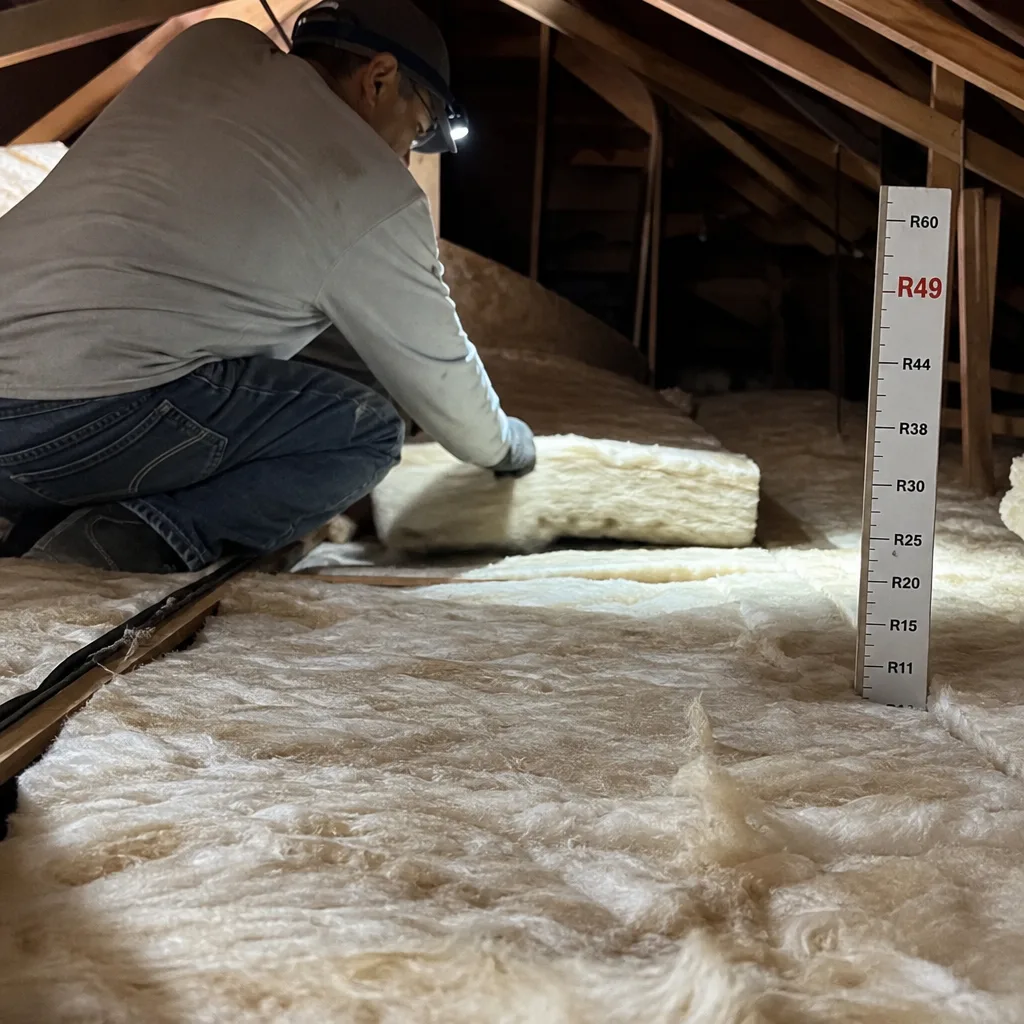
California Title 24 currently requires R-38 minimum for attic insulation in new construction and major renovations in Westminster’s climate zone. Many existing homes perform at R-19 to R-30. We target R-38 to R-49 for replacement jobs, using Owens Corning, Johns Manville, or Knauf fiberglass, or GreenFiber cellulose for homeowners who prefer recycled content. Higher R-values than R-49 provide diminishing returns in Westminster’s mild climate and are rarely cost-justified.
No. Attic insulation work is contained to the attic and access path. We protect floors and furnishings along the access route with drop cloths. For spray foam applications, occupants should vacate for 24 hours after application due to off-gassing; we schedule these with that timing in mind. Blown-in fiberglass and cellulose projects allow normal occupancy throughout. We provide a Documented Photo Record of the completed work before we leave.
The Bottom Line
Westminster’s insulation care is not about surviving winter. It’s about managing moisture cycles that never make the news, wind events that pressurize your ceiling unpredictably, and a mild climate that hides degradation until it’s expensive. The homeowners who spend least on insulation long-term are those who log quarterly observations, seal air leaks before adding material, and verify performance with numbers rather than comfort. We’ve sealed and insulated over 9,000 homes since 2016, every one with a written price first and documented evidence at completion. The approach works in Westminster because it matches how Westminster’s climate actually behaves. Explore more guides & resources for year-round insulation care.
Written by Wes Okafor, Owner at Topside Attic Insulation Westminster, serving Westminster since 2016.