
Last updated September 24, 2026
Insulation Warning Signs: A Westminster Homeowner’s Reference Guide
A 15 percent jump in summer cooling bills without a rate hike or thermostat change is one of the earliest measurable signs that your insulation system is failing - yet most Westminster homeowners blame the AC unit and spend money on the wrong repair. We’ve been sealing and insulating homes under The Haven Standard since 2016, and the pattern repeats: by the time someone calls us because a room “feels drafty,” the problem has usually been visible in utility data, attic hatch observations, and moisture indicators for 18 to 36 months. This guide - alongside The Complete Guide to Insulation in Westminster - translates what we document on every job into observable evidence you can check yourself, so you catch insulation failure while the scope is still small and the fix is still straightforward.
Quick Answer
The most reliable insulation warning signs in Westminster homes are: a year-over-year utility increase of 10 percent or more without rate changes; settled blown-in insulation below original fill marks visible from the attic hatch; dark staining on fiberglass batts indicating air washing through the material; and uneven room temperatures that persist even when vents are open and unobstructed. These indicators appear months before comfort becomes noticeably bad, and each points to a specific failure mode with a specific repair sequence.
Table of Contents
- How to Use Your Utility Bill as an Early Warning System
- Four Visual Indicators You Can Read from the Attic Hatch
- What Uneven Room Temperatures Actually Mean
- How Moisture Shows Up in Westminster Attics
- When a Warning Sign Becomes an Emergency
- Common Mistakes to Avoid
- When to Call a Professional
- Frequently Asked Questions
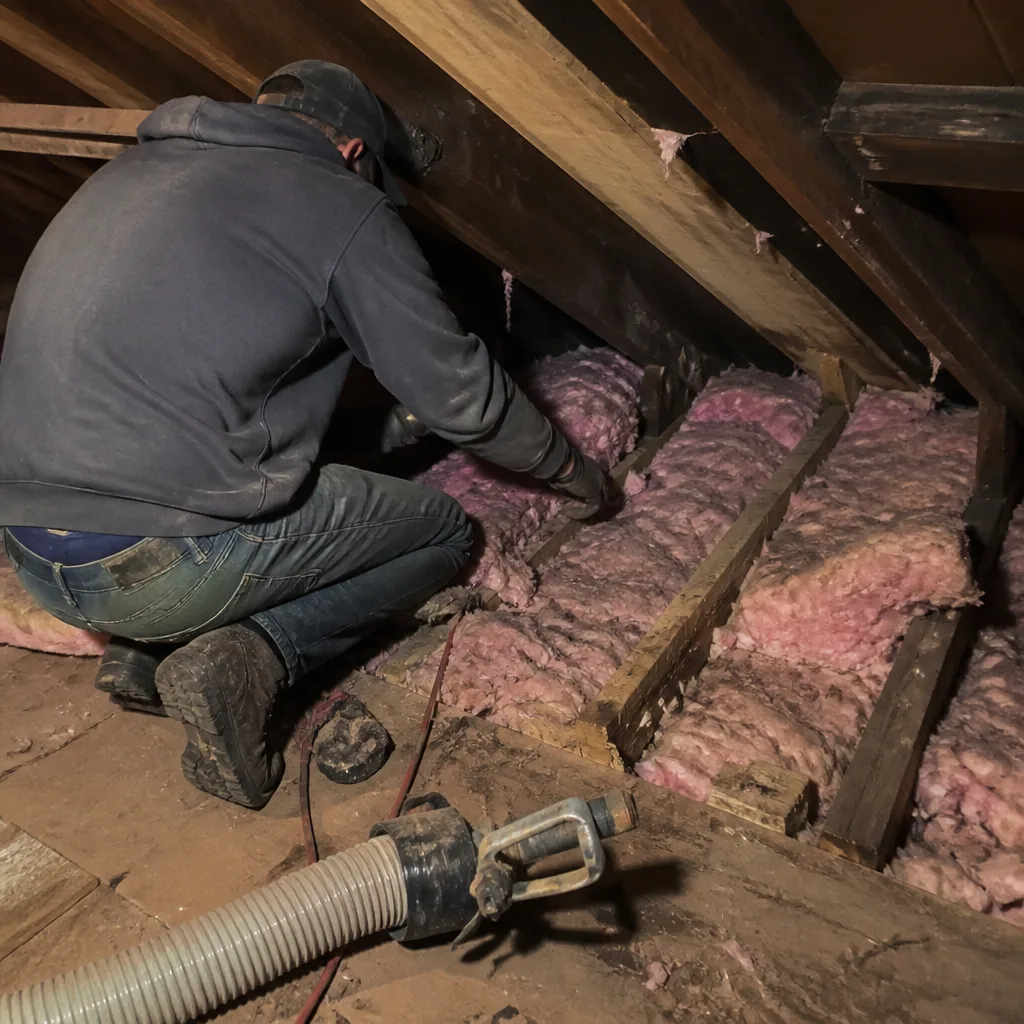 Before
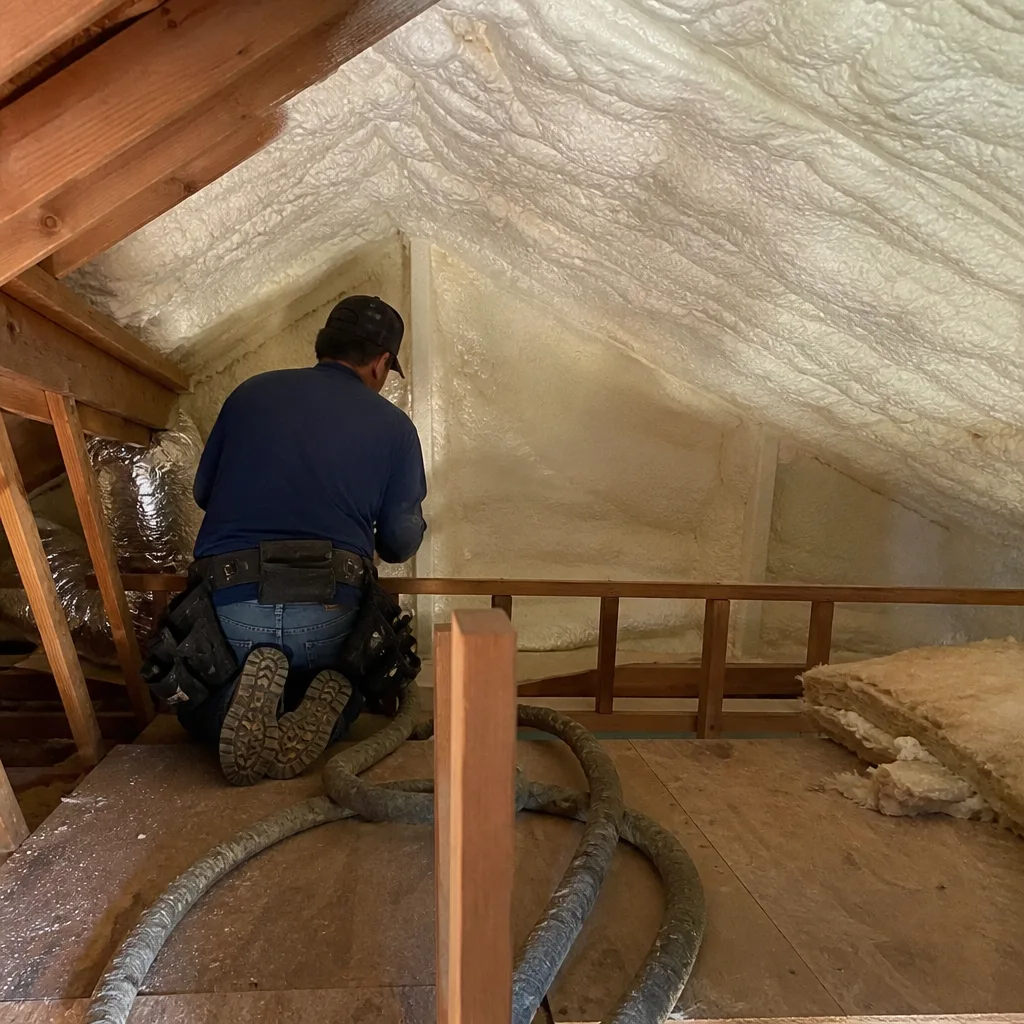 After
AfterHow to Use Your Utility Bill as an Early Warning System
The most powerful diagnostic tool you already own is 24 months of utility bills. Most Westminster homeowners never compare year-over-year usage, and that’s where insulation failure hides in plain sight.
Here’s the method we use on every home energy audit. Pull your July 2023 and July 2024 bills - same billing period, same approximate outdoor temperature range. Check the kilowatt-hour total, not the dollar amount. If kWh increased more than 10 percent and your thermostat setting, occupancy, and major appliances stayed the same, your building envelope is leaking conditioned air faster than it should. In Westminster’s cooling-dominant climate, this almost always means attic insulation has settled, compressed, or been bypassed by air leaks that render it thermally useless.
The same test works for gas usage in January. Compare January 2023 to January 2024. A 10 percent jump in therms with identical thermostat settings points to wall or crawl space insulation failure, or - more commonly - air sealing gaps that let heated air escape faster than the furnace can replace it.
Document this before you call anyone. The numbers become your baseline. When we perform a blower-door test - a pressurization reading that shows, in one number, how much air your building envelope is losing - we compare our after-sealing result against your documented utility trend to verify real-world performance change, not just lab numbers.
One caveat: SCE rate changes and time-of-use plan shifts can obscure the pattern. Isolate kWh and therms, not dollars. If your usage is flat but your bill jumped, that’s a rate issue. If your usage jumped 15 percent with no explanation, that’s an envelope issue.
We’ve documented this repeatedly in Westminster’s older neighborhoods near Westminster Boulevard and Hazard Avenue, where 1960s ranch homes with original batt insulation show 20 to 30 percent cooling-load increases by year five after a previous contractor blew new insulation over unsealed top plates. The new insulation looked fine. The utility bills told the real story.
Four Visual Indicators You Can Read from the Attic Hatch
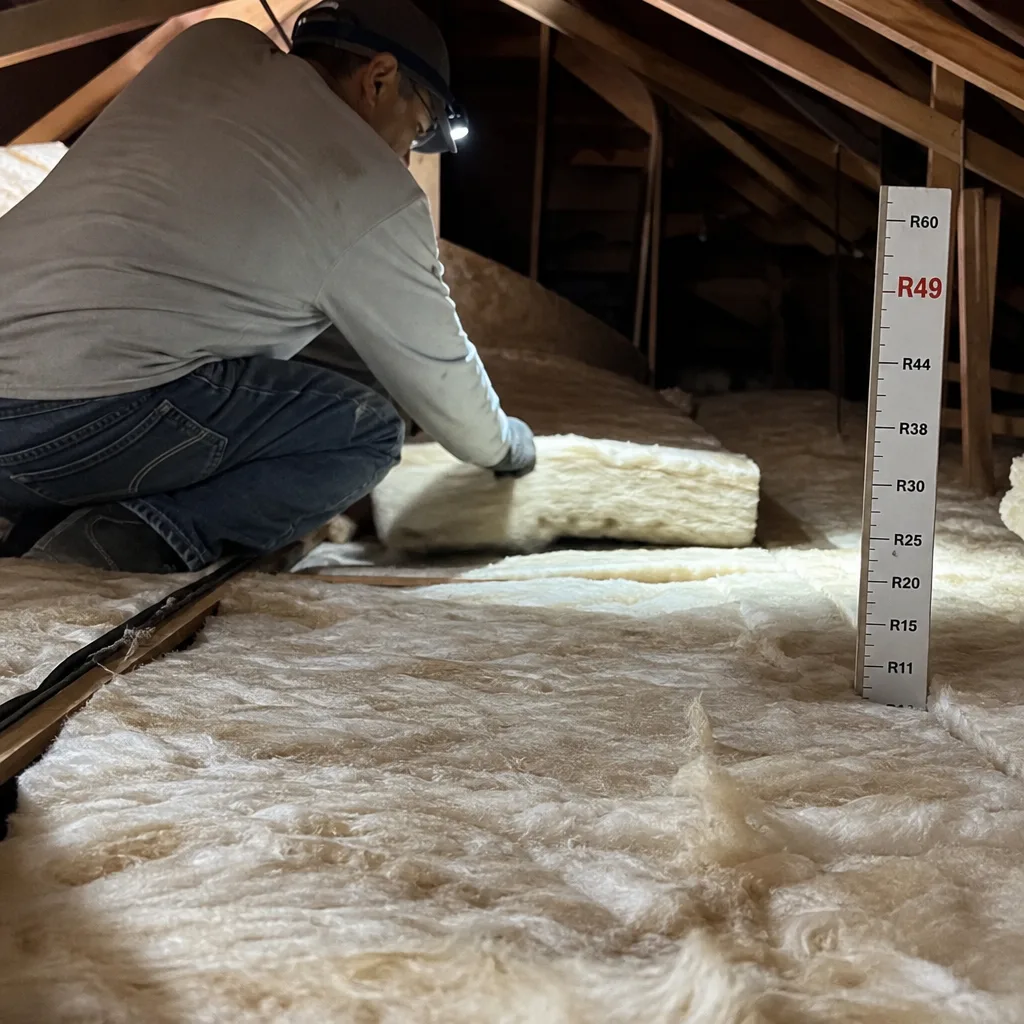
You don’t need to walk your attic to spot most insulation failures. Open the hatch, shine a flashlight, and look for these four specific indicators - a process detailed in our Attic Insulation Maintenance Checklist for Westminster Homeowners. We photograph each on every initial inspection and include the images in our Documented Photo Record.
1. Settled Depth Below Original Fill Marks
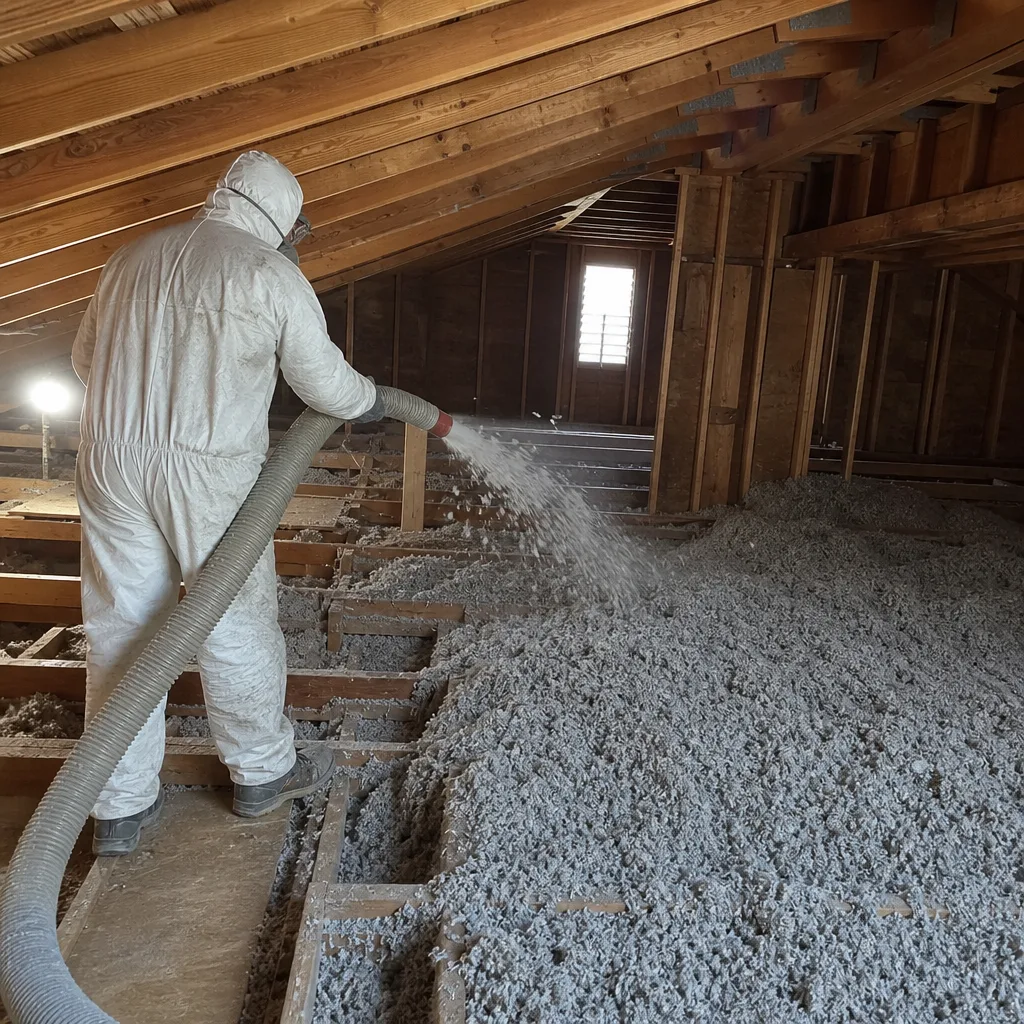
Blown-in cellulose or fiberglass settles over time. Original installation depth was likely marked on a rafter or truss with a Sharpie line and date. If the current surface sits more than 2 inches below that mark, you’ve lost R-value proportionally. In Westminster’s climate, where attic temperatures reach 140°F in August, every inch of lost depth translates directly to heat gain your AC must overcome. For reference, cellulose settles approximately 20 percent from installed depth; fiberglass settles 10 to 15 percent. Anything beyond those benchmarks indicates moisture compression, pest activity, or repeated technician traffic that packed the material.
2. Dark Staining on Batts (Air Washing)
This is the indicator most homeowners miss, and it’s the most diagnostically valuable. Dark gray or brown streaks on the face of fiberglass batts mean air is moving through the insulation, not around it. Warm, humid attic air carries dust and particulate that deposit on the fibers as they pass. The batt becomes a filter, not a thermal barrier. In Westminster’s marine-influenced climate with moderate humidity, this staining appears as diffuse discoloration rather than the sharp mud lines seen in humid Southeast attics. The fix isn’t more insulation - it’s sealing the air leak source first, then replacing the filtered batt. We use Owens Corning and Johns Manville batts for replacement after air sealing is complete.
3. Pest Tunneling
Rodents compress insulation into runways and nesting cavities, creating visible paths 2 to 3 inches wide. Look for smooth, packed channels through loose fill, or batts torn and rearranged into rounded nests. In Westminster, roof rats are the primary attic pest, and their activity peaks in late summer when dry vegetation drives them toward irrigated neighborhoods. Tunneling isn’t just an insulation problem - it’s a contamination problem requiring removal, sanitization, and rodent-proofing before any new material goes in. Our crew includes attic cleaning and rodent proofing as a prerequisite step when we find this; we won’t insulate over active pest evidence.
4. Missing or Displaced Batt Sections at Duct Penetrations
Check where flex ducts or rigid trunk lines pass through the attic floor. Contractors often pull batts aside to run ducts and never replace them. The gap is usually 6 to 12 inches wide, directly above a conditioned room, creating a thermal bypass that defeats the entire attic system. In Westminster’s cooling-heavy load profile, this manifests as a single hot room in summer even when the duct delivers cold air properly. The fix is simple: replace the missing batt, seal the duct boot to the drywall with mastic, and verify with a smoke pencil or blower-door test.
What Uneven Room Temperatures Actually Mean
A room that runs 4 to 6 degrees off from the rest of the house is a symptom, not a diagnosis. The mistake is assuming it means “add insulation everywhere.” Here’s how we rule out causes in sequence, which determines whether the fix is $200 or $4,000.
Step 1: Verify Duct Delivery
Close all interior doors. Hold a thermometer in the supply register airflow for 60 seconds. The discharge air temperature should be within 2 degrees of other registers on the same system. If it’s not, you have a duct problem - leak, restriction, or damper issue - not an insulation problem. We see this frequently in Westminster’s two-story additions from the 1980s, where flex duct was run through unconditioned attic space and has since disconnected at the boot.
Step 2: Check for Insulation Gaps
If duct delivery is uniform, inspect the attic floor above the problem room. Use the hatch observation method from the previous section. Look specifically for missing batts at duct penetrations, settled fill below R-30 equivalent, or areas where insulation was never installed - common above garage ceilings, bonus rooms, and additions where the original contractor stopped at the wall line. In Westminster’s Little Saigon area, we’ve found entire 400-square-foot additions with no attic insulation whatsoever, hidden beneath original drywall for 40 years.
Step 3: Test for Air Sealing Failure
If insulation depth is uniform but the room still drifts, the issue is air movement bypassing the insulation entirely. Top plates - the horizontal framing member where wall studs meet the ceiling - are the most common leak path in California platform framing. Electrical penetrations, can light housings, and chimney chases are close behind. These leaks don’t reduce insulation R-value; they create a parallel path where conditioned air escapes directly to attic space. The diagnostic is a blower-door test with a thermal imaging camera, which we perform on every attic insulation in Westminster assessment. The image shows warm air streaming through gaps that are invisible to the eye.
The repair sequence matters. Seal first, then insulate. Blowing new fiberglass or cellulose over unsealed top plates traps the leak path permanently and can actually accelerate moisture problems by reducing the drying potential of the assembly. We’ve removed and reinstalled insulation in dozens of Westminster homes where a previous contractor skipped this step.
How Moisture Shows Up in Westminster Attics
Westminster’s climate is mild and marine-influenced, which means the moisture signatures differ dramatically from cold-climate homes - a topic covered in our Seasonal Insulation Care for Westminster: Year-Round Homeowner’s Guide. You won’t see frost on nails or ice dams at eaves. The indicators are subtler and often mistaken for roof leaks.
Rust on Metal Components
Check HVAC duct straps, electrical junction boxes, and nail heads for orange-brown oxidation. In Westminster’s moderate humidity with high summer attic temperatures, rust forms slowly from persistent condensation during shoulder seasons when attic surfaces drop below dew point. The source is usually air leakage from the conditioned space below - warm, moist interior air hitting cooler attic sheathing or ductwork. The fix is air sealing at the leak source, not roof ventilation adjustment.
Mold at Specific Locations
Look for dark spotting on the north-facing roof sheathing, at bathroom fan terminations, and around chimney chases. These locations have the longest dew-point exposure in Westminster’s climate. Bathroom fans dumped into attic space - still common in pre-1990 construction - create a point-source moisture load that overwhelms local conditions. The mold is often Cladosporium or Aspergillus species, not the black mold of media concern, but still a respiratory irritant and indicator of ongoing moisture flux. Remediation requires removing contaminated insulation, sealing the fan duct to exterior, and treating sheathing before reinstalling.
Corrosion on Electrical Connectors
Green or white oxidation on wire nuts and junction box terminals indicates chronic humidity cycling. In Westminster’s coastal proximity, salt air accelerates this process in homes within 2 miles of the beach. The electrical hazard is real - corroded connections create resistance heating and fire risk. We flag this for licensed electrician review on every inspection where we find it, and we document it in our photo record.
The underlying cause is almost always air leakage, not roof leaks. A roof leak creates concentrated water staining and typically triggers a call to a roofer first. Moisture from air leakage is diffuse, slow, and misdiagnosed for years. The blower-door test quantifies the leak; the thermal camera locates it; the repair is sealing, not roofing.
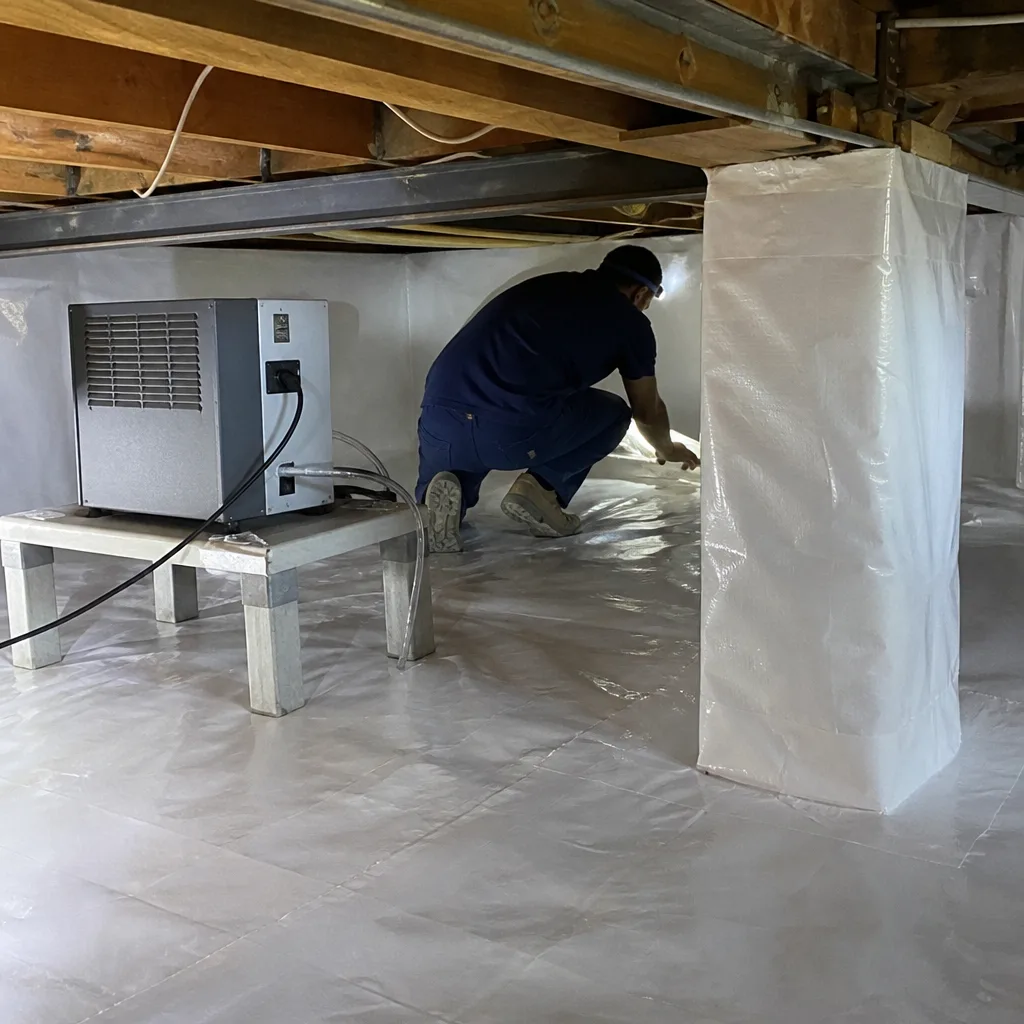
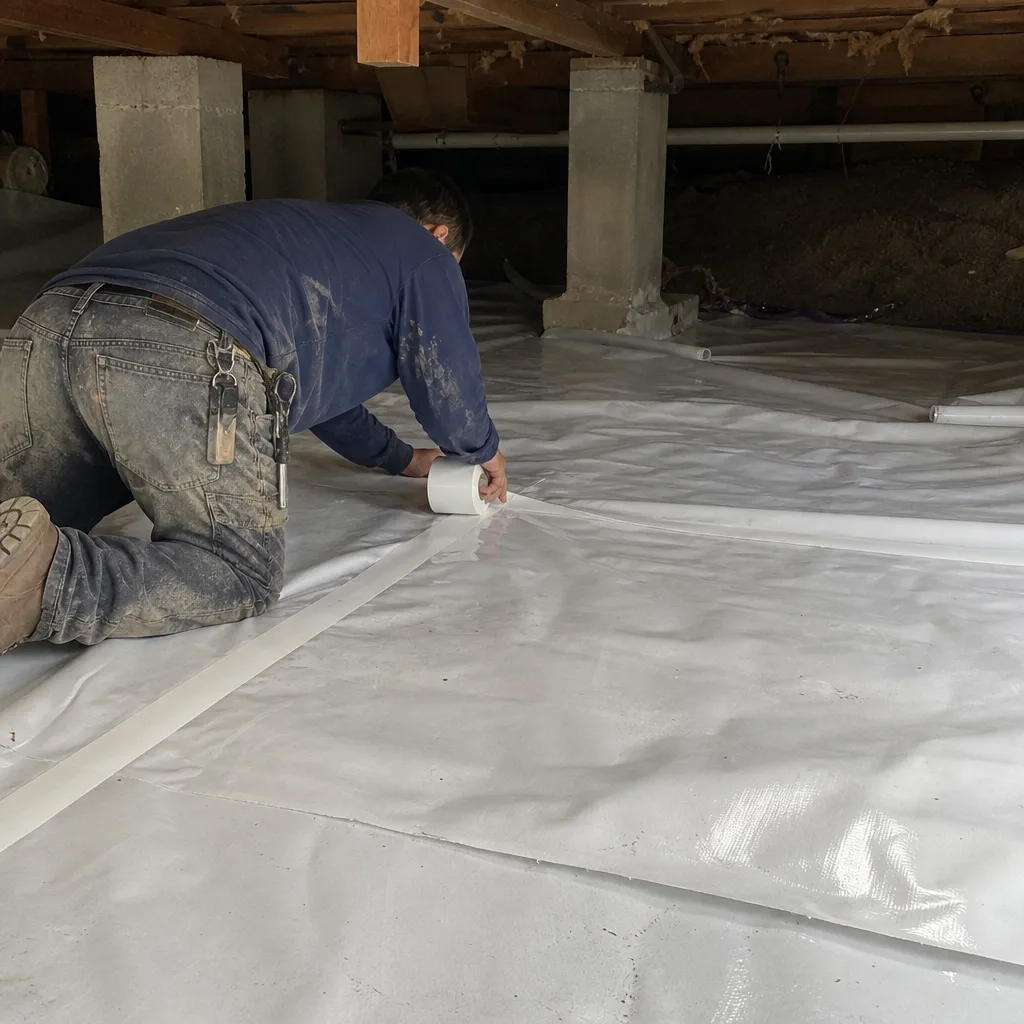
For homes with crawl space moisture issues rather than attic, our crawl space encapsulation & vapor barrier in Westminster service addresses the ground-level moisture source with a complete vapor barrier and conditioned crawl space approach.
When a Warning Sign Becomes an Emergency
Most insulation degradation is gradual and repairable on a planned schedule. Three conditions require immediate scope - waiting risks structural damage, health hazard, or equipment failure.
Active Mold Growth with HVAC Air Handler in Attic
When mold is present within 10 feet of a return air plenum or flex duct connection, spores are likely being drawn into the conditioned air stream. This is an indoor air quality emergency, not a maintenance item. Scope includes stopping the moisture source, removing contaminated insulation, treating sheathing with EPA-registered fungicide, and reinstalling only after clearance verification. We do not encapsulate or cover active mold - removal is the only acceptable method.
Pest Nesting in Insulation with Evidence of Electrical Chewing
Roof rats and squirrels chew wiring for nesting material and path clearance. If you find droppings, nesting material, and any sign of wire damage, the attic is unsafe to enter and the electrical system needs inspection before insulation work proceeds. We’ve found live circuits with exposed conductor in Westminster attics where rodents stripped Romex for nest building. This is a fire and shock hazard requiring electrician coordination.
Insulation Compressed Over HVAC Equipment
Blown-in cellulose or fiberglass packed against furnace cabinets, air handler cabinets, or flex duct connections blocks cooling airflow to the equipment. Manufacturers specify minimum clearances - typically 6 inches - for combustion air and heat exchanger cooling. Compressed insulation causes overheating, premature heat exchanger failure, and in gas furnaces, potential carbon monoxide spillage. If you open your hatch and see insulation touching equipment, that’s an immediate call. We clear and contain, then reinstall with proper baffling.
For emergency assessment, Topside Attic Insulation Westminster answers calls 24/7 with a live person - no voicemail loops. We’ll document the condition, advise on immediate safety steps, and schedule remediation.
Common Mistakes to Avoid
- Adding insulation over unsealed air leaks. This is the most common error we correct in Westminster. The new insulation performs poorly, and the trapped moisture risk increases. Air sealing must precede any insulation addition - it’s Haven Standard practice, not an upsell.
- Trusting depth gauges without checking density. Blown-in insulation can read full depth but be severely compressed by moisture or pest activity. A ruler measurement tells you depth; a handful test tells you whether the material still fluffs. Compacted cellulose feels like damp sand; proper fill feels like dry sawdust.
- Diagnosing from a single room’s temperature. One hot room in summer usually means a duct or air-sealing issue specific to that zone, not a whole-attic insulation failure. Replacing all attic insulation for a single-room symptom wastes money and misses the actual problem.
- Ignoring shoulder-season utility data. Westminster’s mild springs and falls show insulation failure most clearly, when the HVAC runs least. A home with good envelope performance uses minimal kWh in April and October. If your shoulder-season bills are climbing, the envelope is leaking year-round, masked by heavy summer and winter usage.
- Assuming spray foam is automatically better. Closed-cell spray foam has the highest R-value per inch, but in Westminster’s climate, it’s not always the right tool for attic floors. It can trap roof sheathing moisture if the assembly isn’t designed for it. We specify spray foam insulation in Westminster only after assessing the existing roof ventilation and sheathing condition.
- Skipping the photo record. Every contractor should document condition before and after. If they don’t, you have no verification of what was actually done. Our Documented Photo Record is included on every job, not available on request - Haven Standard Clause 4.
- Accepting verbal estimates for envelope work. Attic and crawl space conditions vary too much for phone pricing. A written scope with line-item pricing, delivered before any work starts, is the minimum standard. We provide this on every job - flat price, written scope, written warranty before anyone lifts a tool.
When to Call a Professional
Call when your documented utility comparison shows a 10 percent year-over-year increase, when you observe any of the four attic hatch indicators, or when uneven room temperatures persist after you’ve verified duct delivery. The inspection cost is minimal compared to the cost of treating the wrong problem - or of waiting until mold, pest damage, or equipment failure expands the scope.
Topside Attic Insulation Westminster offers free estimates in Westminster. We’ll perform a blower-door test on applicable jobs, provide before-and-after readings you can verify, and deliver a written price before any work starts. Call (562) 526-6978 to schedule. Every assessment includes a Documented Photo Record, and we honor our Free Second Opinion on any written estimate you’ve already received - bring us the competing quote and we’ll read it with you.
Frequently Asked Questions
Most complete attic insulation removals and replacements in a Westminster single-family home run between $3,200 and $6,800, depending on attic square footage, existing material condition, and whether air sealing and rodent proofing are required. Partial upgrades over sealed attics typically range from $1,800 to $3,400. We provide a flat written price before any work starts - no estimates that balloon on completion. Call (562) 526-6978 for an exact quote; estimates are free.
Yes, partially. Your utility bill comparison and infrared thermometer readings of ceiling surfaces from inside the house reveal performance problems. But visual inspection of the attic - even from the hatch - is necessary to distinguish between insulation failure, air sealing failure, and moisture damage. We document everything we find in photos you receive before we propose any work.
Most commonly, a duct delivery problem or a missing insulation section above that specific room. Rule out duct issues first with a supply-air temperature check. If duct delivery matches other rooms, inspect the attic floor above for displaced batts, settled fill, or a thermal bypass at a top plate or duct penetration. The diagnostic sequence matters - treating an insulation gap as a duct problem, or vice versa, wastes money.
Fiberglass batts and blown-in cellulose have indefinite material lifespan if kept dry and undisturbed. In practice, we find effective service life of 20 to 30 years in Westminster homes before settling, air washing, or pest activity degrades performance. Spray foam lasts longer but can degrade if exposed to sustained UV in unvented roof assemblies. The critical factor isn’t age - it’s whether the material remains at design depth, density, and moisture content.
Adding over existing material is cheaper upfront but often more expensive long-term. If the existing insulation is compressed, contaminated, or installed over unsealed air leaks, new material performs poorly and may trap moisture. We assess existing condition before recommending either approach, and we won’t add over material that compromises the new installation. Our written scope specifies exactly what stays and what goes.
A thorough inspection takes 45 to 90 minutes. We photograph attic and crawl space conditions, measure insulation depth at multiple points, identify air leak paths with blower-door and thermal imaging on applicable jobs, and check for moisture damage, pest activity, and electrical hazards. You receive the photo record, the blower-door readings if performed, and a written scope with flat pricing before any work is proposed. No same-day pressure - review the documentation and call us when you’re ready.
The Bottom Line
Insulation failure in Westminster announces itself through data before discomfort. A year-over-year utility increase of 10 percent, settled fill below original marks, dark staining on batts, and uneven room temperatures that survive duct verification are the four primary warning signs. The repair sequence is always seal first, then insulate - and any contractor who proposes otherwise is skipping the step that determines whether your investment performs. Document what you observe, compare your bills, and call for assessment when the pattern is clear. Early intervention keeps the scope small, the price predictable, and the result verifiable. Explore more guides & resources to stay ahead of insulation issues.
Written by Wes Okafor, Owner at Topside Attic Insulation Westminster, serving Westminster since 2016.