
Last updated September 24, 2026
Insulation Permits, Codes & Inspections in CA: What You Need to Know
In California, pulling an insulation permit doesn’t guarantee an inspector ever enters your attic. Most residential insulation inspections are certificate-of-compliance based, meaning the contractor’s paperwork, not a site visit, is what closes the permit. We’ve worked on Westminster homes where the previous owner believed a permitted job meant verified work, only to find R-19 batts stuffed over unsealed top plates and no documentation of what was actually installed. This guide explains the compliance chain Title 24 actually requires, where permits and inspections diverge, and what paperwork you should retain whether you’re in Westminster, Santa Ana, or Huntington Beach. For more guides & resources on local insulation requirements, see our blog.
Quick Answer
California insulation work triggers a permit when it involves new construction, permitted additions, or replacement that exceeds Title 24’s prescriptive R-value thresholds for your climate zone. Most homeowners need three compliance documents: the CF1R (projected energy budget), CF2R (installer sign-off), and CF3R (HERS rater verification when required). In Westminster and Orange County, HERS verification is mandatory for most attic and wall insulation work in new construction and major alterations, but many replacement jobs rely on certificate-of-compliance inspections where no inspector visits the site.
Table of Contents
- When Is a Permit Required for Insulation Work in California?
- Title 24 Part 6: R-Value Minimums and Climate Zone Rules
- The CF1R, CF2R, and CF3R Compliance Documents Explained
- HERS Verification: What It Is and When It’s Required
- How to Pull Permit History on a Westminster Property
- What Inspectors Actually Check vs. What They Don’t
- Common Mistakes to Avoid
- When to Call a Professional
- Frequently Asked Questions
- The Bottom Line
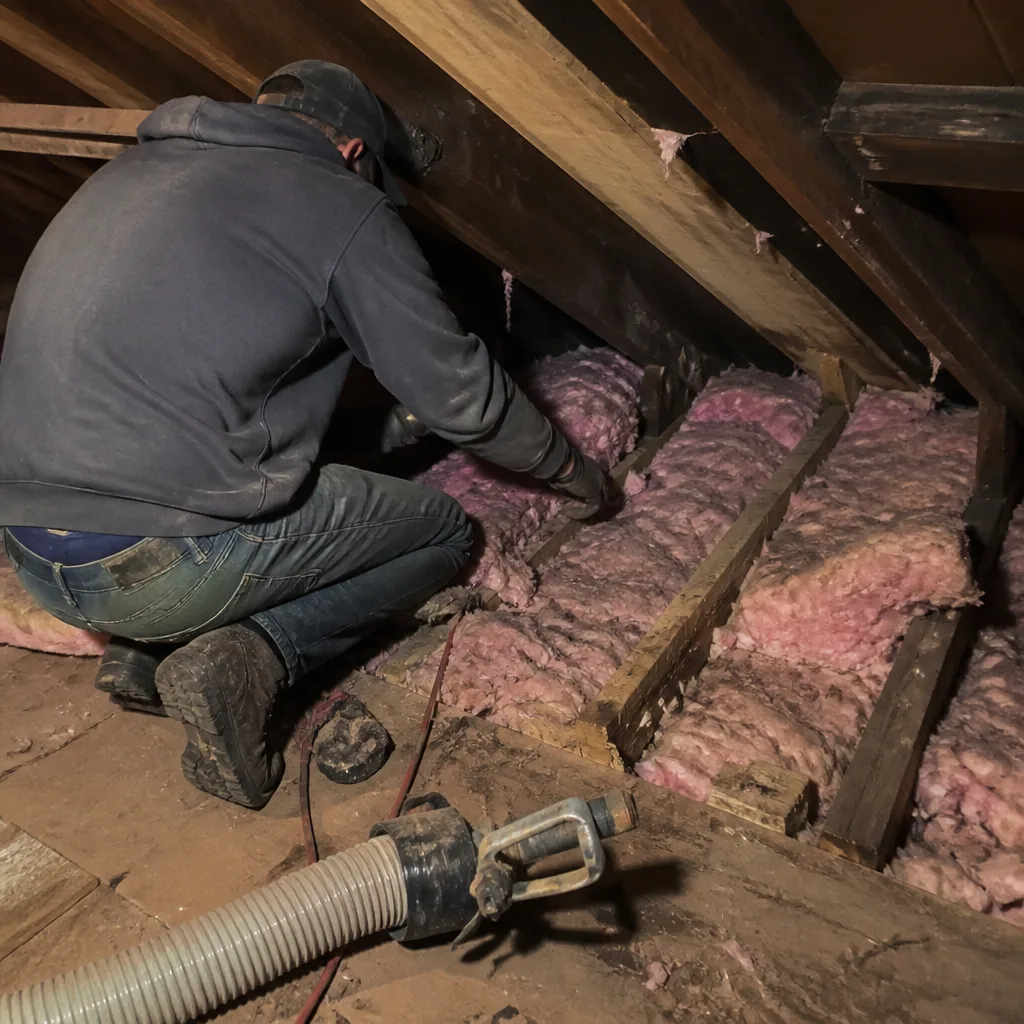 Before
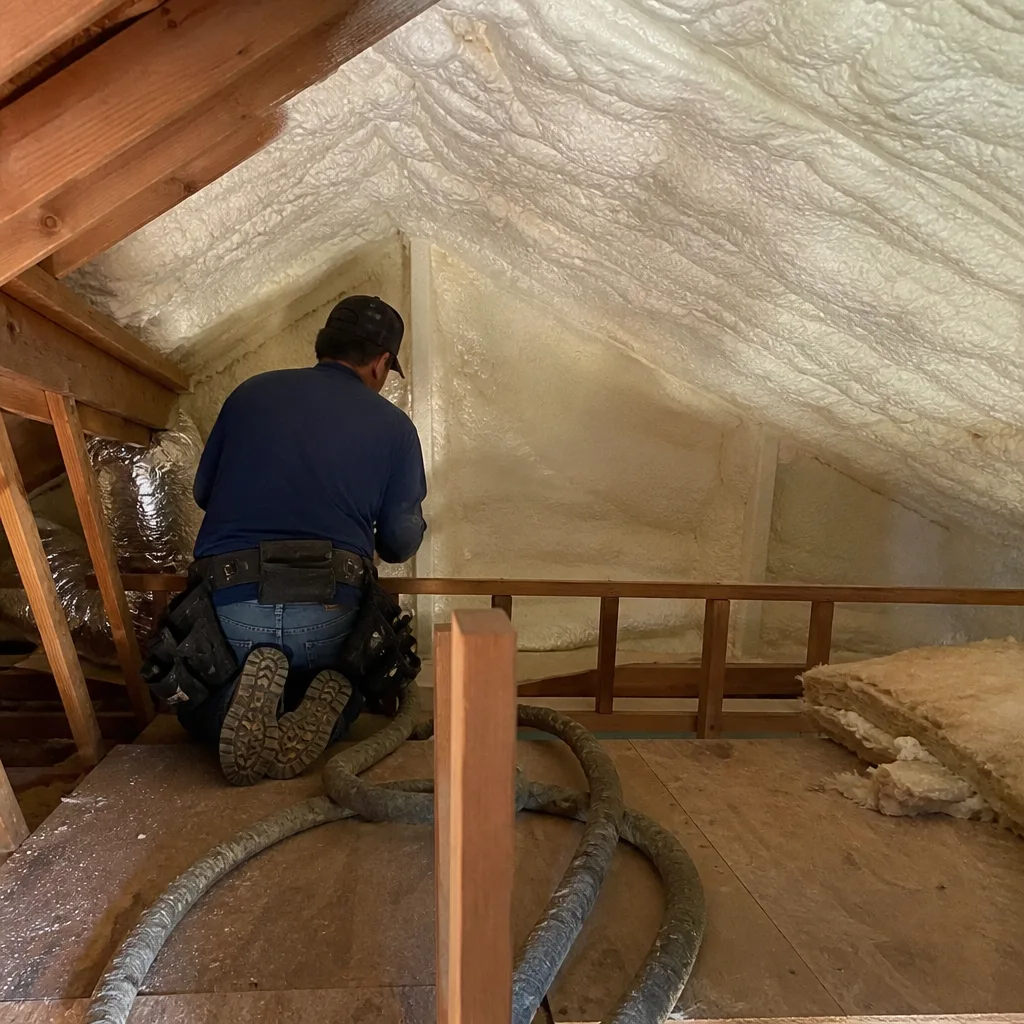 After
AfterWhen Is a Permit Required for Insulation Work in California?
Not every insulation upgrade needs a permit, and the distinction matters for your liability and resale value. California’s building code draws a line between maintenance-level replacement and work that alters the building’s thermal envelope performance.
Permit-Required Work
You’ll need a permit for insulation work in these situations:
- New construction - Any insulation installed in a newly built home requires permitting and full Title 24 compliance documentation.
- Permitted additions or alterations - If your project already has a building permit, insulation within that scope is included and must meet current code.
- Replacement exceeding prescriptive thresholds - Removing and replacing insulation with material that increases the assembly’s R-value beyond maintenance-level equivalence triggers permit requirements in most jurisdictions.
- Changes to the thermal envelope - Converting an unconditioned attic to conditioned space, or insulating walls where none existed before, always requires a permit.
Permit-Exempt Work
These scopes typically do not require permits:
- Like-for-like replacement - Removing damaged R-30 batts and installing new R-30 batts of the same type in the same location, without altering the assembly.
- Top-off insulation - Adding loose-fill fiberglass or cellulose over existing attic insulation without disturbing the thermal envelope, provided the total R-value doesn’t exceed prescriptive maximums that would trigger reclassification.
- Localized repairs - Replacing insulation in areas damaged by leaks, rodents, or mechanical work, limited to less than 25% of the total attic or wall area in most Orange County jurisdictions.
Here’s where Westminster homeowners get tripped up. The City of Westminster follows Orange County’s uniform code adoption, but permit exemption interpretations vary between Westminster, Garden Grove, and Stanton even though they’re adjacent. We’ve seen a Westminster property where the homeowner added R-38 loose fill over existing R-19 batts - a common top-off - and the city classified it as exempt. Check our Insulation Warning Signs: A Westminster Homeowner’s Reference Guide to spot red flags before they become costly problems. Three miles away in Santa Ana, the same scope required a permit because that jurisdiction interprets “alteration of thermal performance” more broadly. When in doubt, call Westminster’s Building Division with your specific scope. The fifteen-minute conversation beats discovering an unpermitted alteration during a future sale.
One more wrinkle: spray foam insulation almost always triggers a permit because it changes the assembly’s vapor permeability and air barrier characteristics. Even a thin layer of open-cell spray foam in an attic knee wall can reclassify the project. Spray foam insulation in Westminster requires careful coordination with the building department because the material itself, not just the R-value, triggers additional fire-resistance and ignition-barrier reviews under CBC Section 2603.
Title 24 Part 6: R-Value Minimums and Climate Zone Rules
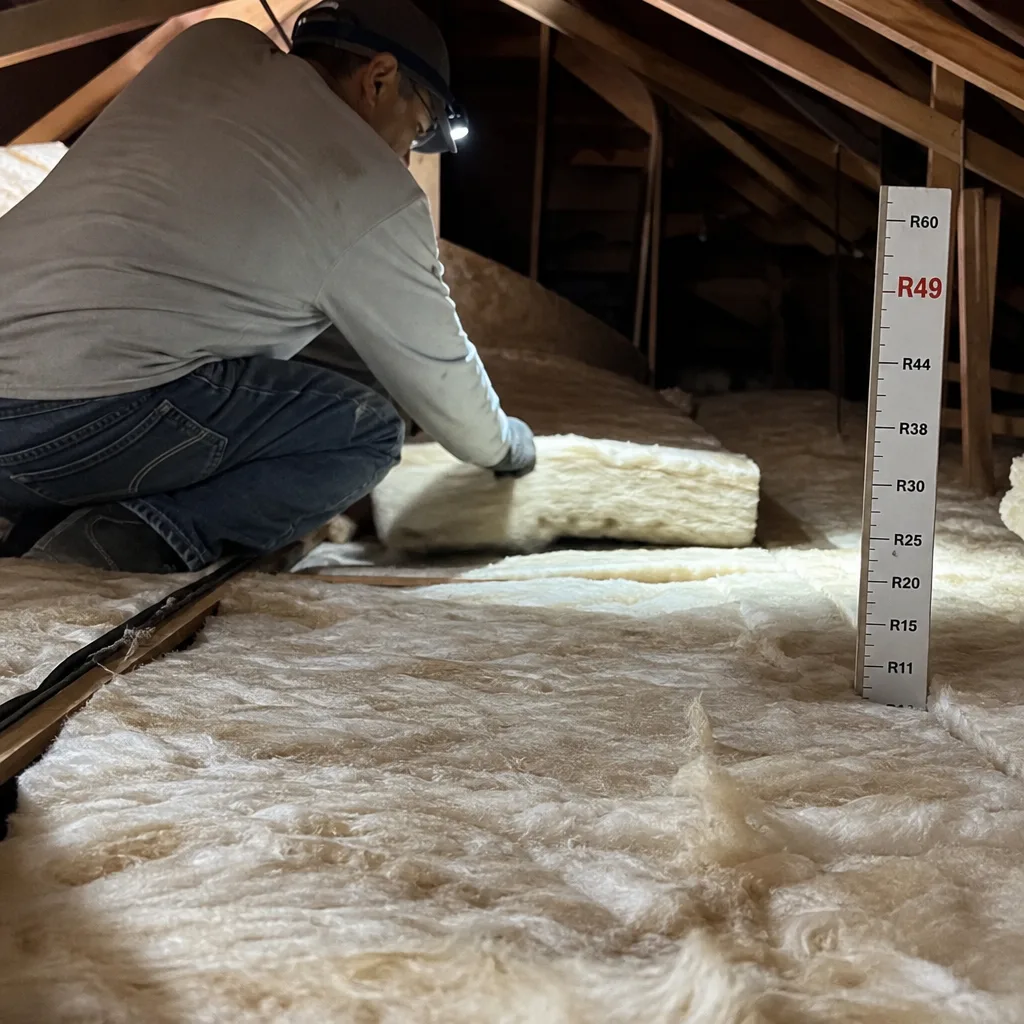
Title 24, Part 6 of the California Code of Regulations governs energy efficiency in buildings. The “Part 6” distinction matters - this is the energy code, separate from Part 2 (the building code) and Part 2.5 (the residential code), though they reference each other. For insulation, Part 6 sets minimum R-values by climate zone, and California has sixteen of them.
Westminster Sits in Climate Zone 8
Westminster, along with most of coastal Orange County, falls in CEC Climate Zone 8. This is a mild marine climate with fewer than 2,000 heating degree days and significant cooling load from solar gain. The R-value requirements here are lower than inland zones but carry specific assembly rules that contractors from hotter climates often miss.
Current Title 24, Part 6 prescriptive R-value minimums for Zone 8 include:
- Wood-framed walls: R-13 minimum cavity insulation, or R-15 if using continuous insulation (ci) approach
- Attics, vented: R-30 minimum at ceiling plane; R-38 if using high-efficiency mechanical or solar-ready compliance path
- Attics, unvented (conditioned): R-30 at roof deck, with specific air-impermeable insulation requirements at the conditioned side
- Raised floors: R-19 minimum in crawl spaces and over unconditioned garages
- Slab-on-grade edges: R-5 minimum vertical insulation for heated slabs, first 2 feet below grade
The trap for Westminster homeowners is prescriptive vs. performance compliance. A contractor can meet Title 24 through the prescriptive path (hit these R-values exactly) or the performance path (model the whole building’s energy use, trade off insulation levels against HVAC efficiency). We’ve reviewed estimates where a contractor proposed R-22 attic insulation in Westminster, below the prescriptive R-30, claiming they’d “make it up” with a high-SEER air conditioner. That’s valid only if they file a CF1R performance compliance model and the total building energy budget checks out. Without that documentation, you’ve got sub-code insulation and no proof the trade-off was legitimate.
Inland zones tell a different story. Zone 10, covering Anaheim and north Orange County, requires R-38 in vented attics prescriptively. Zone 12, reaching into Riverside County, jumps to R-49. A contractor quoting from a national chart or their inland experience may overspecify your Westminster job (unnecessary cost) or underspecify it (code violation). We specify materials from Owens Corning, Johns Manville, and Knauf with published R-values per inch so the math is transparent: R-30 at 10 inches of loose-fill fiberglass, R-38 at 12 inches, no guessing.
Westminster’s coastal proximity also means moisture management rules differ from desert zones. Title 24 requires vapor retarder placement and attic ventilation ratios that account for marine air infiltration. We’ve found mold-saturated R-30 batts in Westminster attics where a contractor installed kraft-faced insulation with the vapor retarder on the wrong side for our climate, trapping humid exterior air against the ceiling drywall. Our Seasonal Insulation Care for Westminster: Year-Round Homeowner’s Guide covers how marine climate conditions affect your attic year-round.
The CF1R, CF2R, and CF3R Compliance Documents Explained
California’s energy compliance documentation runs on a three-form system that tracks a project from design to final verification. Homeowners rarely see these forms explained, yet they’re the only proof your insulation meets Title 24. Here’s what each document is, who completes it, and what you should retain.
CF1R: Certificate of Compliance, Residential (Projected)
The CF1R is the energy budget baseline. It’s generated by compliance software - CBECC-Res, EnergyPro, or equivalent - and shows the projected energy use of your home as designed. For insulation, the CF1R specifies:
- The proposed R-values for each thermal envelope assembly
- The compliance path (prescriptive or performance)
- The HERS features that will require verification
- The climate zone and design assumptions
Who fills it out: The designer, architect, or Title 24 consultant, often through your contractor. For replacement insulation in existing homes, some jurisdictions accept a simplified CF1R or roll it into the permit application.
What you should retain: The final, stamped CF1R with the building department’s approval signature. This is your proof the design was reviewed and accepted. We’ve encountered Westminster homeowners who received only the contractor’s “energy savings estimate” - a marketing document with no regulatory standing - and had no CF1R when the buyer’s lender requested it during resale.
CF2R: Certificate of Installation
The CF2R is the installer’s sign-off. It certifies that the insulation was installed according to the approved CF1R and manufacturer’s specifications. Critical fields include:
- Insulation type, brand, and installed R-value
- Installation location (attic, wall, floor)
- Air sealing measures completed
- Ignition barrier compliance for spray foam
- Installer name, license number, and signature date
Who fills it out: The installing contractor. Under California law, the person signing the CF2R must hold a C-2 (Warm-Air Heating, Ventilating and Air-Conditioning) or B (General Building) license, or work under a contractor who does. The CF2R is a legal attestation - false information is a misdemeanor under Business and Professions Code Section 7028.
What you should retain: The completed CF2R with the installer’s original signature, not a photocopy. In Westminster and Orange County, the CF2R is typically submitted to the building department as part of the certificate-of-compliance package that closes the permit.
CF3R: Certificate of Verification (HERS)
The CF3R is the independent verifier’s check. It’s completed by a Certified HERS Rater - not your contractor - who visits the site and confirms specific energy features were installed correctly. For insulation, the CF3R may document:
- Insulation grade (Grade I, II, or III installation quality per RESNET standards)
- Air barrier continuity at top plates and penetrations
- Blower-door test results when required
- Verification of insulation depth and coverage
Who fills it out: A HERS rater certified by Topside Attic Insulation Westminster home standards or equivalent RESNET accreditation, independent of the installation contractor.
What you should retain: The CF3R with the HERS rater’s certification number and the date of field verification. This is your proof an independent third party checked the work, not just the contractor’s word.
The compliance chain only works if all three documents exist and reference each other. We’ve audited Westminster homes where the CF1R specified R-38, the CF2R claimed R-38 was installed, but a post-installation probe found R-30. Without a CF3R HERS verification, that discrepancy may never surface - the permit closes on paperwork, not physical inspection.
HERS Verification: What It Is and When It’s Required
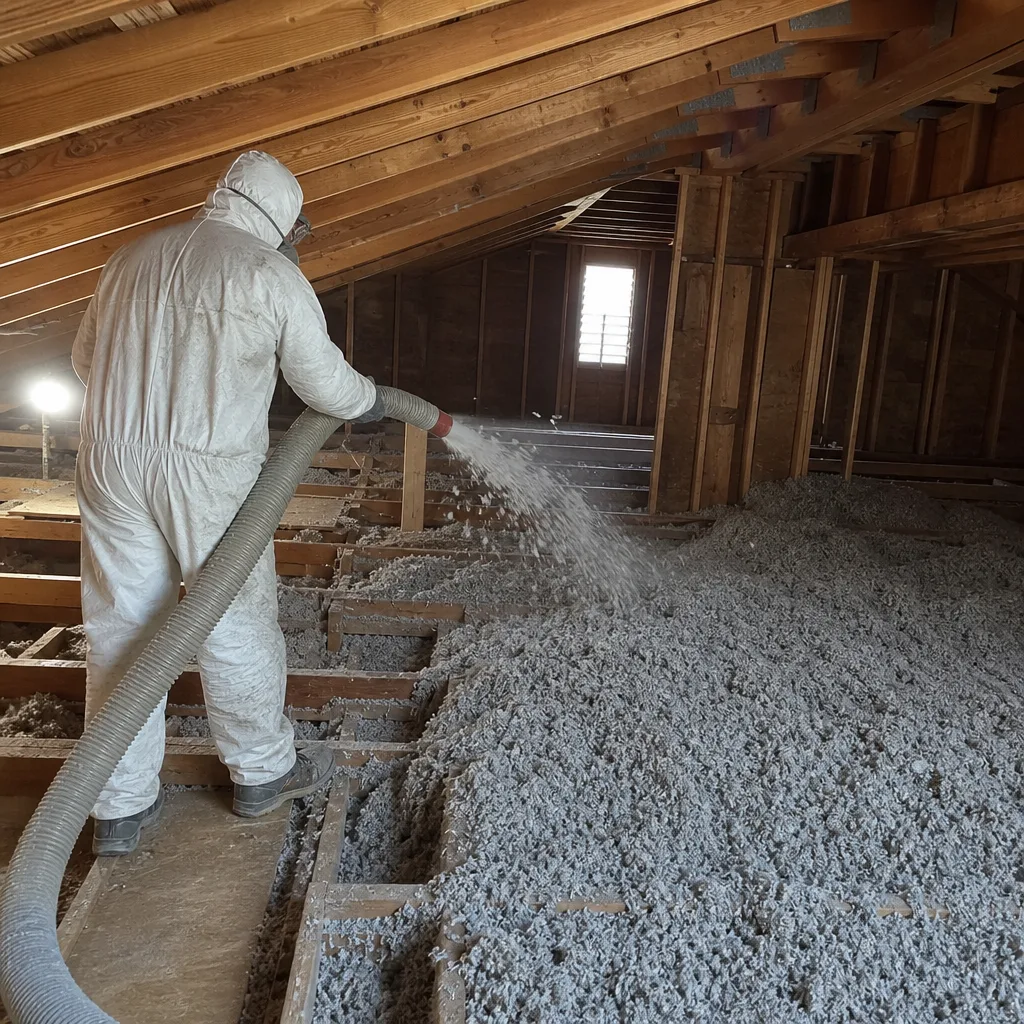
HERS stands for Home Energy Rating System, a RESNET-developed protocol that California adopted as its verification backbone for Title 24 compliance. A HERS rater is a third-party technician trained to inspect and test energy features without financial ties to the installation contractor. This independence is the point.
When HERS Is Required for Insulation Work
Not every insulation job needs HERS verification. The trigger depends on project type and compliance path:
- New construction - HERS verification is mandatory for insulation installation quality (Grade I or II), air barrier completeness, and thermal bypass details. No exceptions in California.
- Additions over 1,000 square feet - Treated as new construction for HERS purposes; full verification required.
- Alterations using the performance compliance path - If your CF1R uses performance modeling, HERS verification of installed insulation R-values and air sealing is typically required to confirm the model’s assumptions.
- Specific HERS measures triggered by the CF1R - Even prescriptive-path projects may require HERS verification for “quality insulation installation” (QII), a Grade I or II requirement that demands visual inspection of cavity fill, compression avoidance, and alignment with air barriers.
What a HERS Rater Actually Checks On-Site
The HERS rater’s inspection is methodical and documented. For attic insulation, expect:
- Depth measurement - Probed at multiple locations, averaged, and compared to the CF1R specification
- Coverage verification - Thermal imaging or visual confirmation that insulation extends to eave edges without gaps, except at vented soffits
- Grade assessment - Grade I (no gaps, compression, or misalignment), Grade II (minor defects), or Grade III (significant defects requiring correction)
- Air barrier inspection - Top plates, recessed can lights, plumbing and electrical penetrations sealed before insulation cover
- Blower-door test - When required by the CF1R, measured in CFM50 (cubic feet per minute at 50 Pascals pressure difference)
Westminster’s HERS market is served by raters based in Orange County and Los Angeles. The typical verification cost for insulation-only work runs $150-$400, depending on the number of HERS measures triggered. This is separate from permit fees and contractor charges.
Here’s what HERS verification is not: It’s not a code inspection. The HERS rater doesn’t enforce the building code; they verify the energy features described in the CF1R were installed. A HERS rater can pass Grade I insulation installation while the building inspector fails the same job for inadequate attic ventilation - two different standards, two different inspectors. We’ve coordinated both on Westminster jobs where the HERS rater verified QII on a Tuesday and the city inspector checked egress window clearance on Thursday.
Our approach at Attic Insulation in Westminster integrates HERS scheduling into project planning when required. We don’t treat it as an afterthought that delays closeout. The Haven Standard requires that we identify HERS triggers in writing before work starts, so homeowners aren’t surprised by a $300 verification cost two weeks after the crew leaves.
How to Pull Permit History on a Westminster Property
Permit history is public record, and in Westminster it’s accessible online. If you’re buying a home, considering insulation upgrades, or verifying that previous work was closed properly, here’s the exact process.
Step-by-Step: Westminster Permit Lookup
- Navigate to the City of Westminster’s Building Division portal - Search “Westminster CA building permits” or access through the city’s main website under Community Development > Building.
- Select “Permit History Search” or “Online Services” - Westminster uses a third-party platform (typically Accela or Tyler Technologies) for permit records.
- Enter the property address - Use the exact street address as it appears on tax records; apartment numbers matter.
- Review the permit timeline - Look for permits with descriptions including “insulation,” “energy,” “Title 24,” “HERS,” or “alteration.”
- Check permit status - Active, completed, expired, or revoked. “Completed” means final inspection passed or certificate of compliance accepted. “Expired” means work didn’t finish within the permit’s time limit.
- Request documentation if needed - Closed permits older than a few years may not show full document scans online. Submit a public records request to Westminster Building Division for CF1R, CF2R, and CF3R copies.
What to Look For in Insulation Permits
Focus on these data points:
- Permit issue date vs. work completion - A permit issued after work was done is a red flag; that’s not a permit, it’s a cover-up attempt.
- Final inspection date - If blank, the permit may still be open, creating a cloud on title.
- Contractor name - Cross-reference with the CSLB license lookup to confirm the contractor was licensed at the time.
- HERS rater identification - CF3R records should show a rater name and certification number.
We’ve worked on Westminster homes in the Little Saigon commercial corridor where previous owners converted attic space without permits, and in Westminster Village where 1970s insulation was “replaced” with no permit record at all. In both cases, we pulled permit history as part of our initial assessment - it’s free, it’s public, and it changes what we recommend.
If you find open or expired permits, the correction path depends on the city’s policy. Westminster typically allows permit reinstatement within 180 days of expiration with a fee; beyond that, a new permit may be required with current code compliance. For insulation work completed without a required permit, the city may require exposed inspection (remove and replace) or acceptance of a HERS verification with specific affidavits. We’ve navigated this process with Westminster’s Building Division on behalf of homeowners; the key is approaching it cooperatively, not adversarially.
What Inspectors Actually Check vs. What They Don’t
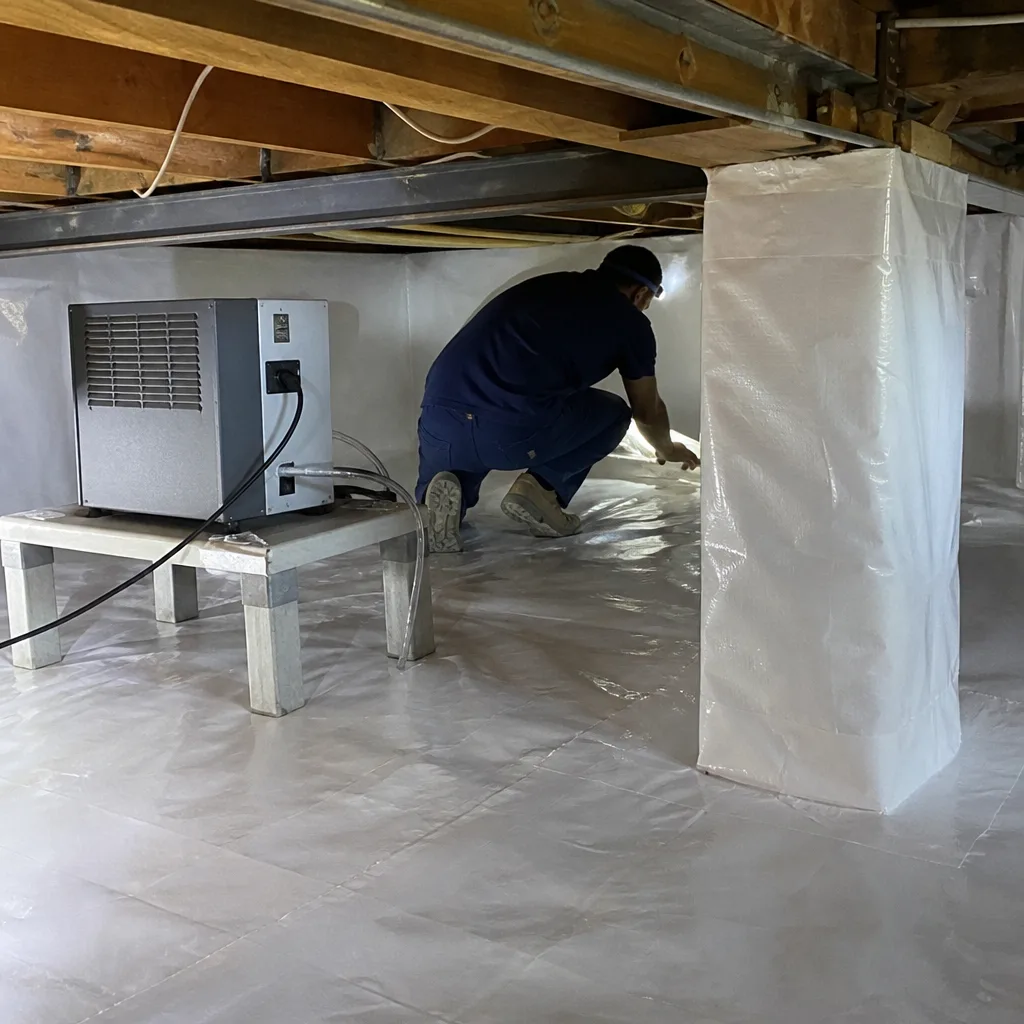
This is where the gap between homeowner assumption and regulatory reality widens. Understanding what inspectors verify, what they delegate, and what they skip entirely protects you from compliance gaps.
Certificate-of-Compliance Inspections (Most Common for Replacement)
For typical residential insulation replacement in Westminster and Orange County, the “inspection” is document-based. The contractor submits:
- Completed CF2R (installer sign-off)
- CF3R if HERS was triggered
- Manufacturer’s certification sheets for insulation materials
- Photos (sometimes, depending on jurisdiction)
The building department reviewer checks that forms are complete, signatures are present, and values match the approved CF1R. No one visits the attic. No one probes insulation depth. No one checks for gaps around chimneys or compressed batts behind kneewalls.
This isn’t negligence; it’s resource allocation. Orange County jurisdictions process thousands of permits annually. Physical inspection of every insulation replacement would require inspector staffing levels that don’t exist. The regulatory bet is that contractor liability (the CF2R is a legal attestation) and HERS independence catch problems.
Physical Inspections (New Construction, Complaints, Spot Checks)
An inspector does visit the site for:
- New construction final inspections - Insulation is visually checked before drywall covers it, with specific attention to fireblocking, draftstopping, and clearance to heat-producing fixtures
- Complaint-driven inspections - If a homeowner or neighbor reports suspected code violation
- Spot checks - Some jurisdictions randomly select permits for physical verification; Westminster’s rate is low but non-zero
- Triggered inspections - Spray foam applications often require a pre-cover inspection of ignition barriers and thickness
What Inspectors Don’t Check (That You Should)
Even physical inspections have limits. Building inspectors in Westminster are not required to:
- Verify actual installed R-value matches label claims (that’s HERS territory)
- Test for air leakage or blower-door performance
- Confirm that insulation covers the full attic plane without gaps
- Check that can lights, bath fans, or duct penetrations were sealed before insulation cover
- Assess whether the insulation type is appropriate for the assembly (vapor permeability, moisture risk)
This is why we provide before-and-after blower-door numbers on every applicable job - a pressurization reading that shows, in one number, how much conditioned air the home was losing before and after the work. It’s not code-required for most replacement work. It’s evidence that the building envelope actually performs, not just that paperwork was filed.
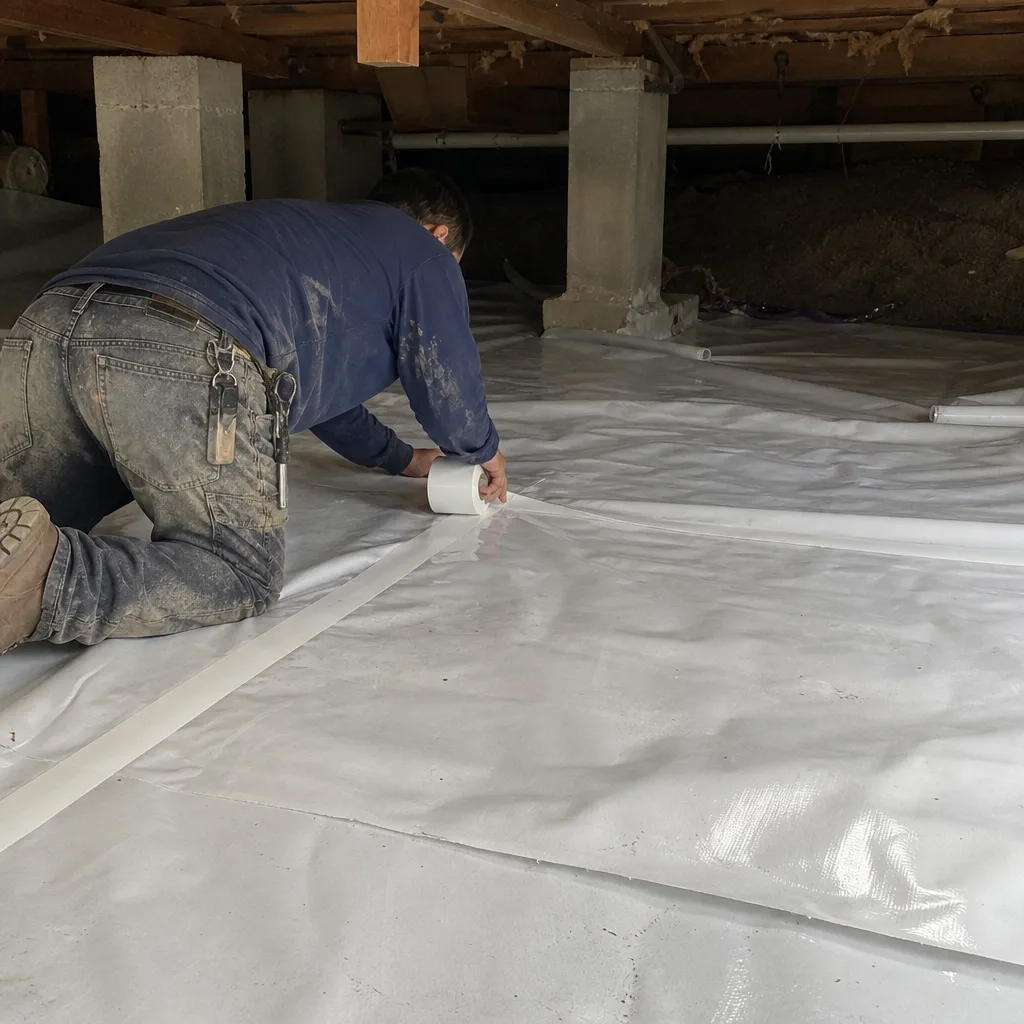
For Crawl Space Encapsulation & Vapor Barrier in Westminster, the inspection gap is even wider. Crawl space work is rarely physically inspected for replacement scope. A contractor could install vapor barrier with unsealed seams, no mechanical fastening, and no termite inspection gap - and close the permit on a CF2R alone. We document our crawl space work with the same photo record and written scope as our attic jobs, because the permit closing proves nothing about installation quality.
Common Mistakes to Avoid
- Assuming “permitted” means “inspected.” In Westminster and most of California, certificate-of-compliance closures are standard for insulation replacement. The permit closing confirms paperwork completeness, not physical verification. Always ask whether your specific scope triggers HERS verification or physical inspection.
- Accepting a contractor’s verbal R-value without documentation. We’ve probed attics where the homeowner was told they received “R-38” and found R-26 due to compression and uneven distribution. Require the CF2R with installed depth and coverage area specified, and spot-check with your own ruler.
- Ignoring climate zone specifics. A contractor quoting R-49 for a Westminster attic is overselling; R-30 or R-38 is prescriptively sufficient in Zone 8. Conversely, R-19 walls in a Zone 12 inland conversion would fail inspection. Verify your contractor is using California’s climate zone map, not a national default.
- Letting the previous owner’s permit gap become your problem. Unclosed permits can cloud title, trigger lender requirements for correction, or force you to bring older work to current code. Pull permit history before you buy, and negotiate corrections with the seller.
- Skipping air sealing before insulation. Title 24 requires air barrier continuity, but many contractors treat it as optional. Blowing GreenFiber cellulose over unsealed top plates is like pouring water into a cracked bucket. We seal first, then insulate - in that order. The blower-door number proves the difference.
- Not retaining compliance documents. The CF1R, CF2R, and CF3R are your proof of code compliance for resale, insurance claims, and warranty disputes. Store them with your deed or in cloud backup. We’ve had Westminster homeowners need CF3Rs five years post-installation for a solar panel permit that required proof of envelope efficiency.
- Hiring unlicensed installers for permitted work. California requires a C-2 or B license for insulation work that involves Title 24 compliance documentation. An unlicensed handyman can legally do minor repairs, but cannot sign a CF2R. If your permit requires a licensed contractor’s sign-off and you used unlicensed labor, you’ve got a documentation gap that may not surface until resale.
When to Call a Professional
Call a licensed insulation contractor when your project involves permit triggers, HERS requirements, or assemblies where air sealing and insulation must coordinate. Specific scenarios: you’re buying a Westminster home with unclear permit history; you’re converting an unconditioned attic or garage; you’re considering spray foam with its ignition-barrier and ventilation implications; or you’ve received conflicting estimates with different R-value recommendations and need a Free Second Opinion on Any Written Estimate.
Topside Attic Insulation Westminster offers free estimates in Westminster - call (562) 526-6978. Every estimate includes a written price before any work starts, a documented scope of air sealing and insulation measures, and identification of any permit or HERS requirements specific to your project. We’ve completed 9,000+ homes sealed and insulated since 2016, every one with a written price before work started and a documented record when the crew left.
Frequently Asked Questions
Most attic top-off work in Westminster does not require a permit if you’re adding loose-fill material over existing insulation without exceeding prescriptive R-value thresholds or altering the thermal envelope. Removing all existing insulation and replacing it, or converting from batt to spray foam, typically triggers permitting. Call Westminster Building Division with your specific scope to confirm. For a free assessment of your attic’s permit status and insulation needs, call us at (562) 526-6978.
A building inspector enforces the California Building Code for structural, fire, and life safety compliance, employed by the city. A HERS rater is an independent third party certified by RESNET who verifies energy features like insulation installation quality and air barrier completeness for Title 24 compliance. They check different things, report to different entities, and both may be required for your project. The HERS rater cannot approve your structural work; the building inspector cannot verify your insulation grade.
HERS verification for insulation-only work in Westminster and Orange County typically runs $150-$400, depending on the number of measures triggered by your CF1R. New construction with full QII, air barrier, and blower-door testing runs higher, often $600-$1,200. This is separate from permit fees and contractor charges. We identify HERS requirements in our written estimate so you’re not surprised by verification costs after installation.
Yes. Westminster permit records are public and searchable online through the city’s Building Division portal using your property address. For permits older than approximately five years, you may need to submit a formal public records request for full document copies. We pull permit history as part of our initial assessment for Westminster homeowners at no charge - it’s standard practice before we recommend any scope of work.
The correction path depends on the city’s policy and how long ago the work was completed. Westminster typically allows permit reinstatement within 180 days of expiration; beyond that, a new permit with current code compliance may be required. For unpermitted work that can’t be visually verified, the city may require exposed inspection or acceptance of a HERS rater’s verification with specific affidavits. We’ve navigated this process with Westminster’s Building Division - approach it cooperatively, not as an adversary.
Localized repair is cheaper for isolated damage - less than 25% of attic area from a single leak, for example. Widespread degradation, rodent contamination, or insulation below current Title 24 minimums typically makes full replacement more cost-effective, especially when you factor in air sealing opportunities that repair scope doesn’t address. Most attic insulation jobs in a Westminster home of 1,200-2,000 square feet run between $2,800 and $5,400 for complete removal, air sealing, and replacement with loose-fill fiberglass to R-38. Call (562) 526-6978 for an exact quote - estimates are free.
For loose-fill insulation, measure depth at multiple locations and multiply by the material’s published R-value per inch - Owens Corning, Johns Manville, and Knauf all publish this data. For batts, check the label and inspect for compression or gaps. The definitive verification is a HERS rater’s probe test, documented on a CF3R. We provide installed depth documentation and, on applicable jobs, before-and-after blower-door readings so you have performance evidence, not just thickness claims.
The Bottom Line
California’s insulation compliance chain has three links - CF1R design, CF2R installation, CF3R verification - and most homeowners only see the middle one. In Westminster and across Orange County, permit closure rarely involves a physical attic inspection; the paperwork closes the permit, and the paperwork is only as reliable as the contractor who signed it. Protect yourself by pulling permit history before you buy, requiring documentation of installed R-values and air sealing scope, and understanding whether your project triggers independent HERS verification. The cheapest insulation estimate is never the best value if it leaves you with an open permit, undocumented work, or a thermal envelope that leaks conditioned air through gaps the certificate-of-compliance never checked.
Written by Wes Okafor, Owner at Topside Attic Insulation Westminster, serving Westminster since 2016.