
Last updated September 24, 2026
How to Hire a Insulation Contractor in Westminster: A Step-by-Step Guide
California requires an insulation contractor license, but the CSLB exam tests installation knowledge, not whether the contractor measures the job before and after. In Westminster, where summer attic temperatures regularly hit 140°F and winter marine-layer moisture creeps through every unsealed gap, the difference between a good insulation job and a bad one isn’t visible from the street. It’s in the blower-door number you get afterward, or don’t. We’ve sealed and insulated over 9,000 homes since 2016, and the homeowners who get the best results aren’t the ones who found the lowest bid. They’re the ones who knew which questions to ask before anyone climbed into their attic.
Quick Answer
To hire an insulation contractor in Westminster, verify their CSLB license classification (C-2 for insulation work), confirm they air-seal before insulating, and check Insulation Permits, Codes & Inspections in CA: What You Need to Know to understand local requirements. Demand a written scope with R-value targets and product specifications, and require post-job verification such as blower-door numbers. Avoid any contractor who prices over the phone without a site visit or treats air sealing as an optional upgrade.
Table of Contents
- Step 1: Verify the Right CSLB License Classification
- Step 2: Ask the Five Air-Sealing Questions
- Step 3: Demand a Written Scope of Work
- Step 4: Know How to Read a Blower-Door Report
- Step 5: Spot Red Flags in Insulation Quotes
- Westminster-Specific Considerations
- Common Mistakes to Avoid
- When to Call a Professional
- Frequently Asked Questions
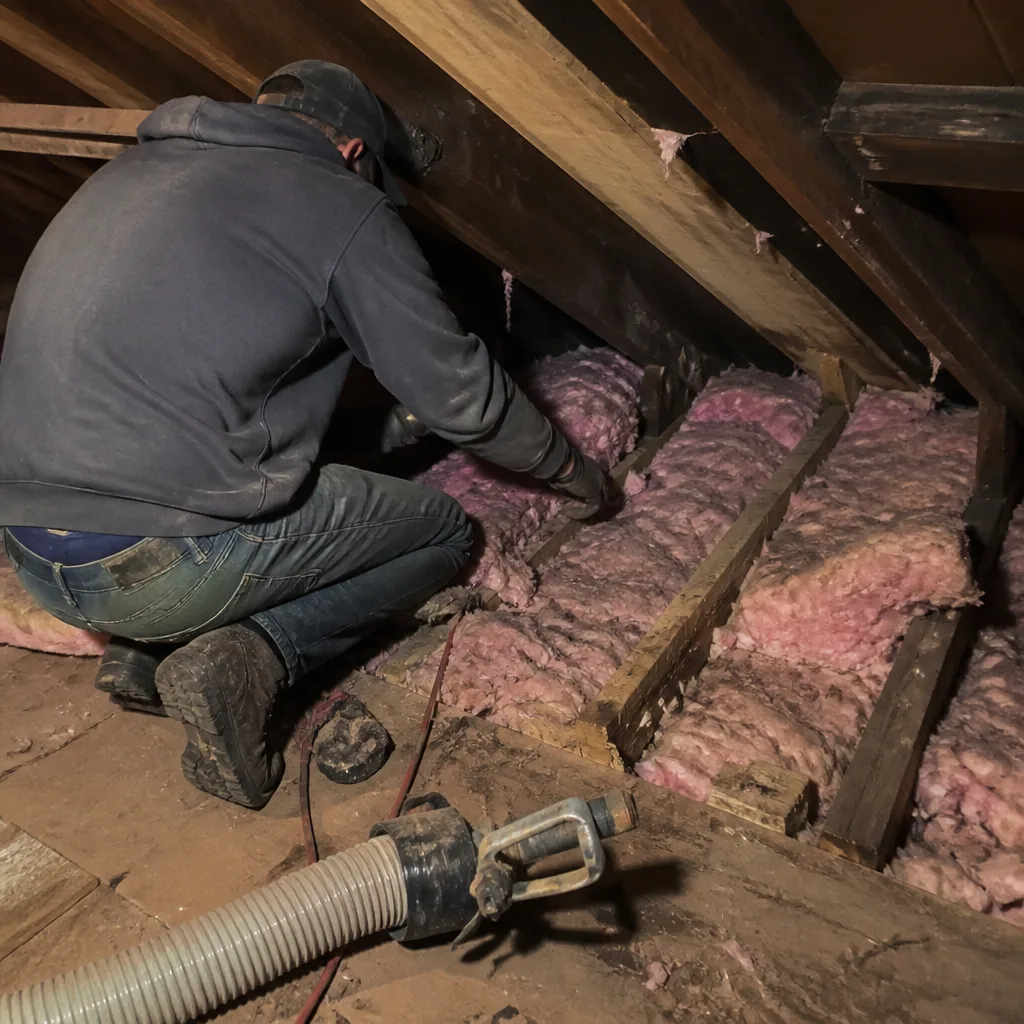 Before
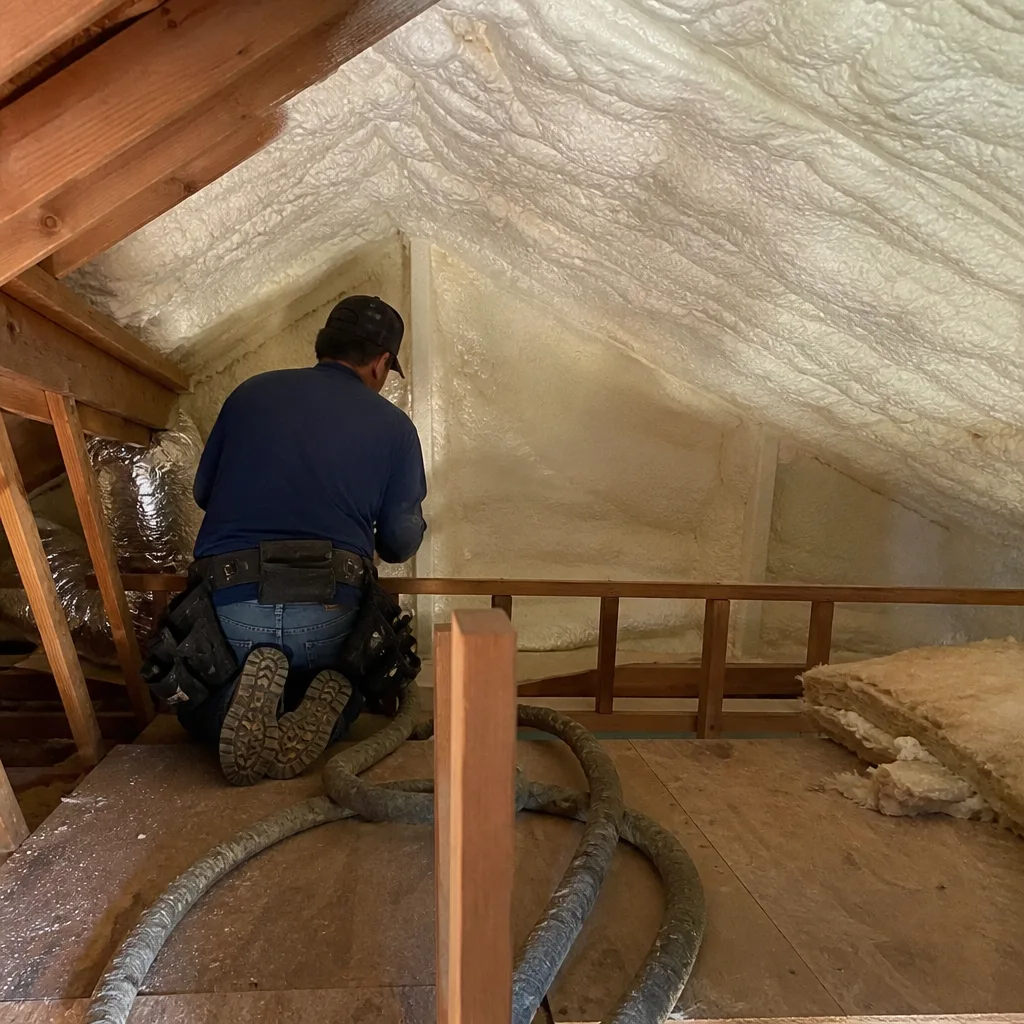 After
AfterStep 1: Verify the Right CSLB License Classification
Every legitimate insulation contractor in California carries a license from the Contractors State License Board. The classification printed on that license determines what they’re legally qualified to do, and most homeowners never check it.
Here’s what the three relevant classifications actually cover:
- C-2 - Insulation and Acoustical Contractor: This is the correct classification for thermal insulation work in attics, walls, and crawl spaces. The holder has passed a trade exam covering installation methods, fire safety, and vapor retarders. For attic work in Westminster, this is what you want to see.
- C-17 - Glazing Contractor: This classification covers glass, window, and curtain-wall installation. A C-17 holder can legally install insulated glass units, but not blow fiberglass into your attic. Some contractors operate under this classification for window replacement jobs that include “insulation” as a side task. That’s a mismatch.
- B - General Building Contractor: A B-license holder can perform insulation work only if it’s part of a larger structural project. A standalone attic insulation job falls outside their legal scope unless they’re subcontracting to a C-2. Ask who holds the C-2 if the person selling you the work carries a B.
To verify, go to cslb.ca.gov and use the Instant License Check tool. Enter the contractor’s license number and confirm three things: the classification matches the work, the status reads “Active,” and the workers’ compensation insurance section shows coverage (or a valid exemption certificate for sole proprietors with no employees). In Westminster, we’ve encountered homeowners who discovered their “insulation contractor” was operating on a suspended license only after the job went wrong. The check takes 90 seconds. Do it before you sign anything.
One more detail: ask for the name of the qualifier on the license. This is the person who passed the CSLB exam and legally oversees the work. If the person selling you the job can’t name the qualifier, that’s a signal the operation may be using a rented license, a practice the CSLB has been cracking down on in Orange County.
Step 2: Ask the Five Air-Sealing Questions
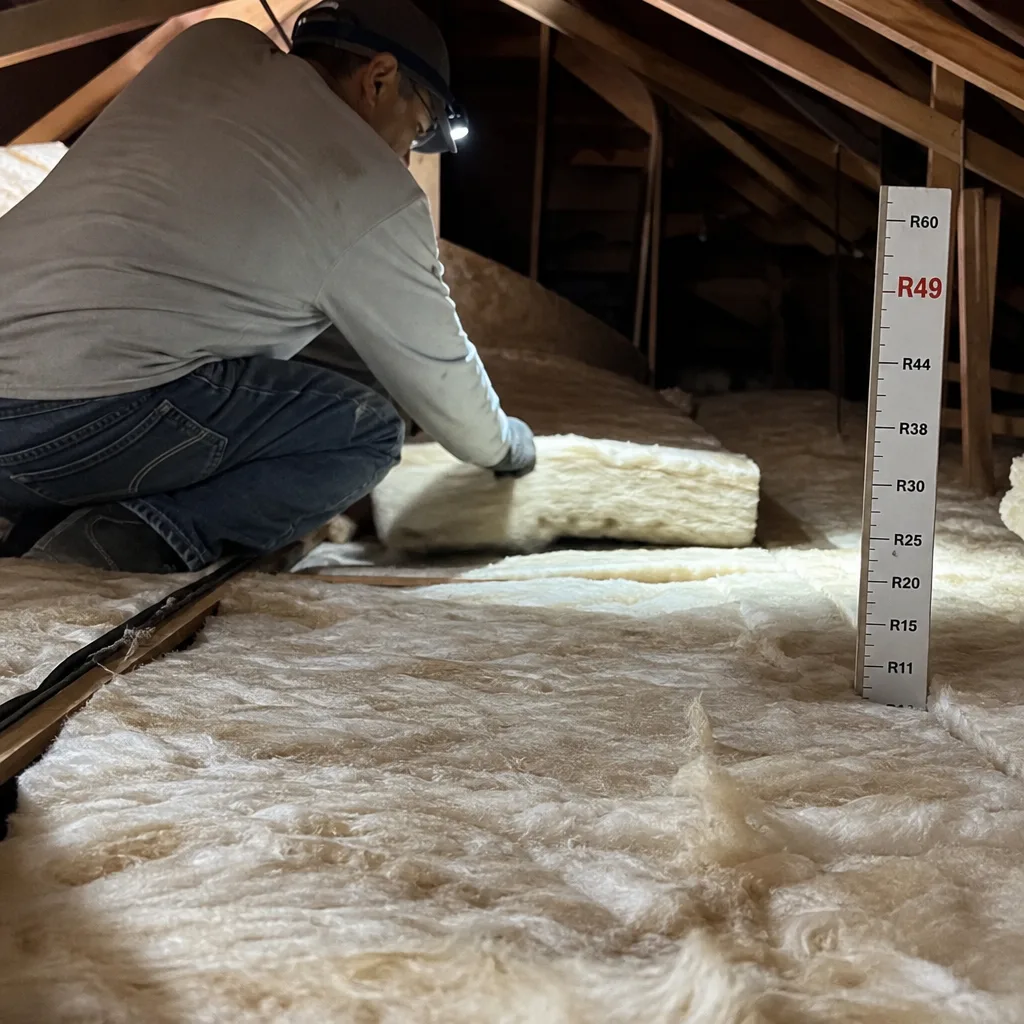
Most insulation failures in Westminster homes aren’t insulation failures at all. They’re air-sealing failures. When a contractor blows R-38 fiberglass over an attic floor with unsealed top plates, can lights, and plumbing penetrations, the insulation acts like a filter. Conditioned air escapes through the gaps, carrying moisture and dust with it. The insulation gets dirty, compressed, and ineffective within a few years.
These five questions separate contractors who understand building science from those who sell product by the bag:
- “Do you air-seal the attic floor before installing insulation?”
Honest answer: “Yes, we seal all top plates, electrical penetrations, can lights, chimney chases, and duct boots with fire-rated caulk or foam before any insulation goes in.”
Warning sign: “We can add air sealing as an upgrade if you want better performance.” - “What specific locations do you seal?”
Honest answer: A list that includes top plates (the horizontal framing member where walls meet the ceiling), recessed can lights, plumbing and electrical penetrations, bathroom fan housings, and the attic hatch perimeter.
Warning sign: “We spray some foam around the big holes” or no specific list at all. - “Do you perform a blower-door test before and after the work?”
Honest answer: “Yes, we test before to establish a baseline, then test after to verify our air-sealing work. You get both numbers in writing.”
Warning sign: “We don’t usually do that” or “You can feel the difference when we’re done.” - “What blower-door result do you guarantee?”
Honest answer: A specific percentage reduction (we typically see 30-50% reduction in CFM50 on Westminster homes built 1960-1990) or a target ACH50 for the home’s size and age.
Warning sign: “We’ll improve it” with no number attached. - “If the post-test numbers don’t meet your target, what happens?”
Honest answer: “We come back and find the leaks we missed, at no charge, until we hit the target we quoted.”
Warning sign: Silence, or “The insulation is installed correctly, so the job is complete.”
In Westminster’s climate, the marine layer keeps humidity elevated for months. Unsealed attic floors let that moisture migrate into insulation, where it reduces R-value and can support mold growth in winter. A contractor who treats air sealing as standard scope, not an upsell, understands this. One who doesn’t is selling you a product, not a performance outcome.
Step 3: Demand a Written Scope of Work
Under Haven Standard Clause 1, every job begins with a written price, a written scope, and a written warranty before anyone lifts a tool. This isn’t paperwork. It’s the only document that defines what you actually bought. We’ve reviewed competitor quotes in Westminster that listed “attic insulation” as a single line item with a dollar amount. That’s not a scope. That’s a price tag.
A proper written scope for insulation work must include these elements:
| Element | What It Specifies | Why It Matters |
|---|---|---|
| R-value target | The thermal resistance to be achieved, e.g., “R-38 blown fiberglass per Title 24 requirements” | Prevents substitution with lower-performing material; R-value degrades if installed at insufficient depth or density |
| Product name and density | Manufacturer and product line, e.g., “Owens Corning AttiCat blown-in fiberglass, 0.5 lbs/ft² density” | Different products have different coverage rates, settling characteristics, and fire ratings; density affects R-value per inch |
| Air-sealing locations | Specific building components to be sealed, with materials specified | Without this, air sealing becomes discretionary; “seal penetrations” means nothing enforceable |
| Preparation work | Existing insulation removal, cleaning, rodent proofing, baffle installation | Westminster homes with original 1960s insulation often need removal before new material can be installed correctly |
| Post-job verification method | Blower-door test, thermal imaging, or other documentation | The only proof the job performed as designed; without it, you’re buying a promise |
| Title 24 compliance documentation | HERS verification or Certificate of Installation for new construction and major alterations | Required for permit compliance in California; absence can block final inspection or resale disclosure |
Ask for the scope before you agree to price, not after. A contractor who won’t put specifications in writing before you sign is a contractor who reserves the right to change them later. At Topside Attic Insulation Westminster home, we deliver the written scope, the warranty terms, and the fixed price as a single document. No work starts until the homeowner has all three.
Step 4: Know How to Read a Blower-Door Report
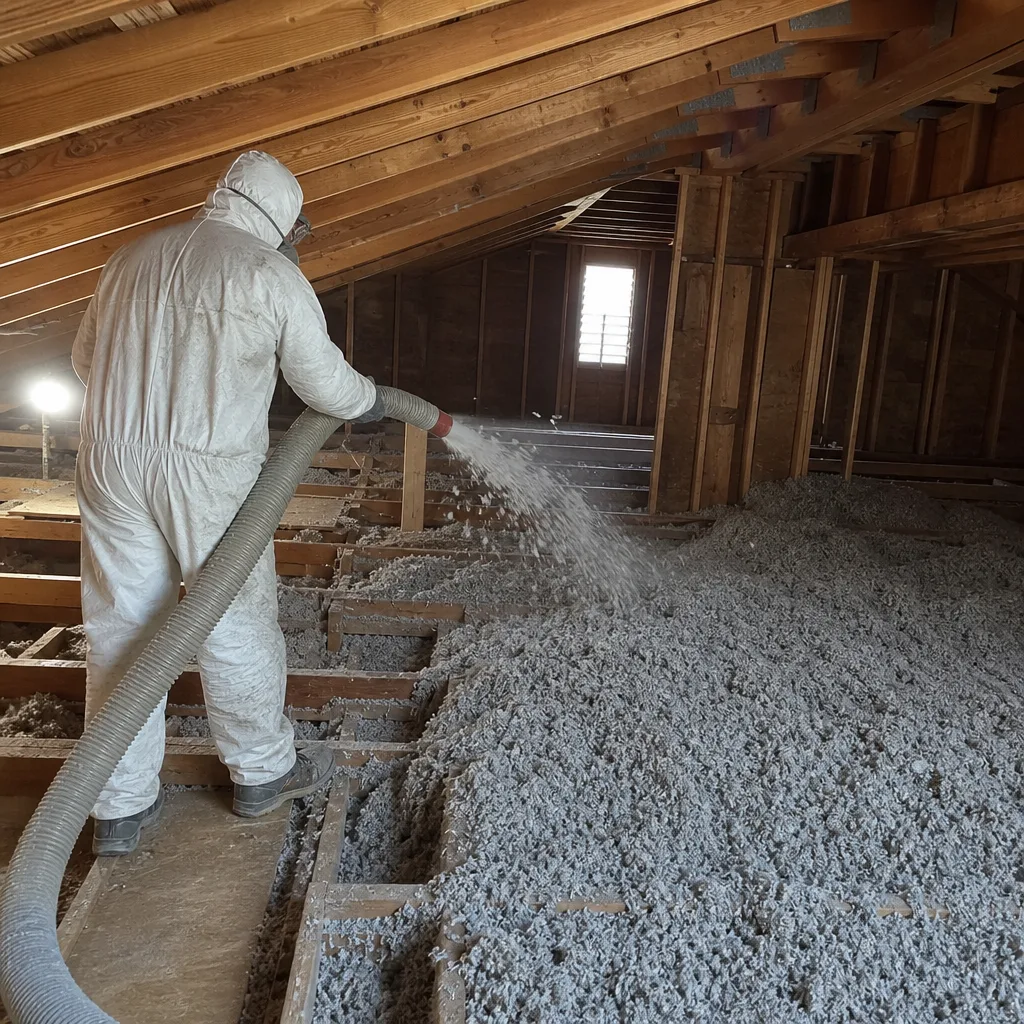
The blower-door test is a pressurization measurement that shows, in one number, how much air your building envelope is losing. A powerful fan mounts in an exterior door frame, depressurizes the house to 50 Pascals, and measures the airflow required to maintain that pressure difference. The result is your home’s leakage rate at standardized test conditions.
Three numbers appear on a typical report. Here’s what they mean and how to evaluate them:
CFM50 (Cubic Feet per Minute at 50 Pascals): The raw airflow through leaks. A typical 1,500-square-foot Westminster home built in the 1970s might read 3,500-5,000 CFM50 before air sealing. After proper sealing and insulation, we’d expect 2,000-3,000 CFM50, depending on the home’s original construction and how many windows and doors it has. The absolute number matters less than the percentage reduction. A contractor claiming success should show you both numbers.
ACH50 (Air Changes per Hour at 50 Pascals): CFM50 converted to house volumes per hour. This normalizes the result for home size. The 2022 California Energy Code sets maximum ACH50 for new construction at 5.0 in most climate zones. Existing homes are harder to tighten, but a contractor doing comprehensive air sealing should achieve significant improvement. Ask what ACH50 target they’re designing toward.
ELA (Equivalent Leakage Area): The cumulative size of all leaks if they were combined into one hole. A pre-sealing ELA of 400 square inches means your home has the equivalent of a 20-inch by 20-inch hole open to outside, continuously. After sealing, that might drop to 200 square inches. This number helps visualize the scale of the problem.
What to watch for: Some contractors run a single blower-door test after the work and present it as proof of improvement. Without the pre-work baseline, that number is meaningless. Others test at non-standard pressures or skip the depressurization protocol, producing numbers that can’t be compared to industry standards. A legitimate report shows test date, technician name, equipment calibration date, indoor and outdoor temperatures, and both pre- and post-work results on the same form.
At Attic Insulation in Westminster, we publish before-and-after blower-door numbers on every applicable job. The homeowner receives the original test report, not a summary. If a contractor won’t show you their test protocol or the report lacks calibration dates, ask why.
Step 5: Spot Red Flags in Insulation Quotes
Westminster’s housing stock includes everything from 1950s tract homes near Westminster Boulevard to 1980s two-stories in the Little Saigon area to newer construction south of the 405. Each has different envelope characteristics, different existing insulation conditions, and different access challenges. A quote that doesn’t account for these variables isn’t a quote. It’s a guess.
Watch for these specific red flags:
- No site visit before pricing. A contractor who quotes attic insulation over the phone based on square footage hasn’t seen your attic hatch location, your existing insulation condition, your ductwork layout, or whether your home has knob-and-tube wiring that must be addressed first. In Westminster, we’ve found homes where the attic was partially used for storage, requiring platform relocation before insulation could be installed properly. No phone quote captures this.
- R-value listed without air-sealing scope. “R-38 blown fiberglass, $X” tells you the product, not the system. Insulation performance depends on the entire assembly: air barrier, insulation, and ventilation working together. A quote that omits air sealing is quoting a component, not a solution.
- No mention of preparation or remediation. If your existing insulation is compressed, water-stained, or contaminated with rodent activity, it needs removal before new material goes in. A quote that assumes clean installation over old material will bury problems that continue to affect your air quality and thermal performance.
- Vague product descriptions. “Premium blown insulation” or “energy-efficient foam” without manufacturer, product line, and density specification allows substitution with whatever material is cheapest that week. Johns Manville, Knauf, Owens Corning, and GreenFiber each make multiple product lines with different characteristics. The specific product matters.
- No Title 24 compliance documentation. For permitted work in California, insulation installation requires a Certificate of Installation and may require HERS verification. A contractor who doesn’t mention this either plans to skip the permit or doesn’t know the requirement. Either way, you carry the risk.
- Pressure to decide immediately. “This price is only good today” or “I can only hold this material price until Friday” is urgency theatre, not business practice. Materials from major manufacturers don’t fluctuate on 48-hour cycles. A written price under Haven Standard remains valid for a defined period, typically 30 days, because it’s based on actual scope, not imaginary scarcity.
One Westminster-specific note: homes in the older neighborhoods near Beach Boulevard and Hazard Avenue often have original plaster ceilings with limited attic access. A legitimate quote accounts for the additional labor to create access, protect finished surfaces, and restore them afterward. A low quote that ignores this will either result in surprise charges or damaged finishes.
Westminster-Specific Considerations
Westminster sits in Orange County Climate Zone 8, with hot, dry summers and mild, moist winters influenced by the Pacific marine layer. This combination creates specific conditions that affect insulation strategy.
Summer attic temperatures: Unshaded asphalt shingle roofs in Westminster can reach 170°F surface temperature in August. Attic air temperatures regularly exceed 140°F. Without proper insulation and ventilation, that heat radiates through the ceiling plane, forcing air conditioning systems to run continuously. R-38 insulation in the attic floor is the Title 24 minimum, but performance depends on installation quality. Gaps, compression, or incomplete coverage create thermal bypasses that render the rated R-value meaningless.
Marine layer moisture: From May through July, and again in winter, moist ocean air pushes inland. When it contacts cooler attic surfaces, condensation forms on uninsulated ductwork and nail points. Air sealing prevents this moist air from reaching cold surfaces. Vapor retarder strategy matters too: in Westminster’s climate, interior-side vapor retarders can trap moisture, while proper attic ventilation and air sealing from the conditioned side is the preferred approach.
Title 24 and local amendments: California’s energy code applies statewide, but local jurisdictions add amendments. Westminster follows the Orange County amendment package, which includes specific requirements for cool roof compliance on re-roofing projects and may affect insulation strategy when roof replacement and attic work are combined. A contractor working regularly in Westminster should know whether your project triggers these requirements.
Neighborhood construction patterns: The tract homes built west of Bolsa Avenue in the 1950s and 1960s typically have 2×4 ceiling joists with limited depth for insulation. Achieving R-38 may require raised heel trusses, insulation dams, or dense-pack approaches. Newer construction east of the 405 generally has deeper cavities and fewer surprises, but may have complex rooflines with multiple attic spaces that each need individual treatment. A contractor who works only in one type of home may miss conditions common in the other.
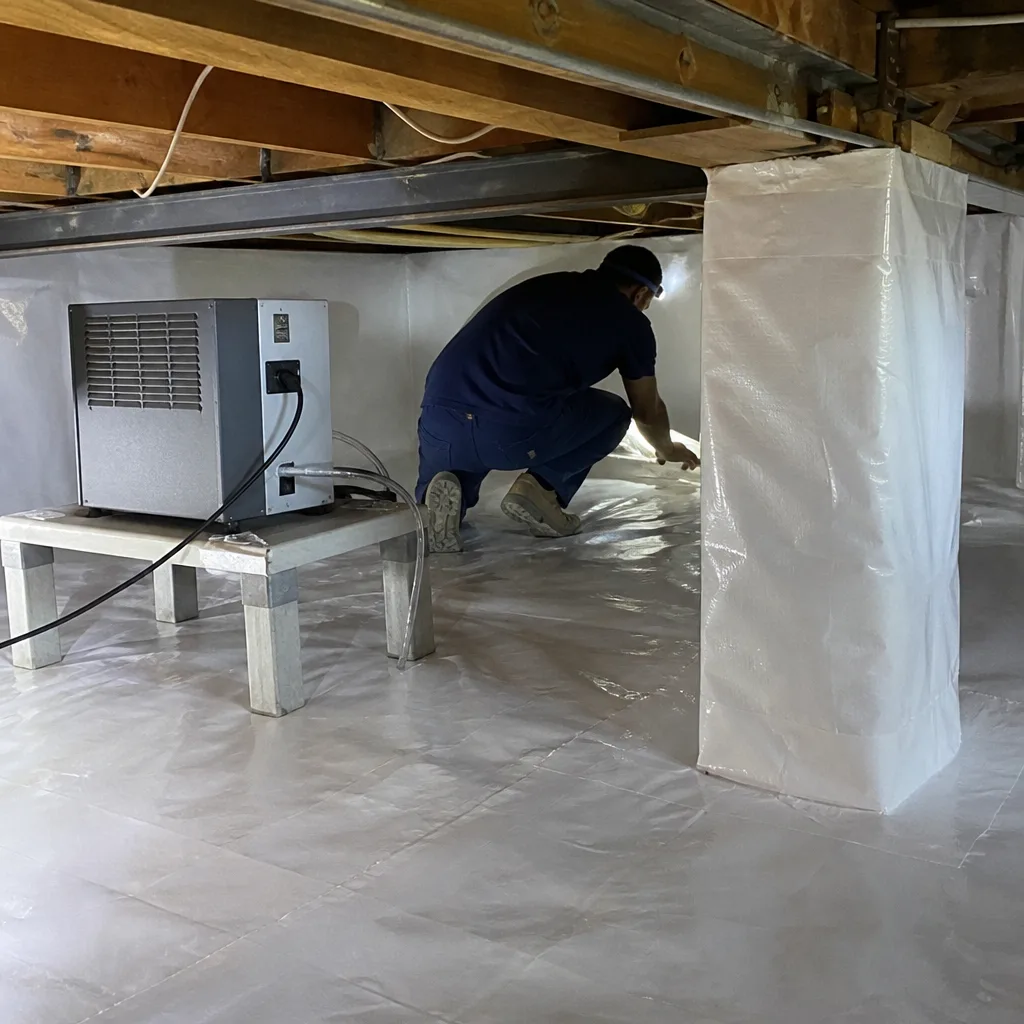
For Crawl Space Encapsulation & Vapor Barrier in Westminster, the same marine-layer moisture dynamics apply. Unsealed crawl spaces in Westminster’s older neighborhoods often show wood moisture content above 20% in winter, the threshold for fungal growth. Encapsulation with vapor barrier and conditioned air supply addresses this directly.
Common Mistakes to Avoid
- Hiring based on price per square foot alone. Insulation is sold by the bag, but performance is delivered by the system. A lower price often means less material at lower density, skipped air sealing, or no verification. In Westminster, we’ve revisited homes where a “cheap” job required complete removal and redo within five years.
- Ignoring existing insulation condition. Blowing new fiberglass over rodent-contaminated, compressed, or water-damaged old insulation traps problems and reduces new material effectiveness. The scope must address what’s there now, not just what goes on top.
- Assuming all spray foam is equivalent. Open-cell and closed-cell spray foams have different R-values per inch, vapor permeance, and fire characteristics. Spray Foam Insulation in Westminster applications must match product to location. Closed-cell on roof decks in unvented attics is common; open-cell in the same location can absorb moisture and degrade.
- Not verifying permit requirements. Insulation work that involves removal of existing material, structural modification, or changes to ventilation often requires a permit in Westminster. Unpermitted work can complicate resale, insurance claims, and warranty enforcement. Ask your contractor who pulls the permit and who schedules inspection.
- Accepting verbal warranties. A “lifetime warranty” that exists only in conversation is unenforceable. The written warranty should specify what’s covered (material, labor, or both), for how long, and what conditions void it. Our 365-Day Done Right Promise is written, with specific remedy language, because verbal promises don’t survive the first disagreement.
- Neglecting to check for electrical hazards. Westminster homes from the 1960s and 1970s may have knob-and-tube wiring or overloaded circuits in the attic. Insulation contractors disturb this space. Verify the contractor’s procedure for identifying and protecting electrical systems before work begins.
When to Call a Professional
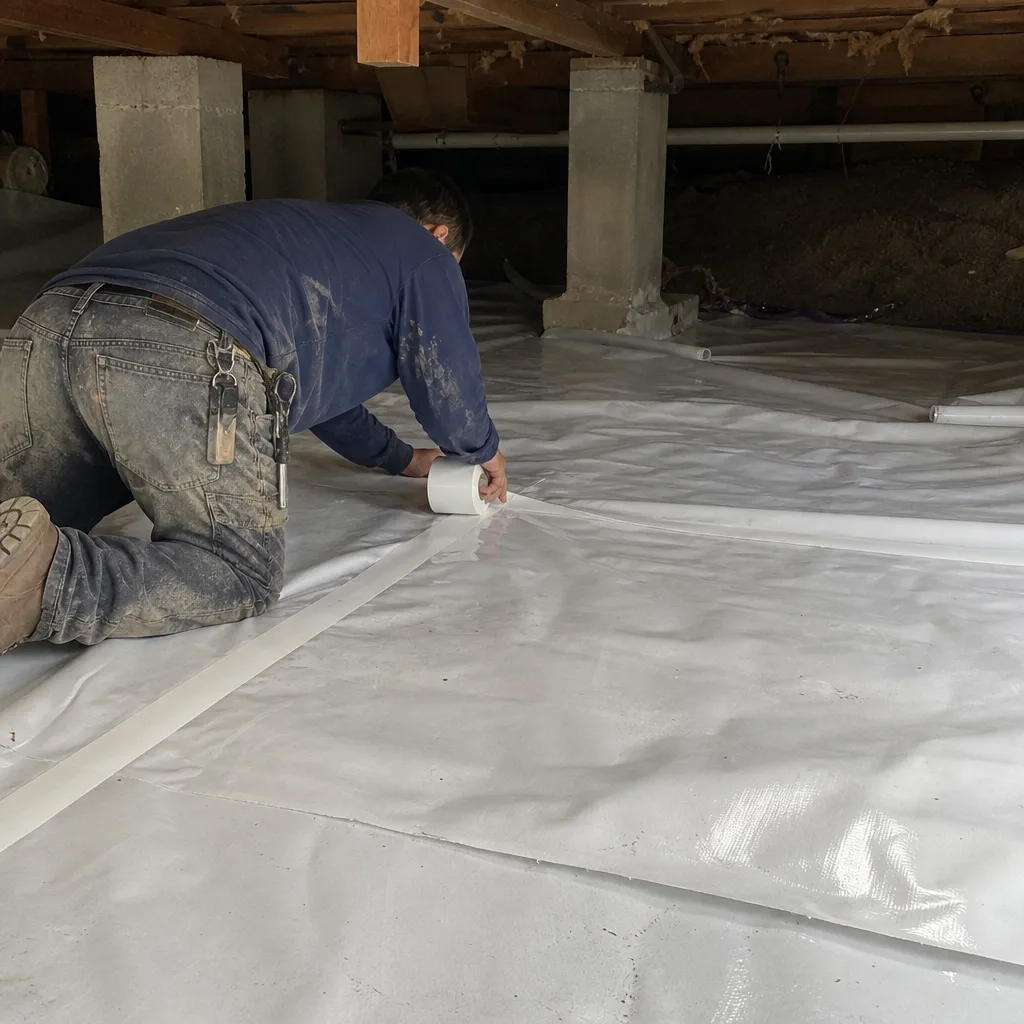
Some insulation conditions in Westminster require immediate professional assessment: visible mold on attic sheathing, water-stained insulation indicating active roof leaks, rodent infestation with contaminated material, or rooms that are more than 10°F different from the thermostat setting despite running HVAC continuously. See Insulation Warning Signs: A Westminster Homeowner’s Reference Guide for a fuller checklist. These aren’t DIY projects. Disturbing contaminated insulation without proper PPE and containment spreads particles through your home. Assessing roof leaks from inside the attic risks falls through concealed damage.
Topside Attic Insulation Westminster offers free estimates in Westminster. We’ll inspect your attic, document conditions with photos, and deliver a written scope with fixed pricing before any work is discussed. Call (562) 526-6978 to schedule. Every estimate includes a Documented Photo Record of what we found, whether you hire us or not.
Frequently Asked Questions
Most complete attic insulation jobs in Westminster run between $2,800 and $6,500 for a typical 1,200-2,000 square foot home, depending on whether existing material requires removal, whether air sealing is included in scope, and the insulation type. For detailed pricing factors, see Insulation Cost Breakdown: The Westminster Homeowner’s Reference for 2026. Spray foam applications range higher due to material cost and labor intensity. Call (562) 526-6978 for a written estimate specific to your home - estimates are free and include a Documented Photo Record.
A standard attic insulation job with air sealing takes one to two days for a typical Westminster home. Jobs requiring complete insulation removal, rodent remediation, or extensive air sealing of complex rooflines may extend to three days. We provide a specific schedule in the written scope before work begins, including arrival time and crew size.
Permit requirements depend on scope. Adding insulation over existing material in an accessible attic often does not require a permit. Removal of existing insulation, modification of ventilation, structural changes, or spray foam application typically does. We identify permit requirements during our initial inspection and include permit costs in the written price when applicable. The homeowner never faces surprise permit fees after work starts.
California Title 24 specifies minimum R-38 for attic insulation in Climate Zone 8, which includes Westminster. However, performance depends on installation quality and air sealing completeness, not just R-value thickness. A properly air-sealed attic at R-38 often outperforms an unsealed attic at R-49 because thermal bypasses negate theoretical R-value. Our written scope specifies both the R-value target and the air-sealing locations required to achieve it.
Homeowners can purchase batt insulation and install it in accessible floor joist bays, but blown-in and spray foam applications require specialized equipment and training. More importantly, most homeowners lack the diagnostic tools to identify air leakage paths or verify results. In Westminster’s climate, the performance gap between DIY and professionally air-sealed installation typically exceeds any material cost savings. For safety, we do not recommend homeowners enter attics with active electrical hazards, limited structural decking, or signs of rodent contamination.
Signs of underperforming insulation include rooms that are uncomfortable despite HVAC operation, high energy bills relative to similar homes, ice dams on roof edges in rare cold snaps, or visible gaps and compression in attic insulation. The definitive assessment is a blower-door test combined with thermal imaging, which reveals air leakage and insulation gaps invisible to visual inspection. We provide this assessment as part of our home energy audit service.
The Bottom Line
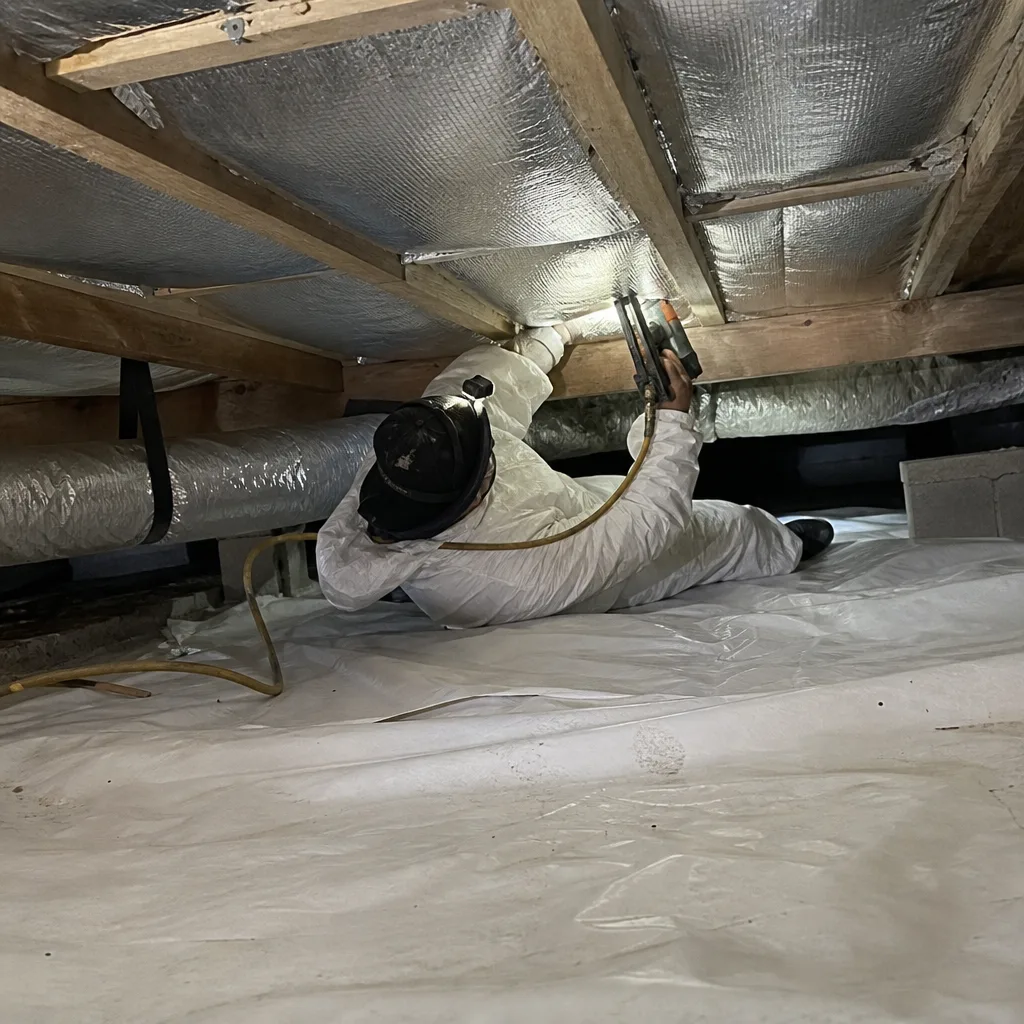
Hiring an insulation contractor in Westminster requires more than checking a license number. The CSLB verifies minimum competence, not performance commitment. The questions that matter are whether the contractor air-seals before insulating, whether they verify results with blower-door numbers, and whether every promise exists in writing before work starts. Demand specificity in product, scope, and verification. Reject quotes that price by phone, omit air sealing, or present R-value as the only metric. The homes we’ve sealed and insulated since 2016 share one trait with the best outcomes: homeowners who knew what to ask before they hired. Browse more guides & resources to prepare for your project.
Written by Wes Okafor, Owner at Topside Attic Insulation Westminster, serving Westminster since 2016.