
Attic Insulation Top-Up in Westminster, CA
An attic insulation top-up adds a new layer of blown-in insulation over your existing material to bring the total depth up to current energy-code levels – most Westminster homes built before 2005 are sitting at R-19 or less when R-38 is the current California Title 24 minimum for this climate zone. The job typically runs one to three hours for a standard 1,200-to-1,800-square-foot attic and costs less than a full removal-and-replacement. But a top-up done without addressing air leaks first is money that underperforms, which is why our process starts with sealing before any material goes in.
If you’ve noticed your energy bills climbing through Westminster’s June-through-September heat stretch, or the second floor of your home runs noticeably warmer than the first, your attic’s R-value is likely the reason. The good news: in most cases, what’s already up there is still usable – you just need more of it, layered over a properly sealed attic floor. You can reach us at (562) 526-6978 for a written price before any work starts, or read through this page first to understand exactly what the job involves. Our full Attic Insulation in Westminster page covers the broader service line if you’re weighing your options.
When You Need an Attic Insulation Top-Up
Not every attic needs a full tear-out. A top-up is the right call when the existing insulation is dry, uncontaminated, and still structurally intact – just thin. These are the situations we see most often in Westminster:
- Your home was built before 2000 and has never had insulation added. Tract homes in Westminster’s older neighborhoods near Bolsa Avenue and the 405 corridor were often built to the code minimum of their era – R-11 or R-19 batts that are now 25 to 40 years old and compacted by 10 to 20 percent of their original thickness. Compaction alone can drop effective R-value by 15 to 25 percent even without moisture damage.
- Your summer cooling bills are higher than your neighbors’ in comparable homes. Westminster sits in an inland-influenced coastal zone where July and August afternoons routinely reach the low 90s. A radiant gain load that isn’t blocked by adequate attic insulation forces your air conditioner to run longer cycles. A depth check often reveals 3 to 5 inches of settled blown-in when there should be 10 to 12.
- You had insulation installed more than 15 years ago and never had it measured since. Blown cellulose and fiberglass both settle over time. A job that measured R-30 at install may read R-22 today without any visible damage.
- Your attic has existing blown-in that’s intact but thin, with no signs of rodent activity or moisture intrusion. If the material is clean and dry, topping it up is straightforward and costs a fraction of full replacement. We’ll document the existing depth at multiple points before anything is added.
- You received a home energy audit flagging your attic as the primary source of heat gain. In Westminster’s climate, attic heat gain accounts for 25 to 40 percent of cooling load in under-insulated homes. If the audit report names the attic, a top-up is typically the fastest return on investment.
- You’re preparing to sell and the buyer’s inspector flagged inadequate insulation depth. This is a common repair request in Westminster real estate transactions. A documented top-up – with before-and-after depth measurements and a photo record – gives you a paper trail to hand to escrow.
Our Attic Insulation Top-Up Process
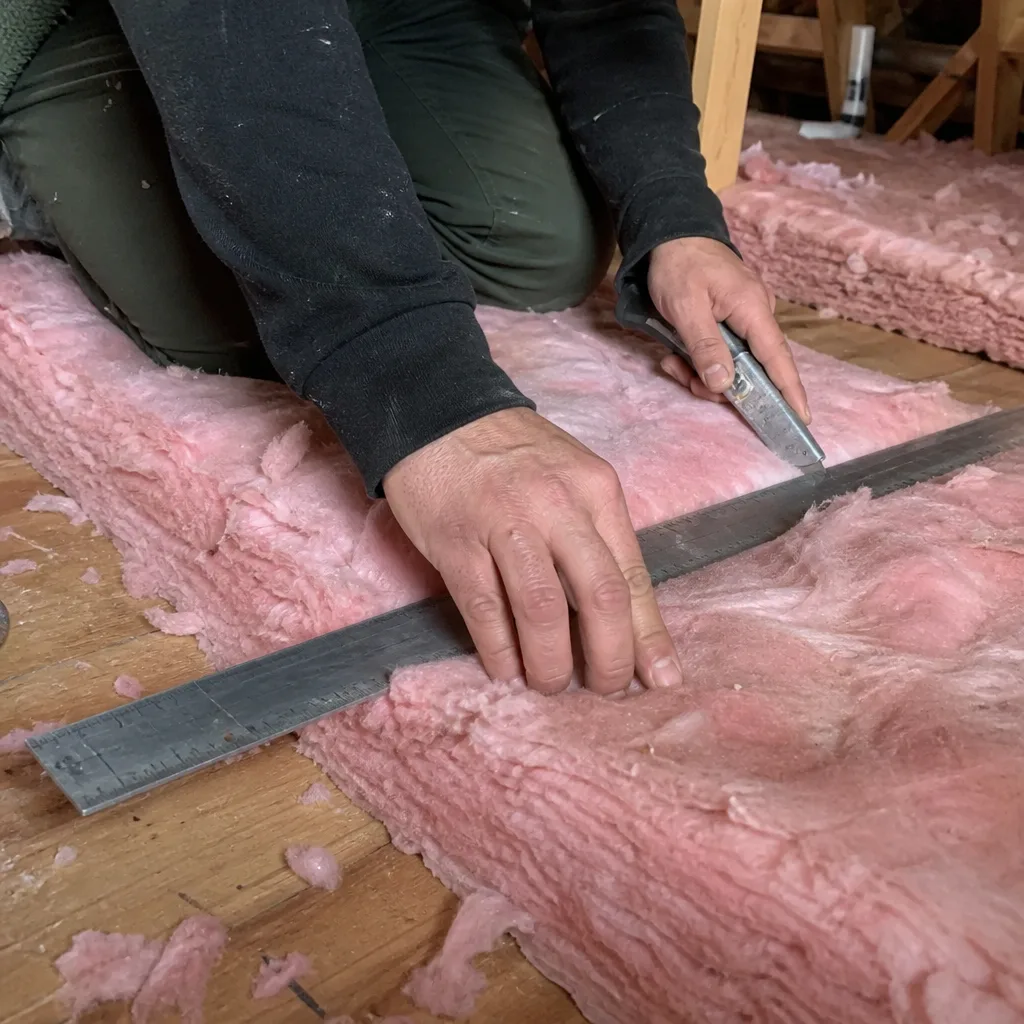
We run every top-up job through the same sequence. Air sealing is not optional and it is not an upsell – it is the first physical step, every time, no exceptions. Blowing insulation over an unsealed attic floor traps conditioned air losses under a blanket rather than stopping them. We’ve measured homes in Westminster where unsealed top plates and can-light penetrations were responsible for 30 to 45 percent of the building’s total air leakage. Covering that up with more insulation doesn’t fix it.
- Written scope and price before any work starts. Under Haven Standard Clause 1, you receive a flat written price and a written scope of work before anyone touches a tool. The scope names the target R-value, the material we’ll use, and which air-sealing locations will be addressed. No verbal estimates, no price-after-the-fact surprises.
- Blower-door baseline reading. A blower-door test – a pressurization measurement that shows, in a single CFM50 figure, how much conditioned air your building envelope is currently losing – is run before we open the attic hatch. This number becomes the “before” in your documented report. In Westminster homes we test regularly, we see readings ranging from 2,800 CFM50 in tighter 2000s-era builds up to 5,500 CFM50 or higher in older homes with original can lights and unsealed top plates.
- Attic floor air sealing. Top plates, pipe penetrations, wire chases, recessed-light housings, and HVAC boot perimeters are sealed with two-component spray foam or fire-rated caulk, depending on the penetration type. This step happens before any insulation is added – no exceptions, no material goes in until the sealing is complete and inspected.
- Depth measurement and documentation of existing insulation. We measure existing depth at a minimum of eight points across the attic floor, document those readings with photos, and calculate how much additional material is needed to reach the target R-value. This record is part of the Documented Photo Record you receive when the job closes.
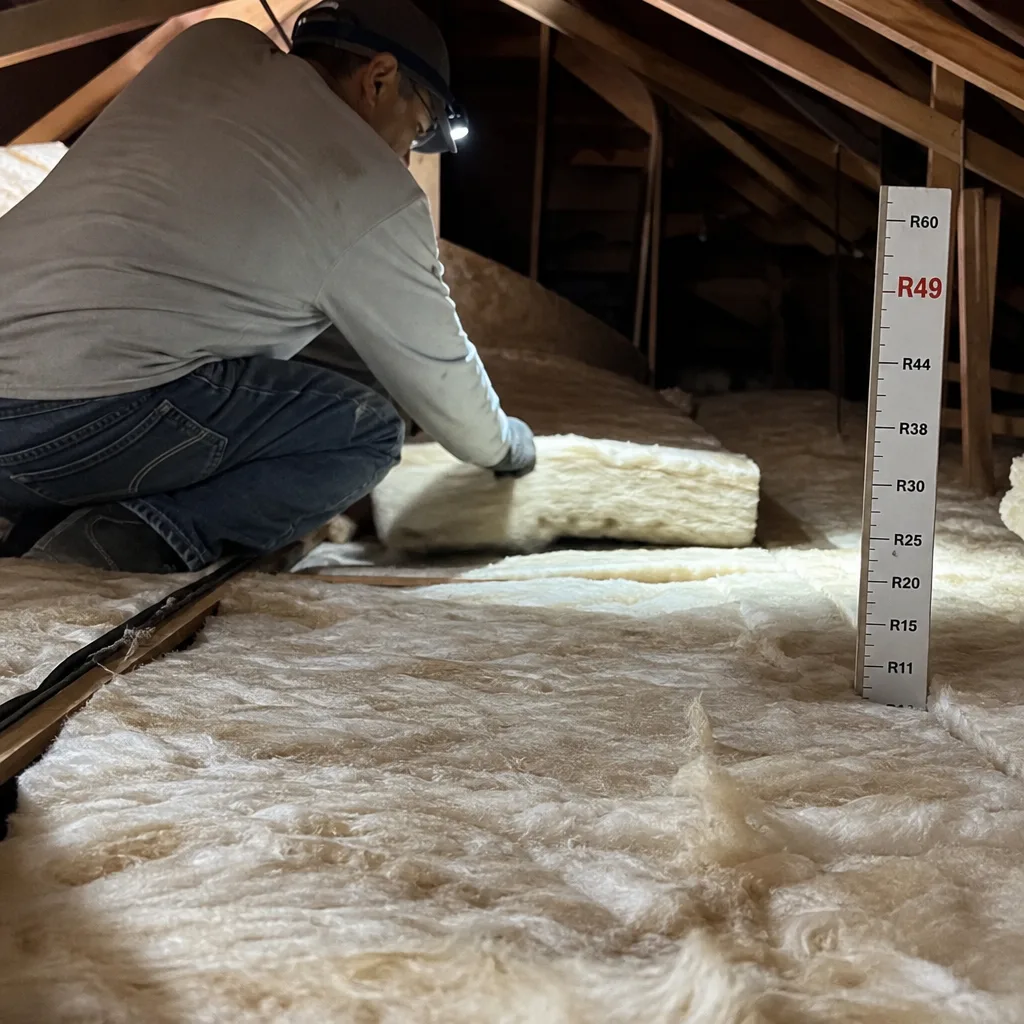
- Blown-in insulation installation. We add blown cellulose or blown fiberglass – most Westminster top-up jobs use GreenFiber blown cellulose or Owens Corning ProPink blown fiberglass, depending on the existing material and your preference – to the specified depth. Depth rulers are installed in the attic for any future verification. We do not use proprietary materials that lock you into a single vendor for any future service.
- Post-job blower-door reading and documentation. The blower-door runs again after the attic is closed. You receive both numbers in writing: what the home read before sealing, and what it reads after. The before-and-after blower-door report, the depth documentation, and the full photo record are delivered to you before we leave the driveway.
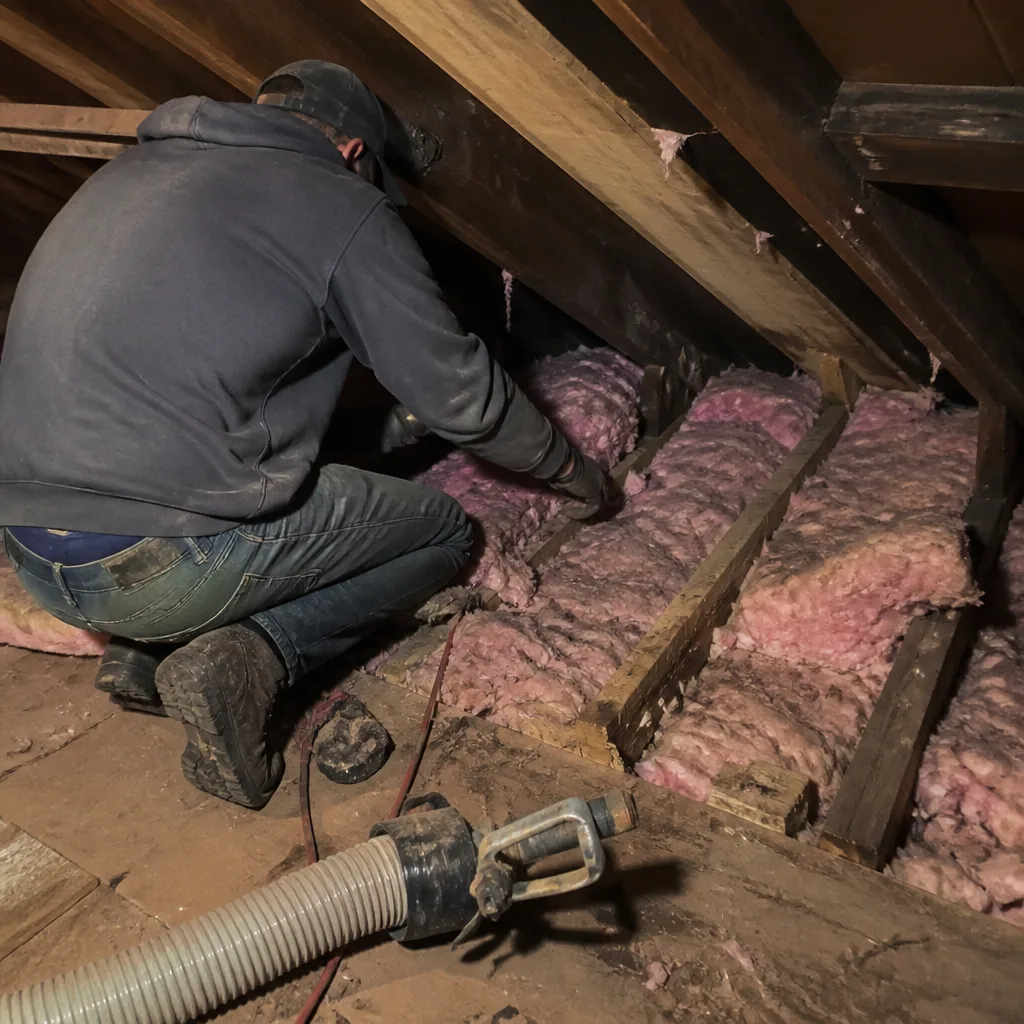 Before
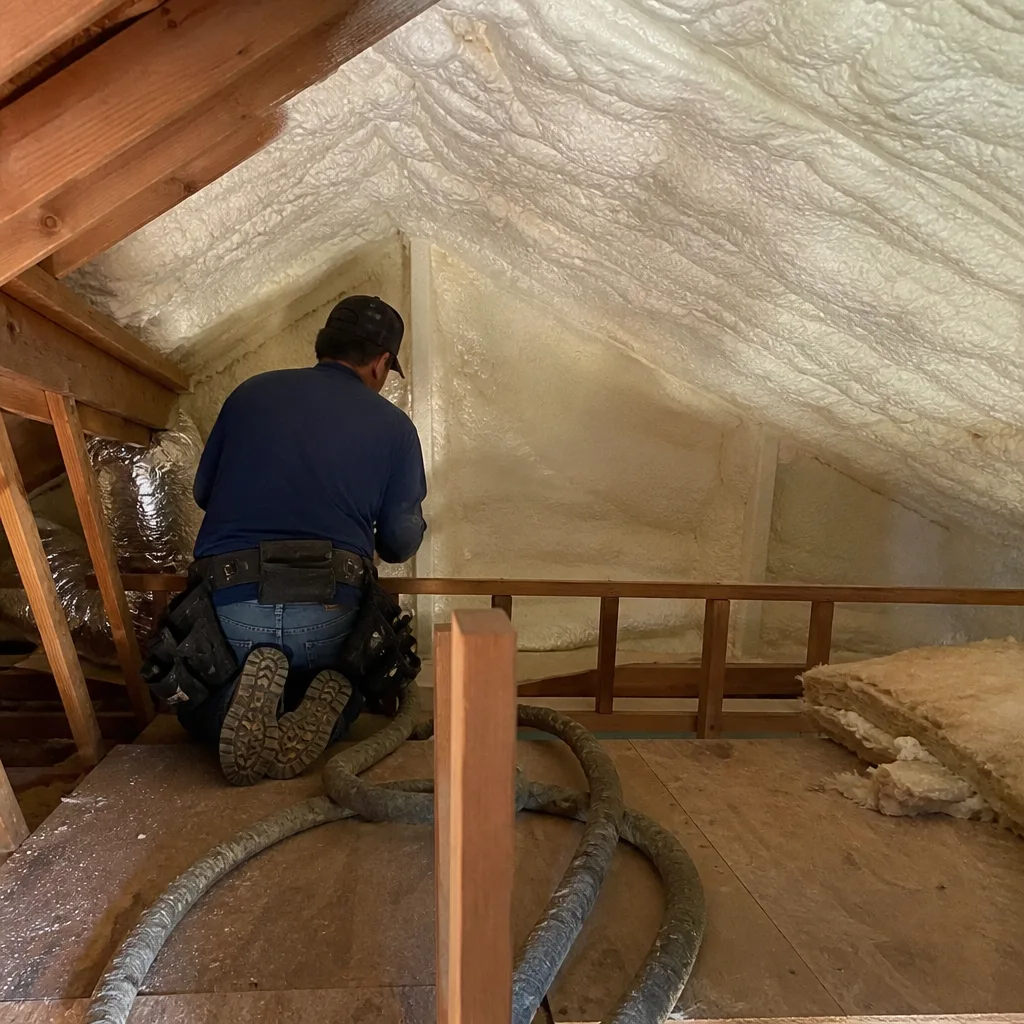 After
AfterAttic Insulation Top-Up Pricing in Westminster
Most attic insulation top-up jobs in Westminster run between $850 and $2,400 for a single-story home with an accessible attic between 1,000 and 2,000 square feet. Two-story homes with larger attic footprints or complex layouts typically land between $1,800 and $3,500. These ranges include the air sealing step – it is built into the price, not added later.
What moves the number:
- Starting R-value vs. target R-value. A home sitting at R-11 that needs to reach R-38 requires significantly more material than one going from R-22 to R-38. Current California Title 24 standards call for R-38 in Climate Zone 8, which covers Westminster. Some utility rebate programs push the recommended target to R-49.
- Attic accessibility and layout. Attics with low pitches (under 18 inches at the eaves), multiple HVAC units, or significant ductwork require more time to navigate safely. Westminster’s older ranch-style homes along Trask Avenue and Westminster Boulevard often have attic configurations that take longer to cover evenly.
- Volume of air sealing needed. A home with 15 open can lights and unsealed top plates at every interior wall will take longer to seal than a newer home with a simpler penetration pattern. We count the penetrations during the initial assessment and include that labor in the written price before work starts.
- Material choice. Blown fiberglass from Owens Corning and blown cellulose from GreenFiber or Johns Manville carry slightly different material costs per square foot. We’ll show you both options and the cost difference in the written scope.
- Existing insulation condition. If we find moisture damage, rodent contamination, or material that needs partial removal before a top-up can proceed, that changes the scope. We document the finding with photos and present the revised scope in writing before any additional work is authorized.
A written price is generated after the assessment – not before, and not verbally. Under Haven Standard Clause 1, the number you see on paper is the number you pay. We also offer a Free Second Opinion on any written estimate you’ve already received: bring us the competing quote and we’ll read it with you, line by line.
Call (562) 526-6978 to schedule your assessment. There’s no pressure to book on the call – the written price comes after the attic visit, and you decide from there.
FAQs – Attic Insulation Top-Up in Westminster
Can I just add insulation on top of what’s already there, or does the old material need to come out first?
In most cases, you can add on top of existing insulation – as long as it’s dry, uncontaminated, and not compressed from rodent activity or moisture damage. When we assess your attic, we measure the existing material at multiple points and photograph its condition. If it’s clean and intact, a top-up is the right move and costs significantly less than removal and replacement. If we find evidence of moisture, pest activity, or mold, we’ll document it with photos and present a revised scope before any additional work starts. We don’t make that call verbally – it goes in writing so you can review it.
Will topping up my insulation actually lower my energy bills in Westminster’s climate?
Yes, and the before-and-after blower-door numbers we document give you a way to verify the change rather than just taking our word for it. In Westminster’s climate – hot, dry summers with afternoon temperatures that regularly push into the low 90s and a marine layer that can trap heat in an under-ventilated attic – going from R-19 to R-38 typically reduces attic-sourced heat gain by 30 to 50 percent. The actual bill impact depends on your HVAC system’s efficiency and your usage patterns, but the insulation change is measurable in CFM50 terms before you see it on a utility statement. Homes we’ve tested in the 92683 and 92684 zip codes have gone from blower-door readings above 4,500 CFM50 to below 2,800 after a top-up with air sealing included. Call (562) 526-6978 for a written price on your specific home.
How long does an attic insulation top-up take in Westminster?
For a standard single-story home between 1,200 and 1,800 square feet, the full job – assessment, air sealing, and blown-in installation – runs three to five hours in most cases. Larger attics, low-clearance sections, or high volumes of air-sealing work can push that to a full day. We give you the time estimate in the written scope before work starts, and we send a technician name and a text when they’re on the way, under Haven Standard: Arrive on Schedule.
What R-value do I need for my attic in Westminster, CA?
California Title 24, the state’s building energy standard, requires R-38 for Climate Zone 8 – which covers Westminster. If you’re aiming for a utility rebate from Southern California Edison or SoCalGas, some programs require R-49 to qualify for the full incentive. We’ll confirm the current rebate requirements with you during the assessment and note the target R-value in the written scope. The measurement rulers we install in your attic after the job allow any inspector or future contractor to verify the depth without disturbing the material.
Is an attic insulation top-up enough, or do I also need attic air sealing?
Air sealing is not a separate add-on at Envelope Insulation Co. – it is built into the top-up process and included in the written price. Blowing insulation over an unsealed attic floor slows conductive heat transfer but does nothing for air infiltration. In Westminster homes with older can lights, open top plates at interior partition walls, and unsealed plumbing and wire penetrations, air leakage can account for 30 to 45 percent of total conditioned-air loss. We seal those locations before any blown-in material goes down. The before-and-after blower-door readings document exactly what that sealing step accomplished.
Why Westminster Homeowners Choose Envelope Insulation Co.
Since 2016, we’ve sealed and insulated more than 9,000 homes under The Haven Standard – every one with a written price before work started and a documented photo record when the crew left. We don’t subcontract top-up jobs and we don’t send unmarked vans. Every technician is background-checked and uniformed, and a live person answers at (562) 526-6978 any time you call – no voicemail loop, no callback window measured in business days.
The materials we use – GreenFiber, Owens Corning, Johns Manville, and others in our standard rotation – are sourced from manufacturers you can look up independently. We don’t use proprietary or house-brand products that tie you to us for future service.
The 365-Day Done Right Promise covers every completed job: if anything about the work isn’t right within a year of completion, we make it right. That promise is written into the job documentation, not just said on a page like this one.
Westminster’s older housing stock – much of it built between 1955 and 1985 – was never designed to hold conditioned air the way California’s current energy code expects. A top-up done correctly, with air sealing first and documented R-value delivery after, is one of the highest-return envelope improvements available at this price point. Our home page covers the full range of building-envelope services we provide if you’re working through a broader energy improvement plan.
To get a written price for your Westminster attic, call (562) 526-6978. The assessment is scheduled at your convenience, the price comes in writing after the attic visit, and no work starts until you’ve reviewed and approved the scope. That’s Haven Standard Clause 1 – and it applies to every job, no exceptions.
Written by Wes Okafor, Owner at Topside Attic Insulation Westminster, serving Westminster.