
Attic Baffles & Ventilation Prep in Westminster, CA
Attic baffles – also called rafter vents or ventilation channels – are rigid cardboard or foam inserts that hold a clear airway open between the attic floor insulation and the underside of your roof deck, from the soffit vent all the way up toward the ridge. Without them, blown-in or batt insulation slides forward and blocks the soffit, killing the passive airflow the roof deck needs to stay dry and the attic needs to stay within a few degrees of outside air temperature. In Westminster, where the marine layer keeps humidity elevated through the spring and coastal winds shift direction daily, a blocked soffit is one of the fastest ways to build up moisture in a low-slope residential attic.
Ventilation prep is the phase that comes before any insulation goes in: we confirm soffit vent area, measure net free area against the square footage of conditioned space below, check for blocked or missing vents, and install baffles in every rafter bay that needs one. This is standard practice at Topside Attic Insulation Westminster, and it’s part of how we do every attic insulation job – not a line item you have to ask for. You can read more about the full scope on our Attic Insulation in Westminster page, or call (562) 526-6978 to ask Wes Okafor directly what we found in the last attic we worked on in your neighborhood.
The short answer for anyone researching this: baffle and ventilation prep work in a typical Westminster home runs between $180 and $420 as a standalone scope, or is folded into the written price of a full Attic Insulation services project at no additional line charge when both scopes are done together. You’ll have that number in writing before anyone enters the attic.
When You Need Attic Baffles & Ventilation Prep
- Your attic insulation was blown in years ago and nobody mentioned baffles. This is common in Westminster homes built in the 1960s and 1970s, when code didn’t require ventilation channels. The insulation has likely migrated forward and compressed against the soffit, and you’re losing both R-value and airflow at the same time.
- You’re seeing moisture staining or dark streaks on the underside of roof sheathing near the eaves. That pattern almost always points to blocked soffit vents. Warm, humid air from the living space rises, hits the cold roof deck, and condenses – then sits there because there’s no airflow to carry it out.
- Your energy bills are higher in summer than neighbors with similar square footage. Westminster’s July afternoons push attic temps well past 130°F when ventilation is blocked. A properly vented attic running close to outside air temperature is meaningfully cooler, and that difference shows up in air conditioning runtime.
- A previous contractor added blown-in insulation and your upstairs rooms still feel stuffy. If baffles weren’t installed before the blow, the insulation is likely acting as a dam at the eave line. We see this regularly in the Sigler Park and Westminster Village areas of the city, where older ranch-style homes got energy upgrades in the 2000s without proper ventilation prep.
- You’re replacing your roof and the contractor flagged wet or soft sheathing near the eaves. This is a baffle problem that’s been running for years. Fixing the ventilation path at re-roof time – or immediately after – stops the cycle before it restarts.
- You have a new addition or bedroom conversion and no one re-evaluated attic airflow. Changing the conditioned footprint changes the 1:150 ventilation ratio the California building code uses as its baseline. An addition that expanded your living space by 300 square feet may have pushed your attic into a ventilation deficit without anyone noticing.
Our Attic Baffles & Ventilation Prep Process
-
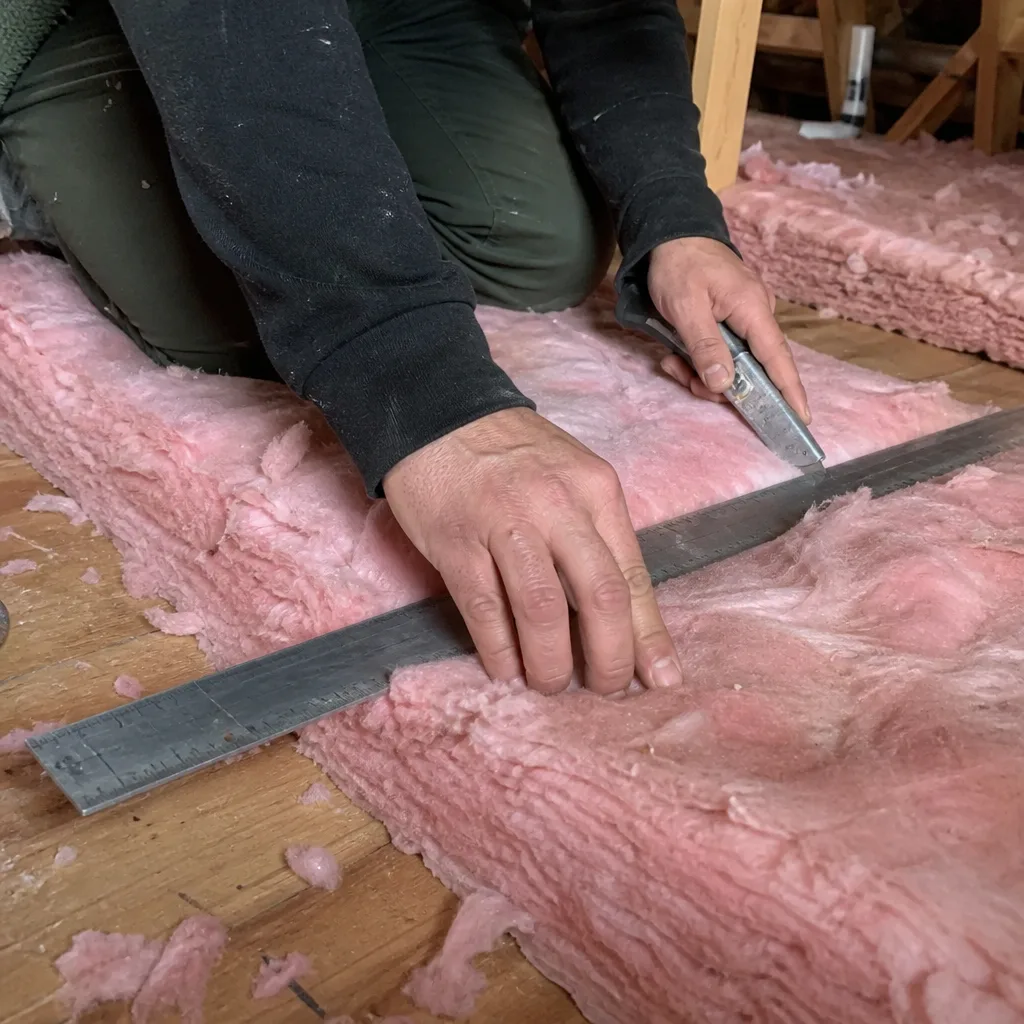
Initial Attic Assessment and Documentation
Before any material goes in, we photograph the existing attic condition from hatch to ridge: current insulation depth, soffit vent locations, any visible moisture damage, and the rafter bay situation at the eave line. This Documented Photo Record is yours at the end of the job regardless of what we find – it’s included on every visit, not something you request later. We also note the attic’s total square footage and calculate the net free area (NFA) of existing soffit and ridge vents against it. In Westminster’s older housing stock, we frequently find aluminum soffit that was painted over during a re-skin, cutting NFA by 40% or more.
-
Written Price Before Any Work Starts
Once we know what we’re working with, we produce a flat written price – scope, materials, and labor – before anyone lifts a tool. Under Haven Standard Clause 1, that written price is non-negotiable as a starting point: you’ll know exactly what baffle installation and ventilation prep costs in your Westminster home before you agree to anything. If the attic assessment reveals additional issues (a blocked ridge vent, a missing gable screen), those are quoted separately in writing as well.
-
Soffit Vent Clearing and Net Free Area Verification
We clear any insulation or debris from the eave line and, where soffit vents are painted or physically blocked, we restore airflow or flag them for replacement. Then we recheck NFA. The California Residential Code targets a minimum 1:150 ventilation ratio (1 square foot of vent area per 150 square feet of attic floor) for attics without a vapor barrier, and 1:300 where a qualifying vapor retarder is present. Westminster homes built before 1978 almost never meet the 1:150 target at the time of original construction – and decades of re-roofing and Attic Batt Insulation additions have made that worse in many cases.
-
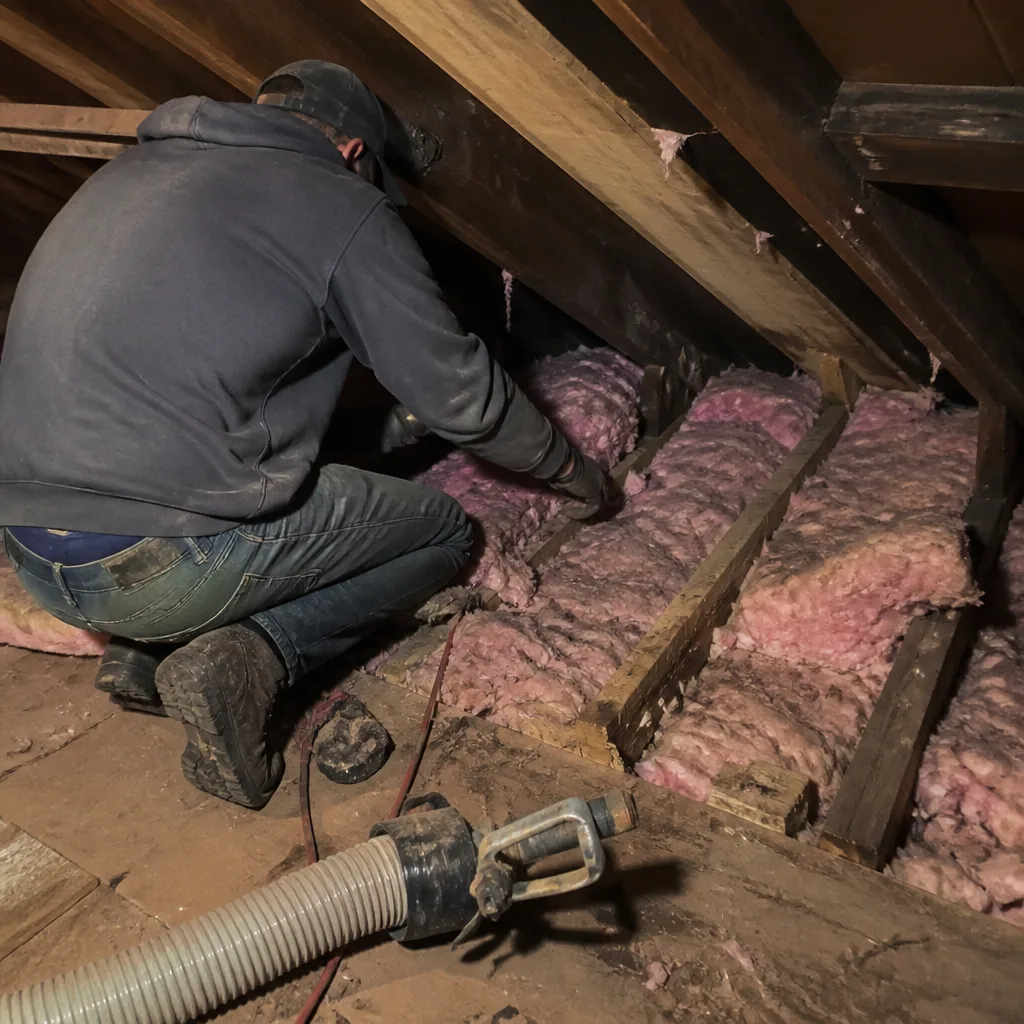
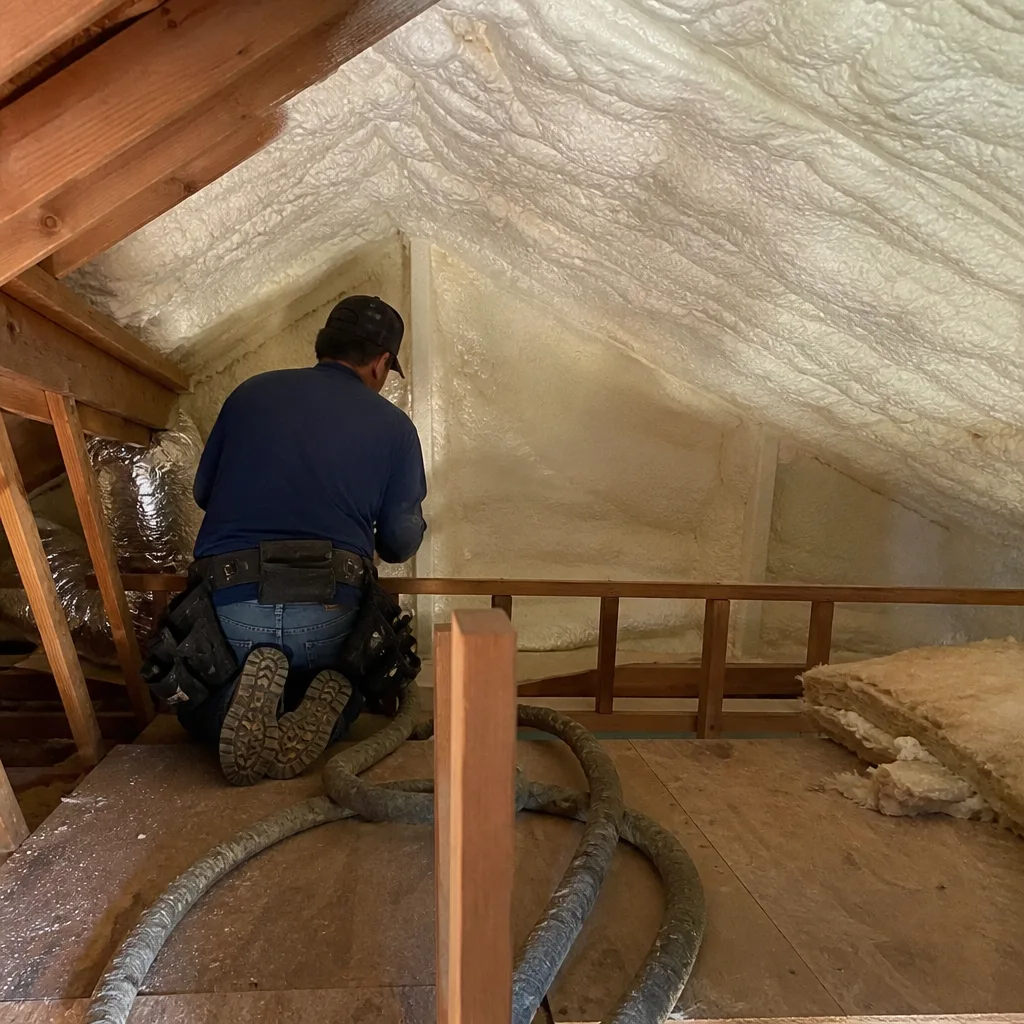
Baffle Installation in Every Affected Rafter Bay
We install rigid baffles – typically Owens Corning ProPink Raft-R-Mates or equivalent 1-inch foam channels – in every rafter bay that runs from eave to open ridge or power vent. Each baffle is stapled flush against the roof deck and butted tightly at the top plate so insulation can’t migrate beneath it. The channel they create maintains a minimum 1-inch clear airway, which is the standard needed for passive convective flow. In shallow-pitch roofs common in Westminster’s post-war neighborhoods, we occasionally step up to a 2-inch channel to compensate for lower stack pressure.
-
Air Sealing at the Attic Floor Before Any Insulation
Baffle installation is typically paired with attic floor air sealing – top plates, plumbing penetrations, recessed can lights, and any HVAC penetrations that open into the conditioned space below. We seal these with two-component spray foam or fire-rated caulk before insulation goes in, because adding insulation over an unsealed attic floor is the single most common reason homeowners don’t see the energy savings they expected. This is a hard prerequisite at Topside Attic Insulation Westminster, not an upsell: we will not blow insulation over an unsealed floor. On applicable jobs, we record a before-and-after blower-door number – a pressurization reading that shows, in one figure, how much conditioned air the building envelope was losing – so you can verify what the air sealing actually accomplished. Our full Attic Insulation in Westminster page covers this in more detail.
-
Final Documentation and 365-Day Done Right Promise
After baffles are in place and air sealing is confirmed, we photograph every completed rafter bay and any vent work performed. Those photos, along with the blower-door readings where applicable, go into your job record. The 365-Day Done Right Promise applies from this point: if anything in the scope isn’t performing as documented, we come back and make it right – in writing, not as a verbal assurance. That written warranty is delivered before the crew leaves, not emailed to you three days later.
 Before
 After
AfterAttic Baffles & Ventilation Prep Pricing in Westminster
Most homeowners asking about this service want a number before they call anyone. Here it is for Westminster:
| Scope | Typical Price Range | What Drives the Variation |
|---|---|---|
| Baffle installation only (existing insulation stays, ventilation path blocked) | $180 – $280 | Number of rafter bays, attic access difficulty, baffle depth needed (1″ vs 2″) |
| Ventilation prep + baffle install (no insulation added) | $240 – $420 | NFA deficiency, soffit vent clearing required, ridge vent condition |
| Baffle + ventilation prep bundled with full attic insulation project | Included in insulation scope price (no separate line charge) | Baffle labor and materials are part of the written project price, not an add-on |
| Baffle + air sealing + insulation (full attic envelope package) | $1,400 – $3,200 depending on attic size and current conditions | Home square footage, existing R-value, material choice (GreenFiber cellulose vs. Johns Manville fiberglass), attic access |
A few things that move the number in Westminster specifically: homes in the zip codes 92683 and 92684 tend to have shallower attic pitches than homes in neighboring Garden Grove or Fountain Valley, which means less working room and sometimes a requirement for the lower-profile 2-inch foam baffle instead of the standard cardboard channel. That adds modest material cost but doesn’t change the labor estimate significantly. Homes built before 1975 with original aluminum soffit almost always need vent clearing as part of the prep scope.
Under Haven Standard Clause 1, you receive a flat written price before any work starts – no hourly estimates, no “we’ll know when we open it up” pricing. If the attic reveals something unexpected (rotted sheathing near the eave, a collapsed ridge vent), we document it and present a separate written option before proceeding. Nothing is added to the invoice without your written approval first.
We also offer a free second opinion on any written estimate you’ve already received. Bring us a competing quote and Wes Okafor will read it with you line by line, identify anything missing or unclear, and give you a straight comparison – no obligation to book with us afterward.
To get a written price for your Westminster attic, call (562) 526-6978 or reach out through the home page contact form. The estimate is free and you’ll leave with a number, not a callback window.
FAQs – Attic Baffles & Ventilation Prep
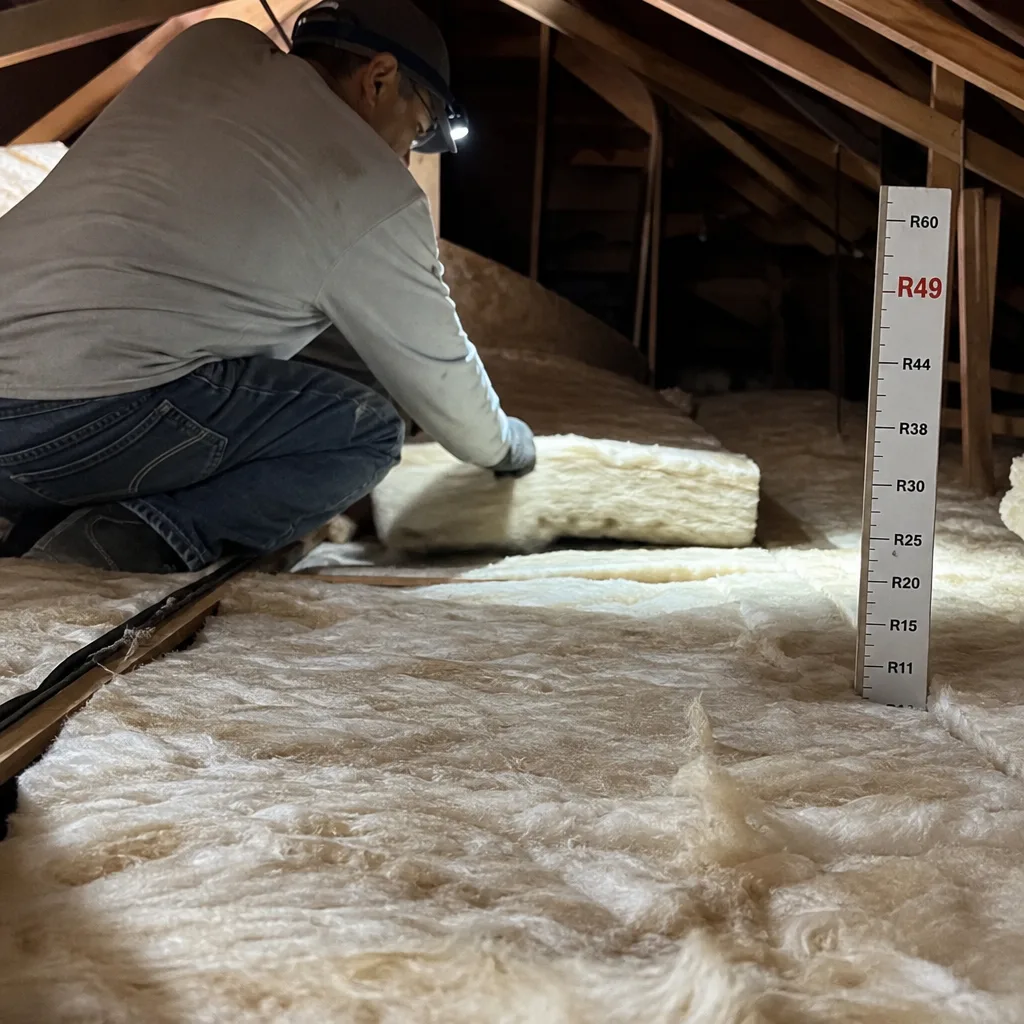
What exactly is an attic baffle and do I really need one in Westminster?
An attic baffle is a rigid channel – usually foam or heavy cardboard – that sits in each rafter bay and holds open a clear airway between your soffit vent and the upper attic, even after insulation is installed. Without baffles, blown-in cellulose or fiberglass will eventually fill that gap and block the soffit entirely. In Westminster, where the marine layer keeps exterior humidity higher than inland cities like Anaheim or Riverside, a blocked soffit means moisture-laden air has nowhere to go and can condense against your roof sheathing. Whether you need baffles depends on your current soffit clearance: if the rafter bays at your eave line are open and unblocked, you may be fine; if insulation is pushing against the soffit or the bay is already blocked, baffles are the fix. Call (562) 526-6978 and we’ll tell you what we find before quoting anything.
Can you install baffles without removing my existing insulation?
Yes, in most cases we can access the rafter bays from the eave side and install baffles without pulling out the field insulation. The exception is when existing insulation has completely packed the bay from top plate to soffit – in that situation, we need to clear the eave-line insulation to get the baffle seated flush against the roof deck. We’ll photograph what we find and include that documentation in your written price before anything is moved. If insulation removal is required, it’s quoted separately with its own line item, not folded into the baffle price silently.
How do baffles affect my insulation’s R-value?
Installed correctly, baffles don’t reduce your effective R-value. The 1-inch or 2-inch channel they hold open sits against the roof deck, above the insulation plane, and the insulation fills the rest of the rafter bay cavity and extends across the attic floor at full depth. The common misconception is that the channel “takes up space” where insulation could go – it does, slightly, at the very top of the rafter bay, but the thermal performance of attic insulation comes almost entirely from the horizontal depth across the attic floor, not from the rafter cavity fill. Proper ventilation actually protects your R-value over time by preventing moisture from degrading insulation density.
My neighbor had baffles installed and still has moisture problems. What did they miss?
Baffles only fix the soffit-to-ridge airflow path. If moisture is still building up after baffles are installed, the most common remaining cause is an unsealed attic floor – can lights, plumbing penetrations, and top plates that are letting warm conditioned air into the attic in large enough volume that ventilation alone can’t clear it fast enough. The second most common cause is an undersized ridge or power vent on the exhaust side: baffles bring air in from the soffit, but that air needs somewhere to exit. A blower-door test – a pressurization reading that shows, in one number, how much conditioned air your building envelope is losing – will identify whether air sealing is the missing piece. We include before-and-after blower-door readings on applicable jobs so you can see whether the sealing work actually changed the number.
Why Westminster Homeowners Choose Topside Attic Insulation Westminster
Since Wes Okafor started Topside Attic Insulation Westminster under The Haven Standard in 2016, we’ve worked in more than 9,000 homes across the region, and every single one got a written price before work started and a documented photo record when we left. That’s not a policy we added after a bad review – it’s the operating model from the beginning.
Westminster’s housing stock is specific: a large share of homes were built between 1955 and 1975, many with original aluminum soffit that’s been painted over multiple times, hip roofs with short rafter runs that limit baffle options, and attic floors that have had insulation added by two or three different contractors over the decades – sometimes without air sealing, almost never with proper ventilation documentation. We understand what we’re walking into before we climb through the hatch, and we can describe the documentation you’ll receive before we ever schedule the job.
Materials come from manufacturers like Owens Corning, Johns Manville, and GreenFiber – none of them proprietary to us, which means we can match the right product to your attic’s needs rather than the other way around.
The 365-Day Done Right Promise covers every completed job. If the ventilation prep isn’t performing the way the documentation says it should, we come back. That’s a written commitment, not a verbal one.
Call (562) 526-6978 to schedule an Attic Insulation Near Me in Westminster, CA assessment. You’ll get a written price, a named technician, and a text when they’re on the way – and you’ll leave with a documented record of exactly what was found and what was done.
Written by Wes Okafor, Owner at Topside Attic Insulation Westminster, serving Westminster.