
Crawl Space Insulation in Westminster, CA
Crawl space insulation in Westminster, CA typically runs between $1,800 and $4,200 depending on square footage, existing moisture conditions, and whether air sealing is required before the insulation goes in. Most jobs are completed in a single day. At Topside Attic Insulation Westminster, we’ve insulated crawl spaces in homes across Westminster, from the older ranch-styles near Hoover Street to the mid-century builds off Bolsa Avenue – and in every case, the insulation goes in after the air leaks are sealed, not before.
That sequence matters more than most homeowners realize. Blowing fiberglass batts or spray foam under a floor that’s still leaking conditioned air is like putting a blanket over a drafty window: it helps a little, but it doesn’t fix the actual problem. Under The Haven Standard that’s guided our work since 2016, air sealing is a hard prerequisite, not an optional line item you can add later. If you’d like to understand how crawl space insulation fits into the broader picture, our full Crawl Space Encapsulation & Vapor Barrier in Westminster page covers the complete scope. Or call us directly at (562) 526-6978 – a live person answers, any time of day.
Wes Okafor leads every job under a written scope and written warranty, delivered before anyone starts. That’s Haven Standard Clause 1, and it hasn’t had an exception since we opened.
When You Need Crawl Space Insulation
Westminster’s climate sits in a mild coastal band, but “mild” doesn’t mean negligible. Marine layer mornings, occasional Santa Ana wind events, and the region’s naturally high water table create crawl space conditions that degrade unprotected insulation faster than most homeowners expect. Here are the clearest signs that your crawl space insulation is failing or simply absent:
- Cold or uneven floors in winter. If the hardwood or tile in your living room feels noticeably colder than the rest of the house from November through February, the thermal break between your conditioned floor and the unconditioned crawl space below it has broken down. In Westminster homes built before 1985, this often means the original kraft-faced batts have sagged away from the subfloor entirely.
- Elevated heating and cooling bills without a clear cause. A crawl space with no insulation or degraded insulation can account for 15 to 25 percent of a home’s total heat loss. If your energy bills have crept up and your attic insulation checks out, the crawl space is the next place to look.
- Musty odors entering living spaces. Westminster’s proximity to the Santa Ana River corridor means groundwater sits closer to the surface than in inland cities. When moisture accumulates in an uninsulated or under-insulated crawl space, it moves up through the floor system. The smell you notice in a first-floor bedroom is usually the first indication.
- Visible mold or moisture staining on floor joists. If you or a contractor has been under the house and seen dark staining on the joist faces, that’s condensation damage – meaning the crawl space temperature and humidity are swinging enough to produce liquid water on structural wood. Insulating without addressing the moisture source first will trap the problem.
- Pest intrusion through the subfloor. Degraded fiberglass batts that have fallen from joist bays are a common nesting material. In Westminster neighborhoods near Sigler Park and the older commercial corridors on Westminster Boulevard, we regularly find rodent nesting in crawl space insulation that was installed decades ago and never replaced.
- A home energy audit flagging crawl space losses. Our home energy audits use blower-door data – a pressurization measurement that shows, in one number, how much conditioned air the building envelope is losing – to locate the highest-priority thermal bypasses. When the crawl space registers as a major loss zone, targeted insulation and air sealing is typically the most cost-effective single fix available.
Our Crawl Space Insulation Process
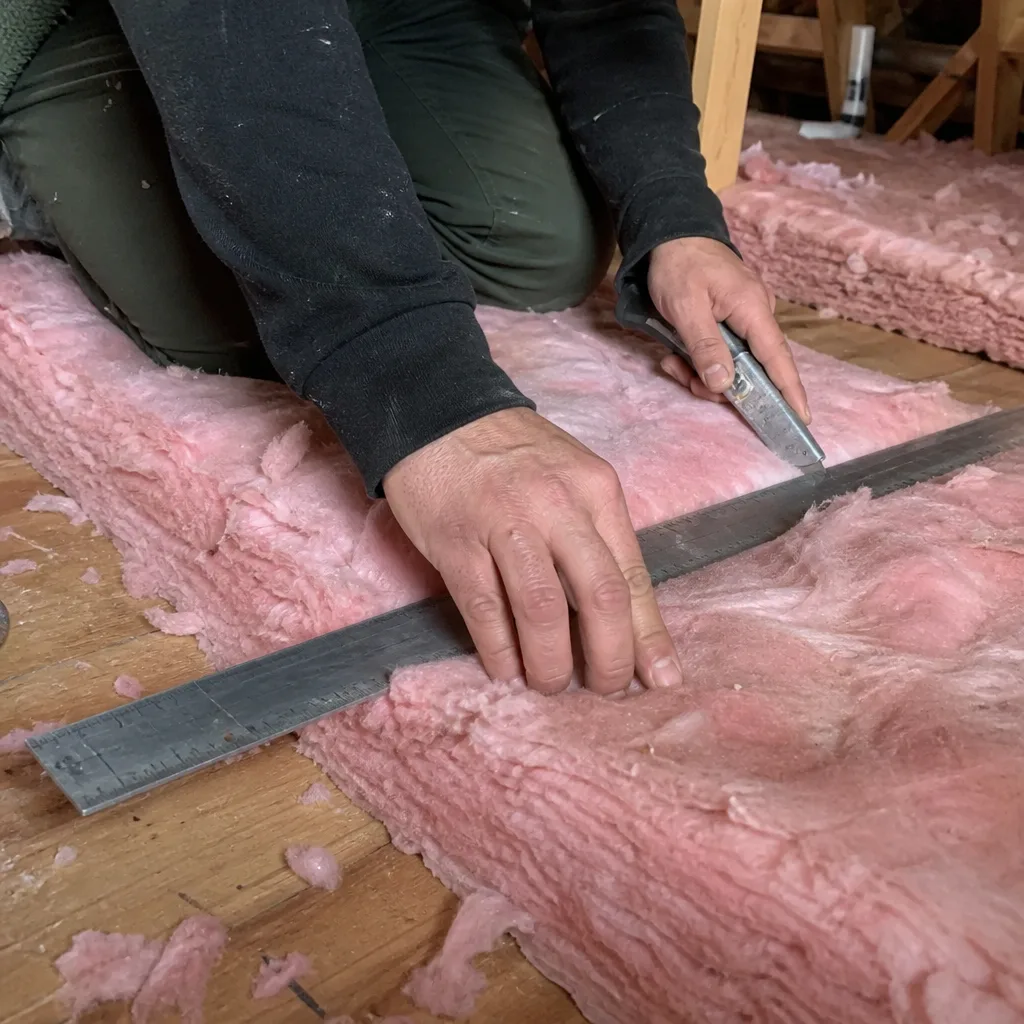
The steps below describe what actually happens on a Topside Attic Insulation Westminster job. Nothing is skipped for schedule convenience, and the order is not flexible – air sealing before insulation is the whole point.
- Pre-job inspection and blower-door baseline. Before we quote a price or schedule a crew, Wes Okafor or a designated technician inspects the crawl space in person. We document what’s there: existing insulation type and condition, joist bay depth, vapor barrier status, any signs of moisture intrusion or pest activity, and the location of mechanical penetrations (HVAC ducts, plumbing, electrical conduit). On applicable jobs, a blower-door test is run to establish the pre-work air-leakage baseline in CFM50 – cubic feet per minute at 50 pascals of pressure. That number goes into your written record so you have something to compare against when the job is done.
- Written price and written scope delivered before work starts. Under Haven Standard Clause 1, you receive a flat written price covering every line item – materials, labor, disposal – before anyone lifts a tool. No change orders for “conditions we found when we got there” unless those conditions are documented in writing and approved by you first. This is the part of the process our Westminster customers cite most often when they refer us to neighbors.
- Air sealing of penetrations and rim joists. This is where we diverge from most crawl space contractors. Before any insulation material is installed, all significant air pathways are sealed: rim joists (the perimeter framing where the floor system meets the foundation wall), plumbing penetrations, HVAC duct boots, and any gaps in the subfloor. We use two-component spray foam or caulk appropriate to each gap size. In Westminster homes with older gas line penetrations from kitchen or laundry renovations, these are almost always unsealed – and they are a measurable air-leakage path, not just a drafty inconvenience. Sealing these before insulating is the step that produces the blower-door improvement; the insulation itself adds the thermal resistance.
- Vapor barrier installation or inspection (if not already part of scope). Crawl space insulation performs poorly against a dirt floor that’s off-gassing ground moisture. If your home doesn’t have a properly lapped and sealed vapor barrier – a minimum 6-mil poly sheeting with taped seams covering the entire crawl space floor and extending up the foundation walls – that goes in before the insulation. If you’re viewing this page as a standalone service, our full Crawl Space Encapsulation & Vapor Barrier in Westminster page explains the complete encapsulation scope and how it coordinates with insulation.
- Insulation installation to correct R-value. California’s Title 24 energy code requires a minimum of R-19 for floors over unconditioned crawl spaces in Climate Zone 8, which covers Westminster. We typically install to R-19 using unfaced fiberglass batts – Johns Manville or Owens Corning products depending on joist depth and availability – friction-fit between joists and supported with wire hangers or insulation support rods. Where rim joist geometry or plumbing density makes batt installation impractical, two-component closed-cell spray foam is used instead, which delivers a higher R-value per inch and doubles as an air seal. All installed depth and coverage is photographed before we leave.
- Post-job blower-door reading and documented photo record. On applicable jobs, the blower-door test is repeated after air sealing is complete. The before and after numbers go into your written job record – not a generic report template, but a document that shows your address, your technician’s name, the date, and the two CFM50 readings. The Documented Photo Record is included on every visit, standard – not available on request. You leave with evidence of what changed, not just an invoice.
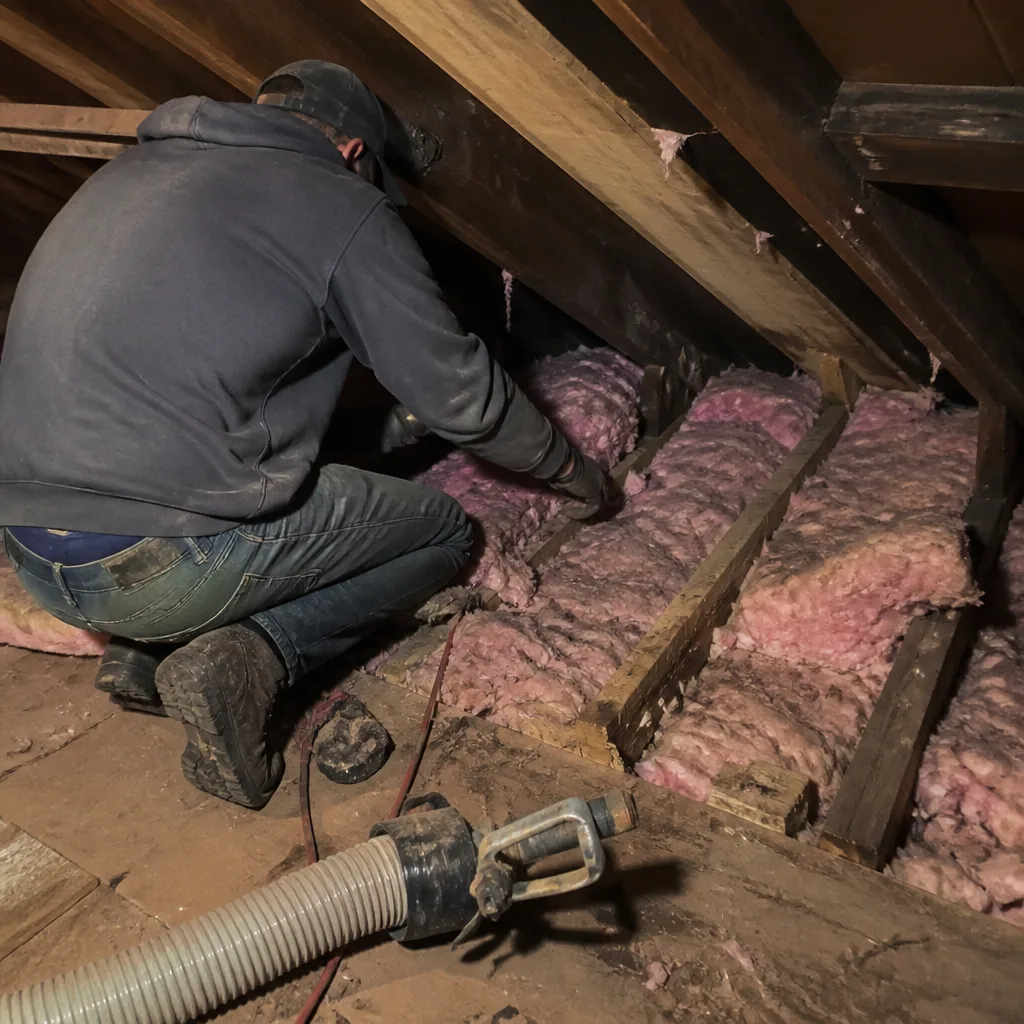 Before
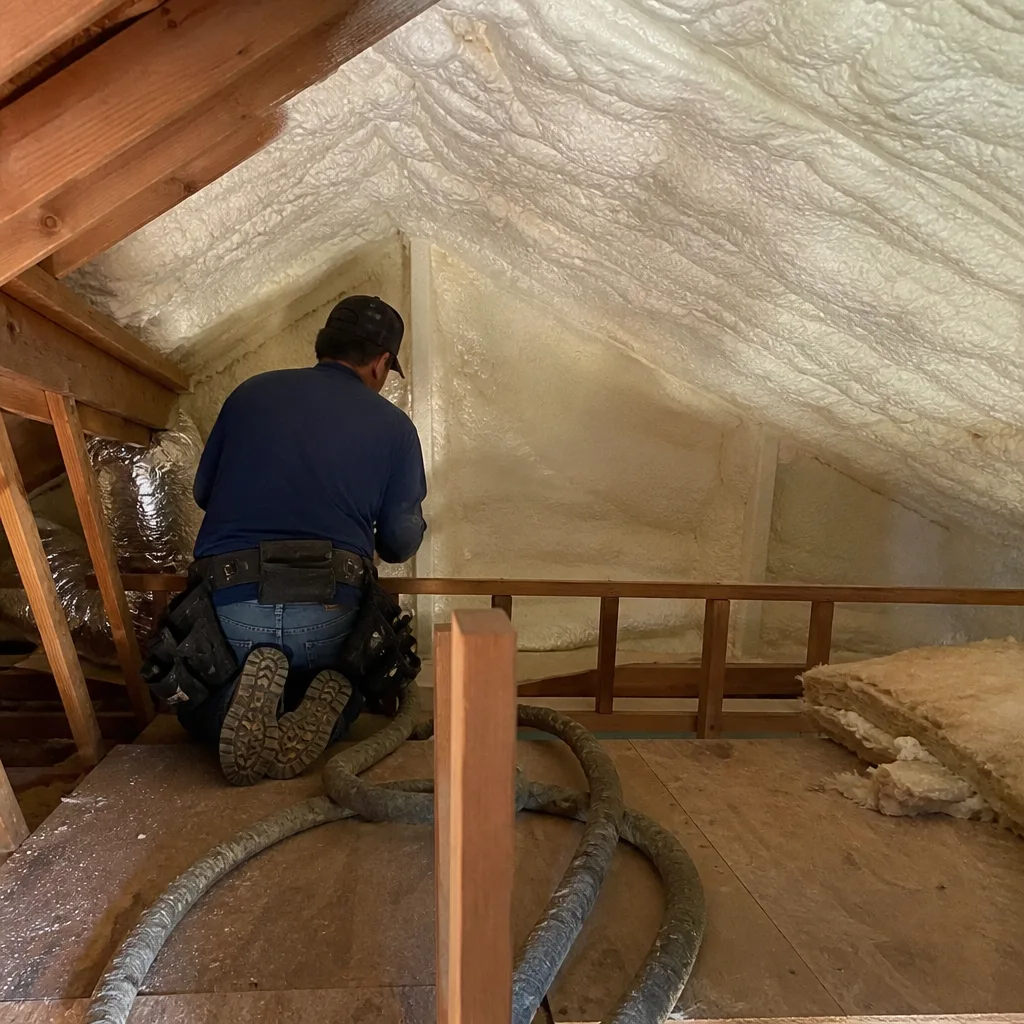 After
AfterCrawl Space Insulation Pricing in Westminster
If you’re wondering How Much Does Crawl Space Encapsulation & Vapor Barrier Cost? (2026 Price Guide) - Westminster, CA, know that crawl space insulation in Westminster costs more than a comparable square-footage attic job for a straightforward reason: the working conditions are harder. Technicians work in confined, low-clearance spaces with limited ventilation, and in Westminster specifically, moisture conditions often require remediation before any insulation material can be installed. The prices below reflect real ranges from completed jobs in Westminster and surrounding Orange County communities.
| Scope | Typical Price Range | Notes |
|---|---|---|
| Small crawl space, air sealing + R-19 batts (under 800 sq ft) | $1,800 – $2,400 | Includes rim joist sealing and penetration foam |
| Mid-size crawl space, air sealing + R-19 batts (800-1,400 sq ft) | $2,400 – $3,200 | Most common in Westminster’s single-story ranches |
| Large crawl space or complex layout (1,400+ sq ft) | $3,200 – $4,200+ | Includes multiple access points, duct sealing |
| Add: spray foam for rim joists only | $400 – $800 | Per linear foot of perimeter; higher R-value per inch |
| Add: vapor barrier (if not already present) | $600 – $1,400 | Depends on crawl space area and access difficulty |
| Old insulation removal before reinstall | $500 – $1,200 | Required when existing material is contaminated or collapsed |
What drives the final number: crawl space height (anything under 18 inches adds labor time), the presence of active moisture or standing water that must be addressed first, the number and size of mechanical penetrations that need sealing, and whether existing insulation needs to be removed before new material goes in. Westminster’s older housing stock – particularly homes built between 1955 and 1975 in the central grid between Bolsa Chica Road and Magnolia Street – frequently has collapsed original batts that must come out before a proper reinstall can happen.
Under Haven Standard Clause 1, you receive a written flat price before any work starts. There are no “we’ll see when we get there” caveats in our estimates. If you have a written quote from another contractor, bring it to us – we offer a Free Second Opinion on any written estimate and will read it with you line by line.
FAQs – Crawl Space Insulation
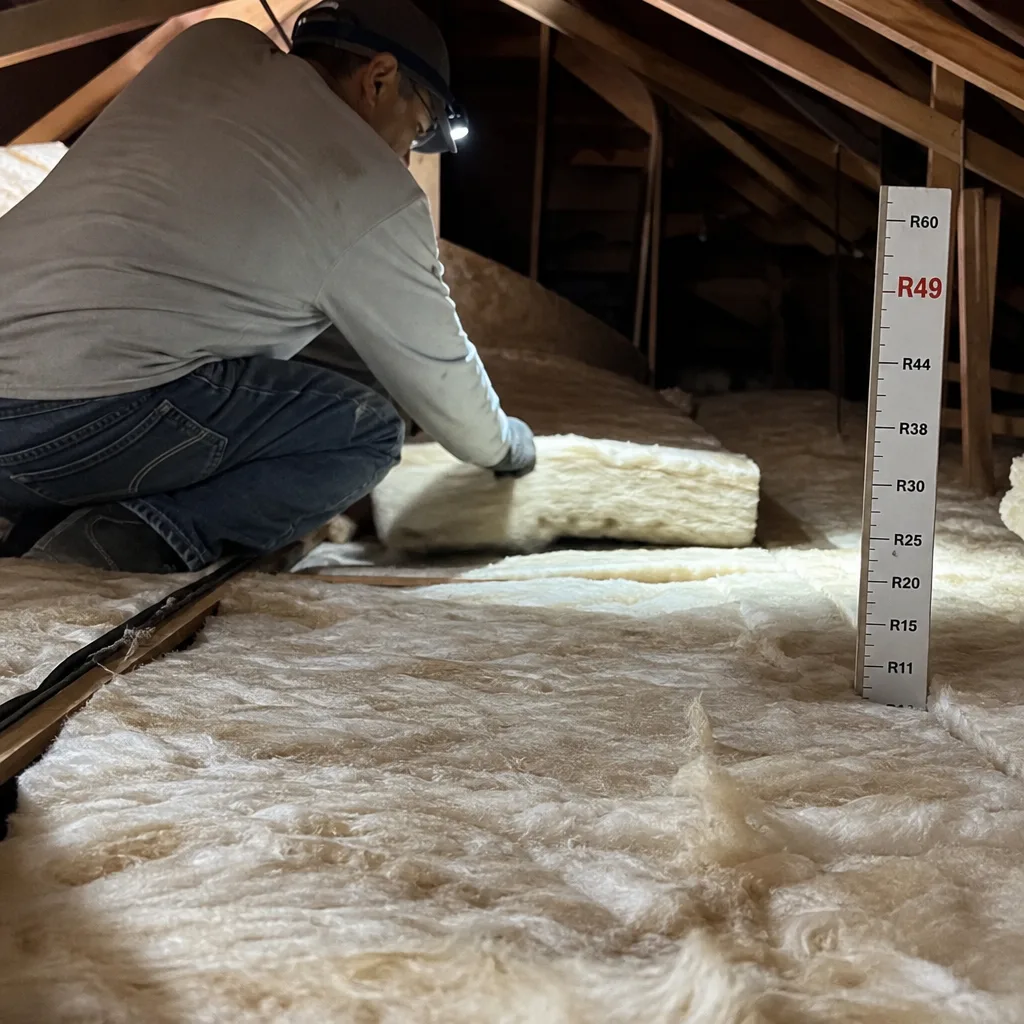
What R-value does my Westminster, CA crawl space actually need?
California Title 24, Climate Zone 8 (which covers Westminster) requires a minimum of R-19 for floors over unconditioned crawl spaces. R-19 is the code floor, not a recommendation – and it assumes the insulation is properly installed and making full contact with the subfloor, which collapsed or sagging batts do not. Some Westminster homeowners with older HVAC systems ask about going to R-25 or R-30 in joist bays deep enough to accommodate it; that’s a reasonable upgrade if you’re already opening the space, but R-19 correctly installed and air-sealed will outperform R-30 with gaps. Call us at (562) 526-6978 for a site-specific assessment – we’ll measure your joist depth and give you a written recommendation before anything else happens.
Should I insulate the crawl space floor (between joists) or the foundation walls?
For vented crawl spaces, which describes the majority of Westminster homes built before 1990, insulating the floor between joists is the correct approach. The floor joist cavity is where the thermal boundary sits – between your conditioned living space and the unconditioned crawl space below. Insulating the foundation walls instead is appropriate for Crawl Space Encapsulation & Vapor Barrier projects, which require a different scope: continuous vapor barrier, sealed vents, and mechanical conditioning or dehumidification. If your crawl space has open vents, floor joist insulation is almost certainly the right answer, and moving to a fully conditioned crawl space is a larger project with a different cost profile. We’ll tell you which applies to your home before any work is scoped.
Can you insulate my crawl space without replacing the vapor barrier first?
It depends on the condition of what’s there. A Crawl Space Vapor Barrier that’s intact, properly lapped, and covering the full crawl space floor can stay in place. One that’s torn, bunched at the edges, or missing in sections should be replaced first – installing insulation over a compromised moisture barrier in Westminster’s high-groundwater environment is a predictable path to mold on the new material within two to three years. Our inspection will document exactly what’s present and whether it passes or needs replacement. We don’t recommend work that isn’t warranted, and we don’t skip steps that are.
How long does crawl space insulation last, and when does it need to be replaced?
Fiberglass batt insulation installed in a dry, well-sealed crawl space can last 20 to 30 years before it needs attention. The failure modes in Westminster are almost always moisture-related: chronic high humidity causes batts to absorb water, lose their loft, and sag out of the joist bays. Pest activity – particularly rodents nesting in the material – is the second most common cause of premature failure in this area. A crawl space we insulate under The Haven Standard, with air sealing and a proper vapor barrier in place, should not show moisture-driven degradation on the timeline a previously unsealed or unprotected space would. The Documented Photo Record we leave with you serves as a baseline: if you’re wondering five years from now what was originally installed, the record is there.
Why Topside Attic Insulation Westminster for Your Crawl Space
Since 2016, Topside Attic Insulation Westminster has worked on more than 9,000 homes across Westminster and surrounding communities – every single one with a written price before work started and a documented record when the crew left. Wes Okafor built the company around the idea that a homeowner shouldn’t have to take a contractor’s word for anything: the blower-door numbers before and after are in the record, the photos are in the record, the written warranty is in your hands before the first tool comes out of the truck.
Crawl space work is where that approach matters most. It’s the part of the house almost no homeowner ever sees, which means it’s also the part of the house where shortcuts are easiest to take and hardest to detect. We use materials from Johns Manville and Owens Corning – not because of any preferred arrangement, but because the performance specifications are consistent and well-documented. Every technician who goes under your home is background-checked and uniformed. And the 365-Day Done Right Promise means that if something isn’t right at day 180, we make it right – in writing, not as a favor.
If you’re starting from the home page and trying to figure out where crawl space insulation fits in a larger building-envelope project, that’s a reasonable question and one we answer in the first conversation. Westminster homes from the 1960s and 1970s typically have insulation gaps in three places simultaneously – attic floor, crawl space floor, and wall cavities – and treating them in the right order matters. We’ll tell you what the right order is for your home, with numbers, before you commit to anything.
Call (562) 526-6978 to schedule a free estimate. A live person answers – not a callback queue, not a voicemail. You’ll get a named technician, a confirmed appointment time, and a text when they’re on the way. The written price arrives before the job starts, and the documented record goes home with you when it’s done.
Written by Wes Okafor, Owner at Topside Attic Insulation Westminster, serving Westminster.