

How Much Does Wall Insulation Cost in Westminster?
Our Wall Insulation services in Westminster, CA typically run between $1.50 and $4.25 per square foot of wall area, depending on the method used and the condition of your existing walls. For a typical 1,500-square-foot Westminster home, most homeowners spend somewhere between $2,800 and $7,500 for a full wall insulation project. That range is wide because the method – blown-in cellulose into existing closed walls versus open-wall spray foam during a remodel – carries very different labor and material costs.
Wall Insulation Cost Breakdown (2026)
Wall insulation in Westminster costs less per square foot than most homeowners expect, but the total bill can move significantly based on method, material, and wall access. Here is what each approach actually costs in this market:
| Insulation Method | Material | Cost Per Sq Ft (Wall Area) | Typical Total (1,500 sq ft home) |
|---|---|---|---|
| Dense-pack blown-in (existing closed walls) | Cellulose or fiberglass | $1.50 – $2.50 | $2,800 – $4,800 |
| Batt insulation (open stud bays, remodel) | Fiberglass or mineral wool (Rockwool) | $0.85 – $1.75 | $1,600 – $3,300 |
| Open-cell spray foam (open walls) | Icynene or Demilec | $1.80 – $3.00 | $3,400 – $5,700 |
| Closed-cell spray foam (open walls) | Icynene or Demilec | $3.00 – $4.25 | $5,700 – $7,500+ |
| Rigid foam board (exterior or interior retrofit) | Owens Corning or CertainTeed | $2.00 – $3.50 | $3,800 – $6,600 |
| Air sealing only (top plates, penetrations, outlets) | Foam, caulk, gaskets | $0.40 – $0.90 | $750 – $1,700 |
A few things move a Westminster project toward the higher end of those ranges. Homes built before 1980 – and there are many in the older residential tracts west of Bolsa Avenue and near the Little Saigon corridor – often have no wall insulation at all and use balloon-frame construction, which complicates dense-pack installation and adds labor time. Homes built between 1980 and 2000 sometimes have thin fiberglass batts installed without any air sealing, which means you are dealing with partial removal before new material goes in. And homes on the newer side of Westminster’s housing stock, particularly in the Garden Grove-adjacent neighborhoods near Springdale Street, tend to have standard 2×4 stud bays that limit how much R-value you can achieve regardless of material.
One cost item that rarely appears in competitor quotes but consistently matters in Westminster: air sealing. At Envelope Insulation Co., air sealing of top plates, electrical outlet boxes, and wall penetrations is treated as a prerequisite, not an optional add-on. We will not blow cellulose into a wall cavity that still has major air pathways open at the top. That position exists because insulation and air sealing address two different problems, and solving only one of them cuts your results roughly in half. The cost line for air sealing appears separately in every written scope we produce so you can see exactly what you are paying for it.
What Affects Wall Insulation Pricing in Westminster
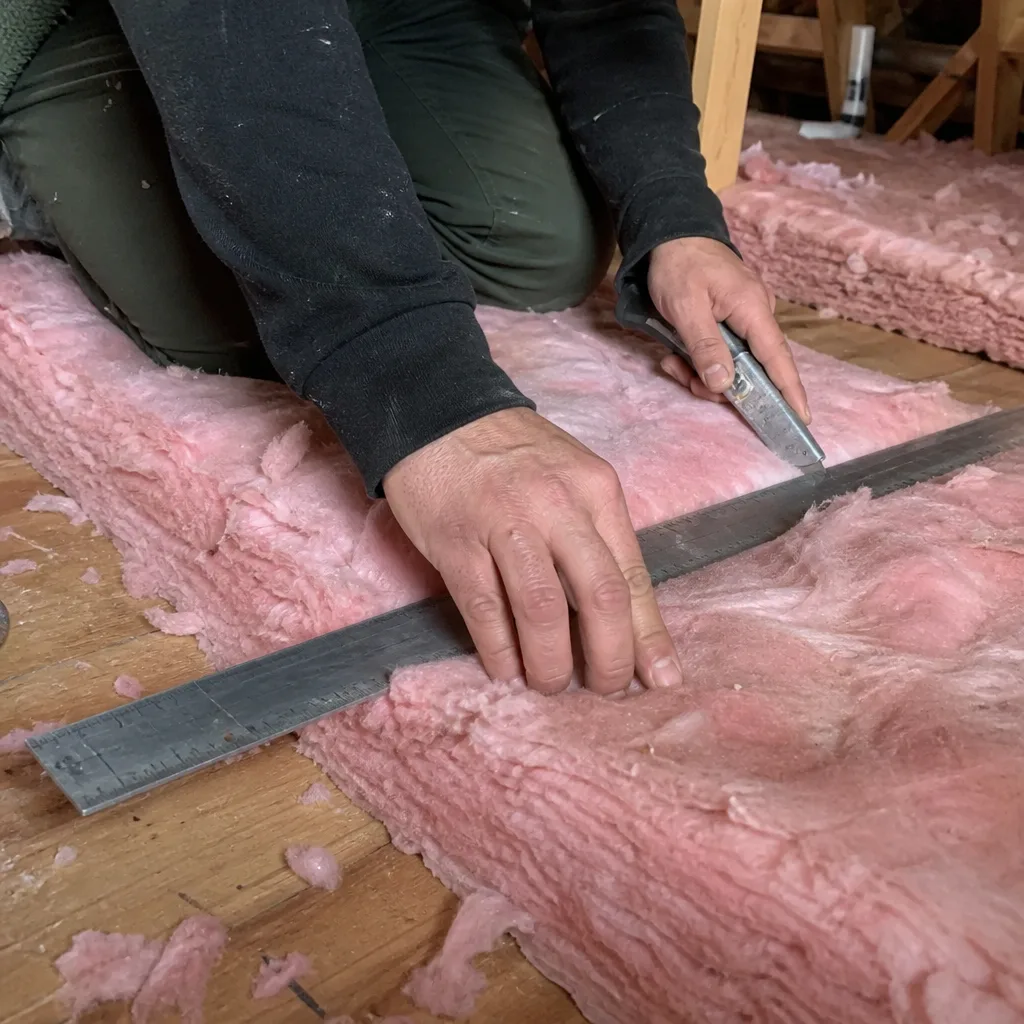
- Wall access method: Closed-wall dense-pack requires drilling small holes (typically 1.5 to 2 inches) through the interior drywall or exterior siding, blowing material in, and patching each hole. Open walls during a remodel skip all of that labor. In Westminster, where a lot of the housing stock has original stucco exteriors, drilling from the outside and patching stucco adds cost compared to working from drywall on the interior.
- Wall depth and stud spacing: Standard 2×4 framing gives you a 3.5-inch cavity, which limits you to roughly R-13 with batts or R-13 to R-15 with dense-pack cellulose. Homes with 2×6 framing – common in Westminster additions and custom builds near the 405 corridor – can hold R-19 to R-21, which uses more material but delivers a measurably better thermal boundary.
- Existing insulation condition: Westminster homes that were originally insulated in the 1970s or 1980s frequently have fiberglass batts that have settled, gotten wet from roof leaks, or been disturbed by rodents. Removing degraded material before installing new insulation adds labor cost. We document what we find with photos before anything is pulled out – that record is part of every job under our standard process.
- Local climate and wall orientation: Westminster sits in the South Bay coastal influence zone. Summers are mild but the marine layer keeps humidity relatively high compared to inland cities like Anaheim Hills or Riverside. West-facing walls get direct afternoon sun and are consistently the highest-gain surfaces in Westminster homes during June through September. Material selection for those walls – particularly whether closed-cell foam’s vapor-retarding properties matter in a given assembly – affects both price and long-term performance.
- Square footage and layout complexity: A straightforward rectangular Westminster ranch house is faster to insulate than a two-story home with multiple dormers, garage-adjacent walls, or an attached accessory dwelling unit. Longer linear footage with fewer interruptions keeps the per-square-foot cost toward the lower end of the range.
- Air sealing scope: In our experience across Westminster and neighboring Fountain Valley and Garden Grove, the air sealing component on a typical wall insulation job runs between $750 and $1,700 depending on the number of penetrations, outlet boxes, and top-plate gaps. That cost is always written into the scope separately. The blower-door test we run before and after shows you the actual change in air infiltration – not an estimate of what we expect to achieve, but a measured CFM50 reading on the day the crew leaves.
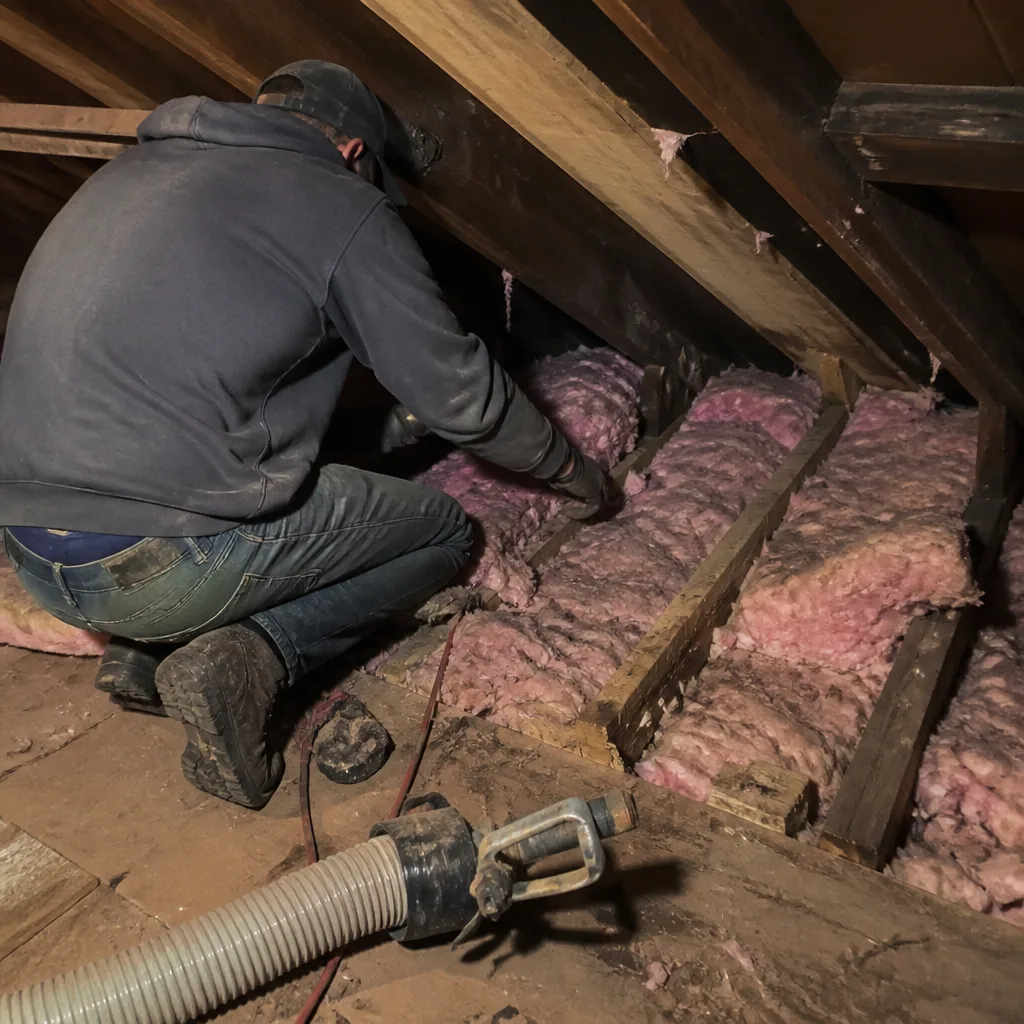 Before
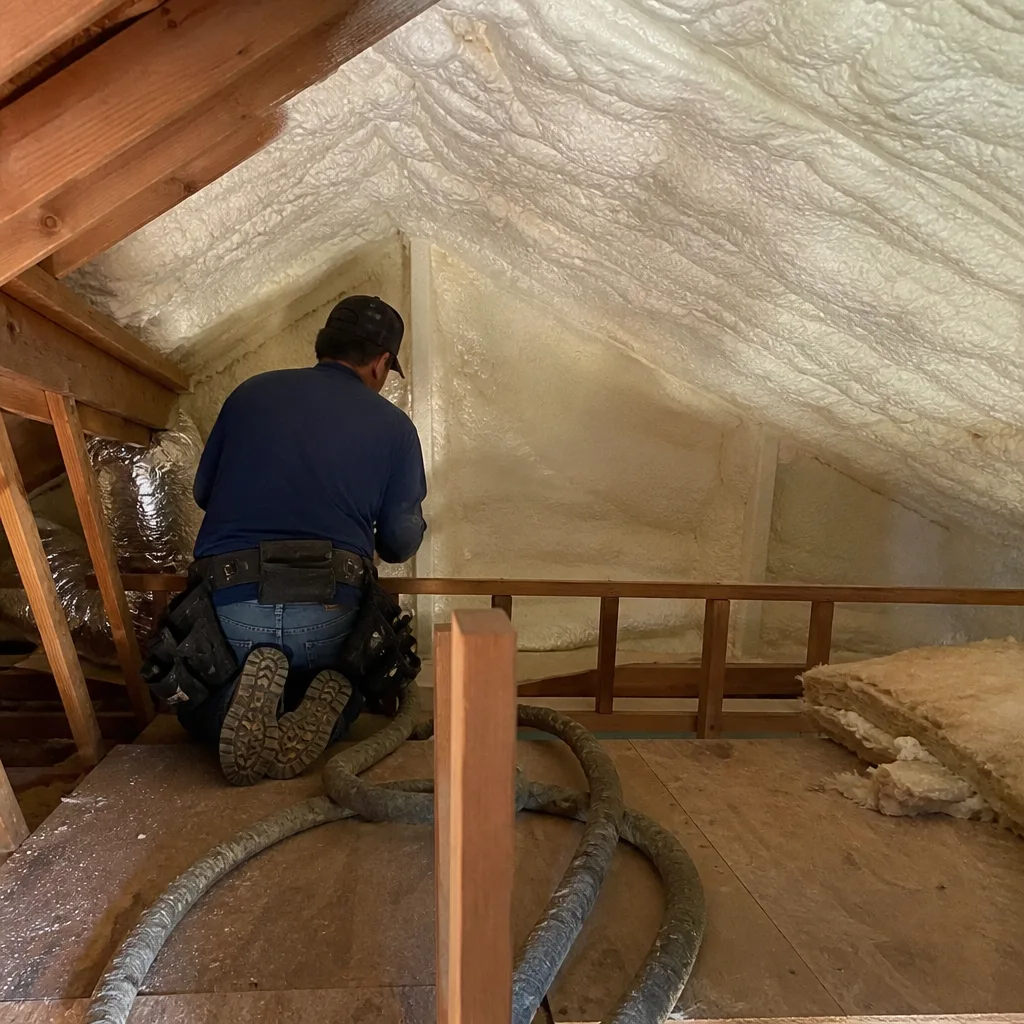 After
AfterHow to Save on Wall Insulation in Westminster
The most direct way to reduce the total cost of a wall insulation project in Westminster is to time it around work that is already opening your walls. A bathroom remodel, a kitchen renovation, or an electrical panel upgrade that requires opening wall cavities gives you stud-bay access without any additional drilling or patching labor. If you know a remodel is coming in the next 12 to 18 months, it usually makes financial sense to wait and bundle the insulation work rather than paying for the closed-wall dense-pack process now and the open-wall process again later.
Second, get clarity on what the air sealing scope actually includes before signing anything. Some Westminster insulation contractors list “air sealing” as a line item but mean only a few cans of Great Stuff around obvious gaps. That is not the same as a systematic sealing of every top plate, electrical outlet on exterior walls, and wall-to-floor penetration before the cellulose goes in. Ask the contractor to show you the blower-door numbers before and after, or tell you why they are not running one. If a written before-and-after reading is not part of what they offer, you have no way to verify what the air sealing actually accomplished.
Third, take advantage of the home energy audit before committing to a specific scope. An audit tells you where your building envelope is losing the most conditioned air and heat. In some Westminster homes, the attic floor accounts for a larger share of heat loss than the walls do, and putting money into attic air sealing and insulation first produces a better return than wall insulation alone. We have seen blower-door readings drop by 35 to 50 percent from attic work alone in homes where the walls were partially insulated but the attic floor had zero air sealing. Knowing that before you spend on walls saves you from doing the lower-value work first.
California utility programs – including SoCalGas rebates and the federal Inflation Reduction Act’s 25C tax credit – can offset a portion of insulation costs. The 25C credit covers 30 percent of the cost of qualifying insulation materials up to $1,200 in a single tax year. We document materials used on every job, which makes it straightforward to pull what you need for a tax filing. Separately, SCE (Southern California Edison) has periodically offered incentives for air sealing in existing homes through their energy efficiency programs – check with them directly for current availability, since those programs change year to year.
Finally, a free second opinion on any written estimate costs you nothing. If another Westminster contractor has already given you a written quote, bring it to us. We will go through it line by line and tell you what is in it, what is not, and whether the scope matches what your home actually needs. That offer is not a sales tactic – it exists because scopes vary enough in this market that a $500 difference between two quotes sometimes reflects a scope difference and sometimes reflects a margin difference, and you deserve to know which one you are looking at.
To get a written price for your specific home – no work starts without it – call (562) 526-6978. Estimates are free and the price you receive is flat, written, and includes a written scope and warranty before any work begins.
What Is the R-Value You Actually Need in Westminster Walls?
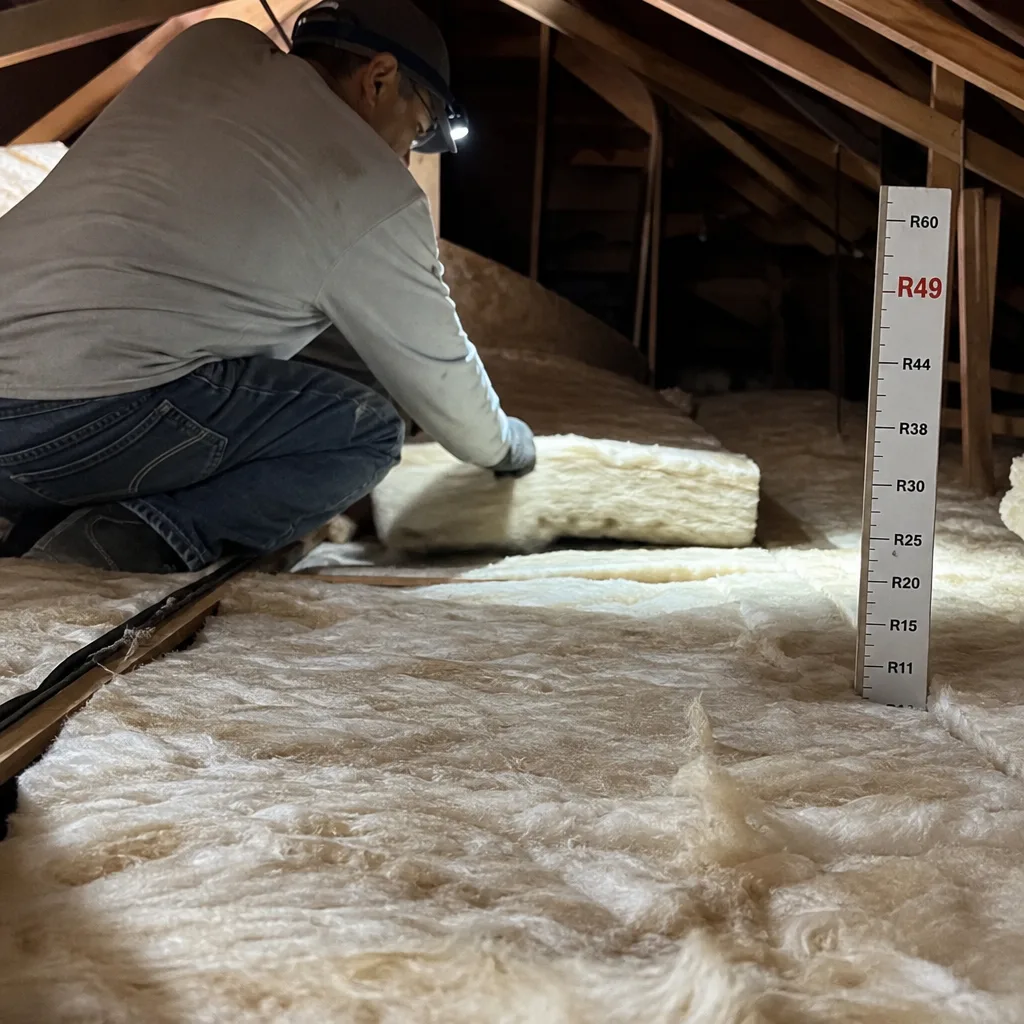
California’s Title 24 energy code sets the minimum wall insulation requirement for Westminster at R-13 for 2×4 stud walls in Climate Zone 8, which covers most of the city. For 2×6 walls, the minimum rises to R-19. Those are minimums for new construction and major remodels – existing homes that have never been insulated are not required to upgrade unless a permit-triggering renovation is underway, but the performance gap between an uninsulated wall and an R-13 wall is significant enough that most Westminster homeowners recoup the cost in reduced HVAC runtime within five to eight years.
In practice, the material choices on the market today make it possible to exceed those minimums even in a 2×4 cavity. Dense-pack cellulose at 3.5 inches achieves R-13 to R-15. Open-cell spray foam in the same cavity runs R-13. Closed-cell spray foam at 3.5 inches reaches R-20 to R-21, which exceeds the 2×6 minimum in a 2×4 wall, but at a cost premium that only makes sense in specific assemblies – typically walls with moisture control concerns or walls where the structural rigidity of closed-cell foam adds value.
Rockwool mineral wool batts are worth mentioning for Westminster homes specifically. Rockwool’s density relative to standard fiberglass gives it better sound attenuation (relevant in Westminster neighborhoods near the 405 and Beach Boulevard corridors) and it does not lose R-value when wet the way fiberglass does. In a coastal climate with periodic humidity, that moisture resistance matters. Rockwool batts in a 2×4 wall run R-15 and cost slightly more than fiberglass at the same dimension – typically $0.15 to $0.25 more per square foot installed.
Dense-Pack vs. Spray Foam for Westminster’s Existing Walls
Most wall insulation projects in Westminster’s existing housing stock come down to one question: dense-pack blown-in material or spray foam. The answer depends on whether the walls are open or closed and what you need the insulation assembly to do beyond thermal resistance.
Dense-pack cellulose is the standard choice for retrofitting closed walls. The installer drills small holes, blows material in at high density (3 to 3.5 pounds per cubic foot for cellulose), patches the holes, and the wall cavity is full. It is the lowest disruption method, and cellulose sourced from GreenFiber or comparable suppliers is made from recycled fiber with a borate-based fire retardant. R-value in a 3.5-inch cavity lands at R-13 to R-15. Total installed cost in Westminster for dense-pack cellulose runs $1.50 to $2.25 per square foot of wall area for most jobs.
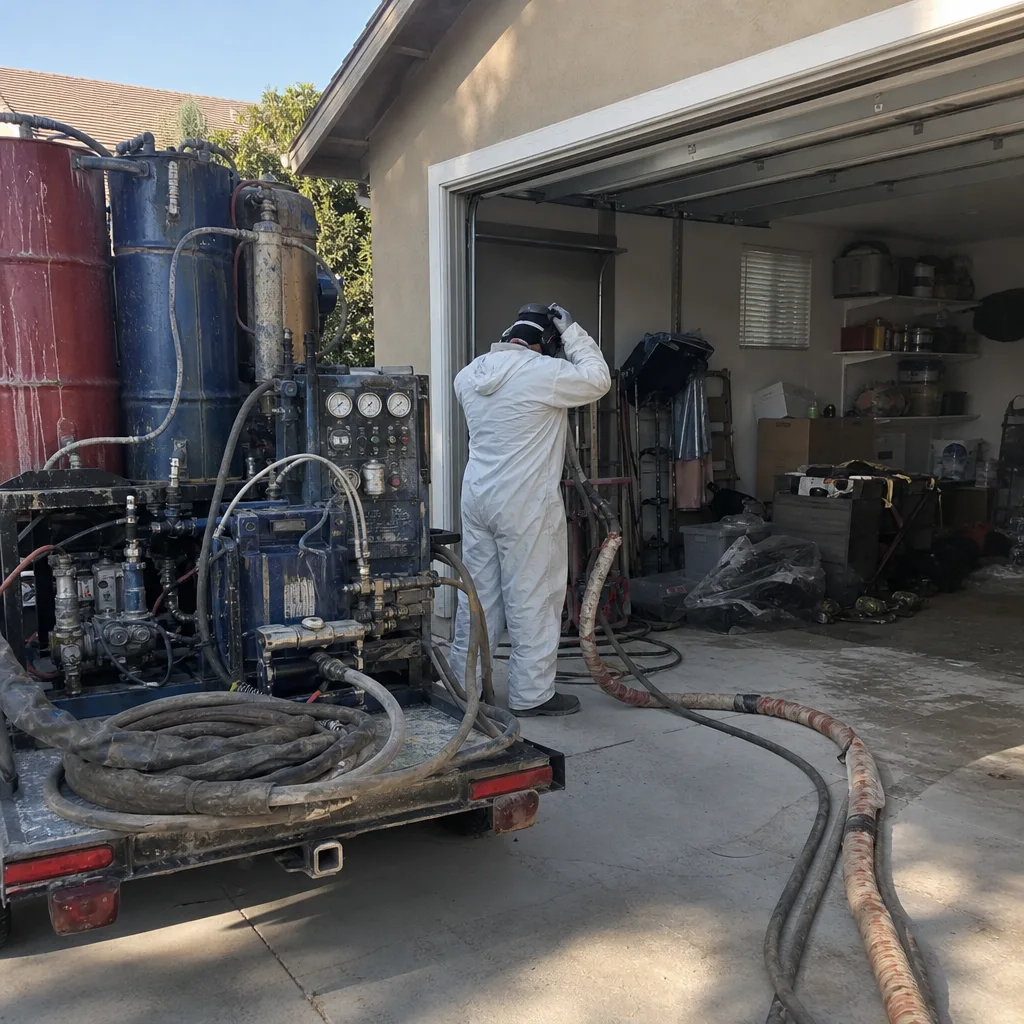
Spray foam – whether open-cell from Icynene or Demilec, or closed-cell from the same manufacturers – is used almost exclusively in open wall situations: new construction, a remodel that has already opened the studs, or an addition. Open-cell foam at $1.80 to $2.50 per square foot gives you R-13 per 3.5 inches and excellent air sealing built into the foam itself. Closed-cell at $3.00 to $4.25 per square foot gives you R-20+ per 3.5 inches and a Class II vapor retarder, which matters in specific assemblies where moisture drive from the exterior is a concern.
The short answer for a Westminster homeowner with intact drywall who wants to add wall insulation: dense-pack is the right starting point, costs less, and produces a good result when air sealing is done first. If your walls are already open for any reason, that is the time to have a real conversation about spray foam.
Westminster-Specific Considerations
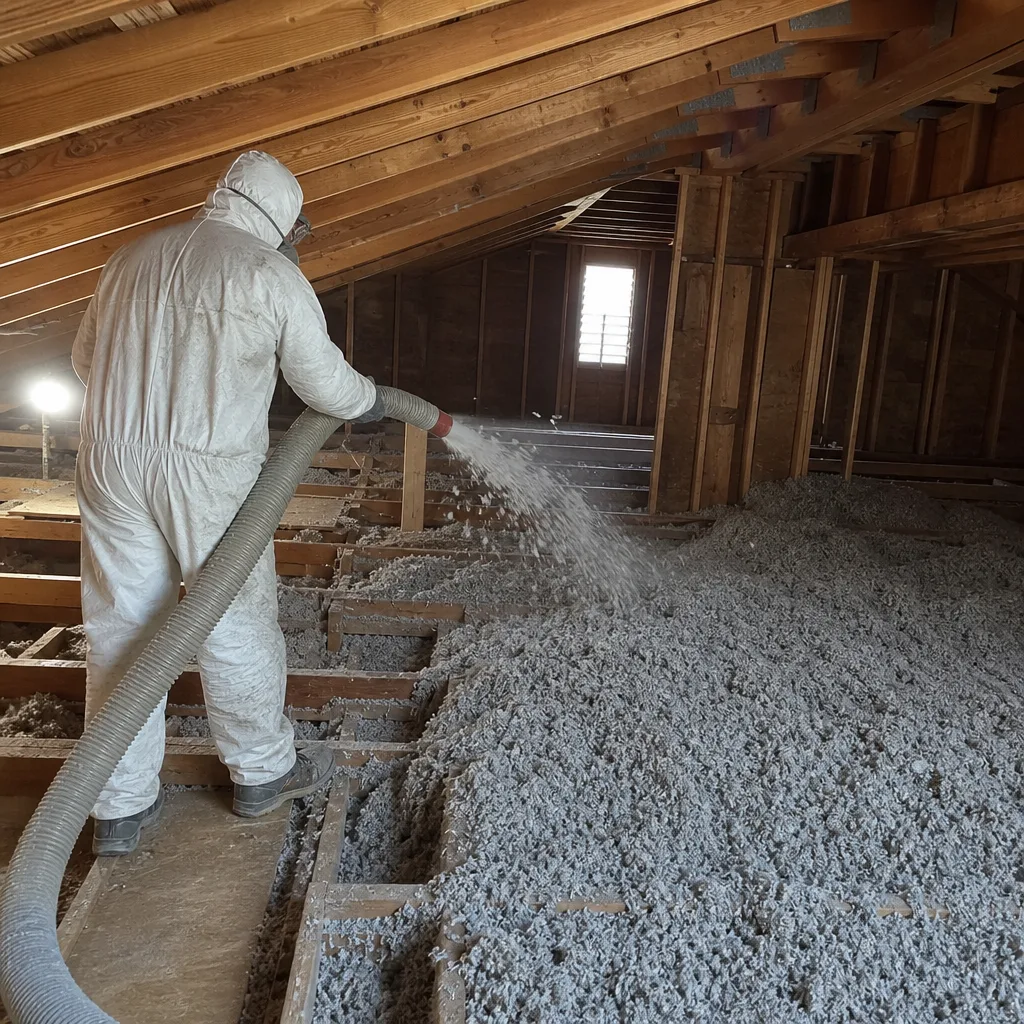
Westminster’s housing stock is more varied than many South Bay cities. The older neighborhoods east of Bolsa Chica Road include a mix of 1950s and 1960s wood-frame homes, many of which were built with no wall insulation at all and have balloon-frame construction where the stud cavities run continuously from the foundation to the roof without a fire block. Balloon framing complicates dense-pack installation because the cavity does not stop at the top plate – it keeps going into the attic. A contractor who does not identify this before drilling starts will either underfill the cavity or waste material trying to fill a vertical chase that was never meant to hold insulation. We identify framing type during the site assessment, before the written price is produced.
The newer subdivisions in the southeastern corner of Westminster near the Huntington Beach boundary, built largely between 1985 and 2005, tend to have standard platform framing with 2×4 studs and original fiberglass batts that have been in place for 20 to 35 years. Those batts are often compressed, moisture-affected, or rodent-disturbed. The question on those jobs is not just what to put in – it is whether to pull the degraded material first or dense-pack over it. Our position is that you do not add new insulation over material that is no longer performing; the photo documentation we produce before any new material goes in makes the condition visible so you can make an informed decision rather than relying on a technician’s verbal description.
Westminster also has a significant number of homes with older dual-pane windows installed in the 1990s that are now at or past their service life. A common mistake is spending on wall insulation before addressing windows that are failing thermally. We flag this during the site visit when it is relevant, because it affects which walls represent the highest-return investment. Our goal is that the money you spend on insulation produces a measurable result – not that every possible scope item appears on the invoice.
For Westminster homeowners considering a full building envelope approach, the logical sequence is: home energy audit first, attic air sealing and insulation second (typically the highest-return measure in a single-story home), then Wall Insulation in Westminster as the next layer of the envelope, and window and door sealing as a final refinement. That order is not arbitrary – it follows the blower-door data, which shows where your home is losing the most conditioned air before any work begins.
How the Estimate Process Works at Envelope Insulation Co.
Under Haven Standard Clause 1, the process is the same on every job: a written price before any work starts, every time. No exceptions, no “we’ll finalize the scope when we get there.” Before Wes Okafor or any member of the team lifts a tool, you have a flat written price, a written scope describing exactly what will be done, and a written warranty. That document is what you use to hold us accountable – it exists specifically so that “done right” is defined before the job starts, not after.
The estimate visit includes a site assessment – we look at the walls, identify the framing type, check for existing insulation, and note any conditions that affect the installation. On applicable jobs, we run a blower-door test before the work begins so there is a baseline number. When the job is complete, we run it again. The difference between those two numbers – expressed in CFM50, the cubic feet per minute of air flow at 50 pascals of pressure – is the documented result of the air sealing work. You receive that data as part of the job record, along with the photo documentation taken before, during, and after installation.
If you have a written estimate from another Westminster contractor, bring it. We will read it with you, explain what each line item means, and tell you honestly whether the scope covers what your home needs. That is not a sales step – it is a free second opinion, offered because the scope variation in this market is real and the difference between a complete scope and an incomplete one is not always visible in a total dollar figure.
FAQs – Wall Insulation Cost in Westminster
How much does wall insulation cost per square foot in Westminster?
Installed wall insulation in Westminster runs $1.50 to $4.25 per square foot of wall area, depending on the method. Dense-pack blown-in cellulose into existing closed walls costs $1.50 to $2.50 per square foot. Spray foam in open walls runs $1.80 to $4.25 per square foot depending on whether you use open-cell or closed-cell. Batt insulation during an open-wall remodel is the lowest-cost option at $0.85 to $1.75 per square foot. Call (562) 526-6978 for a written price specific to your home – estimates are free and include a flat written scope before any work begins.
Is wall insulation worth the cost in Westminster’s climate?
For most Westminster homes, yes – particularly those built before 1980 with no wall insulation. Westminster’s coastal location means summers are mild, but west-facing walls absorb significant afternoon heat load from June through September, and uninsulated walls contribute to HVAC runtime in both summer and winter. Homes that add R-13 to R-15 wall insulation along with attic air sealing typically see a 15 to 25 percent reduction in heating and cooling energy use, depending on baseline conditions. The blower-door test we run before and after gives you an actual measured number rather than a projected estimate, so you can verify what the work accomplished.
How long does wall insulation installation take in Westminster?
A dense-pack retrofit of an average 1,500-square-foot Westminster home typically takes one full day – sometimes a day and a half if the framing is complex or patching is extensive. Open-wall batt installation during a remodel moves faster, often four to six hours for a similar-sized home. Spray foam in open walls takes roughly the same time as batts for the install, with an additional cure window before the walls can be closed. We give you a time estimate in writing as part of the scope, so you know what the crew’s schedule looks like before they arrive.
What is the difference between blown-in and spray foam for wall insulation in Westminster?
Dense-pack blown-in (cellulose or fiberglass) costs $1.50 to $2.50 per square foot and works in existing closed walls without opening the drywall – it is the standard choice for Westminster retrofit projects. Spray foam costs $1.80 to $4.25 per square foot and is used in open walls; it provides both insulation and air sealing in a single material, which has advantages in specific assemblies. Closed-cell spray foam also acts as a vapor retarder, which matters in walls where moisture drive is a concern. The right choice depends on whether your walls are open, your R-value target, and your moisture management needs – all of which we assess before producing a written price.
Does wall insulation require a permit in Westminster?
In most cases, adding insulation to existing wall cavities without structural modifications does not require a building permit in Westminster under the City of Westminster’s current building code. However, if the work is part of a larger remodel that includes opening walls, moving framing, or altering the building envelope in other ways, a permit may be required for the overall project. We identify permit requirements during the site assessment and note them in the written scope. If a permit is needed for your specific project, that cost and the filing process are addressed before work starts – not discovered after the fact.
Written by Wes Okafor, Owner at Envelope Insulation Co. (operating as Topside Attic Insulation Westminster), serving Westminster since 2016.
Pricing reflects the Westminster market as of 2026. Topside Attic Insulation Westminster offers free estimates – call (562) 526-6978.
What Our Customers Say
"Crawl space encapsulation done properly. Photographs of the vapour barrier at every seam, and the damp smell in the hallway is gone."
- Ainsley P."Turned up on time, protected the hallway, and the written scope matched what was actually done."
- Bruno S."They air-sealed the attic floor before insulating and showed me the blower-door number before and after. The upstairs is finally the same temperature as downstairs."
- Marisol D.