
Rockwool Crawl Space Encapsulation & Vapor Barrier in Westminster: What to Know First
We provide independent Rockwool crawl space encapsulation and vapor barrier service in Westminster, with most jobs scheduled within 48 hours and completed in a single day. As an independent Rockwool service provider, we carry no manufacturer authorization, which means we source parts based on what actually fixes your crawl space, not what a brand catalog limits us to. Most Westminster crawl space encapsulation jobs with Rockwool insulation run between $3,200 and $7,800 depending on square footage, existing moisture damage, and whether the vapor barrier needs full replacement or spot repair. This page is for homeowners who found Rockwool products in their crawl space and need to know whether the insulation can stay, what the moisture control setup should look like, and what it costs to do it right. Call (562) 526-6978 for a written price before any work starts.
How Rockwool Products Fail - and How We Fix Them
- Rockwool Comfortboard 80 waterlogging in Westminster’s clay-heavy soils. The dense mineral wool boards wick moisture upward when the ground vapor barrier is compromised, and in Westminster’s low-lying areas near Little Saigon, we’ve pulled Comfortboard 80 that weighed twice its dry weight. We remove the saturated boards, install a 20-mil reinforced polyethylene vapor barrier with sealed seams, then replace with fresh Rockwool only after a 48-hour dehumidification cycle confirms the space is dry.
- Rockwool Comfortbatt sagging between floor joists in crawl spaces over 60% relative humidity. The friction-fit batts lose their grip when wood expands and contracts through Westminster’s mild but damp winters. We find this most often in 1960s ranch homes off Bolsa Avenue. Our fix: mechanical fasteners plus light-contact strapping, not just re-friction-fitting the same batt back up.
- Rockwool AFB (Acoustical Fire Batt) installed in non-fire-rated crawl space applications. Homeowners sometimes inherit these from previous owners who used whatever was on the truck. AFB is denser and slower to dry than Comfortbatt; in a crawl space, it becomes a moisture sponge. We document the misapplication, remove it, and specify the correct product for the actual application.
- Rockwool cavity fill leaving thermal bypasses at rim joists and sill plates. The batts don’t conform to irregular framing the way spray foam would, and in Westminster’s older post-war construction with notched joists and mixed lumber dimensions, we regularly find 1- to 3-inch gaps that defeat the R-value on the bag. We seal these bypasses first with two-part closed-cell foam, then reinstall Rockwool where appropriate. Seal the bypasses first. The R-value on the bag is only real if the air has nowhere else to go.
- Rockwool products contaminated by rodent activity in unsealed crawl spaces. The mineral wool doesn’t support mold, but rodents nest in it readily. We’ve found this in Westminster homes near the Westminster Golf Course where field mice access through foundation vents. We remove contaminated material, rodent-proof the perimeter, then reinstall with proper air-sealing details that weren’t part of the original 1980s or 1990s install.
Our Rockwool Crawl Space Encapsulation & Vapor Barrier Process
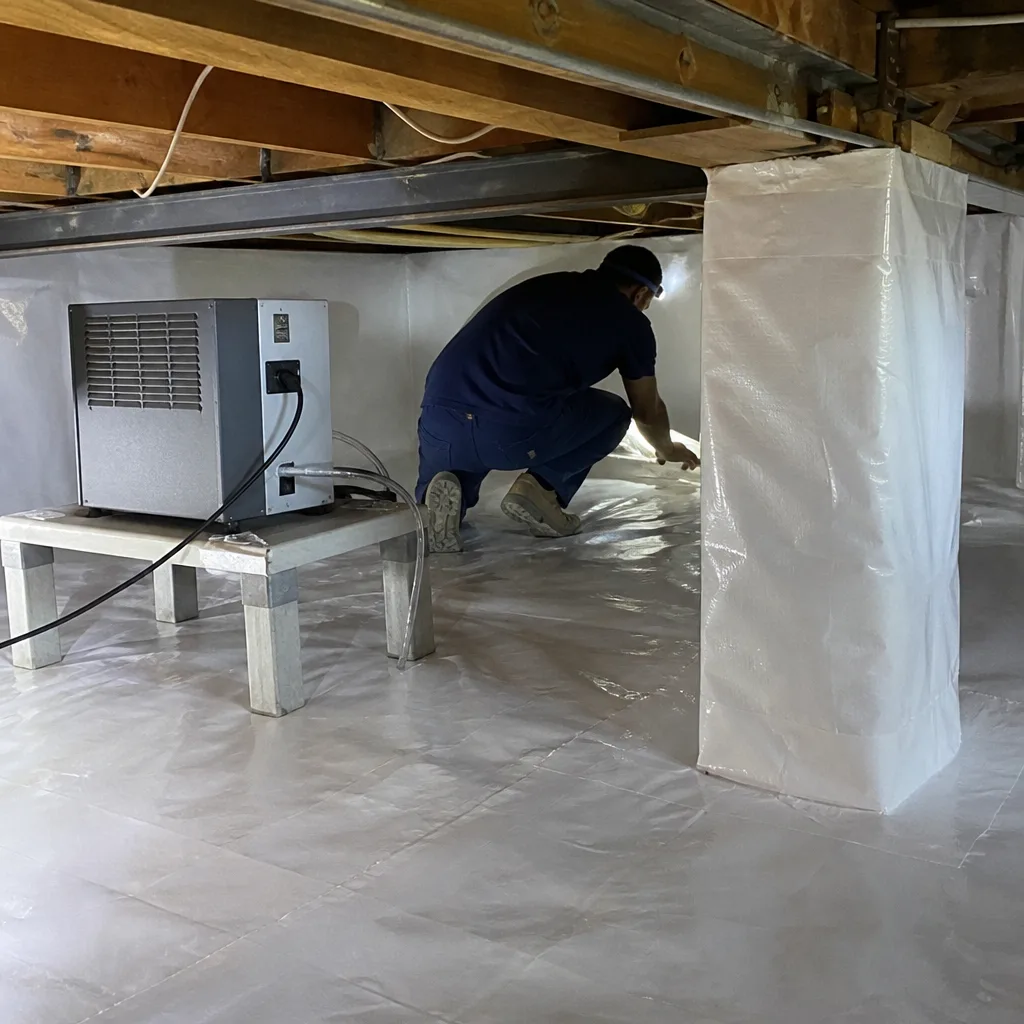
- 1
Moisture and damage assessment. We measure relative humidity at three points, photograph existing Rockwool condition, and check for wood rot with a probe meter. You get these photos in your Documented Photo Record.
- 2
Blower-door-informed air leakage mapping. On homes with conditioned crawl space access, we run a blower-door test to quantify how much conditioned air is being lost through the floor assembly. The pre-work number goes on your written scope.
- 3
Air sealing before any insulation touch. Rim joists, sill plates, plumbing penetrations, and electrical chases get sealed with two-part closed-cell foam. We do not remove and reinstall Rockwool over unsealed bypasses.
- 4
Vapor barrier installation or repair. New 20-mil reinforced polyethylene with overlapped, taped seams and mechanical fastening to walls and piers. If your existing barrier is salvageable, we patch and re-tape only where needed.
- 5
Rockwool reinstallation or replacement with material-matched product. We source from our regular suppliers carrying Owens Corning, Johns Manville, Knauf, Rockwool, CertainTeed, Icynene, Demilec, and GreenFiber. No proprietary lock-in means we use what’s right for your assembly.
- 6
Post-work documentation. Final photos, settled-depth measurements where applicable, and on jobs with blower-door access, the after-test number showing air leakage reduction. Written warranty and 365-Day Done Right Promise delivered before we leave.
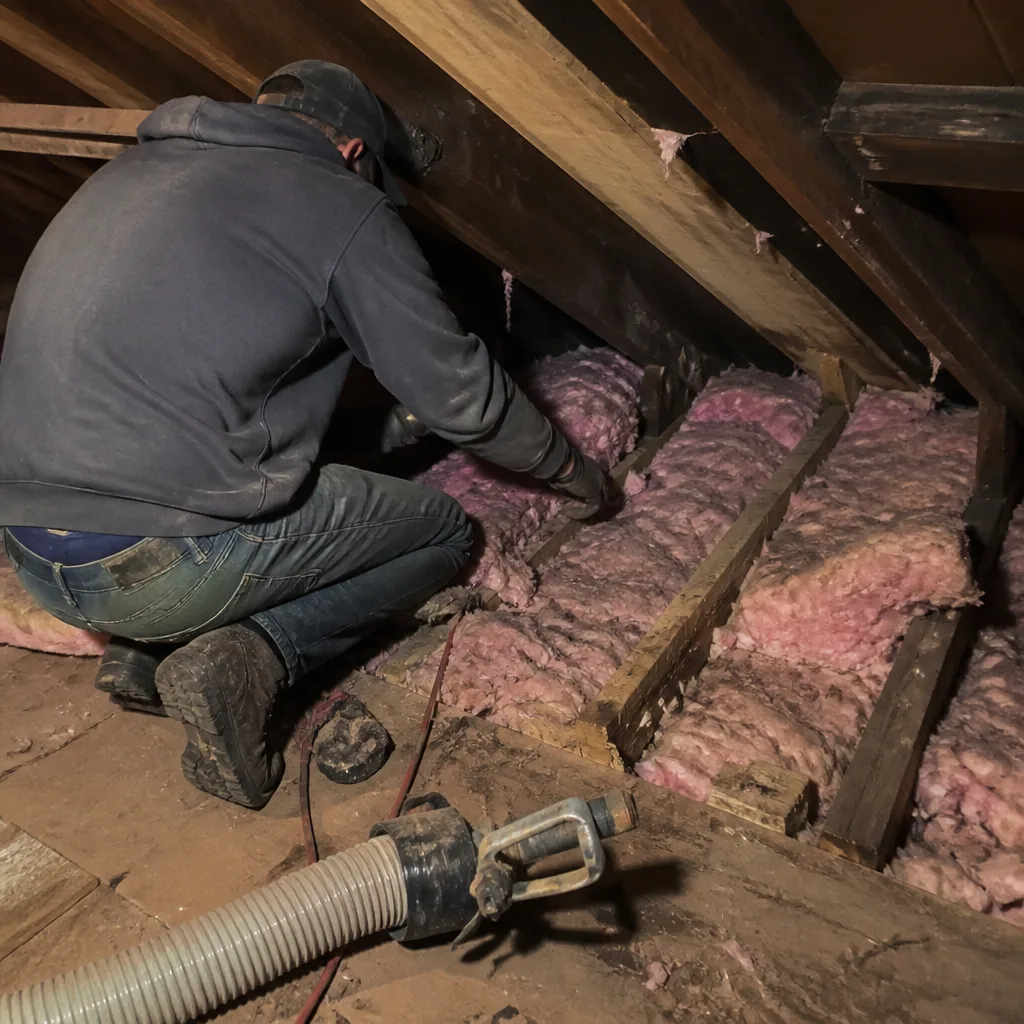 Before
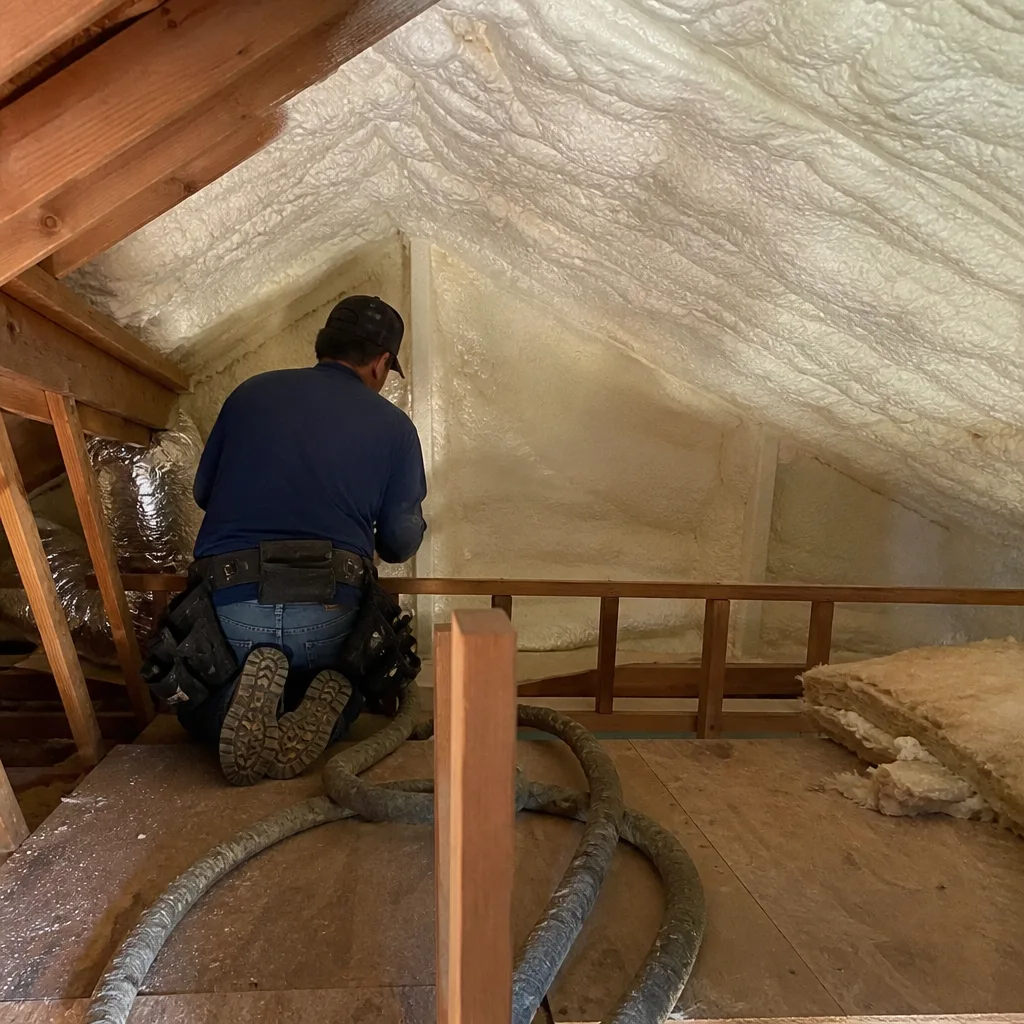 After
AfterWhat Rockwool Crawl Space Encapsulation & Vapor Barrier Costs in Westminster
Most Rockwool crawl space encapsulation and vapor barrier jobs in Westminster fall between these ranges:
- Spot vapor barrier repair with Rockwool batt repositioning: $3,200-$4,500
- Full vapor barrier replacement, air sealing, and Rockwool reinstall in a 1,200 sq ft crawl space: $5,500-$7,800
- Full encapsulation with dehumidifier specification, insulation replacement, and rodent proofing: $7,500-$11,000
What moves the price: crawl space height (less than 18 inches adds labor), active water intrusion requiring sump pump coordination, extent of contaminated insulation removal, and whether the home needs a dedicated dehumidifier sized to the space. We don’t quote over the phone without seeing it, but we do provide a written price before any work starts, always, and we offer a Free Second Opinion on any written estimate you’ve already received. Call (562) 526-6978 to schedule.
Why Westminster Homeowners Call Topside Attic Insulation Westminster for Rockwool Work
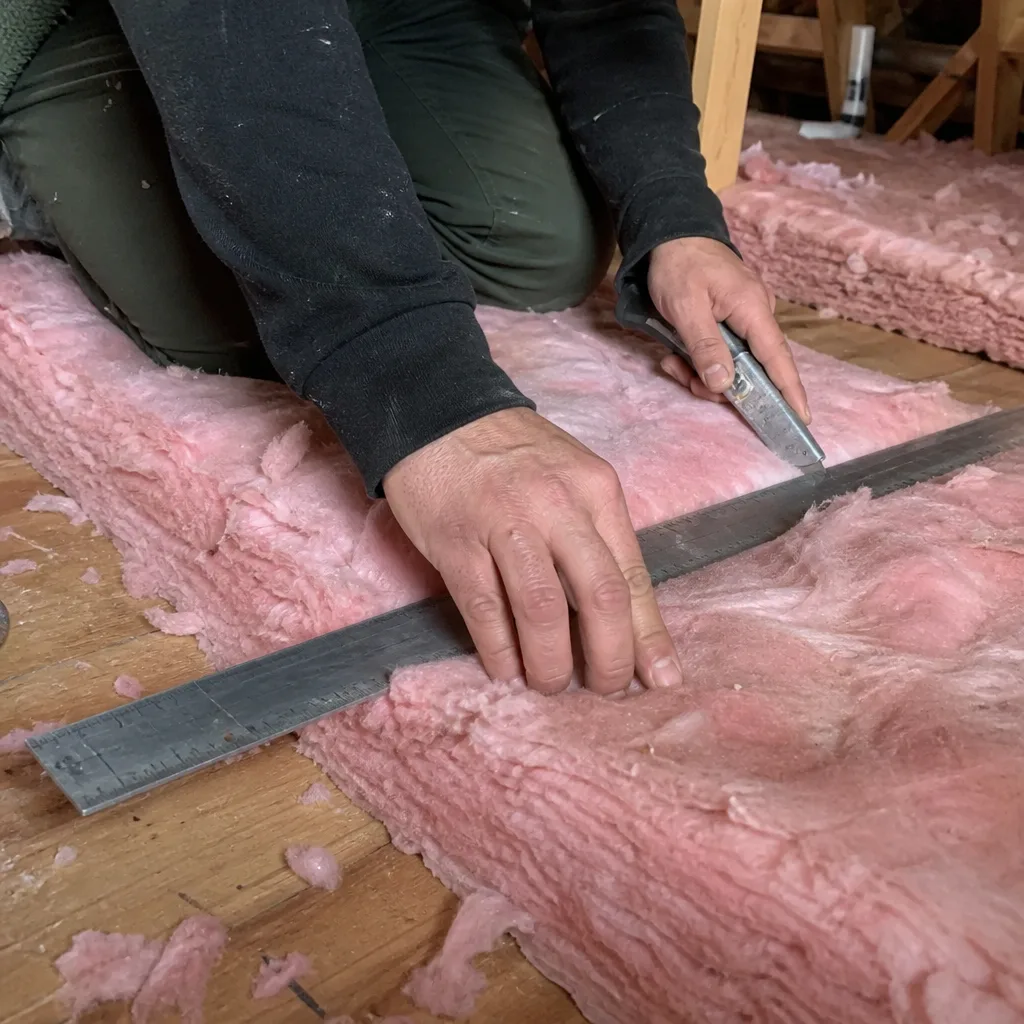
Wes Okafor has spent the better part of two decades running insulation crews across Orange County, and the neighborhoods around Westminster Mall have seen more than a few of his jobs: existing attic insulation pulled, bypasses around top plates sealed with two-part foam, then blown-in fiberglass brought up to R-38 before a final settled-depth measurement is photographed and left with the homeowner. That same documentation discipline applies to every crawl space job we run. We’re independently owned and operated under The Haven Standard since 2016, with 9,000+ homes sealed and insulated, every one with a written price before work started and a documented record when the crew left. Our technicians are background-checked and uniformed; calls are answered by a live person 24/7. We also service Reflectix and other brands, so if your crawl space has mixed materials from previous owners, we don’t need to call in a second contractor.
FAQs
No, our work does not affect Rockwool’s product warranty, which covers manufacturing defects only and does not extend to installation condition. As an independent service provider, we document what we find and what we do, but we cannot file warranty claims on your behalf with Rockwool. Call (562) 526-6978 if you’d like us to assess whether your issue is installation-related or product-related.
Yes. We stock common Rockwool batt sizes and vapor barrier materials on our Westminster-area trucks, and our suppliers in Orange County carry Comfortbatt, Comfortboard, and AFB lines with will-call availability. Most jobs don’t wait on parts. If your crawl space has an unusual specification, we’ll know before we leave the estimate.
Repair is cheaper when less than 30% of the insulation is compromised and the vapor barrier has isolated failures. Full replacement makes sense when moisture has degraded the mineral wool throughout, when rodent contamination is extensive, or when the original install skipped air sealing and you’re paying to heat and cool the crawl space. We quote both paths when both are viable. Call (562) 526-6978 for a written comparison.
We can assess within 24-48 hours and start most jobs within 2-4 business days. Emergency water intrusion gets prioritized. The actual repair takes one day for most Westminster crawl spaces under 1,500 square feet; drying time before Rockwool goes back in adds 24-48 hours if we need to run dehumidification.
We do when the crawl space is conditioned or directly connected to the thermal envelope, which lets us run a meaningful blower-door test - a pressurization reading that shows, in one number, how much air your building envelope is losing. On vented crawl spaces, we document air sealing at the floor plane with smoke pencil and infrared imaging instead. Either way, you get the evidence in writing.
Written by Wes Okafor, Owner & Lead Insulation Technician, Topside Attic Insulation Westminster at Topside Attic Insulation Westminster, serving Westminster and nearby areas.