
Owens Corning Radiant Barrier Installation: The Westminster Owner’s Guide
Most Owens Corning radiant barrier installations in Westminster run between $1,800 and $3,400 for a typical 1,200-2,000 square foot attic, and we stock the full OC system on our truck for same-day completion when the attic is accessible. The barrier itself - a perforated, reinforced aluminum sheet product, usually OC’s AtticCat-compatible line or the standalone radiant barrier rolls - reflects up to 97% of radiant heat, but only if it’s installed with proper air gaps and the attic floor below it is already sealed. Homeowners usually figure out something’s wrong when their upstairs bedrooms won’t cool below 78°F even after sunset, or their July electric bill jumps $80-$140 year-over-year with no rate change.
Which Owens Corning Models This Applies To
Owens Corning sells radiant barrier in two configurations, and mixing them up is the most common compatibility failure we see in Westminster attics.
The AtticCat Blown-In System compatible barrier is a perforated, double-sided aluminum sheet sold in 4-foot by 250-foot rolls, designed to be stapled to roof deck undersides before blown-in fiberglass goes over the floor. The perforations let moisture escape - critical in Westminster’s marine layer months when attic humidity can spike above 70% overnight. The standalone Owens Corning Radiant Barrier Roll (product code varies by distributor, but typically marked “RB-481” or similar on the wrap) is the same material without the AtticCat branding, and it’s what we carry for retrofits where the floor insulation is already in place.
Here’s the gotcha: OC’s barrier is 0.006-inch aluminum laminated to a woven polyethylene scrim. Some big-box stores stock a thinner 0.004-inch private-label version that looks identical on the roll but tears during staple installation and loses reflectivity faster. We source through authorized OC distributors - same lot numbers, same mil spec. We also stock Reflectix if a homeowner wants a double-bubble alternative for specific cathedral ceiling applications, though for standard Westminster gable roofs the OC product tests better on emissivity (0.03 vs. 0.05).
To identify what you have now, check the printed edge strip on the roll remnant or any loose pieces: Owens Corning marks their product with a repeating “OC” logo and the roll’s ASTM C1313 compliance statement. No marking usually means aftermarket or expired stock.
Signs Your Owens Corning Radiant Barrier Installation Is Failing
- Hot ceiling patches in late afternoon. The barrier’s reflecting surface has oxidized or collected dust to the point where emissivity has risen above 0.10. In Westminster, this happens fastest above the southwest-facing roof planes where Santa Ana winds drive dust through ridge vent gaps.
- Visible tearing or sagging between rafters. The polyethylene scrim has degraded from attic heat cycling - 140°F summer peaks to 45°F winter lows, repeated hundreds of times. Once the scrim separates, the aluminum sheet flops and loses its critical ¾-inch air gap on at least one side.
- Moisture staining on the barrier’s top surface. This means the perforations are clogged with dust or the wrong unperforated product was installed. Trapped moisture hits the aluminum, and you’re looking at potential roof deck rot within two seasons.
- Insulation depth looks right but upstairs rooms still cook. The barrier was installed directly on top of existing insulation instead of the roof deck, eliminating the required air gap. We see this in Westminster’s 1960s-1980s tract homes where a prior owner tried a shortcut during a weekend project.
- Recent rodent activity in the attic. Squirrels and roof rats tear barrier material for nesting. The damage is usually localized but the thermal bypass is immediate - one 12-inch gap can raise the effective attic temperature by 15°F across a 400-square-foot zone.
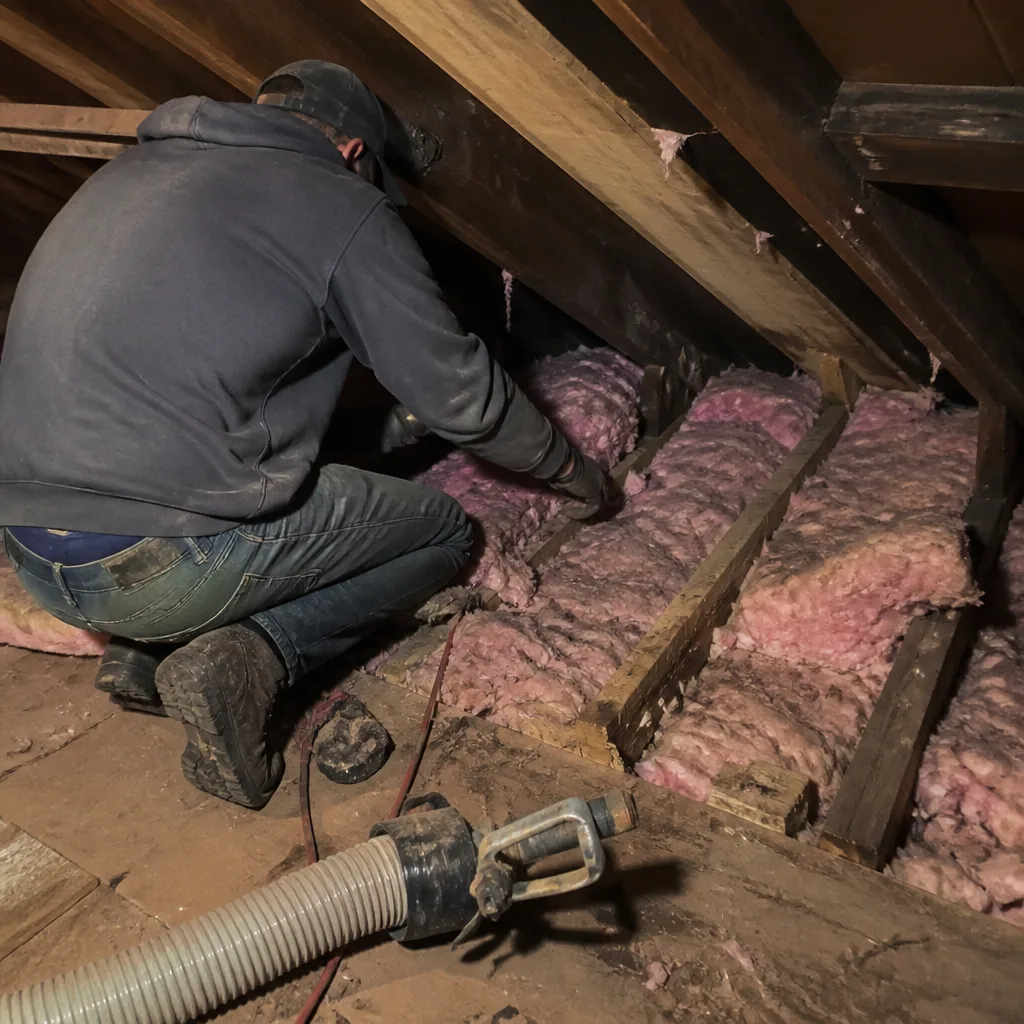 Before
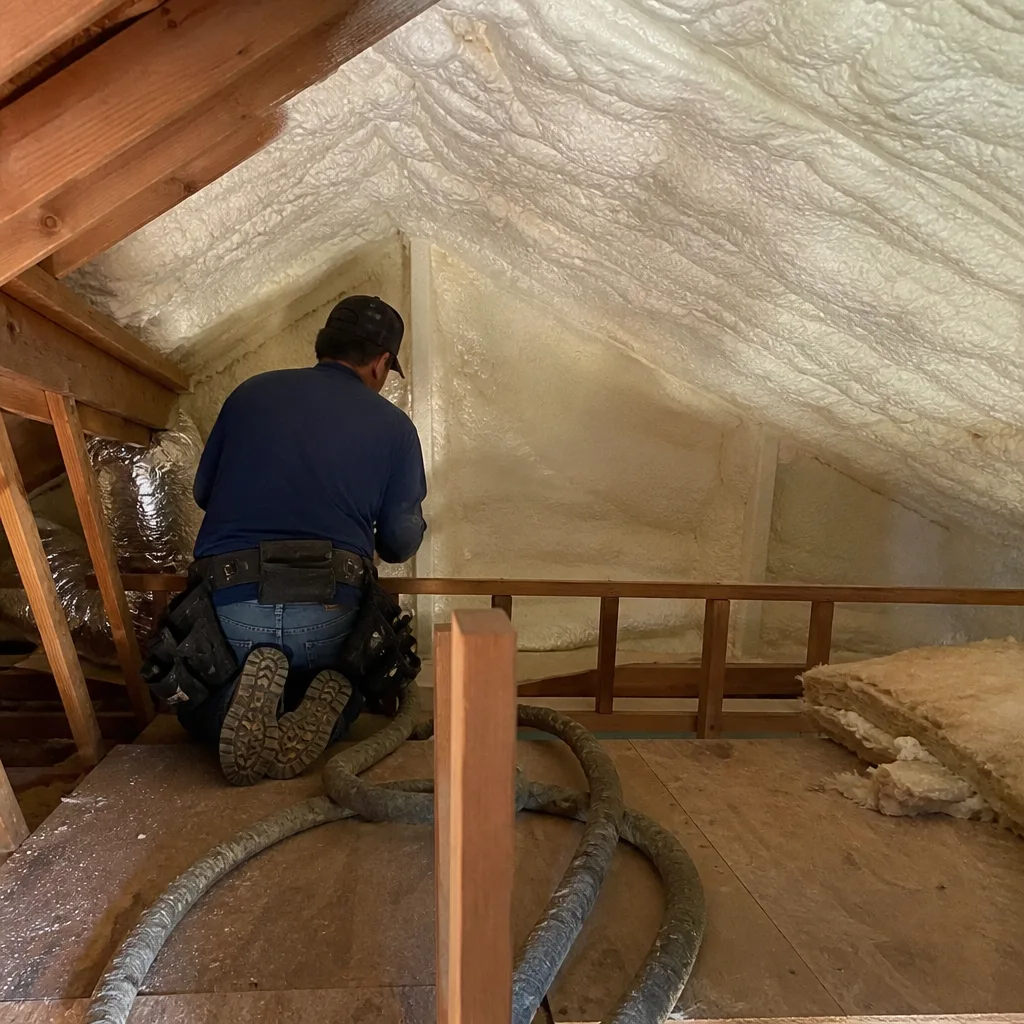 After
AfterReplacement Cost & What’s Included
Here’s how pricing breaks for a typical Westminster installation:
| Scope | Price Range |
|---|---|
| Standard gable roof, 1,200-1,600 sq ft attic, barrier only | $1,800-$2,600 |
| Larger or cut-up roof, 1,600-2,400 sq ft, barrier only | $2,400-$3,400 |
| Add attic air sealing (top plates, can lights, penetrations) | +$400-$800 |
| Add blown-in fiberglass to R-38 after barrier | +$1,200-$2,000 |
The range depends on three things: attic accessibility (scuttle vs. pull-down stairs vs. no access), how much old barrier or debris needs removal, and whether we find unsealed bypasses that have to be addressed first. We don’t quote by phone and then change the number on site - Haven Standard Clause 1 means a flat written price before anyone enters the attic, with the scope itemized line by line.
What the price covers: OC-spec barrier material, stainless staples rated for the aluminum-scrim laminate, full perimeter sealing at walls and ridges, and a post-installation photo record showing every bay. Work carries our 365-Day Done Right Promise. On jobs where we’re also air sealing, you’ll get before-and-after blower-door numbers - the pressurization reading that shows, in one figure, how much conditioned air your envelope was losing.
DIY or Call Us?
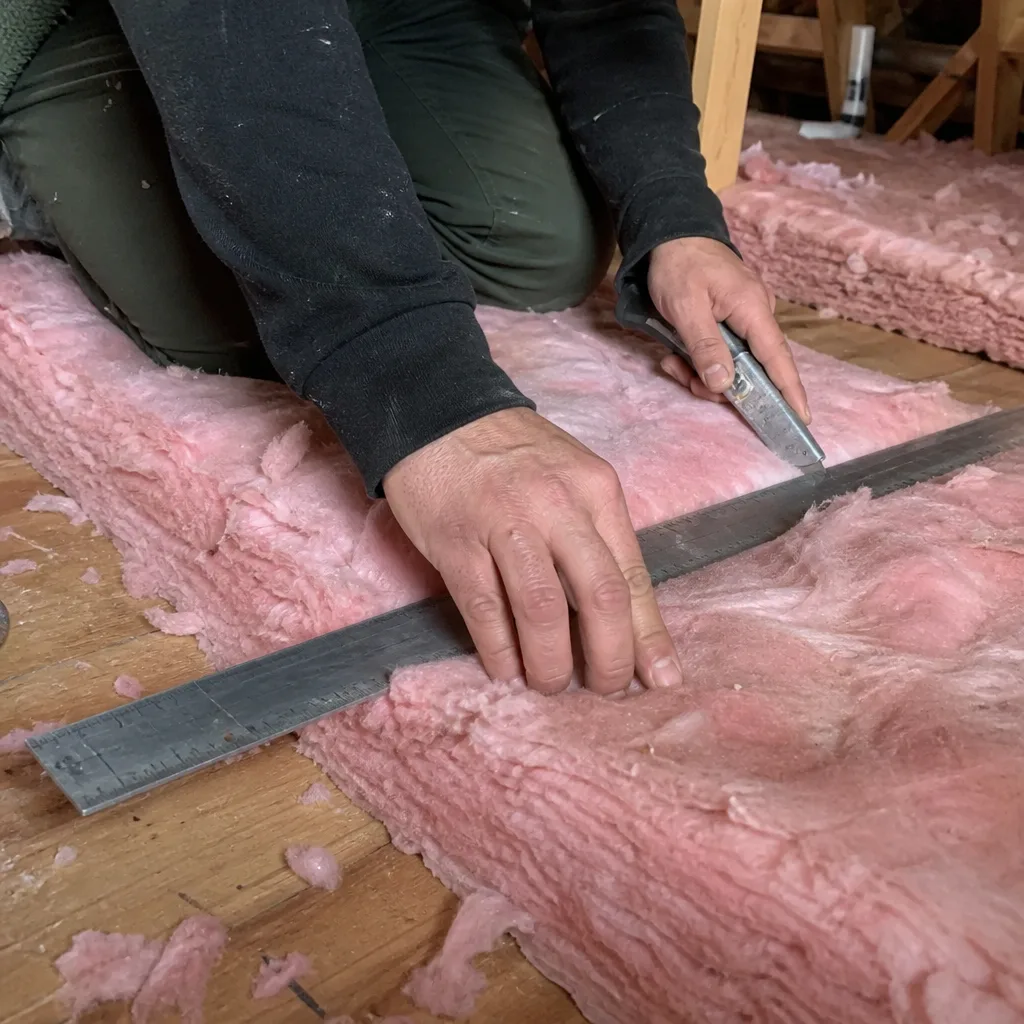
There’s a safe middle ground here. A homeowner can check the attic access, photograph any product markings on existing barrier material, and confirm whether the current installation has the required air gap on both sides. What you can’t safely do: work on a roof deck in 130°F attic heat, handle staple guns overhead while balanced on joist edges, or evaluate whether that dark spot is dust, oxidation, or the start of deck rot.
The real risk isn’t injury - it’s performance failure from invisible errors. A barrier installed with the reflective side facing the wrong direction, or with gaps at the ridge that let convective heat loop behind it, looks fine from below and does almost nothing. We’ve pulled down three DIY Westminster installations in the past two years where the homeowner spent a full weekend and $600 in materials for a system that tested at less than 20% effectiveness.
Seal the bypasses first. The R-value on the bag is only real if the air has nowhere else to go. If your attic floor leaks 3,000 CFM50, a radiant barrier is decorative. Wes Okafor’s position on this hasn’t changed since his weatherization days in Chicago - he still keeps those original blower-door sheets in a binder on his truck.
Call (562) 526-6978 for a written price before any work starts. Estimates are free, and we bring a Free Second Opinion on any competing quote you’ve already collected.
FAQs
In Westminster’s specific conditions - marine layer moisture, Santa Ana dust, and attic heat cycling - a properly installed OC barrier maintains effective reflectivity for 15-25 years. The southwest-facing roof planes degrade faster; we see measurable emissivity rise at year 12 on those sections in homes within a mile of the 405 corridor. Call (562) 526-6978 and we can test your current barrier’s reflectivity with a handheld meter during the estimate.
Localized tears can be patched with matching OC material if the surrounding scrim is still sound, but sagging usually means the scrim has degraded across a whole bay and patching is false economy. We photograph the damage during inspection and show you exactly which sections can stay. Most Westminster retrofits end up being full replacement because the original installation is 20+ years old. Call (562) 526-6978 for an exact assessment - estimates are free.
A standard Westminster gable roof, 1,500 square feet, takes one crew one day - typically 6-8 hours including setup, old material removal if needed, and photo documentation. Cut-up roofs with dormers or multiple attic chambers run into a second day. We don’t leave mid-job; the crew stays until the documented record is complete. Call (562) 526-6978 to check current scheduling.
We carry full rolls of the OC perforated barrier on the truck, enough for most residential attics up to 2,500 square feet. For larger jobs or the rare cathedral ceiling application, we pull from our distributor in Orange with next-morning availability. No homeowner waits on shipping. Call (562) 526-6978 to confirm stock for your specific roof size.
Written by Wes Okafor, Owner & Lead Insulation Technician, Topside Attic Insulation Westminster at Topside Attic Insulation Westminster, serving Westminster and nearby areas.