
Knauf Vapor Barrier Installation: The Westminster Owner’s Guide
Knauf vapor barrier installation in Westminster typically runs $1,800-$3,400 for a full crawl space or attic application, and we stock Knauf-compatible 6-mil and 10-mil reinforced polyethylene on our Westminster trucks for same-day starts. Most homeowners notice the problem first as a musty smell in January when Santa Ana winds pull dry air through gaps, or in March when marine layer moisture collects on the underside of old kraft-faced batts. The barrier’s job is simple: block ground moisture and conditioned-air leakage from crossing the envelope. When it tears at seams, pulls away from sill plates, or degrades at puncture points around plumbing penetrations, the insulation downstream absorbs that moisture and the R-value collapses.
Which Knauf Models This Applies To
Knauf does not sell vapor barrier as a standalone “model” like a garage door opener. Instead, their moisture management components ship as part of system specifications: Knauf EcoSeal for attic air-sealing compatibility, Knauf Insulation’s recommended 6-mil minimum polyethylene for crawl spaces under their fiberglass batts, and their 10-mil cross-laminated reinforced product for high-traffic or rodent-exposed crawl spaces in Westminster’s older slab neighborhoods near Bolsa Chica Road.
To identify what you have, look for the Knauf bag label color: white-labeled batts with kraft paper facing include a factory-attached vapor retarder, not a barrier, and that paper fails fast in Westminster’s clay-heavy soils where groundwater wicks upward. If your existing barrier is loose-laid polyethylene, check the mil thickness stamped in the corner, usually every 24 inches. Anything below 6 mil was likely a builder-grade shortcut. We also stock Reflectix as an alternative radiant barrier-plus-vapor-retarder hybrid for specific Knauf attic systems where summer attic temperatures exceed 140°F, which they do routinely in Westminster’s inland-adjacent lots east of Beach Boulevard.
Topside Attic Insulation Westminster is an independent service provider, not affiliated with Knauf. We source Knauf-compatible materials through regional distribution and do not represent that Knauf endorses our installation methods.
Signs Your Knauf Vapor Barrier Installation Is Failing
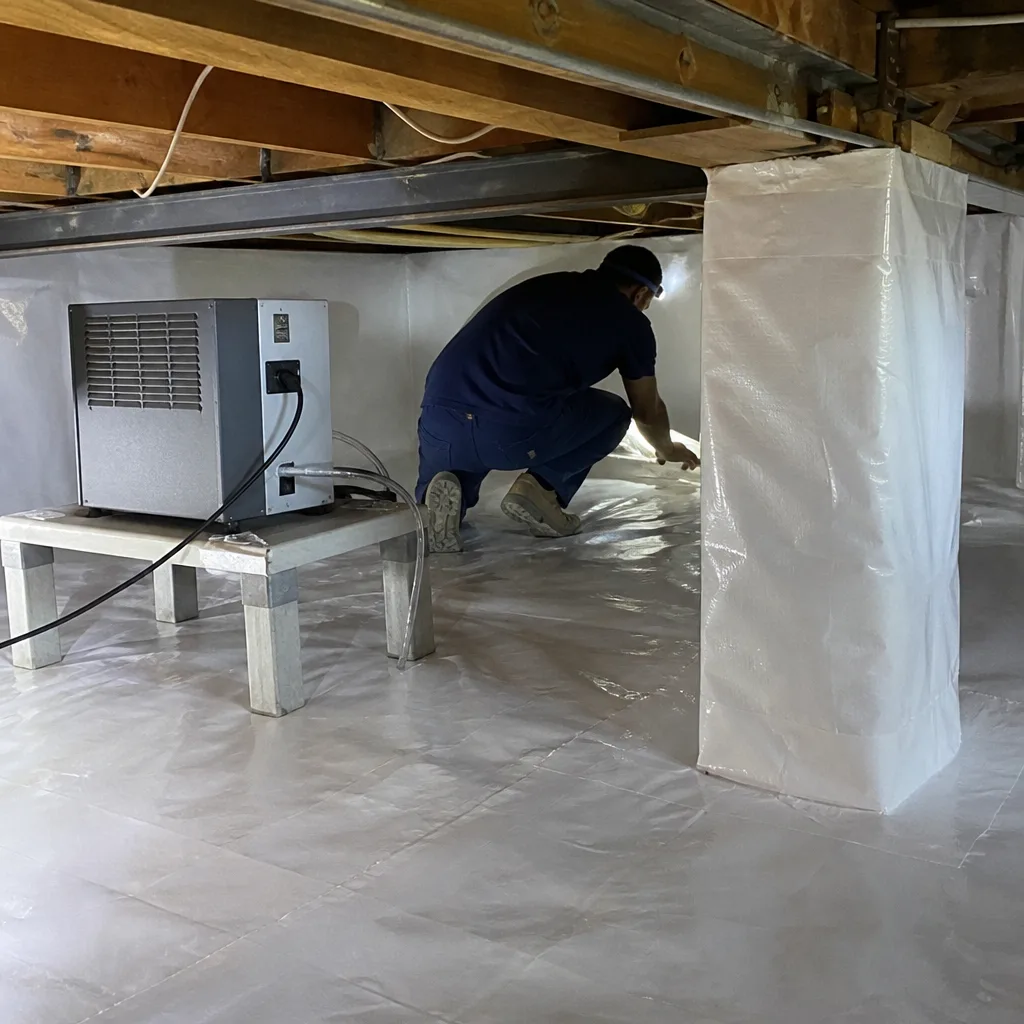
- Musty odors that worsen after rain. Westminster’s winter storms drop moisture into crawl spaces through foundation vents, and a compromised barrier lets that vapor reach floor joists. The smell is mold metabolizing cellulose debris on the wood surface, not the barrier itself.
- Sagging or fallen insulation. When vapor passes through a torn barrier, fiberglass batts absorb weight and compress. We’ve pulled batts in the Park View neighborhood that tested at R-13 despite R-30 labels, entirely from moisture compression.
- White or grey crystalline deposits on the barrier surface. This is efflorescence, mineral salts left when groundwater evaporates through concrete and hits the cooler barrier underside. It means the barrier is no longer sealed to the wall.
- Condensation on ductwork or plumbing in summer. A missing or punctured barrier lets warm, moist crawl space air contact cold surfaces. In Westminster, this peaks August through October when slab temperatures lag behind air temperature by six weeks.
- Rodent trails or nesting in insulation. Torn barrier edges create entry highways. Once rodents compress fiberglass for nesting, the vapor path is permanent and the insulation must come out with the barrier replacement.
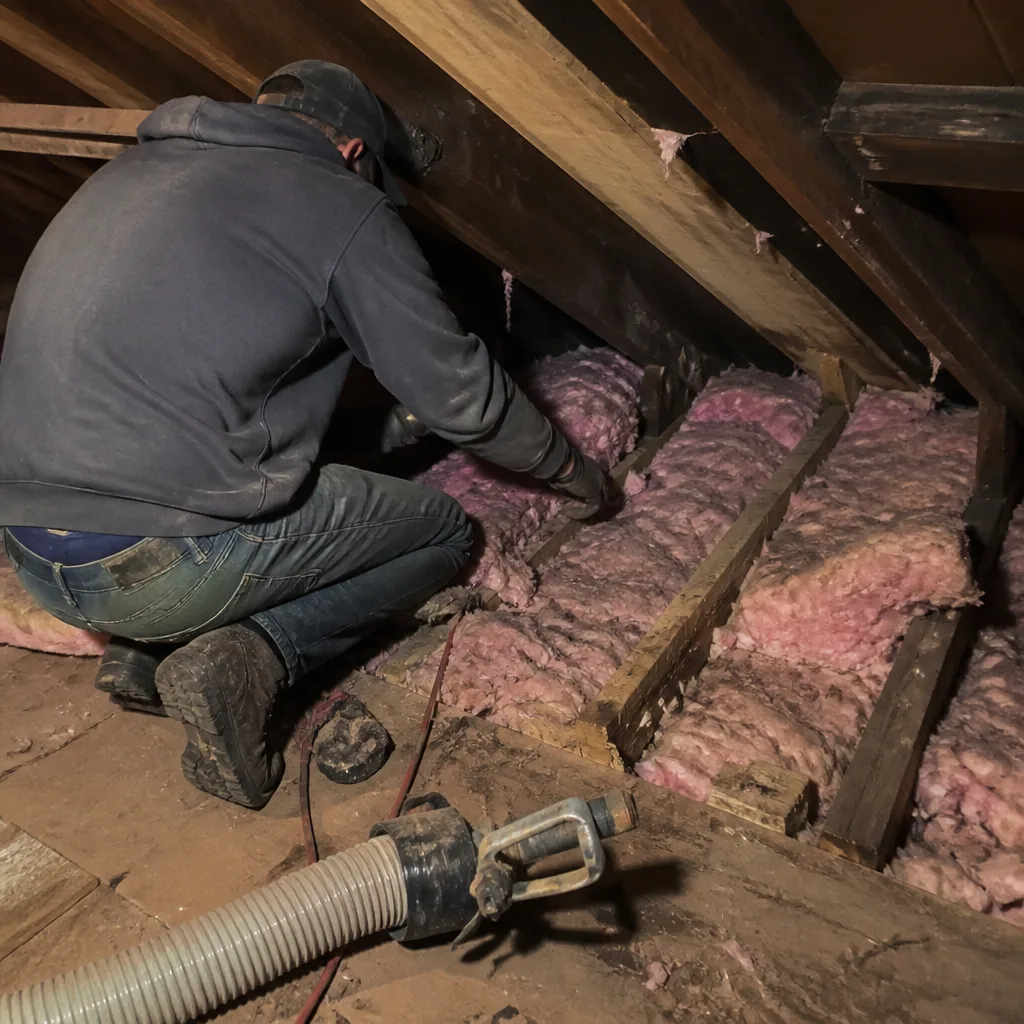 Before
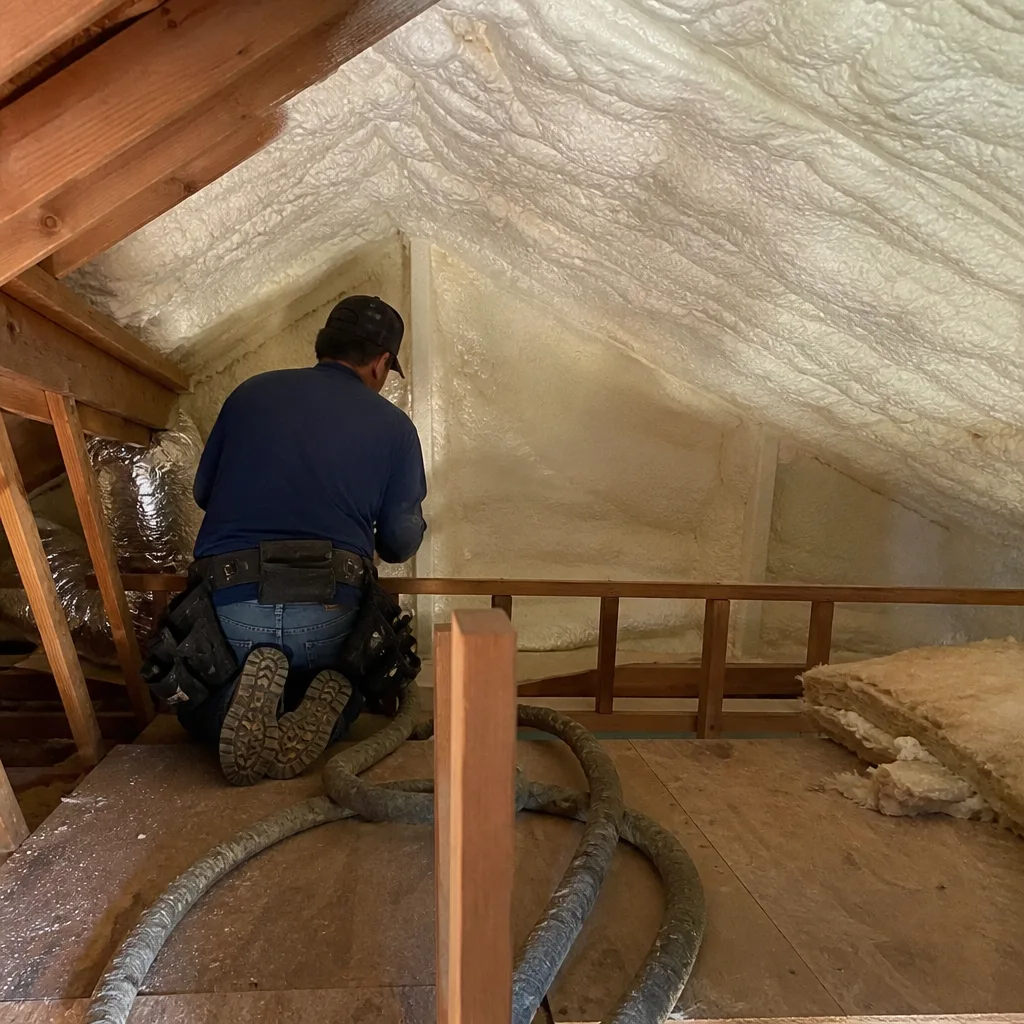 After
AfterReplacement Cost & What’s Included
Most full Knauf vapor barrier replacements in Westminster run $1,800-$3,400 for a 1,200-2,000 square foot crawl space or attic floor. The range depends on three factors: whether we remove degraded existing material, how many plumbing and electrical penetrations need custom sealing, and whether the space requires temporary dehumidification before new barrier installation.
Our price includes Knauf-compatible 6-mil or 10-mil reinforced polyethylene, seam overlap taped with pressure-sensitive vapor-seal tape, mechanical fastening at sill plates and piers, and a Documented Photo Record of every seam and penetration detail. We do not start work without a Written Price Before Any Work Starts, always, per Haven Standard Clause 1. The 365-Day Done Right Promise covers seam separation or fastener pull-out. Before-and-after blower-door numbers are provided on applicable jobs where the vapor barrier ties into attic air-sealing work.
Materials sourced from Owens Corning, Johns Manville, Knauf, Rockwool, CertainTeed, Icynene, Demilec, and GreenFiber - no proprietary product lock-in.
DIY or Call Us?
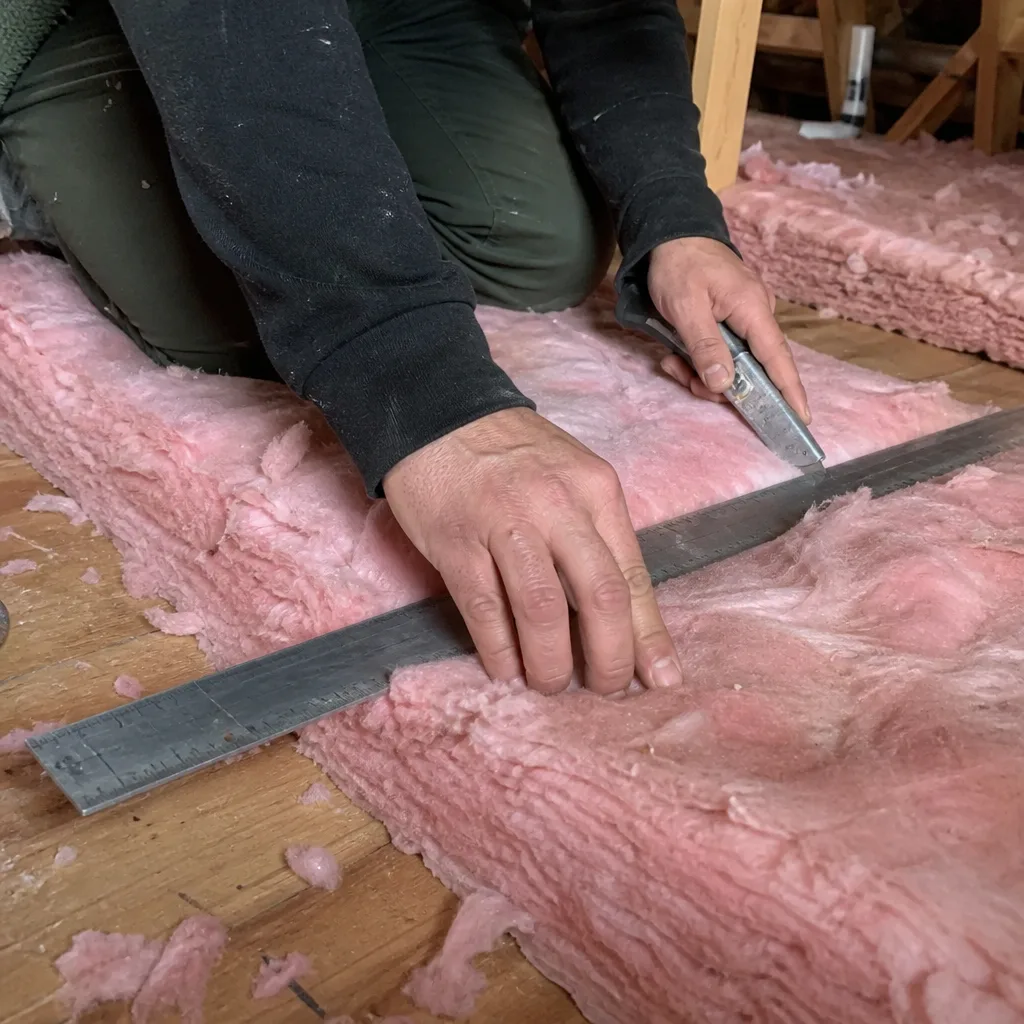
A homeowner can safely inspect their own crawl space vapor barrier with a headlamp and knee pads. Look for tears at seams, pulled fasteners at sill plates, and pooling water that indicates a drainage problem upstream. What you cannot safely do is install a new barrier to code in an enclosed crawl space: California Title 24 requires 6-mil minimum, 12-inch overlap at seams, and sealed penetrations. The tight quarters around Westminster’s older pier-and-post foundations, common south of Westminster Boulevard, make proper seam sealing nearly impossible without a second set of hands and a respirator rated for confined-space work.
More critically, vapor barrier installation without prior air-sealing of bypasses - top plates, wire holes, plumbing chases - traps moisture in wall cavities instead of managing it. Seal the bypasses first. The R-value on the bag is only real if the air has nowhere else to go. Wes Okafor’s position, formed running crews across Orange County since his Kennedy-King College weatherization training, is that adding any barrier over an unsealed envelope is like putting a thick coat on a screen door. For a Free Second Opinion on any written estimate, or to get your Written Price Before Any Work Starts, call (562) 526-6978.
FAQs
Properly installed 10-mil reinforced polyethylene lasts 15-20 years in Westminster’s climate; 6-mil builder-grade product often fails at seams in 7-10 years, accelerated by the thermal cycling between Santa Ana heat spikes and marine layer cool-downs. Call (562) 526-6978 for an exact quote on upgrading to reinforced product - estimates are free.
Small punctures under 2 inches can be patched with vapor-seal tape if the surrounding material is still supple, but seam failures, widespread embrittlement, or rodent damage require full replacement because the barrier’s continuity is its function. We assess this during every visit and document the finding with photos. Call (562) 526-6978 to schedule.
Most residential crawl spaces in Westminster are completed in one day, assuming no active water intrusion or rodent contamination requiring remediation first. Attic floor applications take 4-6 hours for barrier-only, longer if tied to air-sealing and insulation replacement. We provide a written schedule with the written price before anyone lifts a tool.
Yes - we carry 6-mil and 10-mil reinforced polyethylene in 12-foot and 16-foot widths, plus vapor-seal tape and mechanical fasteners, on every Westminster-area truck. Same-day starts are available for standard residential footprints. Call (562) 526-6978 to confirm sizing for your specific crawl space or attic dimensions.
Written by Wes Okafor, Owner & Lead Insulation Technician, Topside Attic Insulation Westminster at Topside Attic Insulation Westminster, serving Westminster and nearby areas.