
Knauf Blown-In Insulation in Westminster: What to Know First
We provide independent Knauf blown-in insulation service in Westminster, with most attic jobs completed in one day and pricing put in writing before any work starts. A typical blown-in fiberglass top-up to R-38 runs $1,800-$3,200 for a 1,200-1,800 square foot attic, depending on existing depth and air-sealing needs. This page is for Westminster homeowners who already have Knauf insulation in place and need service, top-up, or replacement - or who are comparing Knauf against other brands for a new install. Call (562) 526-6978 for a free estimate with written pricing.
How Knauf Products Fail - and How We Fix Them
- Knauf Jet Stream Ultra settling below labeled depth. This high-performance blown-in fiberglass is marketed for R-38 at 14.75 inches, but in Westminster’s warm, dry climate with seasonal Santa Ana wind cycles, we’ve measured settled depths of 11-12 inches in attics older than four years. The product lofts well initially, then compacts where attic traffic or ductwork vibration occurs. We pull depth measurements across a grid pattern, calculate the true R-value loss, and blow additional material to verified settled depth - not bag claim.
- Knauf Insulation EcoSeal compatibility gaps. Homeowners who had EcoSeal water-based elastomeric sealant applied before blown-in was added sometimes find the sealant cracked along top plates in Westminster’s older 1960s tract homes. The sealant was never designed to flex with seasonal truss movement. We remove compromised sections and replace with two-part closed-cell foam at bypasses, then blow new Knauf fiberglass over a stable air barrier.
- Knauf blown-in cellulose (GreenFiber-distributed) moisture retention. In Westminster’s occasional heavy winter rains, cellulose installed near roof leaks or bathroom vents can hold moisture and compress to half its loft. We see this most in the older neighborhoods east of Beach Boulevard where vented soffits were retrofitted poorly. Our fix: remove affected material, repair the moisture source, and reinstall with Knauf fiberglass or a hybrid system less sensitive to intermittent wetting.
- Knafs Atticat system hose abrasion creating inconsistent density. The Atticat blowing machine’s 3-inch hose, when dragged across rough sheathing or pulled too tight around trusses, can create density variations of 20% or more. We spot-test with a core sampler - a 6-inch tube driven through the insulation to extract a cross-section - and reblow low-density zones. Wes Okafor still keeps his original blower-door test sheets from Kennedy-King College in a binder on his truck; he uses the same measurement discipline on every Knauf job.
- Knauf insulation overlaying unsealed can lights and chimney chases. This isn’t a product failure, but a specification failure we see repeatedly in Westminster. Blown-in fiberglass or cellulose blown directly over non-IC-rated recessed housings or unblocked chimney chases creates a fire hazard and thermal bypass. We seal first with fire-rated covers and two-part foam, then insulate. Seal the bypasses first. The R-value on the bag is only real if the air has nowhere else to go.
Our Knauf Blown-In Insulation Process
- 1
Call and scheduling. A live person answers 24/7. We book a site visit, not a phone estimate.
- 2
Attic inspection and blower-door test. We pressurize the house to measure CFM50 - how much air the envelope leaks in cubic feet per minute at 50 Pascals. Most Westminster homes built 1960-1990 test between 3,500 and 5,500 CFM50 before work.
- 3
Air sealing before insulation. Top plates, wire and pipe penetrations, can lights, and chimney chases are sealed with appropriate materials. No Knauf product is blown until this is complete and verified.
- 4
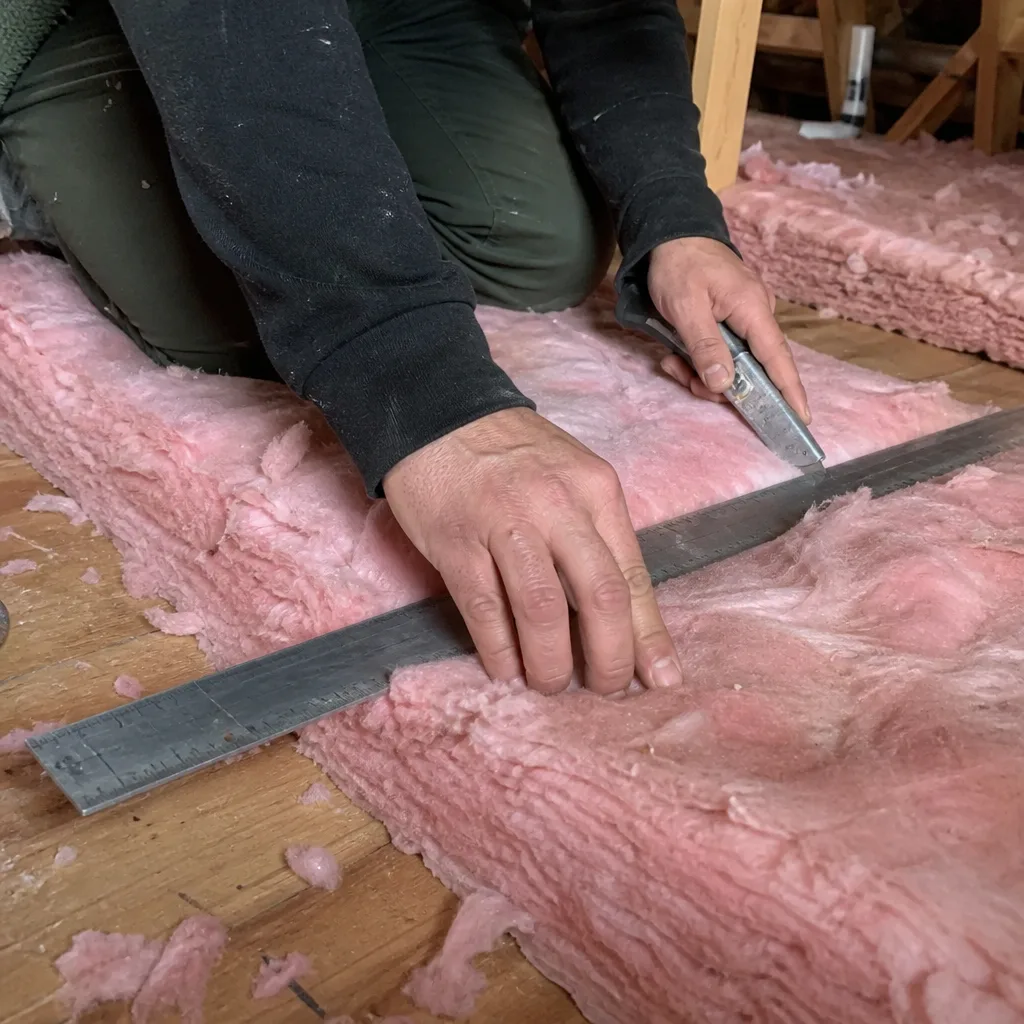
Material selection and installation. We match Knauf product to application - Jet Stream Ultra for open attic floors, dense-pack for closed cavities - and verify installed depth with a ruled stick and photo documentation.
- 5
Post-job testing and documentation. A second blower-door test shows the improvement. You receive: written scope completed, blower-door before/after numbers, settled-depth photos, and our 365-Day Done Right Promise in writing.
- 6
Cleanup and walkthrough. We haul old material if removed. The crew lead reviews documentation with you on site.
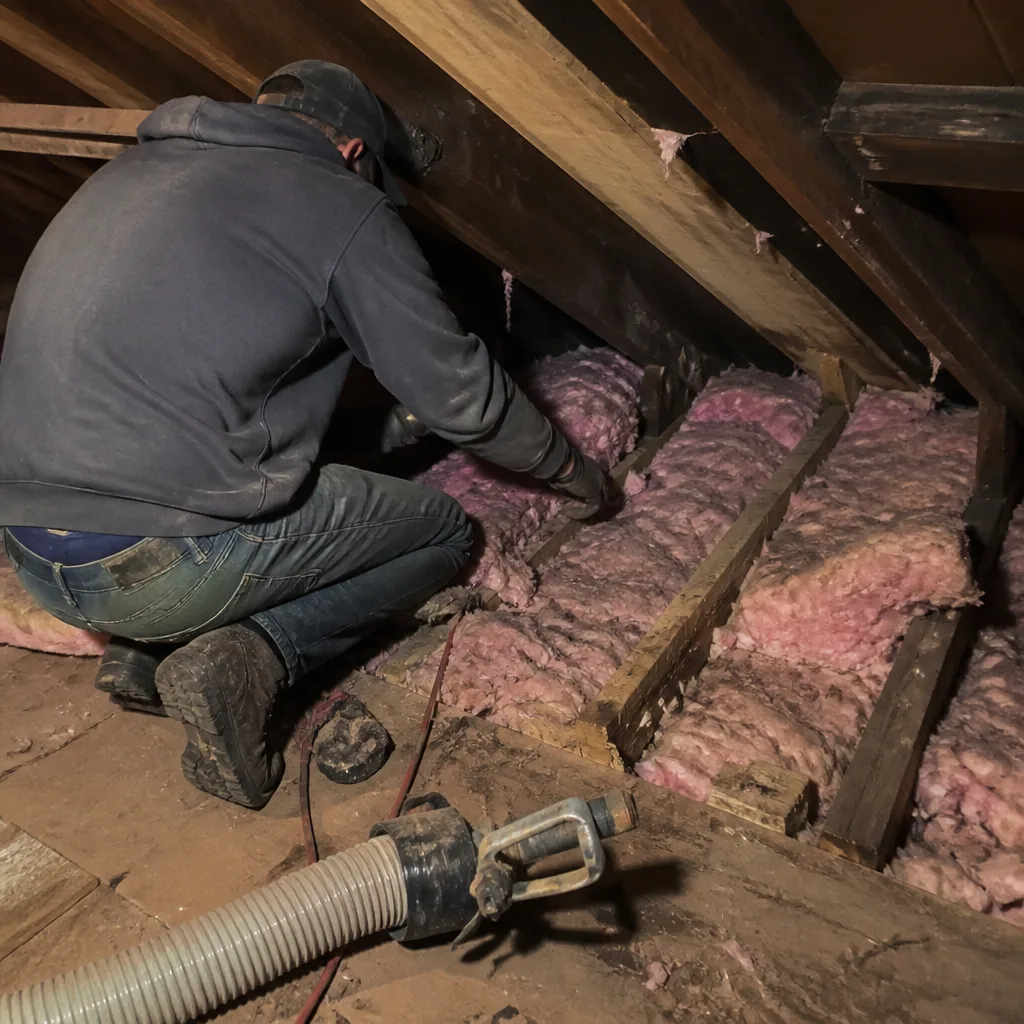 Before
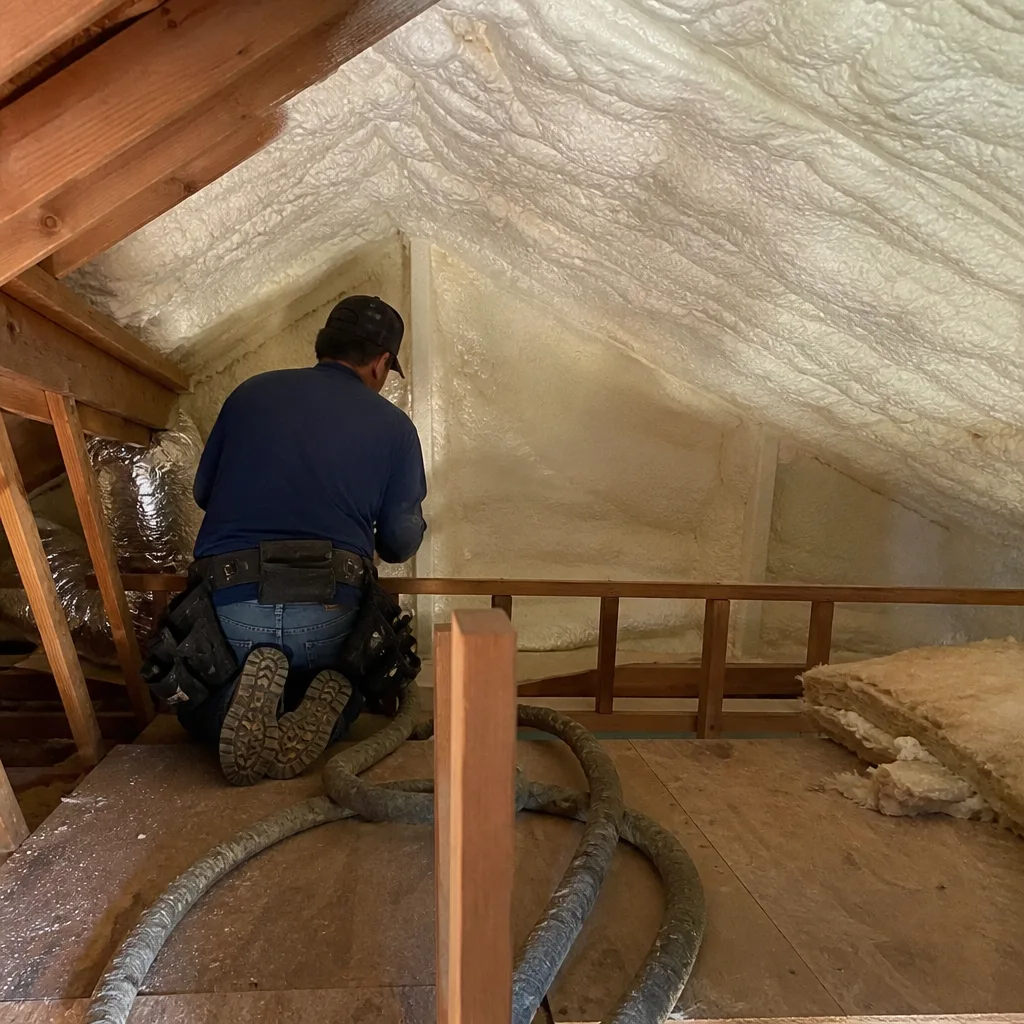 After
AfterWhat Knauf Blown-In Insulation Costs in Westminster
Most Knauf blown-in jobs in Westminster fall in these ranges:
| Scenario | Typical Range |
|---|---|
| Attic top-up (existing R-19 to R-38, fiberglass) | $1,800 - $2,800 |
| Full attic replacement (removal + R-38 new) | $3,200 - $5,500 |
| Dense-pack wall insulation (Knauf, per 1,000 sq ft of wall) | $2,400 - $3,800 |
| Air sealing + insulation package (typical 1,500 sq ft home) | $4,500 - $7,200 |
What moves the price: attic accessibility (hatch size, truss spacing), existing material removal, extent of air sealing required, and whether baffles or vent chutes need installation. We also service Reflectix and other brands if a hybrid system makes sense for your home. Every estimate is free, written, and delivered before any work starts - call (562) 526-6978.
Why Westminster Homeowners Call Topside Attic Insulation Westminster for Knauf Work
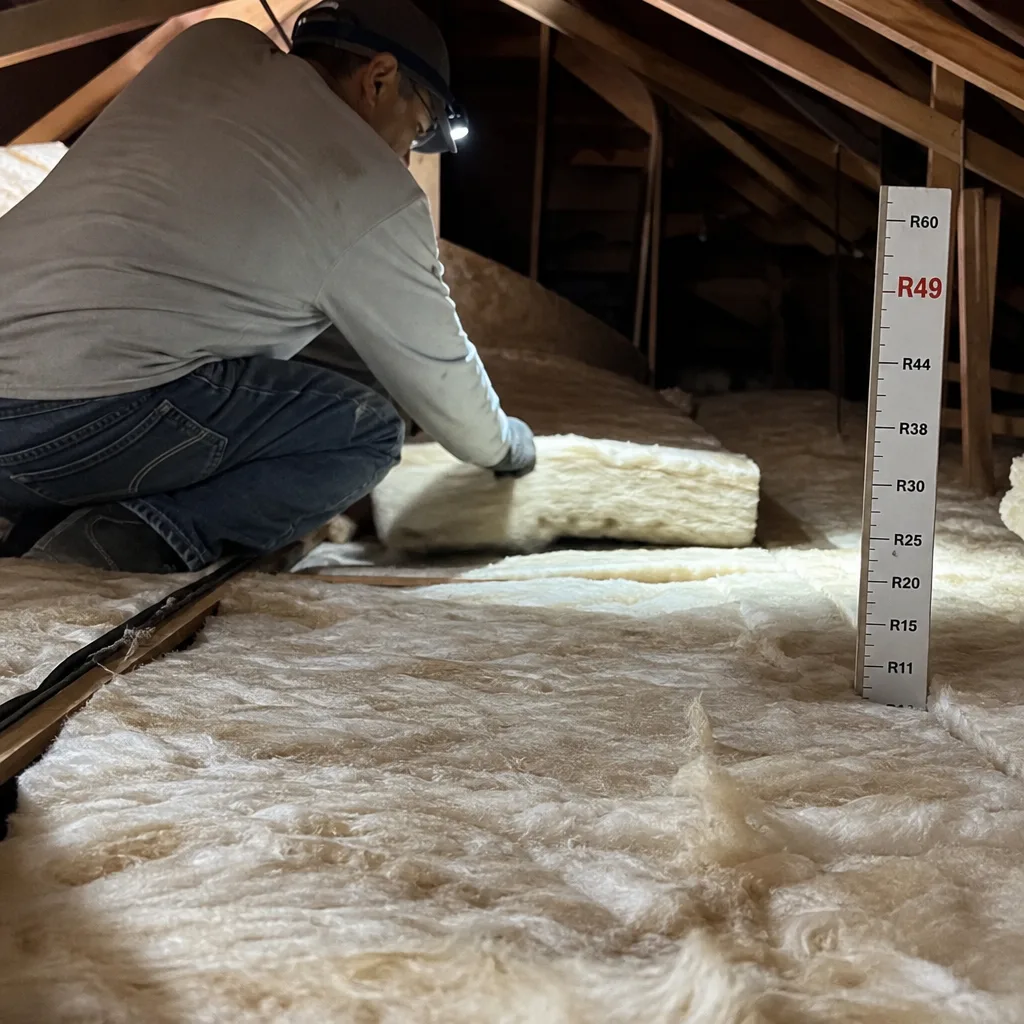
We’ve sealed and insulated over 9,000 homes since 2016, and the neighborhoods around Westminster Mall have seen plenty of our jobs: existing Knauf pulled, bypasses sealed with two-part foam, blown-in fiberglass brought to R-38, settled depth photographed and left with the homeowner. Our 365-Day Done Right Promise applies to every job. Background-checked, uniformed technicians arrive on schedule with a text when they’re en route. We publish before-and-after blower-door numbers on applicable jobs so you can verify the air-sealing result yourself. No voicemail loops. No callback windows measured in business days. Just written pricing, documented work, and a live person on the phone.
FAQs
No - Knauf’s product warranty covers manufacturing defects regardless of who installs it, provided the product was stored and installed per manufacturer specifications. As an independent Knauf service provider, we follow Knauf’s published installation guidelines and document depth and density so any future claim has supporting evidence. Call (562) 526-6978 if you need documentation from an existing install reviewed.
We can match Knauf Jet Stream Ultra or EcoFill cellulose for top-ups in most cases. The issue is settled depth and density - new material blown over old compacted insulation creates thermal irregularities. We core-sample the existing material, calculate the effective R-value, and recommend either a targeted top-up or full replacement based on what we find. Estimates are free.
Top-up is cheaper upfront - typically $1,800-$2,800 versus $3,200-$5,500 for full replacement. But if the existing material is moisture-damaged, rodent-compromised, or installed over unsealed bypasses, repair wastes money on a foundation that underperforms. We inspect and give you both numbers in writing. Call (562) 526-6978 for an exact quote.
Most attic jobs are one day. Dense-pack wall work runs two days - one for drilling and blowing, one for patch and paint coordination. We schedule within a week of estimate approval for standard jobs, and we don’t queue emergency comfort calls behind routine work. Same-week availability is common in Westminster.
We source Knauf, Owens Corning, Johns Manville, and other brands through regional distributors in Orange County - no proprietary lock-in, no factory-direct delays. Most Knauf blown-in fiberglass is on-site within 48 hours of estimate approval. Dense-pack cellulose may take 72 hours depending on batch color matching for exposed applications.
Written by Wes Okafor, Owner & Lead Insulation Technician, Topside Attic Insulation Westminster at Topside Attic Insulation Westminster, serving Westminster and nearby areas.