
Knauf Attic Insulation: The Westminster Owner’s Guide
Knauf attic insulation installed in Westminster homes typically runs between $1.80 and $2.80 per square foot for blown-in fiberglass, with most single-story attics in the 1,200-1,800 square foot range falling between $2,200 and $4,100 for a complete pull-and-replace to R-38. We stock Knauf EcoFill WX and Jet Stream Ultra on every truck, and most Westminster jobs are started same-day once the attic assessment is complete. Homeowners usually discover their Knauf insulation has failed when they notice uneven temperatures between rooms, a sudden spike in summer cooling bills, or find compacted, discolored batts in the attic that have settled well below their labeled R-value.
Which Knauf Models This Applies To
Knauf produces two main attic insulation lines you’ll find in Westminster homes: EcoFill WX blown-in fiberglass and Jet Stream Ultra, the higher-density blowing wool used when R-49 or greater is required by local code. EcoFill WX ships in 30-pound bags rated at R-2.5 per inch settled depth; Jet Stream Ultra achieves R-3.7 per inch and is specified for new construction and deep-energy retrofits. The bag label will show a four-digit lot code and the Knauf Insulation logo with the green leaf mark. If your existing insulation was installed between 2008 and 2018, it may be the earlier EcoFill 1000 series, which has a slightly coarser fiber diameter and does not layer cleanly with current WX stock. We do not recommend mixing the two without a full-depth assessment, as the differing settle rates create thermal bridges at the interface.
Topside Attic Insulation Westminster is an independent service provider with no affiliation to Knauf. We source Knauf materials through standard distribution channels alongside Owens Corning, Johns Manville, and Rockwool. For most Westminster retrofits, we recommend staying with Knauf if your existing insulation is less than ten years old and shows no moisture damage, since matching fiber type preserves the thermal boundary. If the existing material is compressed, rodent-contaminated, or has been wet, we pull it entirely and specify fresh stock.
Signs Your Knauf Attic Insulation Is Failing
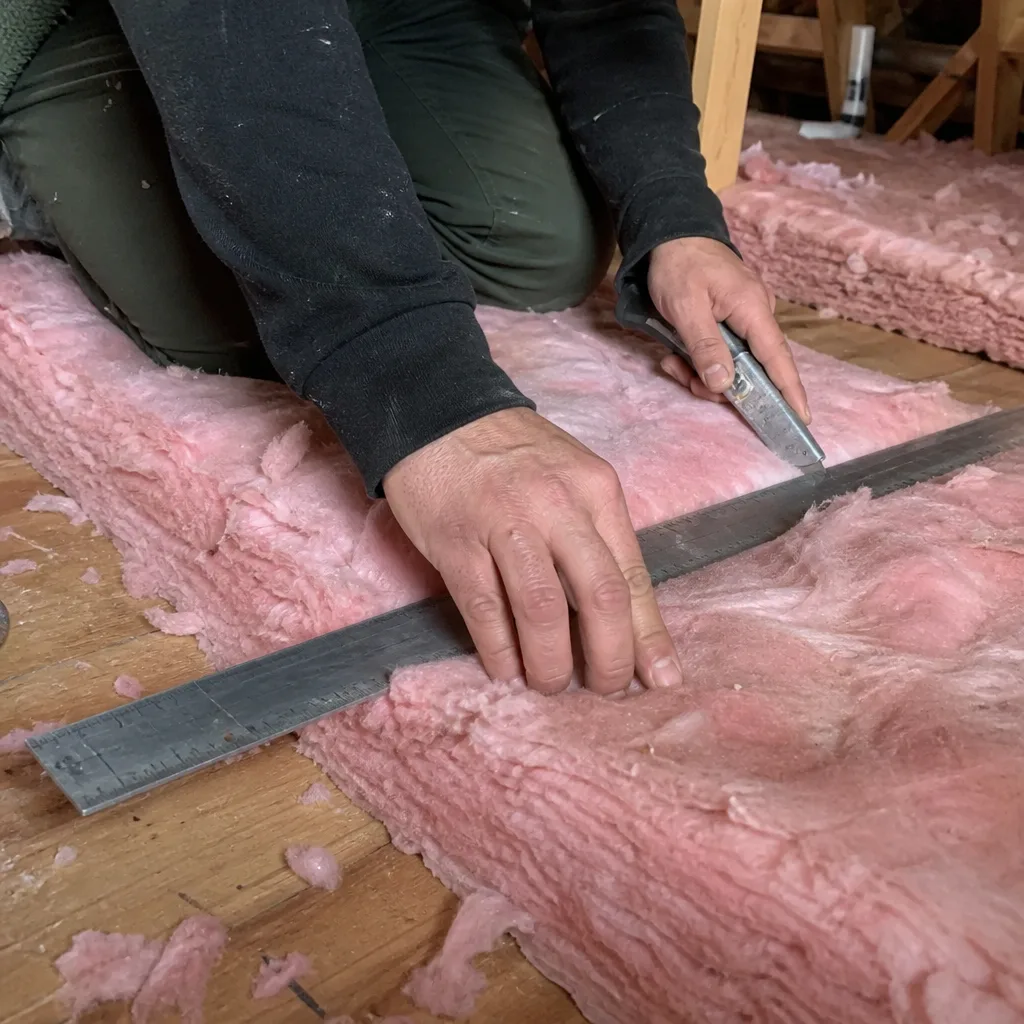
- Uneven room temperatures despite the HVAC running continuously. This usually means the insulation has settled below its designed depth, or air bypasses at top plates and can lights are short-circuiting the thermal boundary. In Westminster’s inland climate, we see this most often in homes built 1965-1985 where original R-19 batts have compressed to R-11 or less.
- Sudden spikes in summer electricity bills with no rate change. Knauf fiberglass loses effectiveness when attic temperatures exceed 140°F, which happens regularly in Westminster from July through October. If the insulation was marginally specified originally, heat gain through the ceiling forces longer AC runtimes.
- Visible discoloration, dark streaking, or a musty smell in the attic. This indicates moisture migration, which collapses fiberglass loft and can trigger mold on the paper facing of older batts. Westminster’s morning marine layer can wick through ridge vents if bathroom fans vent into the attic rather than through the roof.
- Cold spots or drafts at ceiling electrical boxes and recessed lights. These are air leaks, not insulation failures, but they render even properly installed Knauf insulation ineffective. We find this in nearly every pre-1995 Westminster home we assess, especially around the original pancake-style can lights common in the Little Saigon tract builds.
- Insulation depth measures well below the manufacturer’s settled specification. EcoFill WX should read 15 inches for R-38; if you’re seeing 9-10 inches, the material has either compacted from foot traffic, moisture, or was under-blown originally. We photograph the depth gauge against a ruler and include it in the Documented Photo Record.
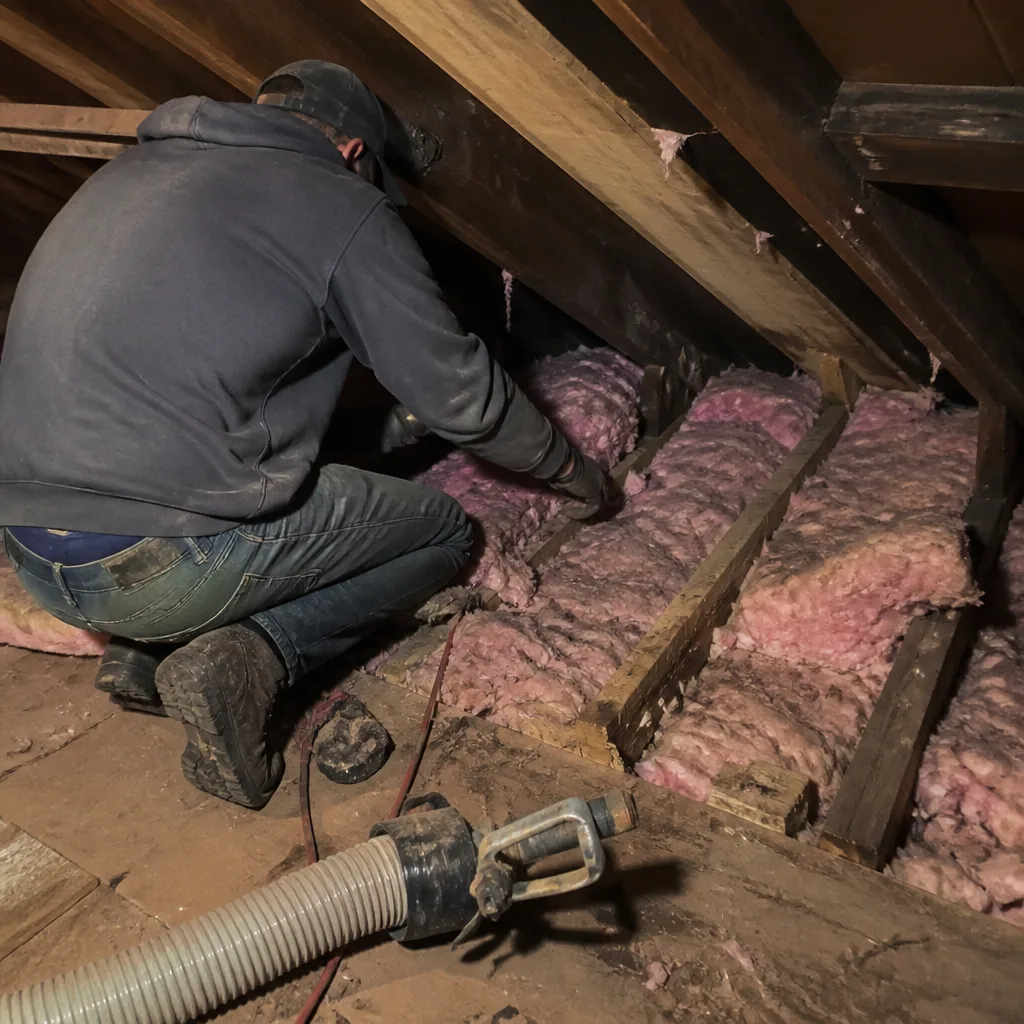 Before
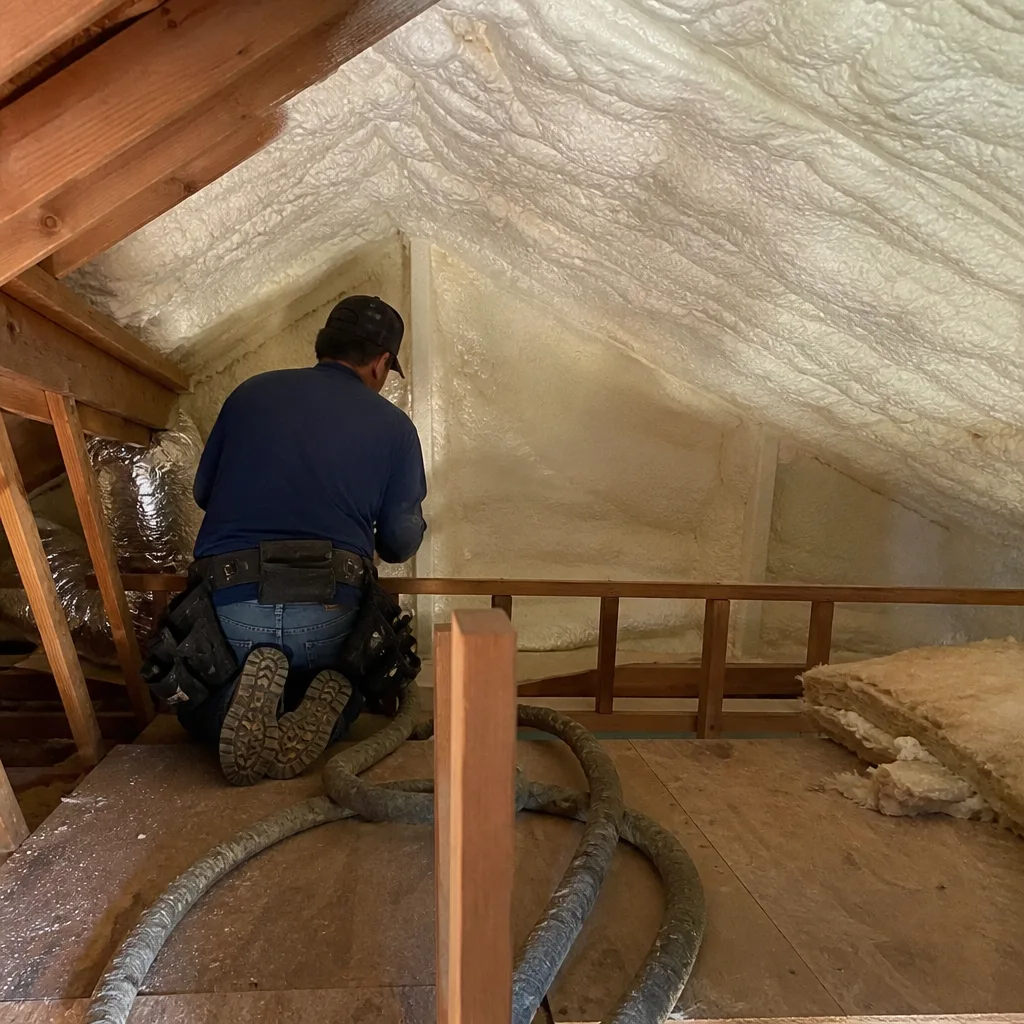 After
AfterReplacement Cost & What’s Included
| Scope | Price Range (Westminster) | Typical Home Size |
|---|---|---|
| Spot-fill to existing depth with Knauf EcoFill WX | $1.80-$2.20/sq ft | Any; limited to accessible areas |
| Full pull-and-replace to R-38 with air sealing | $2.40-$2.80/sq ft | 1,200-1,800 sq ft attic floor |
| Deep fill to R-49 with Jet Stream Ultra | $2.80-$3.40/sq ft | New construction or Title 24 compliance |
| Insulation removal only (contaminated/wet material) | $1.10-$1.50/sq ft | Varies by access and debris load |
The range depends on three factors: attic access difficulty (hatch size, joist spacing, whether we can get the hose through), the condition of existing material, and the extent of air sealing required before new insulation goes in. Every job priced under Haven Standard Clause 1: flat price, written scope, written warranty before anyone lifts a tool. The 365-Day Done Right Promise covers settling below specified depth, installation gaps, and any air-sealing failure that shows on a follow-up blower-door test.
DIY or Call Us?
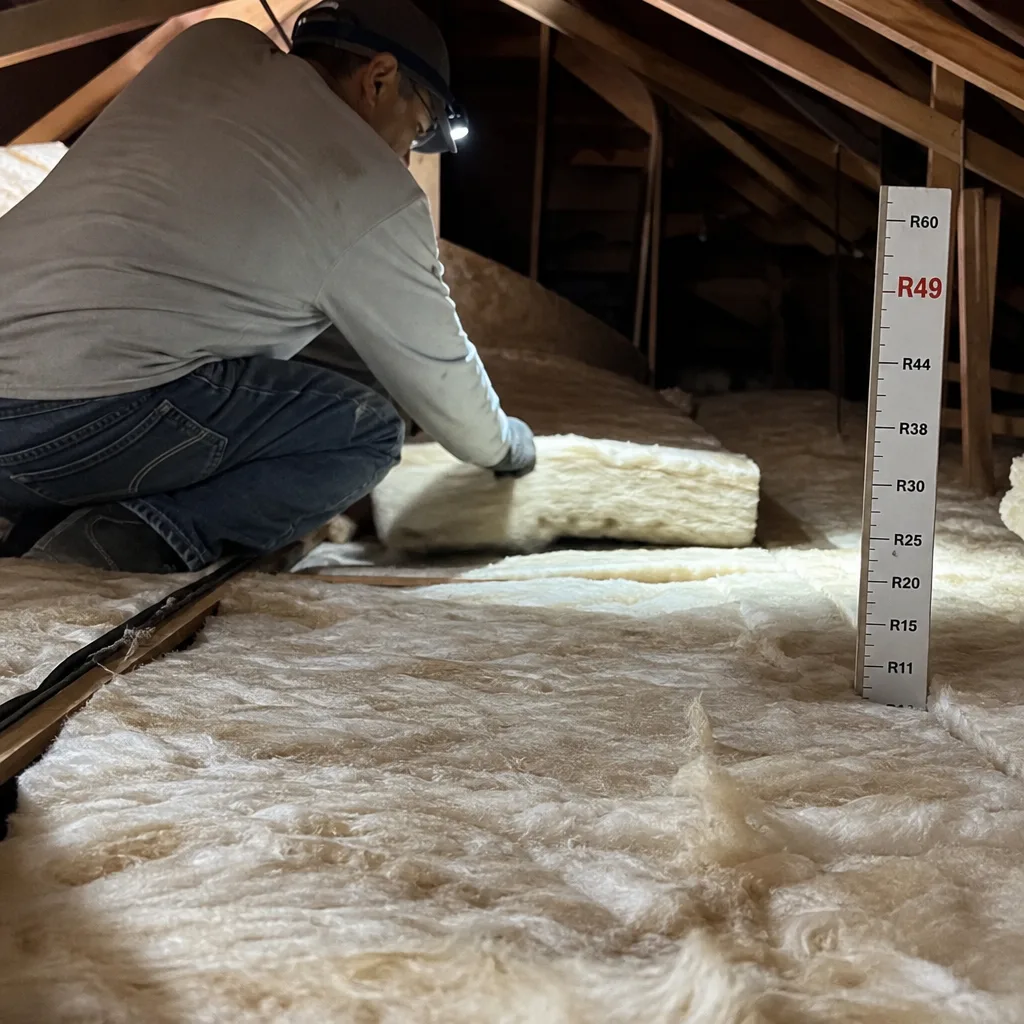
There’s no high-tension danger in attic insulation like you’d find with garage door springs or electrical panels, but there are real ways DIY goes wrong. Homeowners can safely check insulation depth with a ruler, photograph bag labels for identification, and verify that bathroom fans vent through the roof, not into the attic. Where DIY fails: blowing fiberglass to a consistent settled depth requires a calibrated machine and a hose operator who knows how to read attic joist patterns; uneven distribution creates cold spots that show up six months later. More critically, adding insulation over unsealed bypasses wastes material and can trap moisture. Wes Okafor’s position, backed by every job he’s run since 2016: seal the bypasses first. The R-value on the bag is only real if the air has nowhere else to go. If your attic has can lights, top plates, or a furnace flue chase, the air sealing step is not optional. Call (562) 526-6978 and we’ll assess whether a spot-fill or full replacement makes sense, with a written price before any work starts.
FAQs
Properly installed Knauf fiberglass lasts 80-100 years chemically, but its thermal performance degrades much sooner if moisture or air movement compromises the fiber matrix. In Westminster specifically, we find insulation installed before 1990 is often performing at 40-60% of labeled R-value due to compression and bypass leakage, not fiber breakdown. Call (562) 526-6978 for a depth and density check - estimates are free.
Spot-filling works only if the existing material is dry, uncompressed, and free of rodent contamination. If you can fluff the fiberglass by hand and it returns to near-original loft, we can add EcoFill WX to reach target depth. Most Westminster homes we assess need partial or full removal because the original material was under-specified from the start. We’ll tell you which category you’re in after a 20-minute attic inspection.
A typical 1,500 square foot attic with full air sealing and EcoFill WX to R-38 takes one crew one day: morning for prep, sealing, and containment; afternoon for blowing, depth verification, and cleanup. Jobs requiring contaminated material removal add a half day. We text when the crew is en route and leave you with a Documented Photo Record and blower-door numbers before we pack up.
We stock Knauf EcoFill WX and Jet Stream Ultra on every truck, along with Owens Corning, Johns Manville, and Rockwool alternatives. No order delay for standard R-38 and R-49 specs. If your job requires a specific Knauf product we don’t carry - the formaldehyde-free EcoBatt line for chemically sensitive households, for instance - we can source it within 48 hours through our Westminster distributor.
Written by Wes Okafor, Owner & Lead Insulation Technician, Topside Attic Insulation Westminster at Topside Attic Insulation Westminster, serving Westminster and nearby areas.