
Icynene Blown-In Insulation in Westminster: What to Know First
We provide independent Icynene blown-in insulation service in Westminster, typically completing attic top-ups and dense-pack wall jobs in one day with a written price locked before any work starts. Most Icynene systems we encounter in Westminster homes are open-cell formulations originally installed between 2010 and 2020, and the honest price range for a standard attic top-up runs $2,400-$4,200 depending on conditioned square footage and whether the original bypass sealing was done properly. This page is for homeowners who know they’ve got Icynene in their walls or attic and need to add blown-in material without compromising what was already there. Call (562) 526-6978 for a free estimate with a written scope.
How Icynene Products Fail - and How We Fix Them
- Icynene Classic Max (MD-R-200) shrinkage in cathedral ceilings. This open-cell series can pull away from rafter bays in Westminster’s marine climate, especially where roof decks see repeated wet-dry cycling from morning fog and afternoon sun. We find 1/4-inch to 1/2-inch gaps at the foam-to-wood interface that turn into convection channels. Our fix: remove the compromised sections, reseal the bay with two-part closed-cell at the critical interface, then dense-pack the remaining cavity with blown-in fiberglass to restore the thermal boundary without trapping moisture.
- Icynene LD-C-50 overspray bridging in older Westminster tract homes. This lower-density open-cell was commonly used in 1960s-era ranch additions where electricians and HVAC crews later ran new romex and flex duct through the attic. The original foam encased wiring and created hard, brittle bridges that crack when the building settles. We cut back the foam to free the penetrations, seal with fire-rated caulk where code requires, then blow in cellulose or fiberglass around the now-independent runs so future access doesn’t tear the thermal layer.
- Icynene H2Foam Lite water staining in unvented attics. This water-blown open-cell can hold latent moisture if the roof leak above was slow and the homeowner didn’t spot it early. The foam itself doesn’t rot, but the trapped water degrades adjacent drywall and framing. We remove the stained foam in layers, dry the cavity with directed airflow, treat the framing with borate if mold is present, then install blown-in fiberglass with a vapor-smart strategy appropriate to Westminster’s mild, humid winters.
- Icynene closed-cell (CM series) delamination from OSB roof decks. In Westminster’s Little Saigon and Midway City-adjacent neighborhoods, we see this where summer attic peaks hit 140°F and the adhesive bond between high-density foam and engineered wood sheathing lets go. The foam sheet lifts, creating a air gap that nullifies its R-value. We don’t try to reglue it. We remove the failed sheets, inspect the deck for swelling, then switch to blown-in fiberglass on baffles with proper vent chutes - a more forgiving assembly for that roof geometry.
- Icynene retrofit jobs where the original contractor skipped the top plates. This isn’t a product failure, it’s an installation failure we see constantly on Icynene jobs done by spray-only crews who didn’t understand stack effect. The foam looks fine, but the wall cavities leak at the plate line and the attic floor is a sieve. We run a blower-door test to quantify it, seal every top plate and penetration with two-part foam or acoustic sealant depending on clearance, then blow in fiberglass or cellulose to compress the pressure boundary. Seal the bypasses first. The R-value on the bag is only real if the air has nowhere else to go.
Our Icynene Blown-In Insulation Process
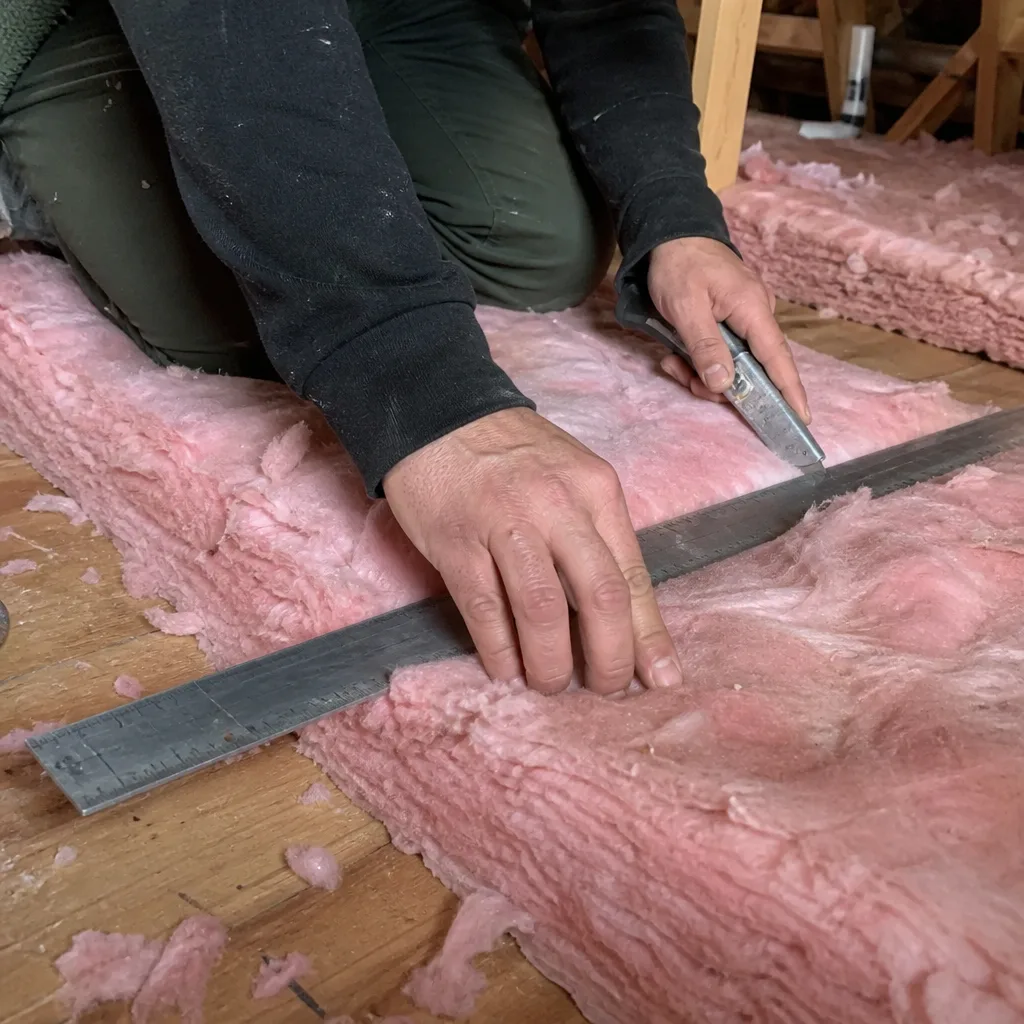
- 1
Call and scheduling. A live person answers, or you can text. We book a 2-hour arrival window and send a text when the technician is en route. Haven Standard: Arrive on schedule, you get a named technician.
- 2
Site inspection and blower-door test. We walk the attic or crawl space, identify the Icynene series if it’s visible, and run a blower-door test - a pressurization reading that shows, in one number, how much air your building envelope is losing. Wes Okafor still keeps his original blower-door test sheets from Kennedy-King College in a binder on his truck; the current digital manometer prints readings we leave with you.
- 3
Written scope and price. Before any work starts, you get a flat price, a written scope describing what we found, and a written warranty. No exceptions. This is Haven Standard Clause 1.
- 4
Air sealing first, then insulation. We seal top plates, can lights, plumbing and electrical penetrations, and chimney chases with appropriate materials. Only after the pressure boundary is continuous do we begin blowing.
- 5
Blown-in installation with settled-depth verification. We install blown-in fiberglass or cellulose to the specified R-value, typically R-38 for attics in Westminster’s Climate Zone 3B, and photograph the settled depth at multiple locations. These photos go in your Documented Photo Record.
- 6
Final blower-door test and cleanup. We run the blower door again, compare the numbers, and leave you with both readings, the photos, and your warranty. The crew vacuums the work path. You pay the written price, nothing more.
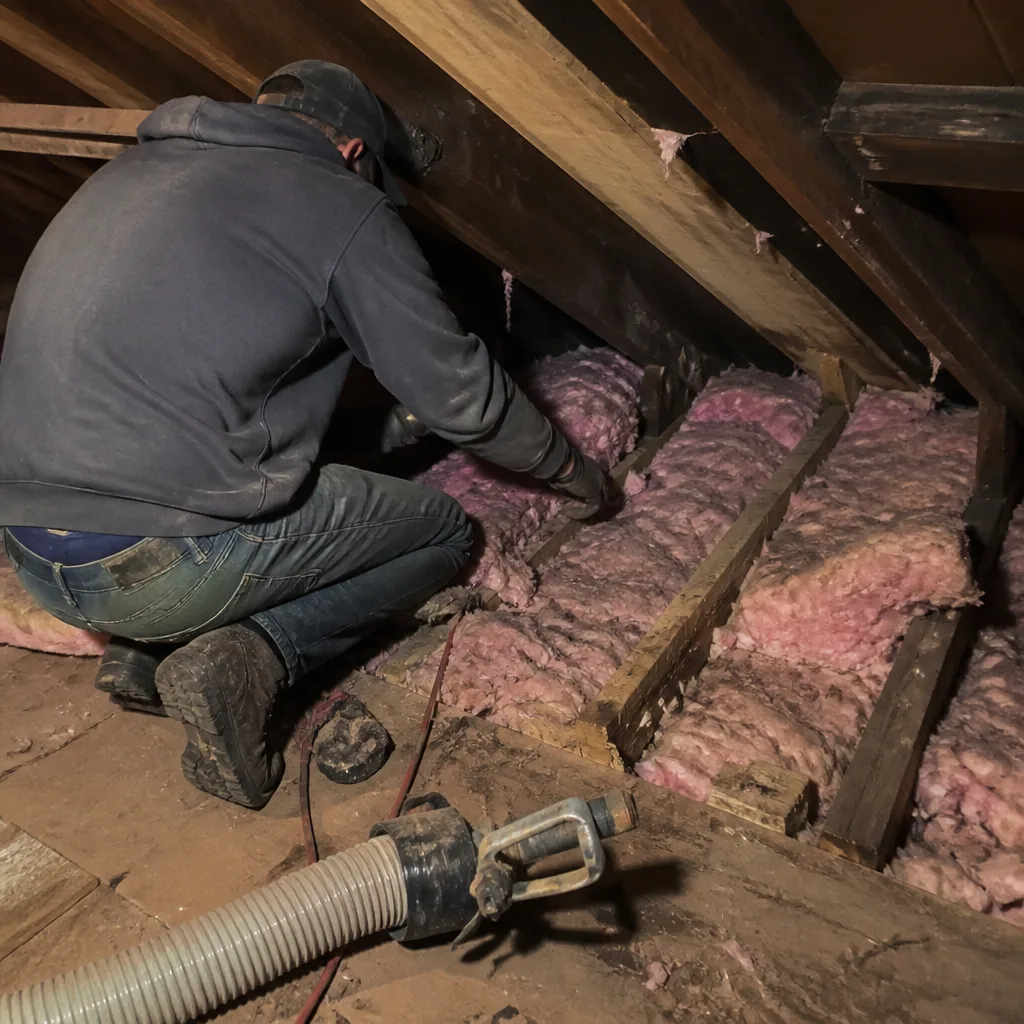 Before
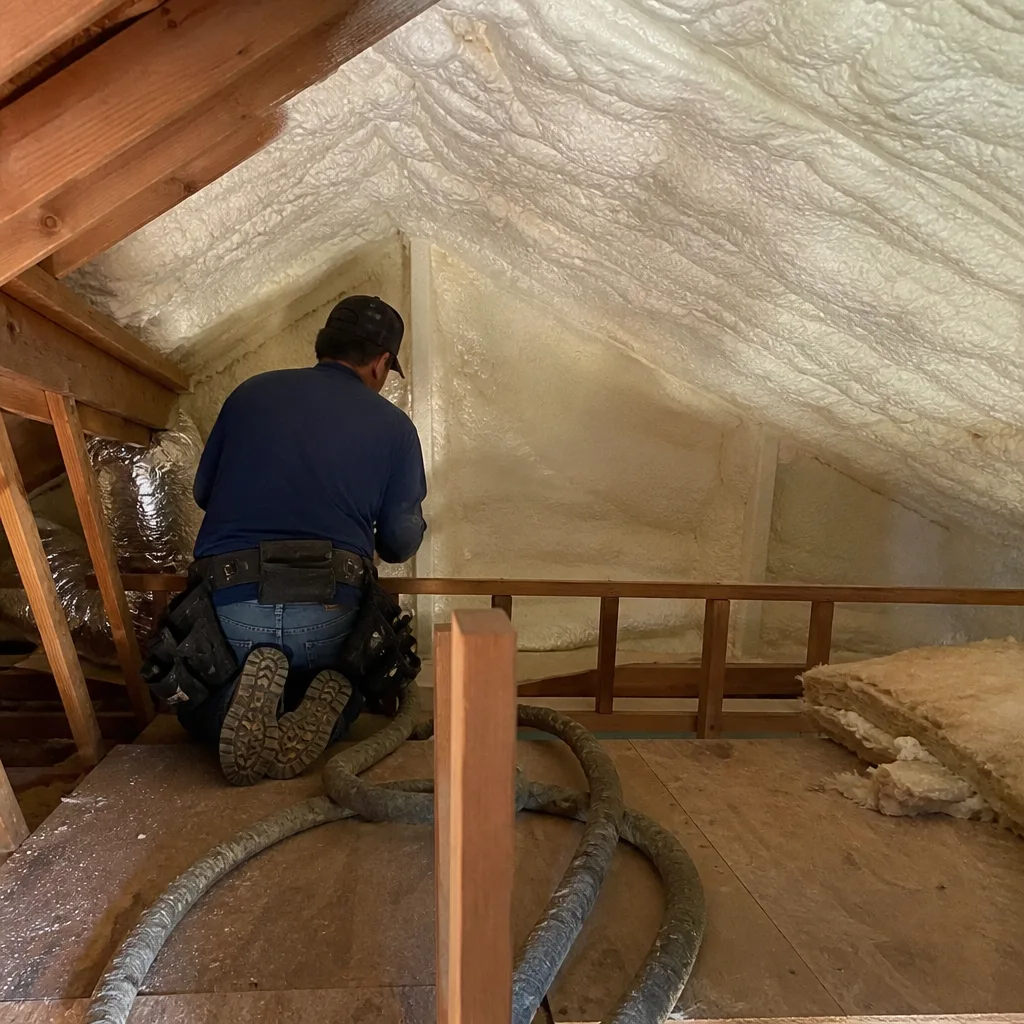 After
AfterWhat Icynene Blown-In Insulation Costs in Westminster
| Job Type | Typical Range | What Moves the Price |
|---|---|---|
| Attic top-up over existing Icynene (1,200-1,800 sq ft) | $2,400-$3,600 | Depth of existing foam, accessibility, whether original air sealing was done |
| Attic top-up over existing Icynene (1,800-2,500 sq ft) | $3,200-$4,800 | Vaulted sections, ductwork in attic, need for baffles |
| Dense-pack wall insulation (Icynene retrofit, per sq ft of wall) | $3.50-$5.50/sq ft | Cavity condition, number of electrical boxes, plaster vs. drywall |
| Icynene removal + full re-insulation with blown-in | $5,500-$9,500 | Volume of foam to remove, disposal fees, structural repairs needed |
| Air sealing only (pre-insulation prerequisite) | $1,800-$3,200 | Blower-door starting number, complexity of chase sealing |
These are real Westminster numbers based on jobs we’ve completed in neighborhoods from Liberty Park to the Bolsa Chica Road corridor. The price goes up when we find Icynene installed over unsealed bypasses, because we won’t blow new material until the pressure boundary is fixed. Call (562) 526-6978 for an exact quote - estimates are free, and we offer a Free Second Opinion on any written estimate you’ve already received.
Why Westminster Homeowners Call Topside Attic Insulation Westminster for Icynene Work
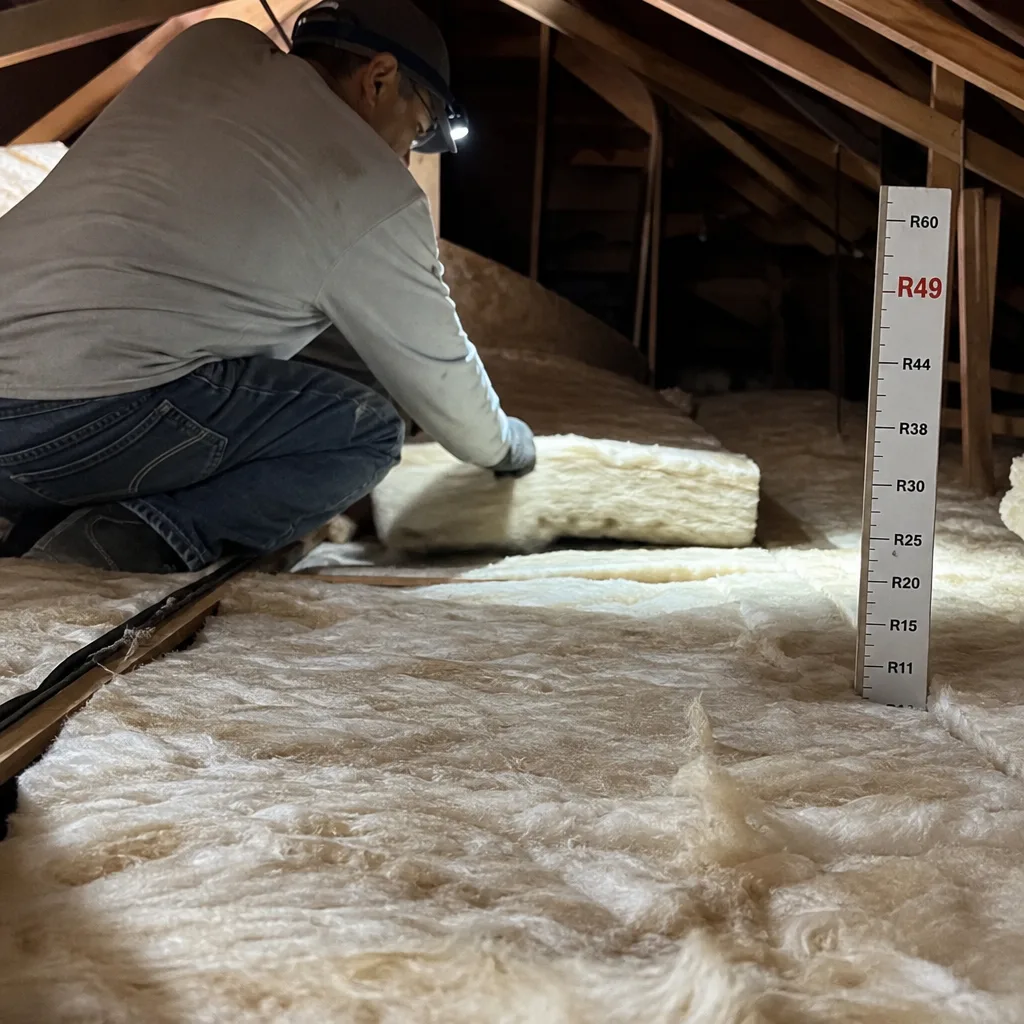
We’ve sealed and insulated over 9,000 homes since 2016, and a measurable share of them had Icynene that needed help. Our technicians are background-checked and uniformed, and they know the difference between Classic Max and H2Foam Lite without reading the tag twice. We carry materials from Owens Corning, Johns Manville, Knauf, Rockwool, CertainTeed, Icynene, Demilec, and GreenFiber, plus Reflectix for radiant barrier applications where that assembly makes sense. No proprietary lock-in means we recommend what fits your house, not what moves our inventory.
Every job closes with a Documented Photo Record and, on applicable work, before-and-after blower-door numbers. The 365-Day Done Right Promise applies to all completed work. Calls are answered by a live person 24/7.
FAQs
No, adding blown-in insulation over properly installed Icynene does not void the foam manufacturer’s warranty, provided the new material doesn’t trap moisture against the foam surface or exceed load limits on ceiling drywall. We check the Icynene installation date and series to confirm compatibility before specifying the blown-in product. Call (562) 526-6978 if you want us to review your original paperwork.
Yes, blown-in fiberglass at R-38 to R-49 and dense-pack cellulose at R-21 to R-23 in walls achieve comparable thermal performance to most Icynene open-cell applications, though the assembly behavior differs - foam air-seals as it insulates, while blown-in requires a separate air barrier. We address that difference by sealing first, then insulating, and we document the result with blower-door numbers.
Repair is cheaper when the Icynene is well-adhered and only局部 areas need attention - typically $800-$2,200 for spot work plus top-up. Full removal and replacement runs $5,500-$9,500 but is necessary when the foam is extensively delaminated, water-damaged, or was installed without proper air sealing beneath it. We give you both numbers in writing and let the condition of what we find drive the recommendation.
We typically schedule inspections within 48 hours, and most blown-in jobs are completed in one day once the scope is approved. Emergency situations - significant water intrusion through a compromised Icynene roof assembly, for instance - get same-day response. Call (562) 526-6978 to check current availability.
We are an independent Icynene service provider, not a factory-authorized dealer, so we do not install new Icynene foam. For blown-in work adjacent to existing Icynene, we use compatible materials from the same manufacturers listed above - Knauf, Owens Corning, Johns Manville - selected for thermal compatibility and moisture performance with the specific Icynene series in your home. We document the product spec in your written scope.
Written by Wes Okafor, Owner & Lead Insulation Technician, Topside Attic Insulation Westminster at Topside Attic Insulation Westminster, serving Westminster and nearby areas.