
Icynene Attic Insulation: The Westminster Owner’s Guide
We stock and install Icynene-compatible attic insulation systems in Westminster, with most residential retrofits running between $2,800 and $5,400 installed depending on attic square footage and whether existing material needs removal. Same-day installation is available on most jobs where the attic is accessible and electrical clearance is met. Homeowners usually discover a problem when their upstairs rooms won’t hold temperature despite the AC running constantly, or when they pull back attic insulation and find the Icynene has pulled away from top plates, turned powdery, or been shredded by rodents that got in through unsealed bypasses.
Which Icynene Models This Applies To
Icynene’s open-cell spray foam lines most commonly found in Westminster attics are the Classic Plus series (originally marketed as LD-C-50) and the newer Icynene ProSeal, which runs at a higher density and is often specified for conditioned attic assemblies. The Classic Plus was widely installed in Orange County between 2008 and 2018, so if your home was built or re-insulated in that window, that’s likely what’s overhead. You can identify it by the yellowed product label left on rafter bays by the original installer, or by cutting a small sample: Classic Plus has a spongy, bread-like texture and will absorb water if pressed into a puddle, while ProSeal feels tighter and rebounds faster.
We do not install proprietary Icynene factory systems; we are an independent service provider with no affiliation to Icynene. For attic retrofits, we typically remove degraded Icynene and replace with a hybrid system: two-part foam air sealing at the envelope plane, followed by blown-in fiberglass or cellulose to the settled depth required for R-38 under Title 24. This approach matches the thermal performance of the original Icynene install at a lower material cost, and it eliminates the vapor-profile risks that open-cell foam can create when applied directly to roof decks in Westminster’s marine climate, where morning fog moisture can accumulate against impermeable assemblies.
Signs Your Icynene Attic Insulation Is Failing
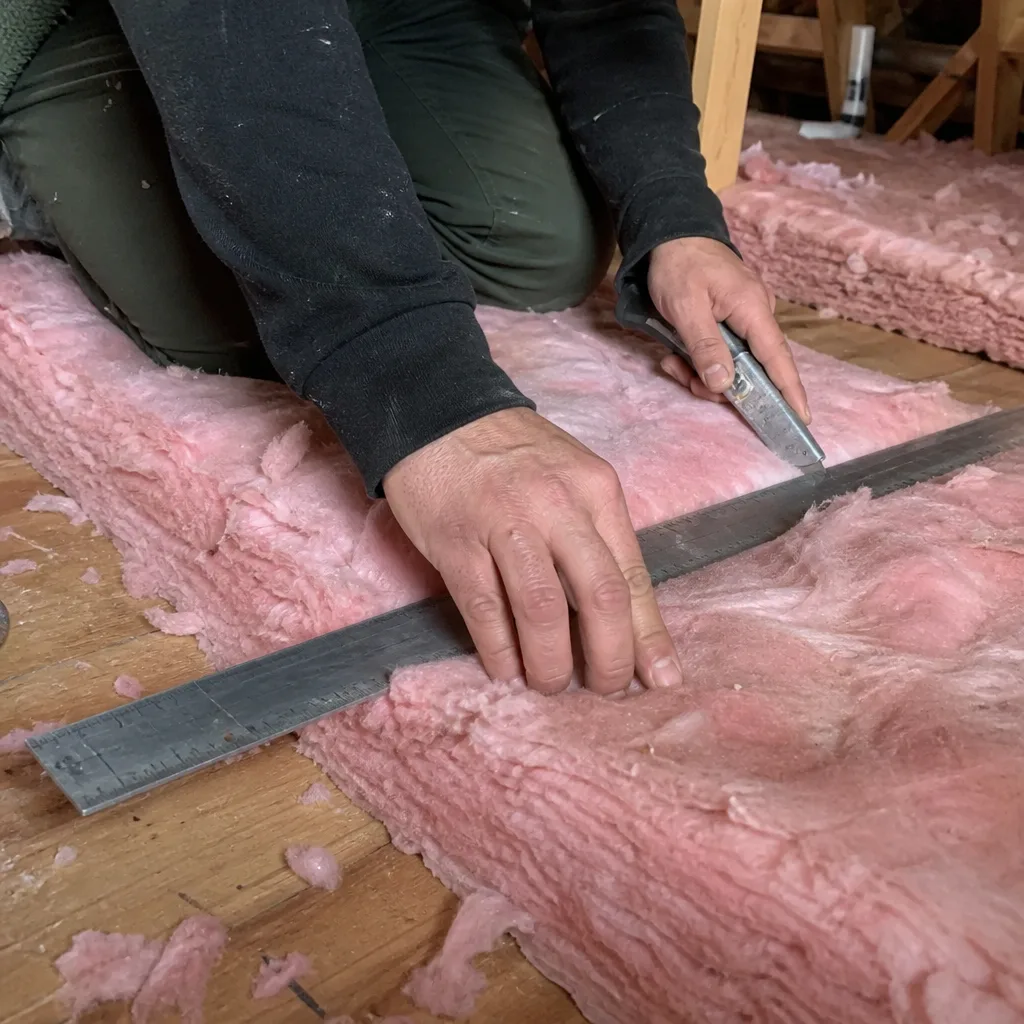
- Temperature stratification between floors. The upstairs runs 8-12 degrees hotter in summer despite the thermostat holding downstairs. This happens when Icynene shrinks or pulls away from framing members, creating convection channels that bypass the foam entirely. We find this most often in Westminster’s older tracts near Bolsa Chica Road, where attic temperatures spike above 140°F and accelerate thermal degradation.
- Musty or chemical odor after rain. Open-cell Icynene is vapor-permeable by design, but when it’s applied too thin at the roof deck or has separated from substrate, bulk water can reach the foam and get trapped against drywall. The result is a sweet, slightly acrid smell that HVAC ducts pull straight into living space.
- Visible crumbling or powdering on the foam surface. UV exposure breaks down the upper skin of Icynene within weeks if it was left exposed in an unconditioned attic, and even protected foam can oxidize over a decade in high-heat conditions. Once the surface powders, the structural integrity is gone and R-value drops measurably.
- Rodent trails and nesting material embedded in foam. Icynene is not a food source, but rodents tunnel through it readily and the shredded foam becomes a filthy, compressed mat that blocks ventilation while creating allergen reservoirs. This is nearly always a sign that attic air sealing was skipped during original installation.
- Ice damming or condensation stains on ceiling drywall below the attic. In Westminster’s cooler winter weeks, warm moist air reaching the roof deck through gaps in degraded foam condenses against cold sheathing. The stains follow rafter lines and often get mistaken for roof leaks until a thermal camera shows the pattern.
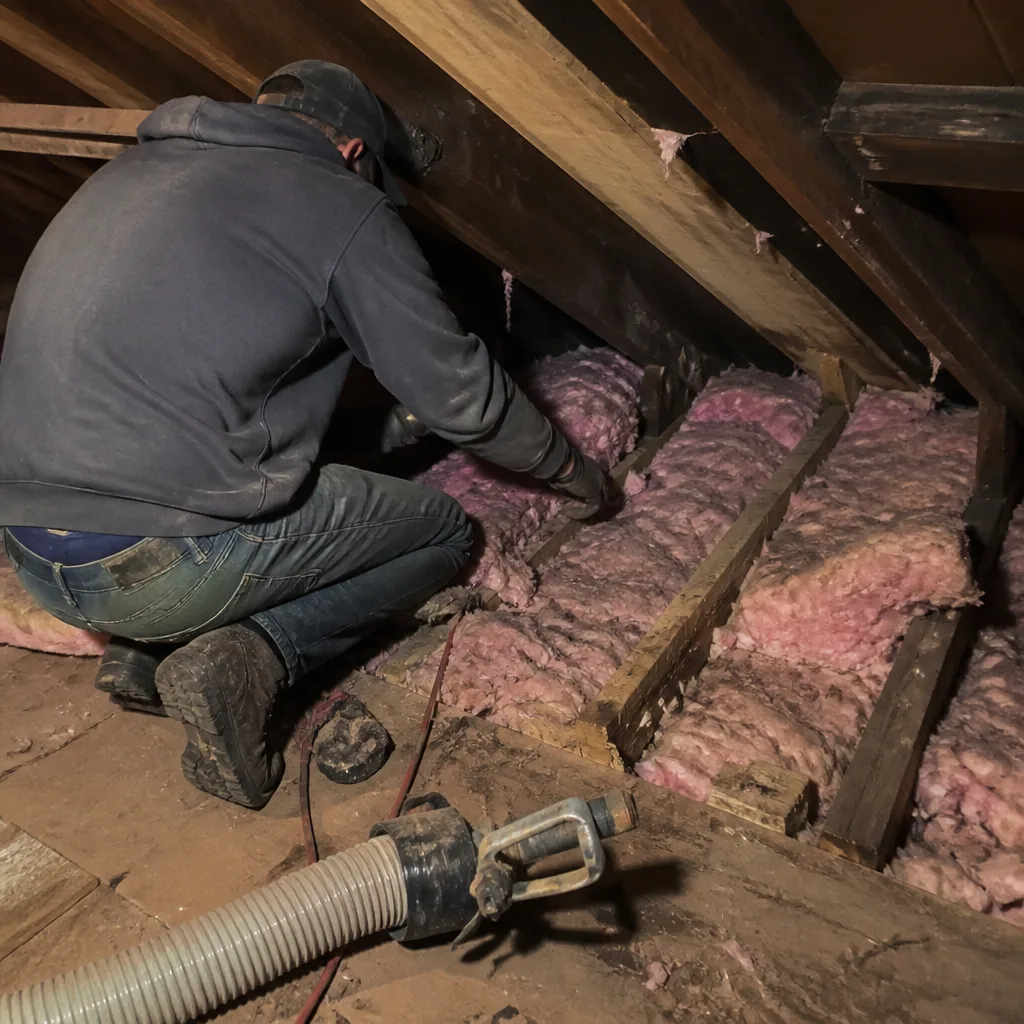 Before
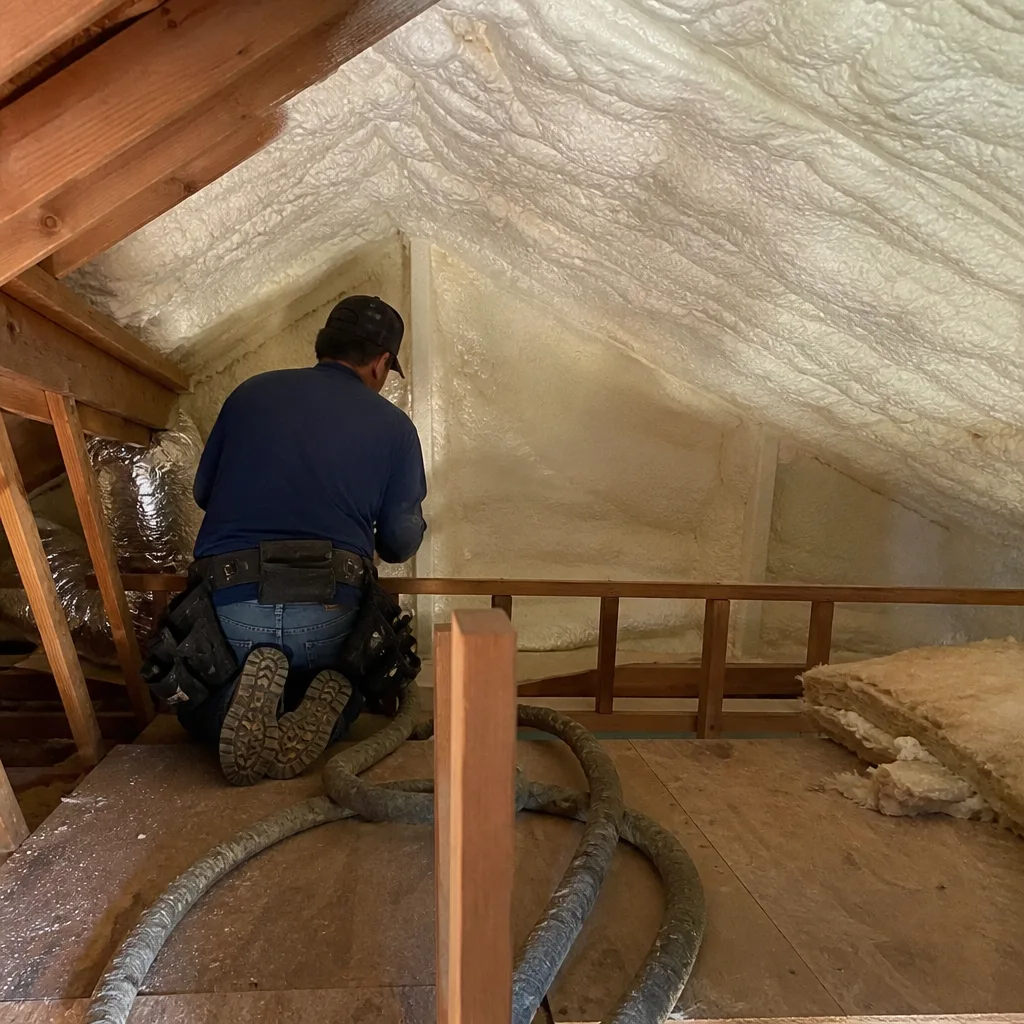 After
AfterReplacement Cost & What’s Included
| Scope | Price Range |
|---|---|
| Icynene removal + attic cleaning, air sealing, blown-in fiberglass to R-38 | $2,800 - $4,200 |
| Above, plus rodent proofing and contaminated insulation removal | $3,600 - $5,400 |
| Conditioned attic conversion with hybrid foam + loose-fill | $5,000 - $8,500 |
The range depends on three factors: attic square footage (most Westminster single-story homes run 800-1,400 square feet of attic floor), whether existing Icynene requires mechanical removal or has already detached, and how many top-plate bypasses, can lights, and duct chases need sealing before new insulation goes in. Every job gets a Written Price Before Any Work Starts under Haven Standard Clause 1, with a flat price, written scope, and written warranty delivered before anyone lifts a tool. The 365-Day Done Right Promise covers all completed work, and we publish before-and-after blower-door numbers on every air-sealing job so you can verify the envelope performance you paid for.
DIY or Call Us?
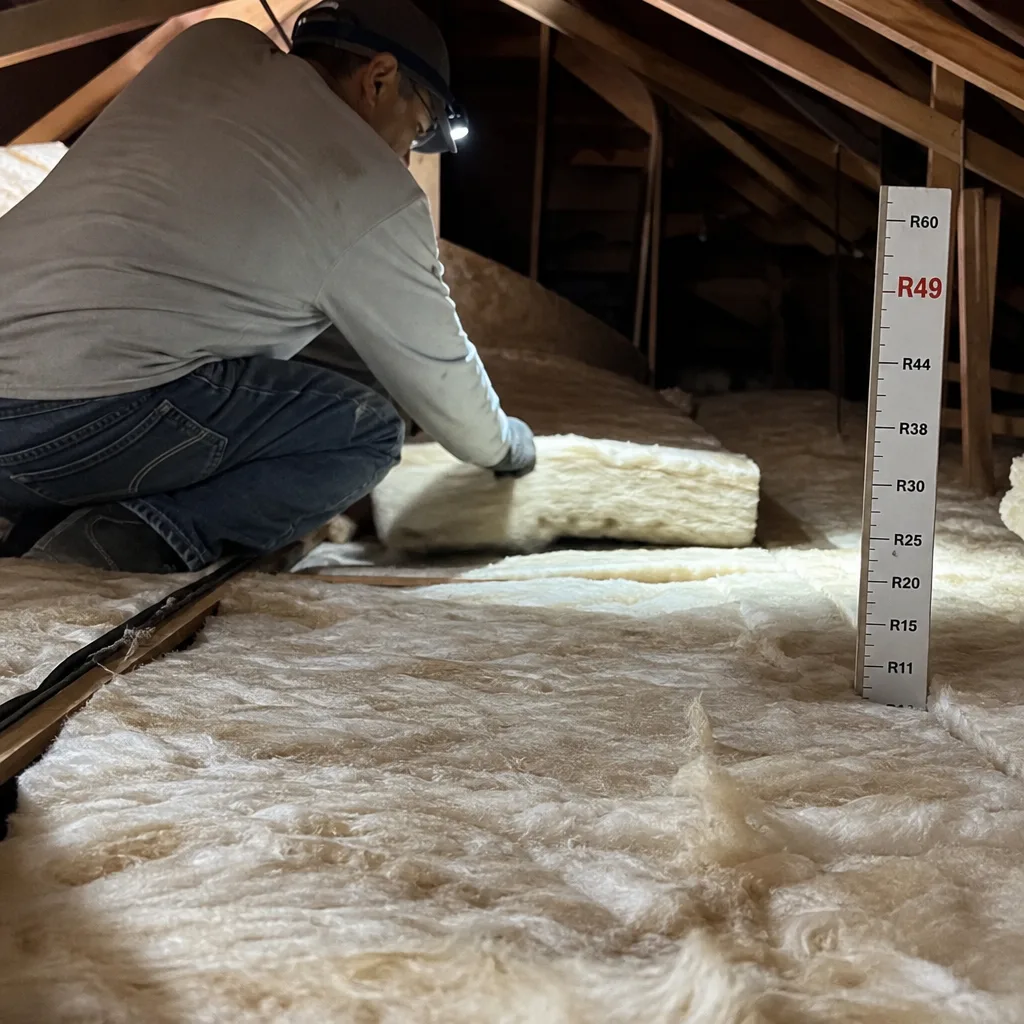
There’s a short list of what a homeowner can safely check: verify attic access clearance, photograph any visible foam degradation for our review, and confirm whether the original installer left a product label or specification sheet. What you should not attempt is removal of existing Icynene yourself. Open-cell foam removal generates respirable particulate and isocyanate dust that requires P100 respirators and negative-air containment; without both, you’re working in a hazardous environment with no margin for error. We also won’t install new insulation over degraded foam, so partial DIY removal just creates more work.
Our crews carry HEPA vacuums, foam-specific scrapers, and the two-part sealants needed to close bypasses before any new material goes down. Seal the bypasses first. The R-value on the bag is only real if the air has nowhere else to go. For a written price on your specific attic, call (562) 526-6978. Estimates are free, and we stock Owens Corning, Johns Manville, Knauf, Rockwool, CertainTeed, Icynene, Demilec, and GreenFiber materials with no proprietary lock-in.
FAQs
Open-cell Icynene in an unconditioned Westminster attic typically shows measurable degradation after 12-18 years, with accelerated aging in west-facing roofs that see afternoon sun. The marine layer moisture cycling, combined with summer attic temperatures above 140°F, stresses the polymer more than inland climates. If your foam is approaching 15 years and you’re seeing any of the symptoms above, it’s worth an inspection. Call (562) 526-6978 for a free assessment with photo documentation.
Spot repair is rarely cost-effective. Once Icynene has pulled away from substrate or begun to powder, the bond is broken and new foam will not adhere reliably to the degraded surface. We remove the failed material, seal the envelope properly, and install a system that can be maintained and augmented over time. Bring us any written estimate you’ve received; under our Free Second Opinion policy, we’ll read it with you line by line.
Most residential attic retrofits in Westminster are completed in one to two working days: half a day for removal and air sealing, half a day for insulation installation and final blower-door verification. Larger homes or those requiring extensive rodent proofing may extend to a third day. We text you a named technician and their arrival window under Haven Standard scheduling.
We stock Icynene-compatible two-part sealants, hybrid foam systems, and the full range of loose-fill and batt alternatives on our Westminster-area trucks. Same-day installation is available when the attic is accessible, electrical clearance is confirmed, and no hazardous material remediation is required. Call (562) 526-6978 to confirm truck stock and schedule; a live person answers 24/7.
Written by Wes Okafor, Owner & Lead Insulation Technician, Topside Attic Insulation Westminster at Topside Attic Insulation Westminster, serving Westminster and nearby areas.