
GreenFiber Attic Air Sealing: The Westminster Owner’s Guide
GreenFiber attic air sealing in Westminster typically runs $340-$780 for a complete top-plate and penetration seal on a single-story home, and we stock the two-part closed-cell foam and compatible sealants for same-day starts on most jobs. The call usually comes after a homeowner notices their GreenFiber cellulose insulation - the loose-fill gray stuff made from recycled paper - isn’t performing like it used to, or after an energy audit flags bypass airflow around can lights and top plates. We see this pattern across Westminster’s 1960s-1980s tract homes, especially in neighborhoods like Little Saigon and the streets north of Westminster Mall where original construction left attic floors full of unsealed gaps.
Which GreenFiber Models This Applies To
GreenFiber doesn’t sell attic air sealing as a branded “system” the way they package their cellulose insulation. What we’re talking about is the air-sealing layer that must exist beneath any GreenFiber cellulose installation - or retrofitted when the original contractor skipped it. If your attic has GreenFiber Low Dust, GreenFiber Sanctuary, or the older GreenFiber All Borate cellulose blown in before 2018, the sealing work applies to your home.
Here’s how to tell what you’re working with. GreenFiber cellulose is gray, slightly fibrous, and heavier than fiberglass - it settles to a dense mat over time. Check for a label on any leftover bags in the garage, or look for the stamped lot code on a joist bay photo if you have one. The critical compatibility issue: GreenFiber cellulose is hygroscopic, meaning it absorbs and holds moisture if humid attic air moves through it. Without a sealed attic floor first, that airflow degrades the cellulose faster than fiberglass and can push R-value below what’s printed on the bag. We don’t install GreenFiber-brand sealant products - we use Owens Corning, Johns Manville, and Knauf-compatible two-part foams and acrylic sealants that perform with GreenFiber installations. Topside Attic Insulation Westminster is an independent service provider, not affiliated with GreenFiber.
The OEM-versus-aftermarket question here is slightly different than with mechanical parts. Some contractors use GreenFiber’s recommended sealant spec (typically a low-expansion foam for top plates). We use equivalent or higher-spec foams from Tremco and Hilti that match the ASTM E-84 fire rating and have better long-term adhesion in Orange County’s heat-cycling conditions. The foam we carry tests to the same standard; the difference is we won’t special-order a GreenFiber-branded can when the compatible product is on our truck today.
Signs Your GreenFiber Attic Air Sealing Is Failing
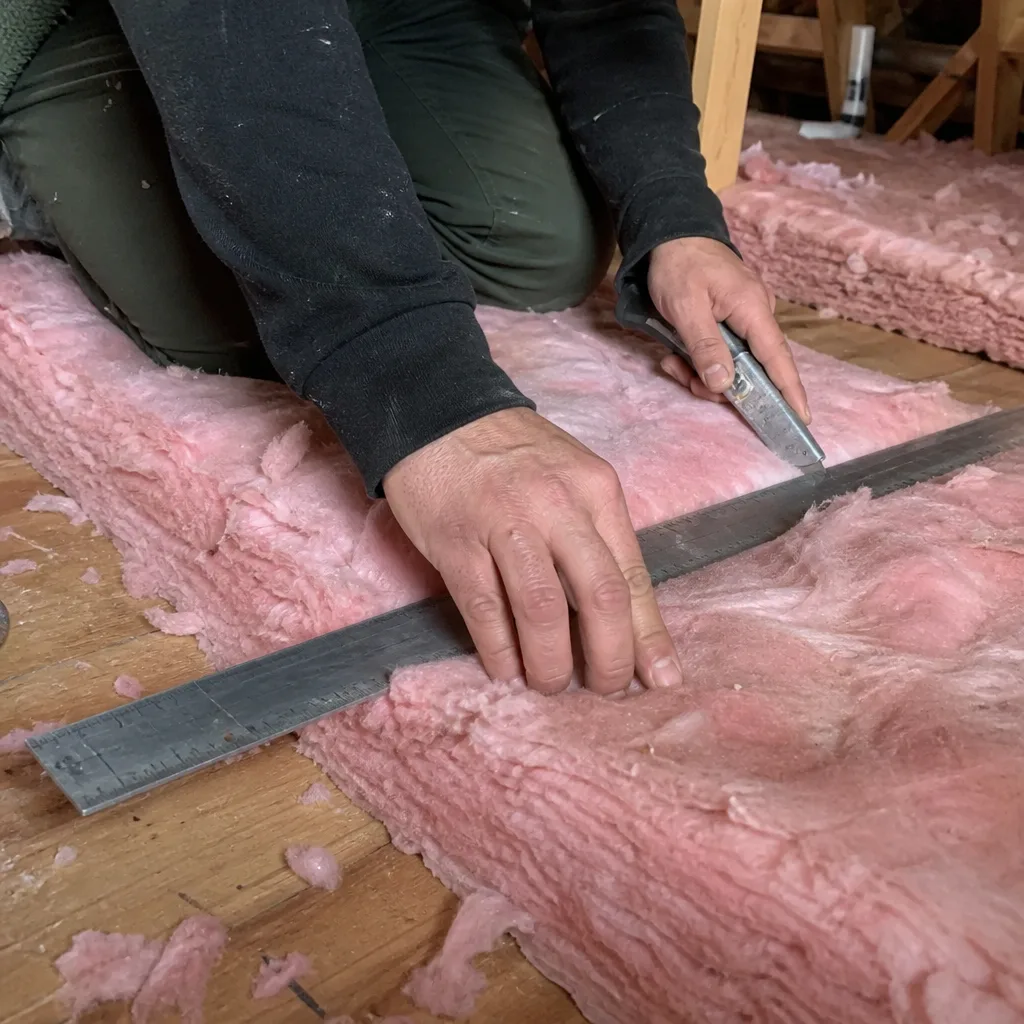
- Hot ceiling spots in summer, cold spots in winter. This means conditioned air is escaping through bypasses - gaps where interior walls meet the attic, around plumbing vent stacks, or near recessed can lights - and the GreenFiber cellulose above can’t stop air movement, only slow conductive heat. We map these with an infrared camera during our initial walk.
- Dust streaking around ceiling registers or can lights. The “ghosting” pattern comes from attic air being pulled through tiny gaps by the pressure differential between conditioned space and attic. In Westminster’s dry summers, this dust is often insulation fines from the GreenFiber layer breaking down.
- Energy bills climbing year-over-year with no rate change. GreenFiber cellulose settles 10-15% in the first two years; that’s normal and calculated. But if bills keep rising after year three, unsealed bypasses are likely letting the cellulose act as a filter rather than a thermal barrier.
- Moisture staining on ceiling drywall below the attic. Warm, humid interior air hits cold attic framing in winter and condenses. GreenFiber’s borate treatment resists mold, but the moisture itself indicates air is moving through the insulation layer, not staying sealed below it.
- Blower-door test shows little improvement after “insulation upgrade.” This is the tell we see most often in Westminster - a previous contractor blew more GreenFiber on top of old material without sealing first. The new R-value looks good on paper; the air leakage number barely moves.
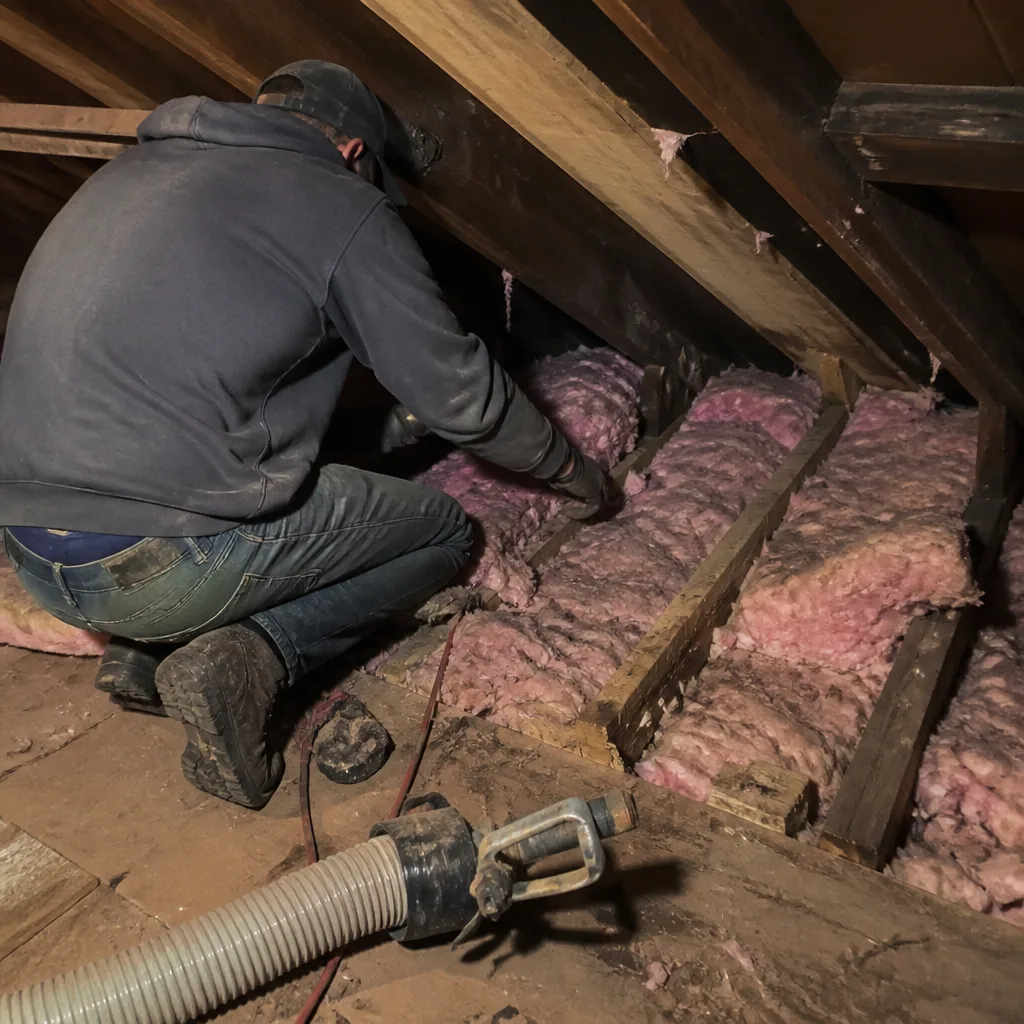 Before
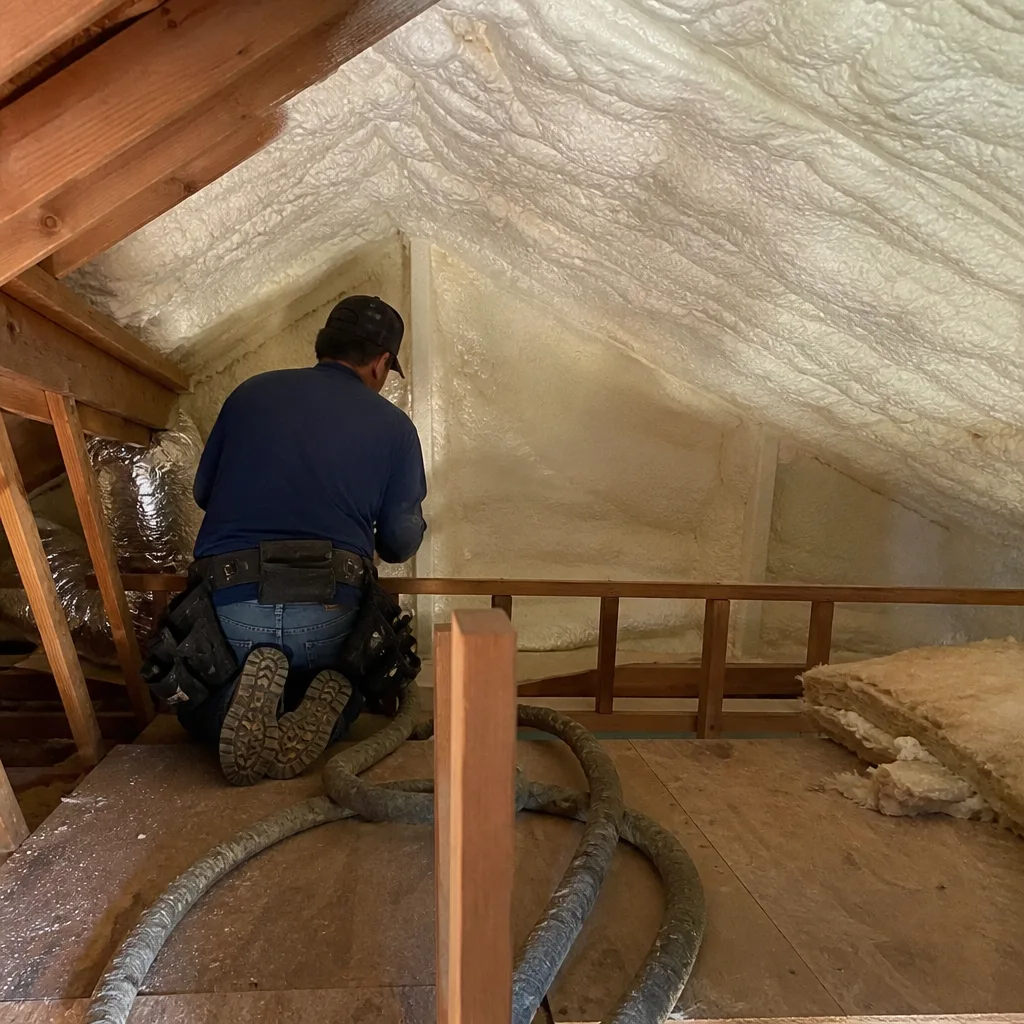 After
AfterReplacement Cost & What’s Included
For a typical Westminster single-story home, 1,200-1,800 square feet, complete attic air sealing with GreenFiber-compatible materials runs $340-$780. Two-story homes or those with complex rooflines (common in the Westminster Heights area) run $680-$1,400 because of extended top-plate linear footage and additional penetration access.
| Component | Price Range |
|---|---|
| Top-plate sealing (two-part foam, all interior wall intersections) | $180-$340 |
| Penetration sealing (plumbing vents, electrical, can lights, chimney chase) | $120-$280 |
| Damming and vent baffles (where needed) | $40-$160 |
What drives the range: attic accessibility (scuttle versus pull-down stair), existing insulation that must be moved and replaced, and whether we find disconnected ductwork that needs addressing before sealing. Every job gets a Written Price Before Any Work Starts - Haven Standard Clause 1 - with the scope itemized. The 365-Day Done Right Promise covers adhesion failure or sealant cracking; in our climate, properly applied two-part foam lasts 20+ years, but we warranty the workmanship for one full year regardless.
DIY or Call Us?
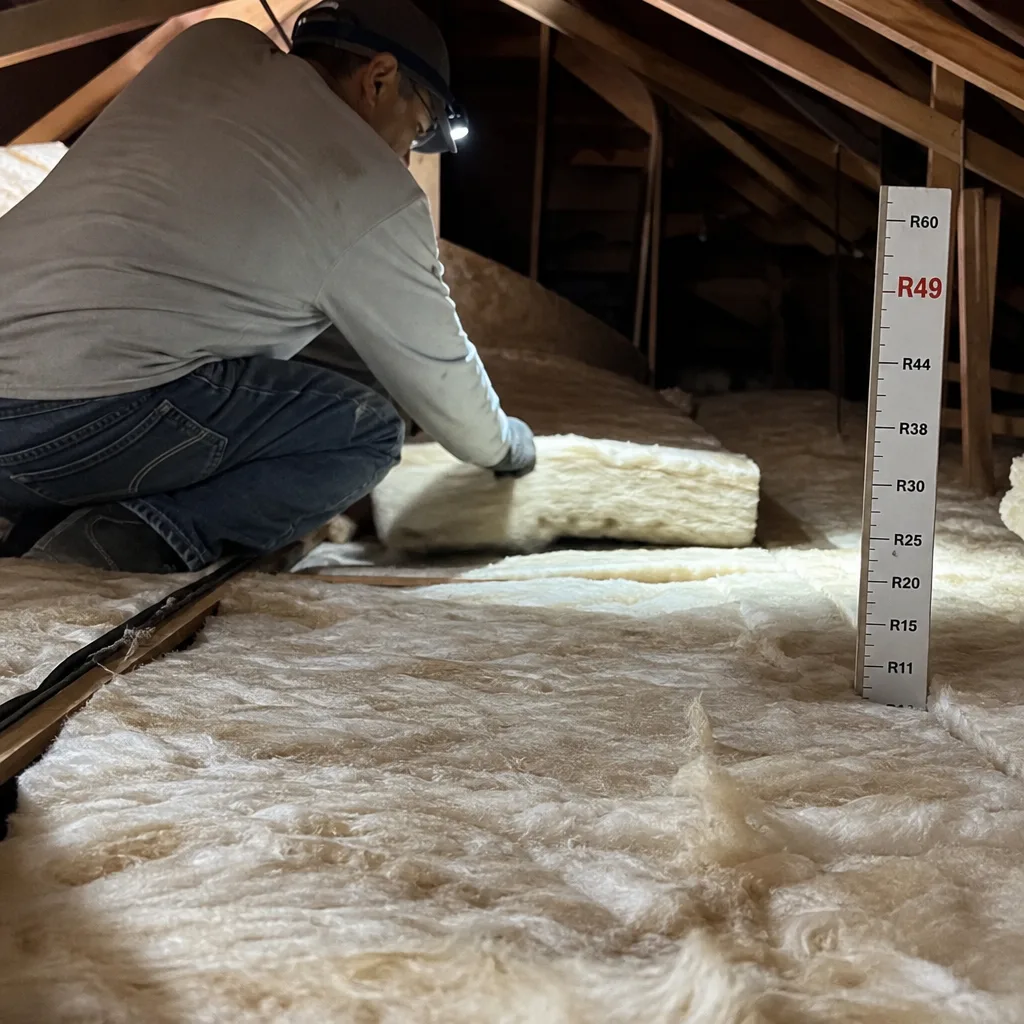
There’s a short list an owner can safely check. Verify your attic scuttle or hatch has weatherstripping. Look for obvious daylight around plumbing vents or the chimney chase. Note any disturbed insulation that might indicate a previous contractor worked around - not through - a bypass.
Where DIY goes wrong: two-part closed-cell foam requires respiratory protection and precise mix ratios; off-ratio foam shrinks and pulls away from framing. More critically, working around energized can lights or near combustion venting without knowing what you’re touching creates fire and CO hazards. Westminster’s 1970s builds often have buried junction boxes and non-IC-rated cans that shouldn’t be foam-sealed without verification. We carry thermal imaging and combustion analyzers on every truck for this reason. If you’ve found a problem, call (562) 526-6978 - we’ll read your situation with you, no charge for the conversation.
FAQs
Properly applied two-part foam and acrylic sealants last 20-25 years in Orange County’s dry, heat-cycling conditions. The bigger variable is whether the original contractor sealed all bypasses - we regularly find partial jobs where accessible gaps were foamed but top plates behind ductwork were skipped. Those unsealed points become the failure path. Call (562) 526-6978 and we’ll show you what’s actually sealed with an infrared scan - estimates are free.
Patching works if the original seal is intact but disturbed in one area - typically where a new fixture was added or a rodent chewed through foam. If the original sealing was skipped entirely or done with low-quality caulk that’s dried and cracked, partial repair leaves you with the same leakage path, just smaller. We don’t quote patch jobs without seeing the attic; the “repair” that makes sense depends on what’s actually there. Bring us any written estimate for a Free Second Opinion - we’ll read it with you.
Most Westminster single-story homes take 4-6 hours for a two-person crew: prep and protection, moving existing insulation, sealing, then replacing and leveling insulation with settled-depth photos. Two-story homes or those with furnace-attic configurations run 6-10 hours. We don’t leave until the blower-door test shows the improvement - typically 30-50% reduction in CFM50 - and the Documented Photo Record is on your phone or email.
We stock Tremco and Hilti two-part foams, acrylic sealants, and fire-rated caulk compatible with GreenFiber installations on every truck. No special order, no return trip. For GreenFiber cellulose top-up or replacement, we source from our regular supplier network - Owens Corning, Johns Manville, Knauf, and GreenFiber among them - with no proprietary lock-in. Same-day starts are available on most Westminster jobs booked before noon.
Seal the bypasses first. The R-value on the bag is only real if the air has nowhere else to go. Wes Okafor has been running crews across Orange County long enough to know that skipping this step is the single most common reason attic insulation underperforms in Westminster’s older housing stock - and the one that’s hardest to diagnose from inside the living space.
Ready to see what your attic is actually losing? Call (562) 526-6978 for a free estimate. We’ll give you a Written Price Before Any Work Starts, a Documented Photo Record when we leave, and before-and-after blower-door numbers so you can verify the result yourself.
Written by Wes Okafor, Owner & Lead Insulation Technician, Topside Attic Insulation Westminster at Topside Attic Insulation Westminster, serving Westminster and nearby areas.