
Demilec Radiant Barrier Installation: The Westminster Owner’s Guide
Demilec radiant barrier installation in Westminster typically runs $1,800-$3,400 for a standard 1,200-2,000 sq ft attic, and we stock the full Demilec-compatible line for same-day starts on most jobs. Most Westminster homeowners figure out something’s wrong when their second-floor bedrooms won’t cool below 78°F even after sunset, or when their summer electric bill jumps $80-$140 over the previous year. The radiant barrier film has either delaminated, pulled away from fasteners, or was never properly integrated with the attic’s air-sealing layer to begin with.
Which Demilec Models This Applies To
Demilec’s radiant barrier products fall under their reflective insulation and spray-foam-adjacent lines, most commonly the Heatlok HFO High Lift systems paired with reflective substrates, and their Demilec APX series used in hybrid attic assemblies across Orange County. The key identifier is the silver reflective facing: Demilec spec sheets call for ASTM C1313-compliant foil, typically 0.5 mil aluminum on reinforced scrim, installed with the reflective side down toward the attic floor in vented assemblies, or up toward the roof deck in unvented conditioned attics.
Here’s where Westminster owners get tripped up. Demilec’s OEM radiant barrier is sized for their specific foam thicknesses, 3.5″ to 5.5″ nominal, and the staple flange spacing differs from generic Reflectix by 1/2 inch. We’ve pulled down “compatible” aftermarket barrier that was riding 3/8″ too narrow on the flange, leaving a thermal short every 24 inches. We stock both Demilec OEM foil and a tested aftermarket equivalent, Fi-Foil’s AA2-VFR, that matches the flange geometry and emissivity spec (0.03 or lower). If your original install was done during 2018-2021, check for the Demilec lot code sticker on the kraft facing, usually near the ridge vent. No sticker means you’re likely looking at a retrofit where the barrier wasn’t integrated with the foam layer, which is a different repair scope.
Topside Attic Insulation Westminster is an independent service provider, not affiliated with Demilec.
Signs Your Demilec Radiant Barrier Installation Is Failing
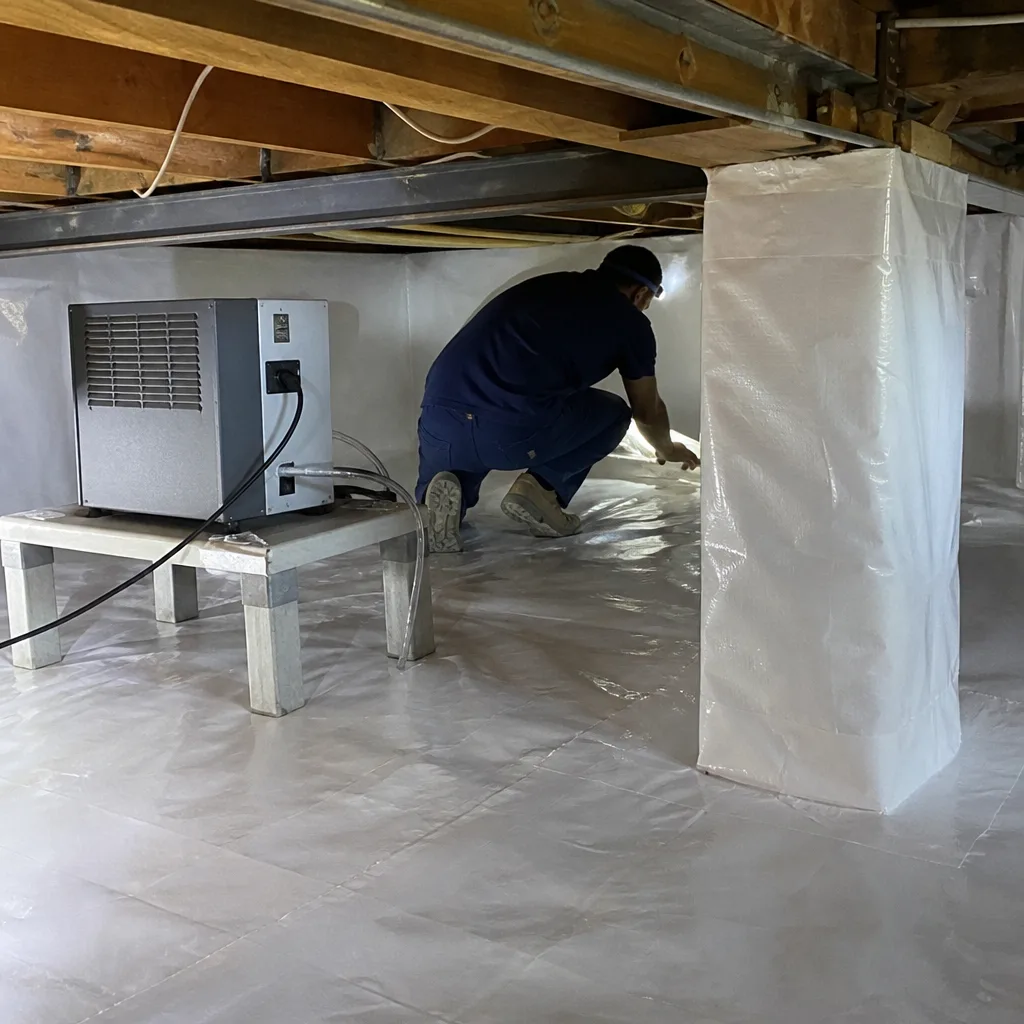
- Hot ceiling patches at midday. The radiant barrier has torn or detached near the ridge, letting roof deck radiation hit drywall directly. In Westminster’s inland heat, a failed section near south-facing roof planes can create 10-15°F surface temperature spikes you can feel with your palm.
- Air handler running 30+ minutes longer than last summer. The barrier isn’t reflecting infrared back toward the roof deck, so your attic floor insulation is absorbing and reradiating heat. Your thermostat keeps calling; the system keeps delivering.
- Visible sagging or foil “draping” between trusses. Demilec’s recommended fastener pattern is every 6 inches on the perimeter, every 12 inches in the field. Skipped fasteners let gravity and attic air movement do the rest. We’ve seen this especially in Westminster’s older Bella Terra and Midway City-adjacent homes where retrofit crews rushed the mechanical attachment.
- Corroded spots or black streaks on the foil face. This is the tell for improper installation: the reflective side was faced down in a vented attic, trapping moisture against the aluminum. Westminster’s morning marine layer pushes attic humidity to 70%+ in shoulder seasons; without proper drying potential, the foil oxidizes from the back side.
- Your energy bill climbed after a “radiant barrier” was added. The crew blew insulation over an unsealed attic floor, then laid barrier on top. Now you’ve got a convection loop under the foil, moving hot air through gaps around top plates and can lights. The barrier is working as a lid on a pot that’s still boiling. Seal the bypasses first. The R-value on the bag is only real if the air has nowhere else to go.
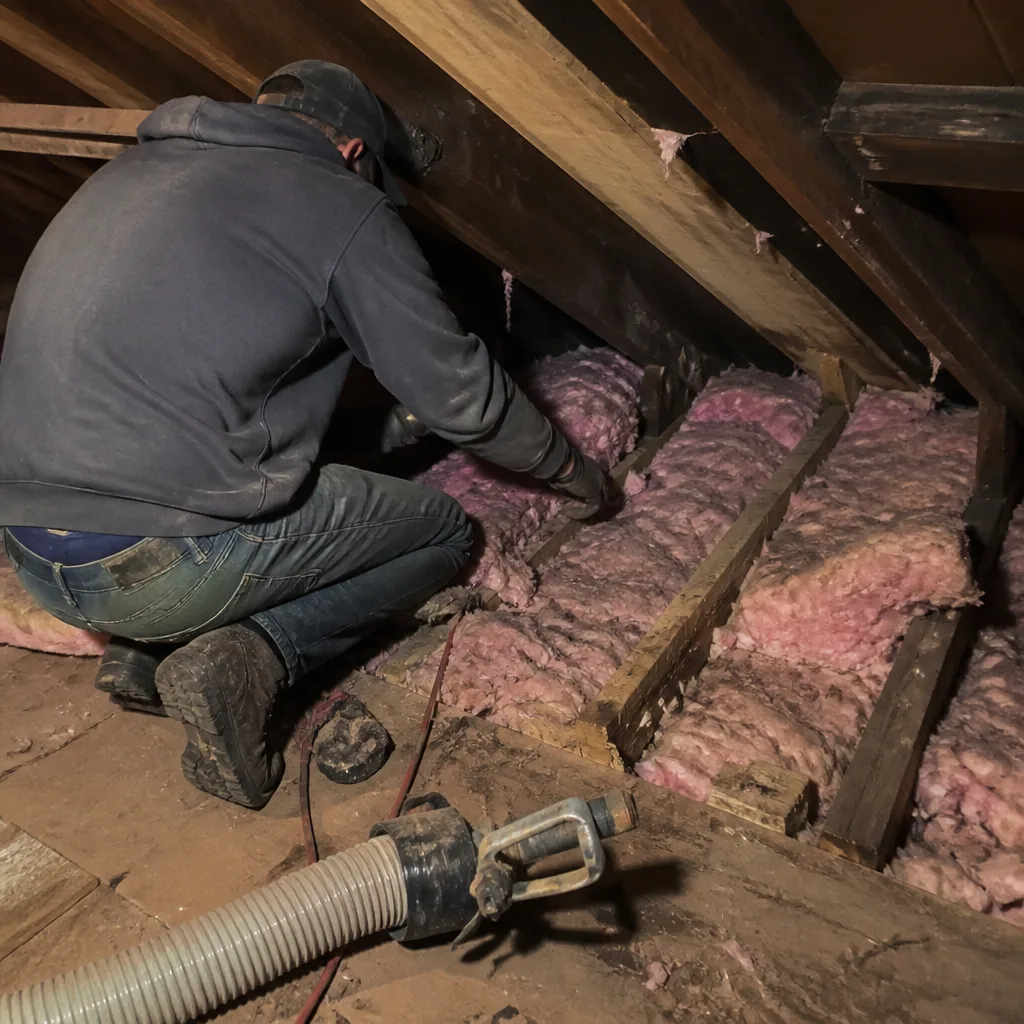 Before
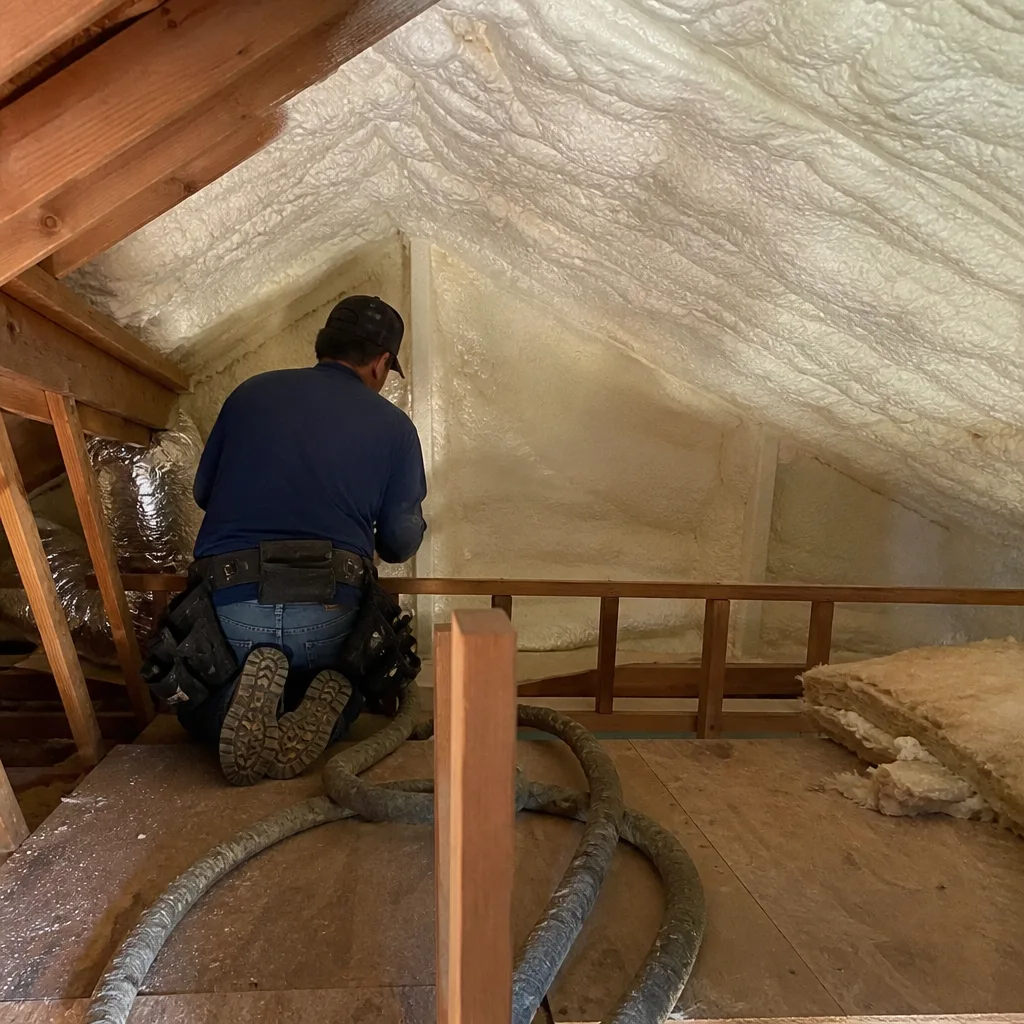 After
AfterReplacement Cost & What’s Included
| Scope | Price Range | What’s Included |
|---|---|---|
| Barrier replacement only, intact foam | $1,800-$2,400 | Removal of failed foil, surface prep, Demilec-compatible barrier install, fastener pattern to spec, documented photo record |
| Barrier + air-sealing retrofit | $2,600-$3,400 | Above plus top plate sealing, can light covers, penetration foam, before-and-after blower-door test with published readings |
| Full assembly: foam + barrier | $4,200-$6,800 | Removal of existing insulation, foam install to Demilec thickness, barrier integration, complete envelope documentation |
What moves you up the range: attic square footage over 2,000, restricted access (hatch under 22″ wide), existing rodent damage requiring cleaning, or a conditioned attic conversion that needs unvented assembly detailing. What we don’t do: quote a flat rate without seeing the space. Under Haven Standard Clause 1, you get a written price, written scope, and written warranty before anyone lifts a tool. No exceptions since 2016.
The 365-Day Done Right Promise covers all barrier work. If the foil delaminates, detaches, or tests outside spec on a thermal scan, we make it right. Wes Okafor still keeps his original blower-door test sheets in a binder on his truck; the documentation habit started at Kennedy-King College and hasn’t stopped.
DIY or Call Us?
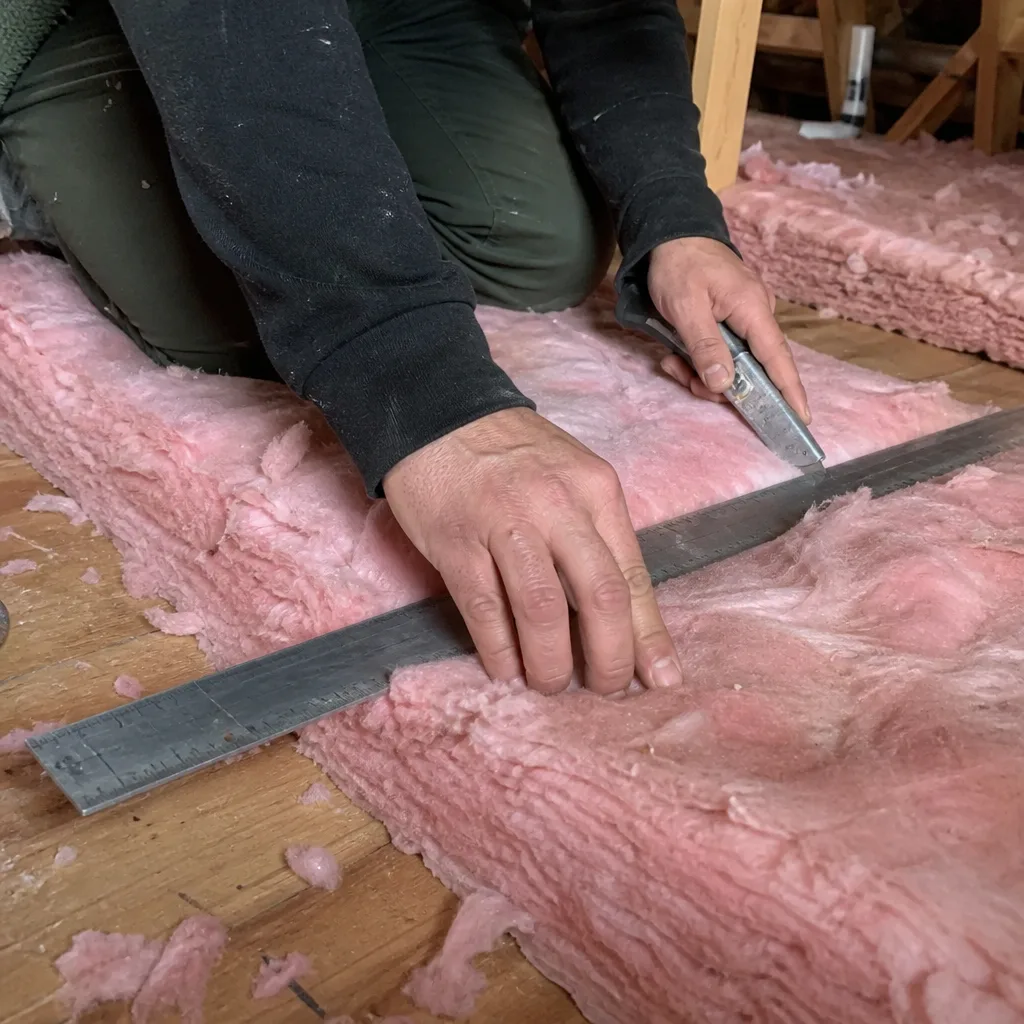
Here’s what you can safely check yourself. Verify the reflective side orientation from the attic hatch with a flashlight, look for obvious tears or detached sections, and photograph any lot codes or labels for us to review by text. What you should not do: crawl across joists in summer heat to re-staple loose sections, or attempt to integrate new barrier with existing spray foam without understanding whether your assembly is vented or unvented. Mis-call that detail and you’ve created a moisture trap that voids the material warranty and risks roof deck rot.
The actual installation requires working around energized Romex, maintaining proper clearances near recessed cans, and matching the fastener pattern to the specific product spec. We carry Demilec-compatible barrier, the right cap staples, and the blower-door rig to prove the air-sealing result. Call (562) 526-6978 for a written estimate, no charge.
FAQs
Properly installed Demilec-compatible barrier should perform 15-20 years in Westminster, though the marine layer’s humidity cycling can accelerate fastener corrosion if the attic ventilation is marginal. We’ve replaced barrier at year 8 in homes near the Santa Ana River corridor where attic ventilation was undersized. Call (562) 526-6978 and we’ll assess your venting as part of the estimate.
Small tears can be patched with foil tape rated for high-temperature exposure, but delamination, widespread fastener failure, or incorrect original orientation means full replacement. Patching a 20% failed area usually costs 60% of replacement and leaves you with seams that show on thermal imaging. We quote both honestly; most Westminster homeowners choose replacement once they see the photo documentation.
A straightforward barrier replacement on a 1,500 sq ft attic takes one day, typically 6-8 hours with a two-person crew. If we’re doing the air-sealing retrofit with blower-door verification, plan on two days: day one for sealing and testing, day two for barrier install and final documentation. You’ll get the photo record and blower-door readings before we leave.
We stock Demilec-compatible barrier in 48″ and 60″ widths, plus the Fi-Foil AA2-VFR equivalent that matches Demilec flange geometry. For OEM Demilec-labeled product, we order direct and typically have it within 48 hours. Most Westminster jobs start same-day or next-day depending on the scope we confirm during your free estimate. Call (562) 526-6978 to schedule.
Written by Wes Okafor, Owner & Lead Insulation Technician, Topside Attic Insulation Westminster at Topside Attic Insulation Westminster, serving Westminster and nearby areas.