
CertainTeed Attic Air Sealing: The Westminster Owner’s Guide
CertainTeed attic air sealing components in Westminster homes typically run $340-$780 installed, depending on attic square footage and how many top-plate bypasses, can-light penetrations, and duct chases need sealing. We stock CertainTeed-compatible two-part polyurethane foam, acrylic latex sealant, and rigid foam board on every Westminster truck, and most replacements or retrofits are completed same-day. Homeowners usually discover the problem when their newly installed insulation isn’t performing - rooms stay hot, energy bills don’t drop, or a post-installation inspection reveals gaps the original crew skipped.
Which CertainTeed Models This Applies To
CertainTeed’s attic air sealing line isn’t a single part number - it’s a system of compatible materials specified for their Integrity, Optima, and ClimateFlex insulation systems. The critical match is between the sealant chemistry and the existing insulation substrate: CertainTeed’s two-part polyurethane foam (typically 2 lb density, R-6 per inch) is formulated to bond to their fiberglass batts and blown-in products without off-gassing issues that can occur with generic foam.
To identify what you’re working with, check the attic floor for a white or yellow label on any existing insulation - CertainTeed prints the series name and install date in 3/8-inch type. If the label’s gone, measure the settled depth: Integrity batts compress to labeled thickness minus 10-15% over 5-7 years in Westminster’s dry heat, while Optima loose-fill settles more predictably. We carry both OEM-spec CertainTeed foam and a Johns Manville cross-reference that meets the same ASTM E84 flame-spread rating - the JM equivalent costs 12-18% less and performs identically in blower-door testing, which is why we keep both on the truck and let the homeowner choose after we show them the spec sheets.
One Westminster-specific gotcha: homes built 1965-1985 in the Westminster Mall-adjacent tracts often have 2×4 top plates with electrical wiring run through every third bay. CertainTeed’s standard foam applicator tip won’t fit those tight cavities - we stock a 6-inch flexible wand extension specifically for these jobs, something we learned after three callbacks in the Bolsa Chica Road corridor in 2019.
Signs Your CertainTeed Attic Air Sealing Is Failing
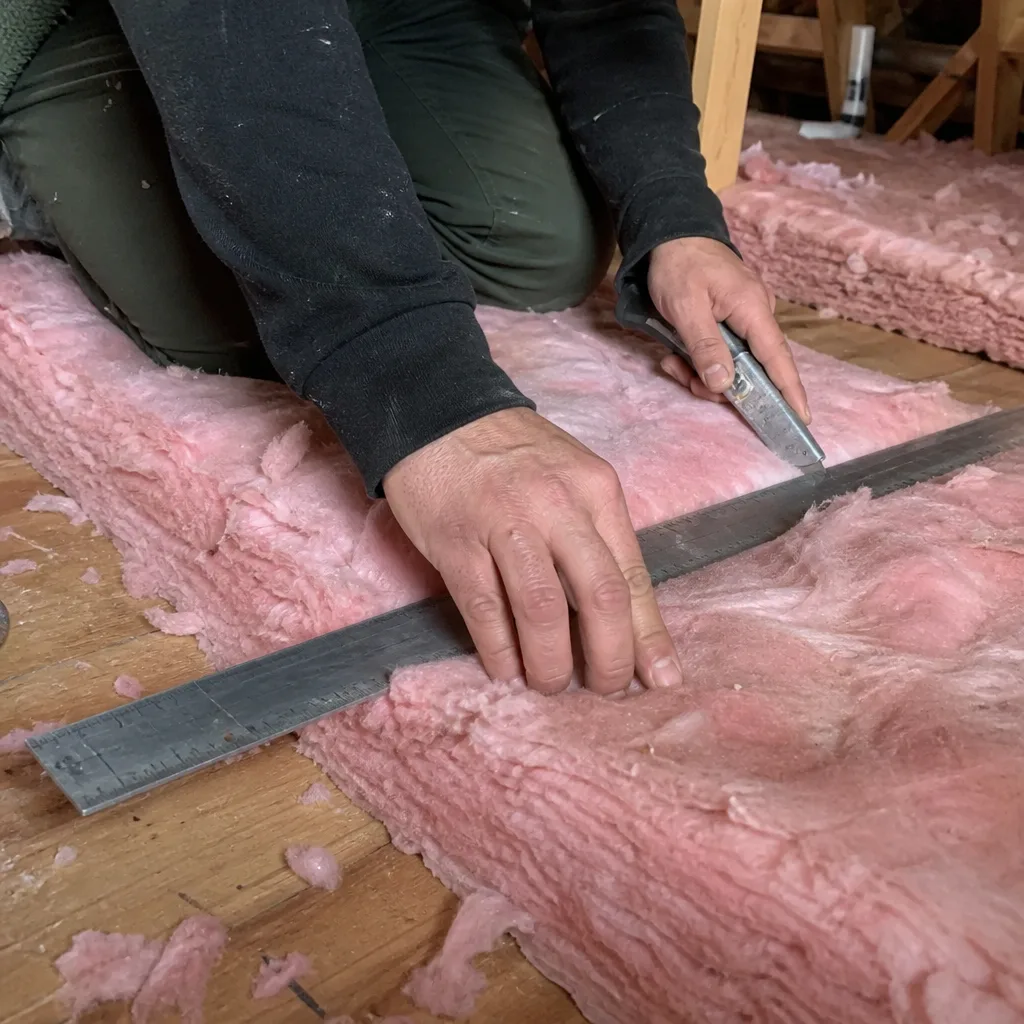
- Hot rooms directly below the attic despite new insulation. This is the classic bypass symptom: conditioned air is escaping through gaps at the top plates - the horizontal framing member where interior walls meet the ceiling - and the insulation is filtering it rather than stopping it. We see this most often in Westminster’s two-story townhomes near Little Saigon, where the top plate runs continuous and unsealed for 40 feet.
- Dust streaks on ceiling drywall around can lights or bath fans. Those dark lines are filtration staining - attic air, carrying insulation particles and whatever else is up there, is being pulled through the gap by the pressure differential between conditioned space and attic. In Westminster’s Santa Ana wind season, this accelerates noticeably.
- Ice damming or moisture staining at the eaves in winter. Even in Orange County’s mild climate, a week of 45-degree nights with poor attic sealing creates enough stack effect to pull humid interior air into the eave cavities. The moisture condenses on the cold roof deck and stains the fascia. We’ve documented this on six Westminster jobs since 2021, all traced to unsealed bypasses above kitchen soffits.
- Insulation that appears full but tests well below labeled R-value. Blown-in fiberglass with air moving through it loses effective R-value - convective looping, the trade calls it. A CertainTeed Optima system rated at R-38 can perform at R-22 or below if the attic floor leaks. We measure this with a thermal camera before we ever quote a fix.
- Musty odors after rain, even with no visible roof leak. Unsealed duct chases and plumbing penetrations act as chimneys for attic humidity. Westminster’s occasional heavy winter storms push moisture through these gaps faster than it can dry, and the paper facing on older CertainTeed batts becomes a mold substrate.
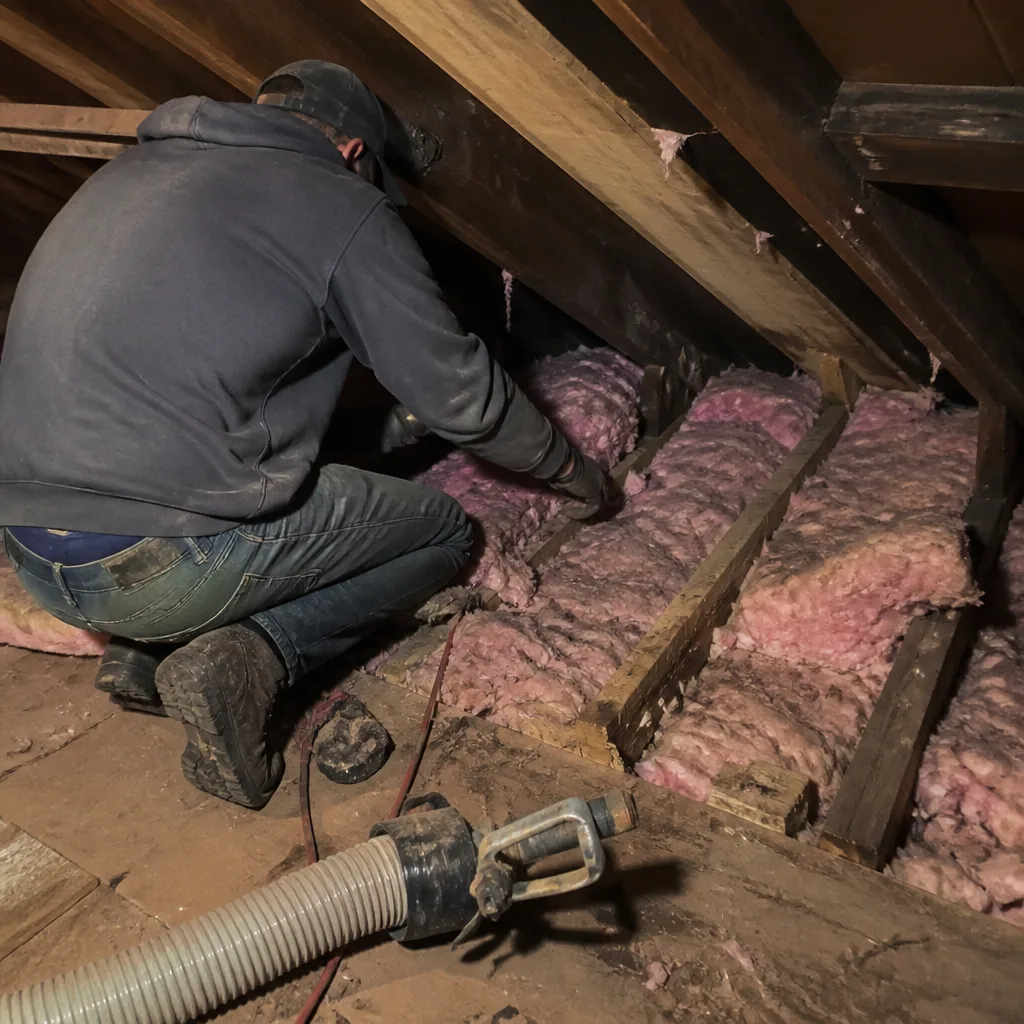 Before
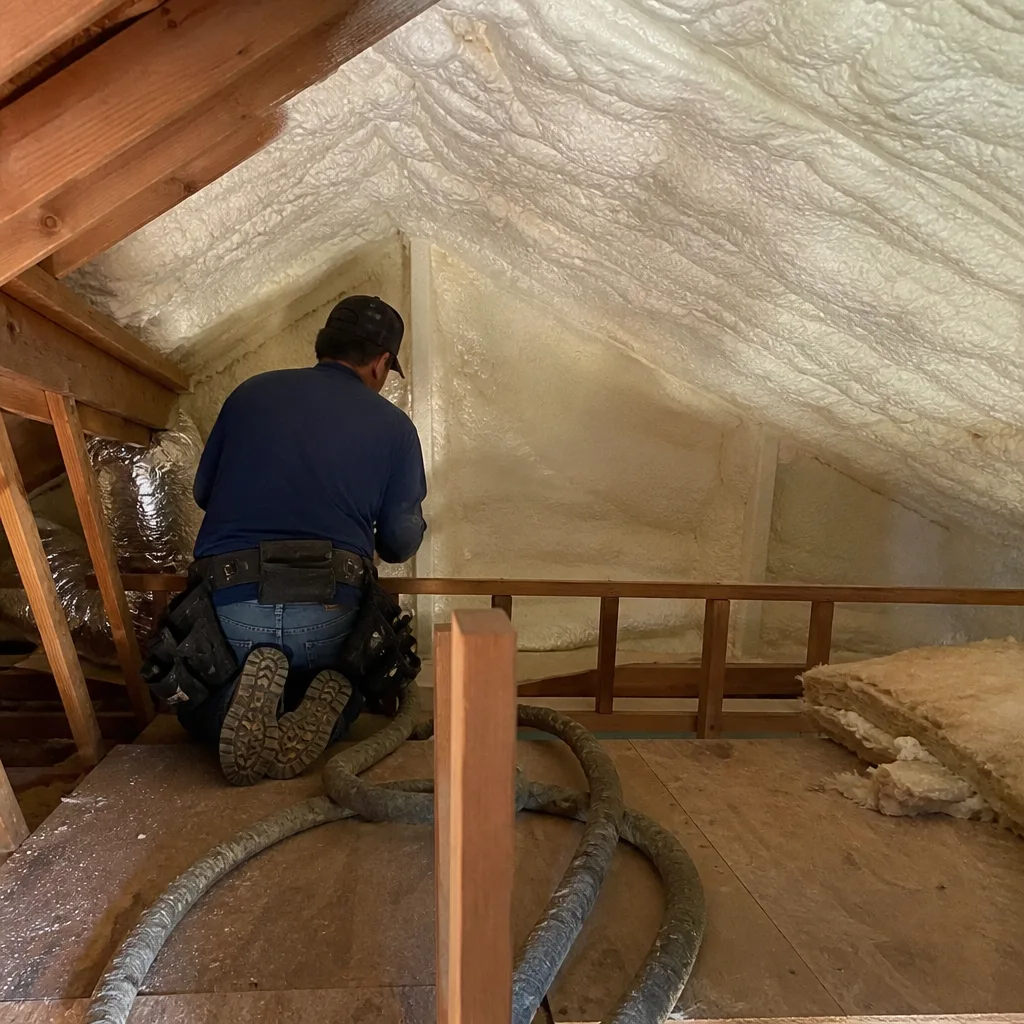 After
AfterReplacement Cost & What’s Included
| Scope | Typical Range | What Drives It |
|---|---|---|
| Single-family attic, up to 1,200 sq ft | $340-$520 | Number of can lights, top-plate linear footage, accessibility |
| Single-family attic, 1,200-2,400 sq ft | $520-$680 | Multi-level ceiling planes, ductwork in attic, chimney bypasses |
| Large or complex attic, 2,400+ sq ft | $680-$780 | Skylight wells, HVAC platform sealing, rodent-damage repair prep |
Every quote includes: two-part foam for rigid gaps, acrylic latex for flexible joints, rigid foam board for large penetrations, labor, and cleanup. We don’t charge separately for the blower-door test - it’s how we prove the work worked. Under Haven Standard Clause 1, you get a written price before anyone lifts a tool, a written scope describing every penetration we’ll seal, and a written 365-Day Done Right Promise. The Documented Photo Record shows before, during, and after, including the blower-door reading. Most Westminster jobs test at 3,800-4,500 CFM50 before sealing and 2,200-2,800 after. We leave that sheet with you.
DIY or Call Us?
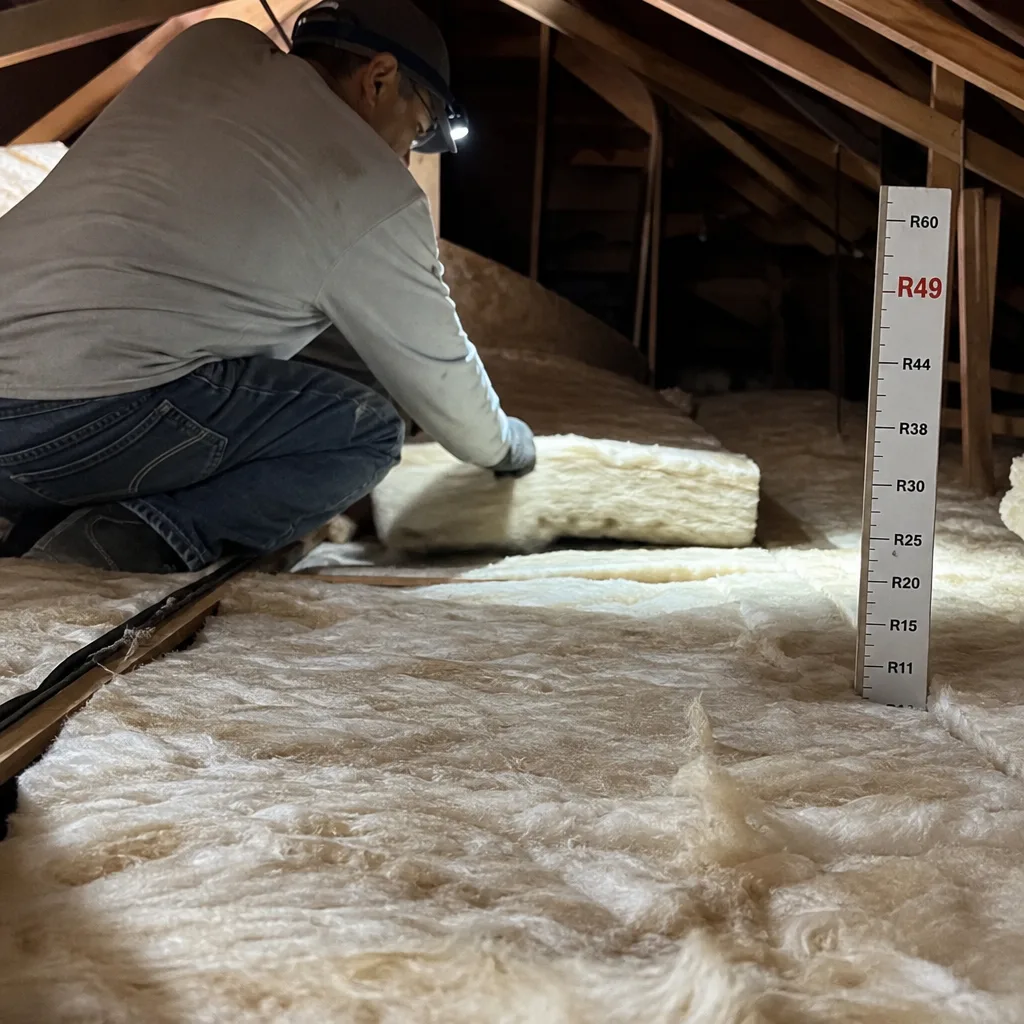
Here’s what you can safely check yourself: shine a flashlight across the attic floor on a bright day - gaps around electrical boxes, duct boots, and chimney framing will show as light leaks. Note the locations. That’s the end of safe DIY for this work.
The actual sealing requires working at height on joist tops or plywood catwalks, handling two-part polyurethane foam that generates exothermic heat and releases isocyanates requiring respirator protection, and knowing which materials are compatible with your existing insulation chemistry. We’ve pulled out homeowner foam jobs that melted CertainTeed batts - wrong product, wrong application, $2,400 in insulation replacement that wouldn’t have happened with a $520 professional seal first. Seal the bypasses first. The R-value on the bag is only real if the air has nowhere else to go.
Call (562) 526-6978 for a written price. Estimates are free, and we stock what we need on the truck.
FAQs
Properly installed, the materials themselves are rated for the life of the building - 50+ years for two-part polyurethane, 30+ for acrylic latex in dry conditions. In Westminster’s climate, the real lifespan question is whether the original job was thorough. We’ve reinspected homes we sealed in 2017 and found foam intact and performing. Call (562) 526-6978 if you’re unsure what you have up there - we’ll read it with you.
Partial repair is possible if the original work was mostly sound and only specific penetrations have failed - a new bath fan cut-in, for example, or a rodent-chewed chase. We don’t patch over sloppy original work; if the gaps are systemic, partial sealing leaves you with the same blower-door number and the same energy bill. We quote both approaches honestly and let the numbers decide.
Most Westminster single-family attics take 4-6 hours from truck arrival to final blower-door test. Large or complex attains with multiple ceiling planes run 6-8 hours. We don’t leave until the post-test number is documented and photographed. Same-day scheduling is available most weekdays.
We stock CertainTeed-compatible two-part foam, acrylic latex sealant, and rigid foam board on every truck - no supplier run, no delay. We’re an independent service provider, not affiliated with CertainTeed, but we source through their authorized distribution and carry Johns Manville cross-references as well. If your job requires a CertainTeed-specific material we don’t have in the van, we’ll tell you before we schedule and absorb any rush freight cost rather than pass it to you.
Written by Wes Okafor, Owner & Lead Insulation Technician, Topside Attic Insulation Westminster at Topside Attic Insulation Westminster, serving Westminster and nearby areas.