
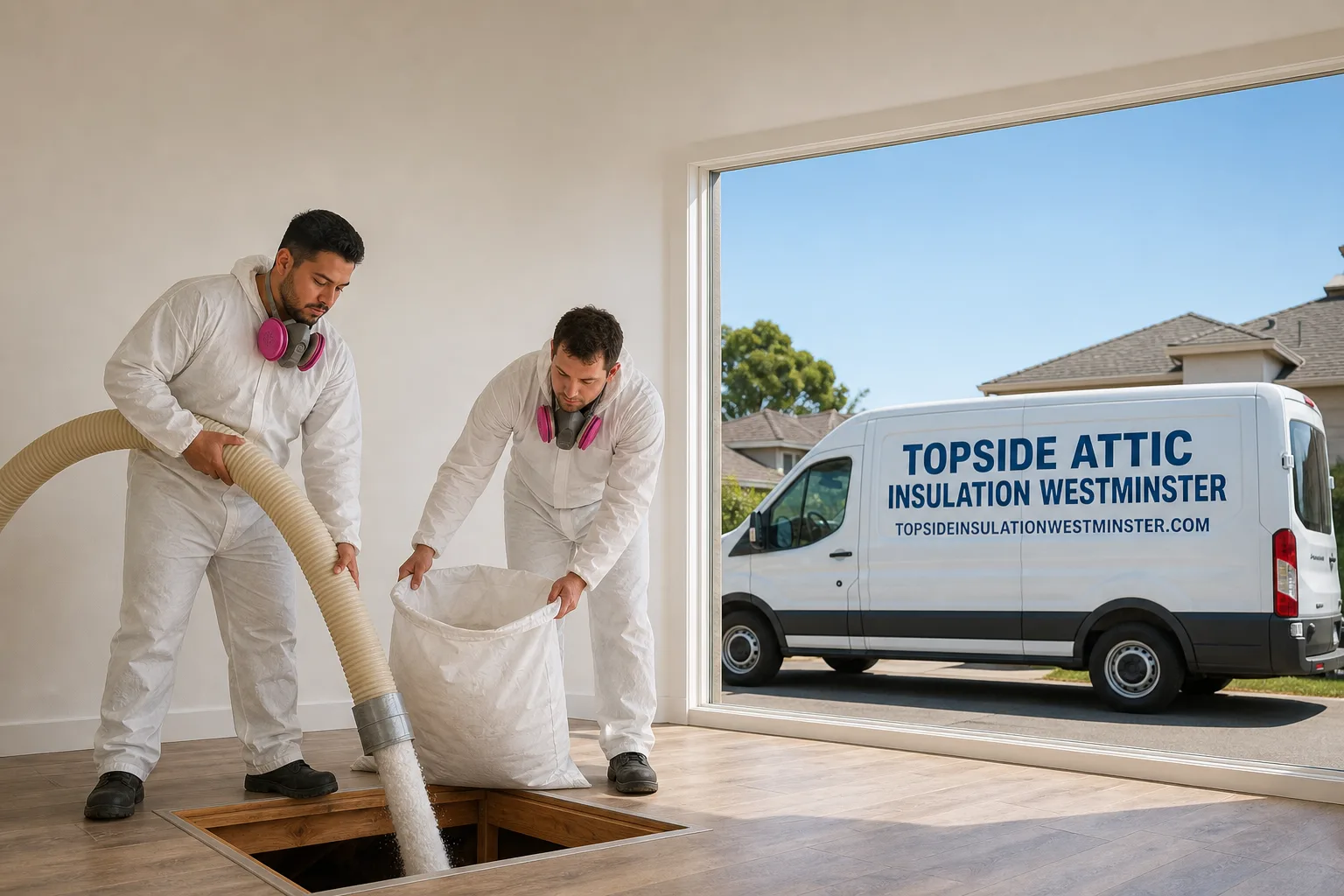
Fast, Reliable Blown-In Insulation Across Tustin
Blown-in insulation in Tustin typically runs $1.80-$3.20 per square foot of attic floor, with most complete attic jobs falling between $2,400 and $5,800 depending on existing depth, air-sealing needs, and access. Dense-pack wall insulation for Old Town Tustin’s historic balloon-frame homes generally costs $3.50-$5.00 per square foot of wall area. We’re Envelope Insulation Co., and our crews serve Tustin from our Los Angeles dispatch office with same-week scheduling for standard jobs and next-day response for urgent heat-loss issues. Call (562) 526-6978 for a written price before any work starts.
Tustin’s not a single housing market. It’s three distinct eras stacked on top of each other: pre-WWII balloon-frame Craftsman bungalows in Old Town with zero wall insulation, 1980s-early 1990s Tustin Ranch tract homes built to pre-modern energy codes, and the ongoing Tustin Legacy redevelopment converting 1,600 acres of former MCAS Tustin into one of Southern California’s largest urban infill projects. Each era needs a different blown-in approach. We’ve sealed and insulated over 9,000 homes since 2016, and the documentation we deliver - written scope, written price, blower-door numbers where applicable, and a photo record - is the same whether we’re working off El Camino Real or Tustin Ranch Road.
Why Topside Attic Insulation Westminster Is Tustin’s Preferred Blown-In Insulation Company
Our Blown-In Insulation team has worked throughout Orange County, but Tustin’s split housing stock has made it one of our most frequent retrofit markets. We regularly see three-star reviews from other contractors where the crew blew insulation over an unsealed attic floor, or drilled through historic siding without checking preservation guidelines, or topped up an R-19 attic without addressing the top plates bleeding air into the Santa Ana wind corridor. Our approach starts with sealing, documents the result, and finishes with a written record.
Response time to Tustin neighborhoods runs same-week for standard assessments, with next-day availability when attic heat loss is forcing the HVAC to run continuously. We coordinate dispatch from our Los Angeles office, but the crew that arrives at your door knows Tustin’s specific conditions: the minimal marine layer relief this far inland, the fall Santa Ana wind patterns that drive infiltration through aging envelopes, and the historic district rules that change how wall insulation gets installed.
Under Haven Standard Clause 1, you get a flat written price, written scope, and written warranty before anyone lifts a tool. That applies in Old Town, Tustin Ranch, and Tustin Legacy equally. We also offer a Free Second Opinion on any written estimate from another contractor - bring us their scope and we’ll read it with you, line by line.
Our Blown-In Insulation Services in Tustin
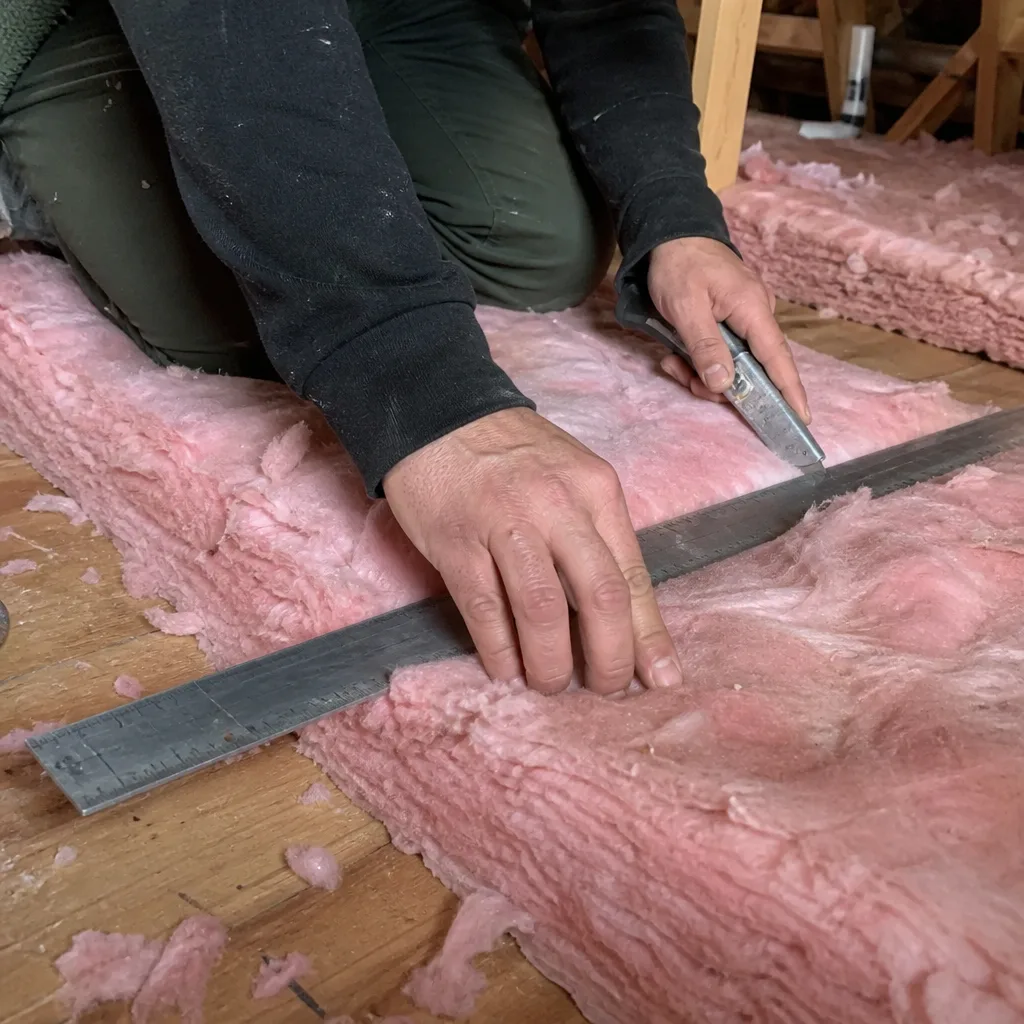
Blown-In Cellulose
We use GreenFire and other cellulose products treated for fire resistance and pest deterrence. In Tustin, cellulose performs particularly well in the hot, dry attic conditions that develop when the marine layer doesn’t reach this far inland. The material settles less than older formulations, and we account for settled depth in our written scope so you know the installed versus settled R-value. For Old Town Tustin’s historic homes, cellulose is often the preferred dense-pack material for wall cavities because it’s vapor-permeable and less likely to trap moisture in balloon-frame construction.
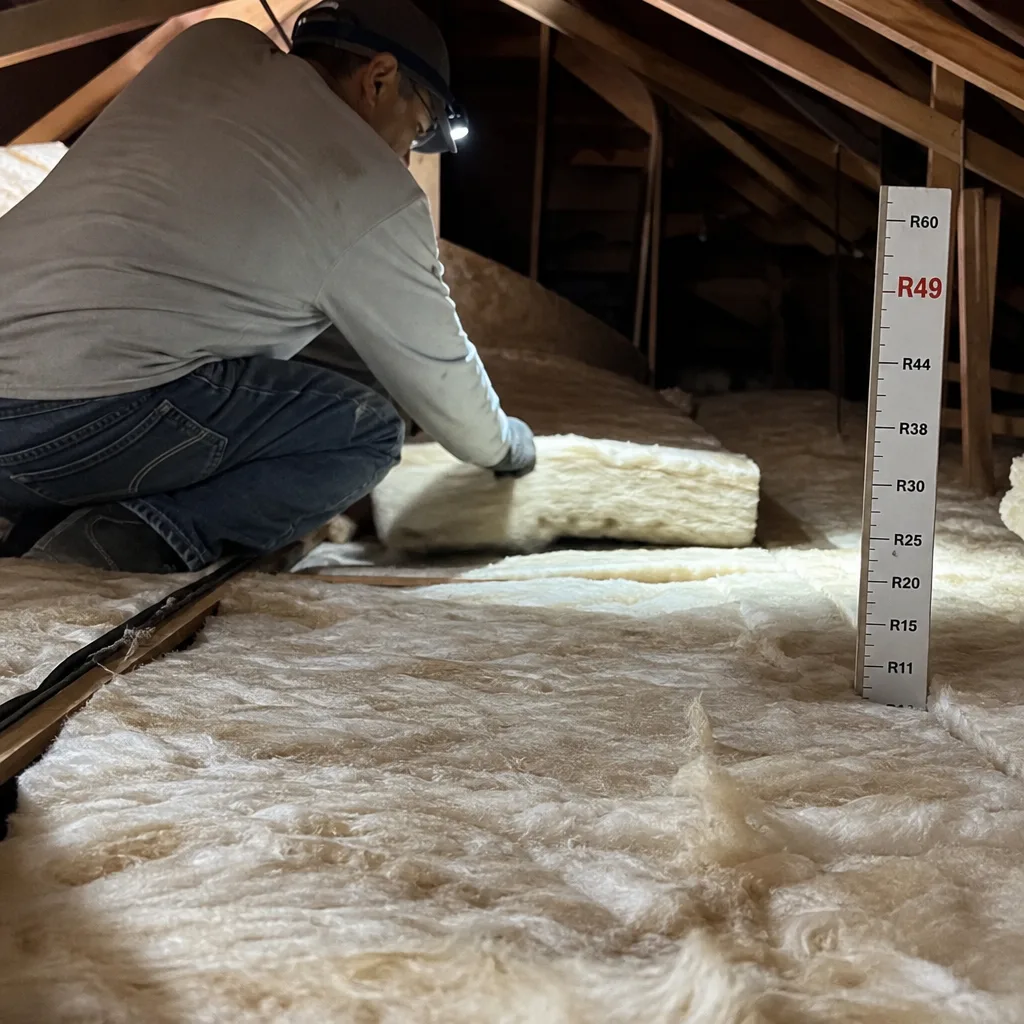
Blown-In Fiberglass
We stock Owens Corning and Johns Manville fiberglass for Tustin attics, typically blown to R-38 or R-49 depending on the existing structure’s load capacity and the California energy code tier that applies. Tustin Ranch homes from the 1980s and early 1990s were often built to R-19 attic standards, so a top-up to modern code represents a significant performance jump - but only if the attic floor is sealed first. We never blow new fiberglass over unsealed top plates, can lights, or duct penetrations. The blower-door test we run before and after shows why: unsealed attics leak conditioned air straight into the vented space.
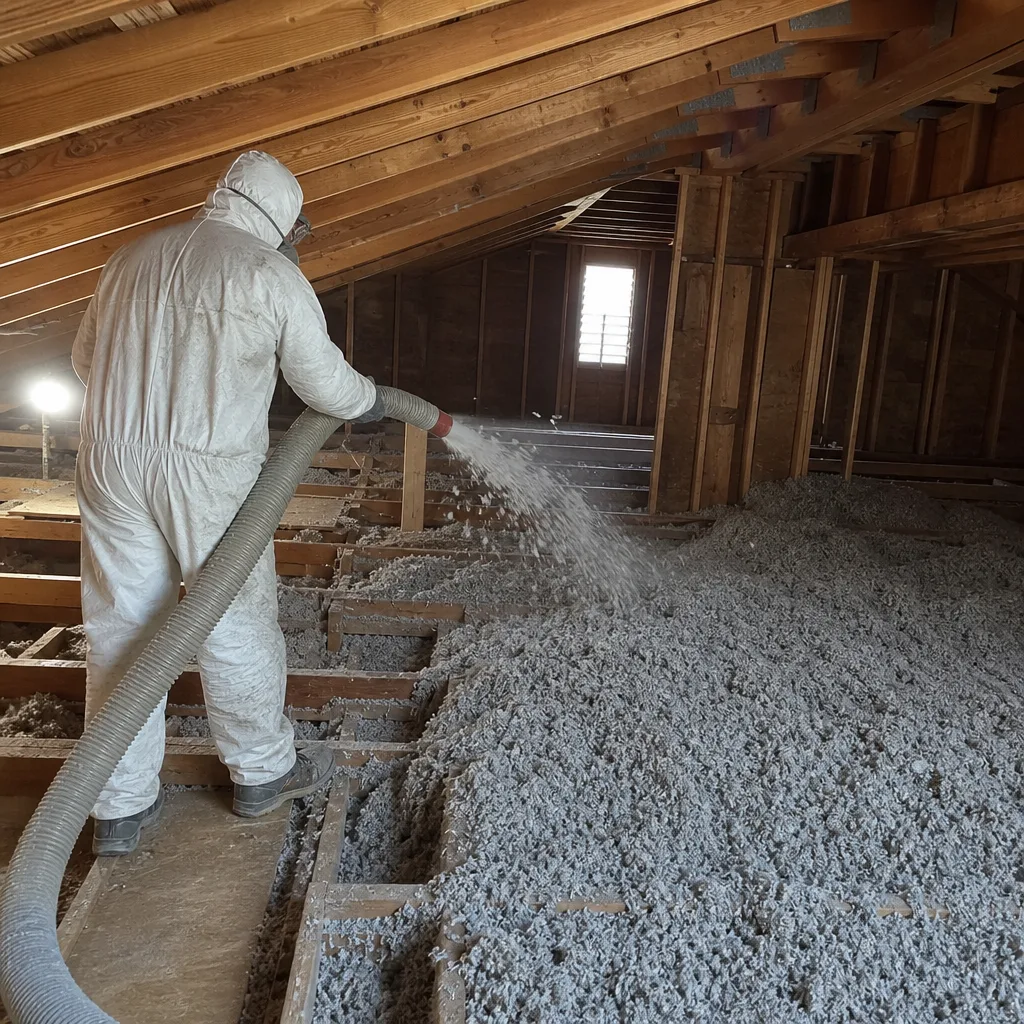
Dense-Pack Wall Insulation
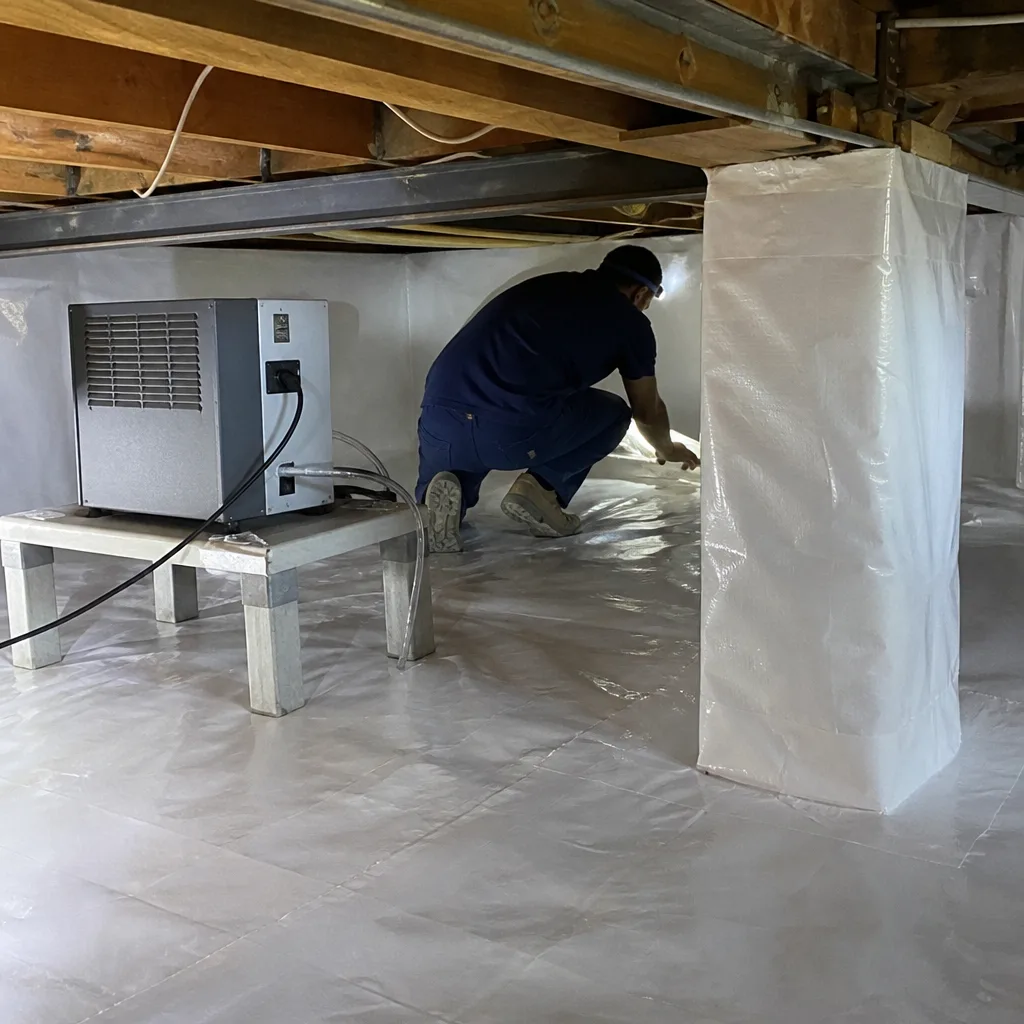
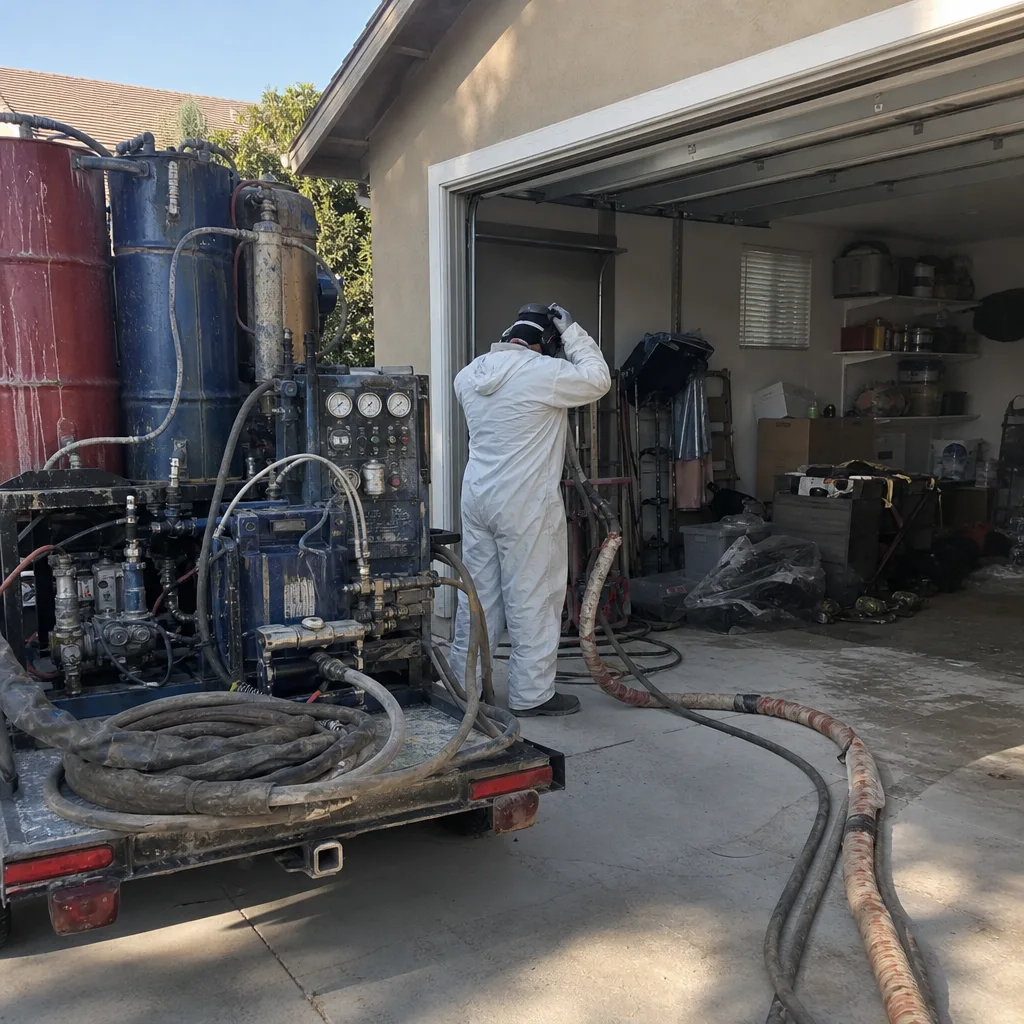
This is where Tustin’s local conditions fundamentally change the installation method. Old Town Tustin’s historic preservation guidelines prohibit drilling through original exterior wood siding on designated properties. Standard Orange County practice is exterior drilling - fast, clean, minimal interior disruption. In Old Town, that approach creates a preservation violation. Our crews work from interior drywall penetrations or attic top-fill access, dense-packing each stud bay with cellulose at 3.5 pounds per cubic foot to eliminate convection loops. On a 1920s balloon-frame Craftsman off El Camino Real in Old Town Tustin, our crew couldn’t touch the original redwood siding per the historic district rules, so we cut 2-inch interior drywall ports at each stud bay and dense-packed the full sill-to-roofline cavities with GreenFire cellulose from inside the house. The homeowner had been living with zero wall insulation and Santa Ana-wind drafts for years; after we air-sealed the attic floor and top-filled to R-38 with Owens Corning fiberglass, the back rooms stopped cycling the furnace all evening.
Blown-In Top-Up
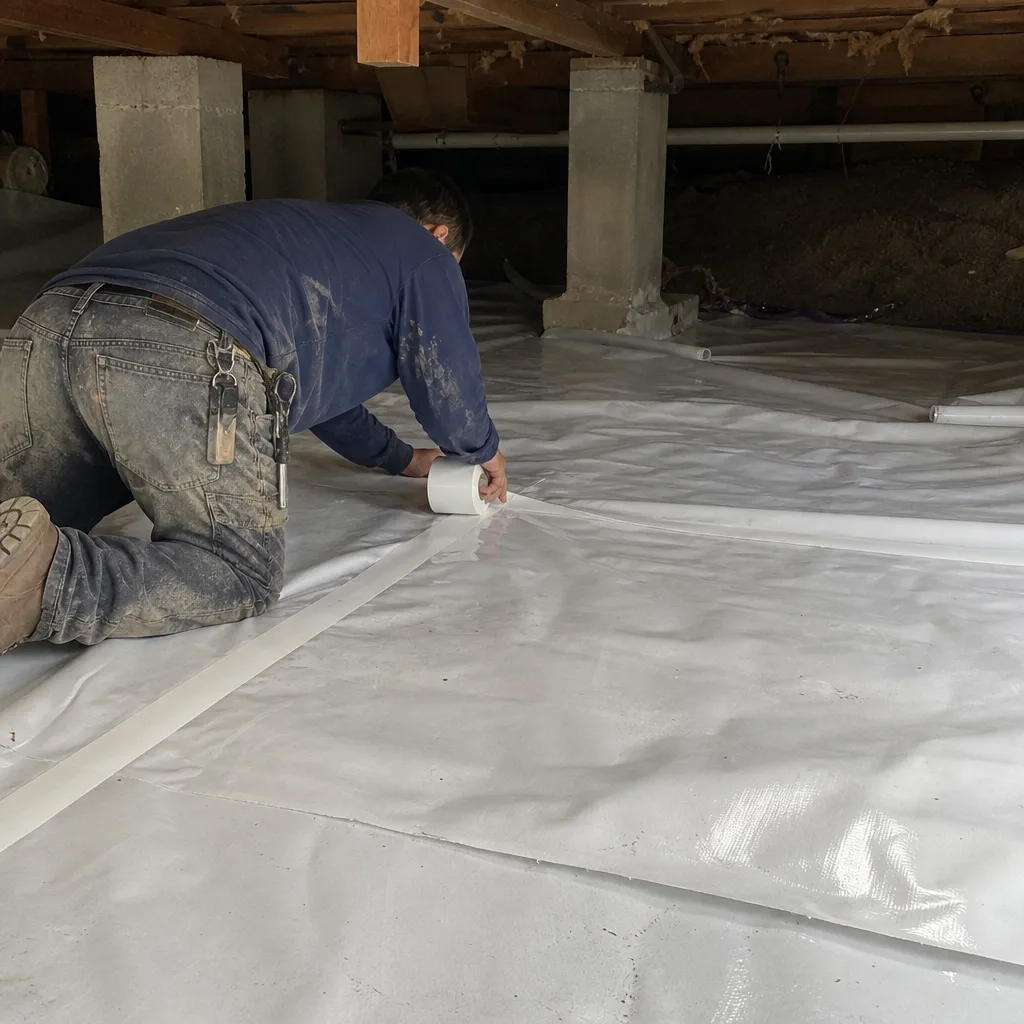
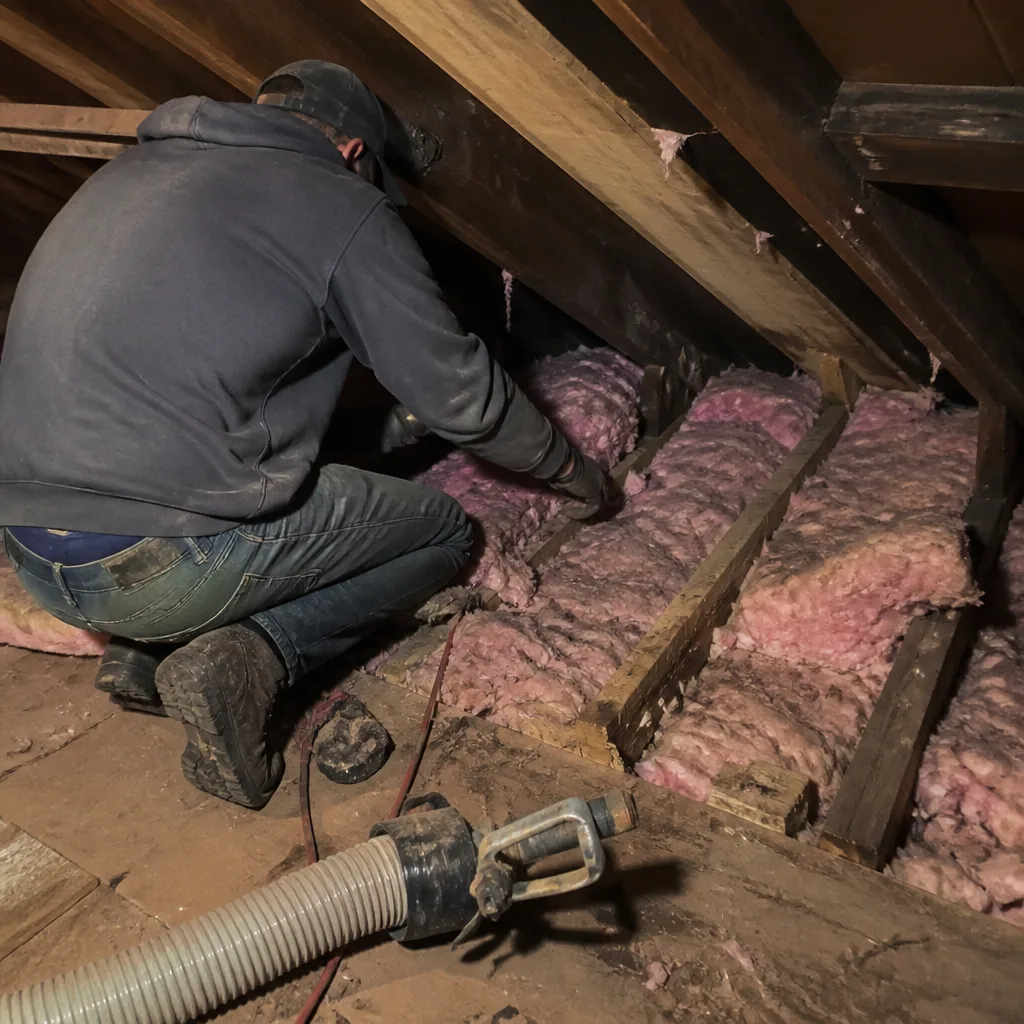
The most common call we get in Tustin Ranch: “The attic has insulation, but the house still runs hot.” We assess existing depth, identify compression or moisture damage, and calculate the gap to R-38 or R-49. But we also inspect for air leakage at top plates, electrical penetrations, and HVAC boots before adding material. A top-up without sealing is the single most common mistake we see in Tustin - the new insulation sits on top of a leaky floor, and the Santa Ana winds push conditioned air out through the same gaps. Our written scope specifies both the insulation depth and the sealing work, with blower-door numbers to verify.
What happens when you call
- 1
A real person answersNo phone trees - you reach a local pro.
- 2
You get an upfront price rangeHonest numbers before anyone is dispatched.
- 3
A background-checked tech heads outLicensed & insured, dispatched right away.
- 4
You approve before work beginsNothing starts until you say go.
 Before
 After
AfterTrusted Brands We Service in Tustin
We source materials from Owens Corning, Johns Manville, Knauf, Rockwool, CertainTeed, and other manufacturers - no proprietary lock-in that limits your options. For Tustin jobs, we maintain local inventory of the most common blown-in formulations so we’re not waiting on delivery to start your project. Owens Corning fiberglass and GreenFire cellulose are our most frequently specified products for Tustin attics, with Rockwool mineral wool used where fire resistance and sound dampening are priorities. Every bag lot is documented in your photo record so you know exactly what went into your home.
Common Blown-In Insulation Problems We See in Tustin Homes
- Exterior drilling on Old Town historic properties. Crews unfamiliar with Tustin’s preservation guidelines use the standard Orange County exterior-drill method on balloon-frame Craftsman homes, tearing through protected original redwood siding and creating a code violation that the homeowner discovers during a routine historic district inspection. We verify preservation status before cutting anything.
- Top-up-only jobs on Tustin Ranch tract homes. A contractor blows new material over existing R-13 or R-19 insulation without sealing the top plates, recessed can lights, or duct boots. The attic looks full, but the unsealed penetrations bleed conditioned air continuously - and Tustin’s position in the Santa Ana wind corridor means that infiltration gets replaced by outdoor air pulled through the envelope.
- Attic blow-in without dense-packing balloon-frame walls. A crew blows loose fill into the attic of an Old Town home, some of it falls into the open wall cavities from above, and they call the walls insulated. The fill doesn’t pack tight enough to stop convection. The walls stay thermally transparent, and the homeowner gets an attic full of insulation but still feels drafts in every room.
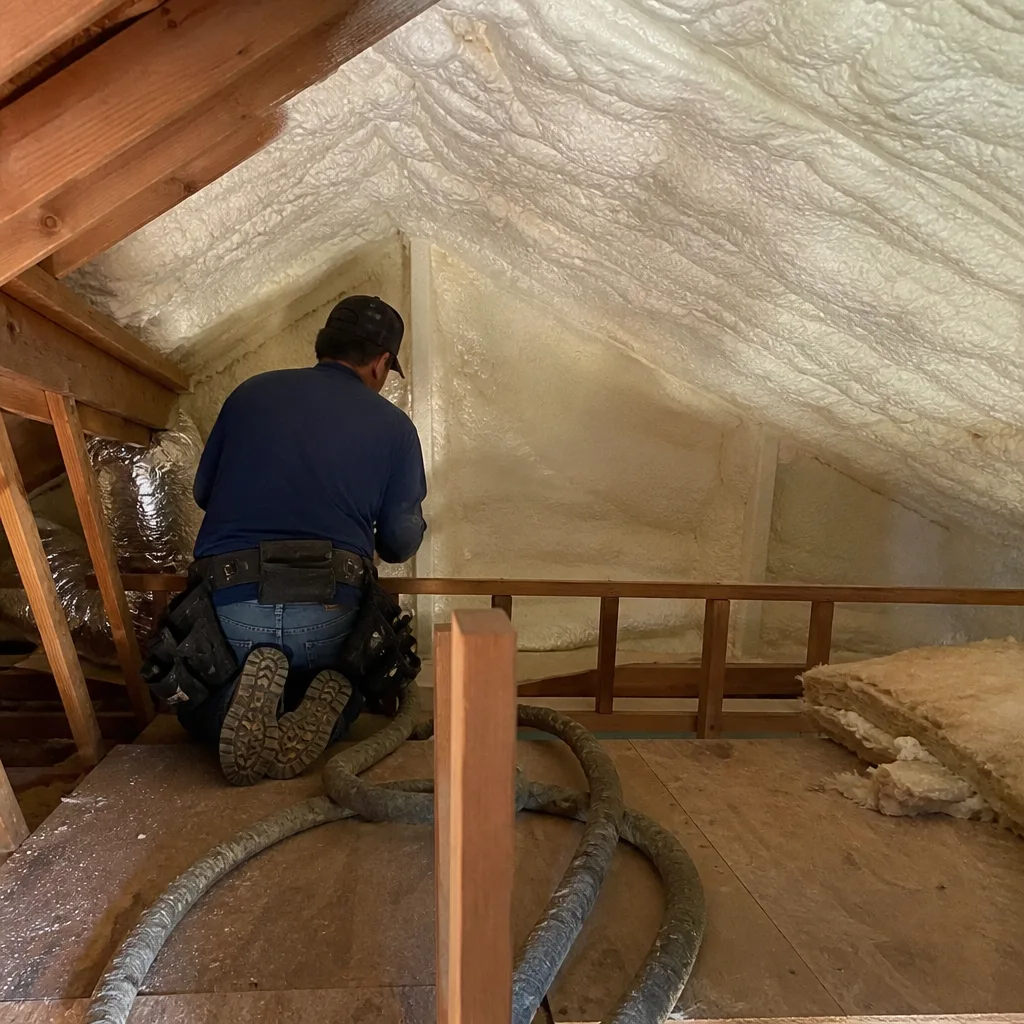
- Title 24 compliance gaps in Tustin Legacy new construction. Some builders meet the minimum code for inspection but leave practical thermal bridges at framing junctions or incomplete air sealing at multi-unit demising walls. We perform blower-door verification and targeted dense-pack or spray-foam remediation for homeowners who want performance beyond the certificate of occupancy.
Pricing for Blown-In Insulation in Tustin, CA
Most attic insulation jobs in a Tustin home this size run between $2,400 and $5,800 for complete removal and replacement with air sealing, or $1,200-$2,800 for a top-up with sealing of accessible penetrations. Dense-pack wall insulation in Old Town Tustin’s historic balloon-frame homes typically runs $3.50-$5.00 per square foot of wall area, with most complete homes falling between $4,500 and $9,000 depending on cavity height, interior access, and the number of obstructions like fire blocking.
What moves the number: existing insulation condition (removal adds labor), attic accessibility (steep pitches or limited hatch access), the extent of air sealing required at top plates and penetrations, and whether we’re working around historic preservation constraints that require interior-only access. We don’t quote per-square-foot over the phone without seeing the space - but we do provide a flat written price on site, before any work starts, under Haven Standard Clause 1. Estimates are free. Call (562) 526-6978 to schedule.
We Also Serve Cities Near Tustin
Our crews work throughout central Orange County, including Tustin and neighboring Santa Ana, Orange, Irvine, and Villa Park. Dispatch and scheduling are coordinated from our Los Angeles office. Same service standards, same written price requirement, same documentation on every job.
Serving Tustin, CA - Our Local Coverage Area
We’re based in the Tustin area and know this community well. Use the map below to see our service coverage - if you’re nearby, we can almost certainly help.
FAQs - Blown-In Insulation in Tustin
Yes - we dense-pack from interior drywall penetrations or attic top-fill access, working entirely inside the home to preserve the original redwood siding. This is our standard method for Tustin’s historic district, not a special request. The 2-inch drywall ports are patched and textured to match after installation. Call (562) 526-6978 for a written scope and price before any cutting begins.
Your attic likely has R-13 to R-19 insulation, built to pre-1990s Title 24 standards, with unsealed top plates and recessed can lights bleeding conditioned air into the vented attic space. Tustin’s inland position means minimal marine layer cooling, so attic temperatures run higher than coastal Orange County. The fix is air sealing at the attic floor followed by blown-in top-up to R-38 or R-49 - not more insulation alone. We verify with a blower-door test. Call (562) 526-6978 for an assessment and written price.
Dense-pack cellulose at 3.5 pounds per cubic foot fills wall cavities completely and resists settling, stopping the convective air loops that make empty or loosely filled walls thermally transparent. Blown-in attic fiberglass sits on a horizontal surface and doesn’t address vertical wall cavities at all. In Old Town Tustin’s balloon-frame homes, the walls are often the weakest thermal link - uninsulated stud bays running from sill to roofline. Dense-pack is the only blown-in method that fixes this without opening the wall cavity fully.
Title 24 Part 6 sets a minimum compliance threshold, not optimal performance. Some Tustin Legacy units meet code at inspection but have practical thermal bridges at framing junctions, incomplete demising-wall sealing in multi-family construction, or builder-grade attic installation that compresses or gaps. We perform blower-door testing and targeted dense-pack or blown-in remediation for homeowners who want verified performance beyond the certificate of occupancy. Call (562) 526-6978 for a second opinion on your builder’s work.
Tustin lies in a recognized Santa Ana wind corridor, and the strong hot dry downslope winds in fall create positive pressure on the building envelope that forces conditioned air out through every gap and pulls unconditioned air in behind it. Insulation slows conductive heat transfer but does nothing to stop this air movement. Without sealing at top plates, can lights, and penetrations, you’re paying to condition air that the wind pushes straight outside. Our before-and-after blower-door numbers quantify this exactly - the reduction in CFM50 shows how much less air your envelope loses after sealing. Call (562) 526-6978 for a free estimate.
Written by Wes Okafor, Owner at Envelope Insulation Co., serving Tustin since 2016.