
Demilec Attic Insulation: The Westminster Owner’s Guide
Most Demilec attic insulation jobs in Westminster run between $2,800 and $5,400 installed, and we can usually start same-day if you call before noon. We stock Demilec-compatible open-cell and closed-cell foam formulations, plus blown-in fiberglass and mineral wool for homeowners who want to match existing Demilec layers without a full tear-out. Homeowners in Westminster typically find us after noticing their upstairs rooms won’t stay cool through August afternoons, or after a home inspector flags settled insulation depth below R-30 during a sale.
Which Demilec Models This Applies To
Demilec’s product line breaks into three families you’ll see in Westminster attics: Heatlok HFO (closed-cell, 2.0 lb density, used in rafter applications for conditioned attics), Sealection 500 (open-cell, 0.5 lb density, common in older retrofit work around Little Saigon), and Demilec Blown-In System (hybrid jobs where spray foam seals the envelope and loose-fill tops it off). The label matters: Heatlok HFO switched blowing-agent formulations around 2018, so matching new foam to old requires checking the HFO-1234ze content stamp, not just the bucket color.
We don’t source proprietary Demilec product; we’re an independent service provider with no affiliation to the manufacturer. What we do is read your existing foam’s density, cure color, and surface texture, then specify a compatible third-party equivalent from our Johns Manville, Icynene, or Knauf stock that bonds clean and meets the same R-value per inch. For hybrid systems, we measure the settled depth of your existing blown layer with a probe, photograph the reading, and match the new fill to that spec rather than guessing from the original invoice.
Signs Your Demilec Attic Insulation Is Failing
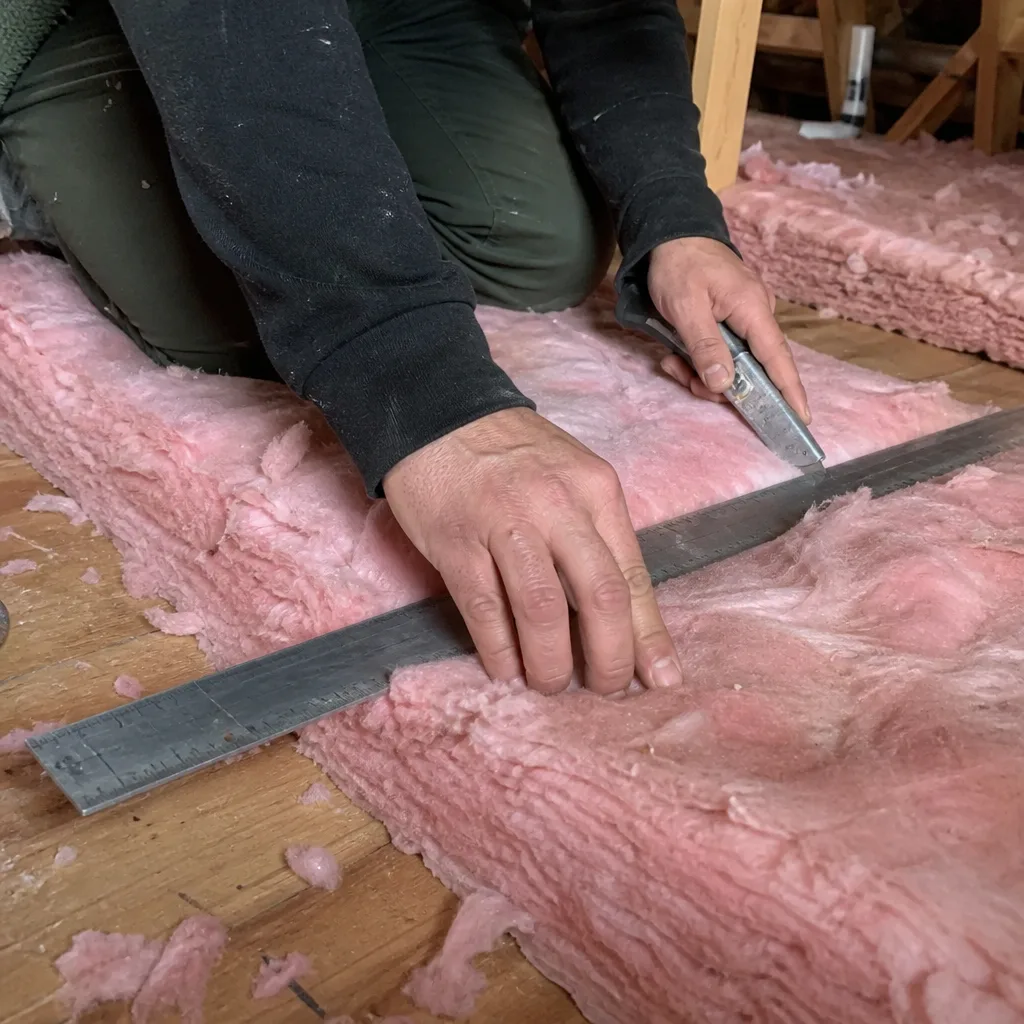
- Uneven room temperatures floor-to-floor. In Westminster’s inland climate, a 12-degree split between downstairs and upstairs by 3 PM usually means your attic insulation has settled below its labeled R-value or your air barrier has separated at the top plates. The conditioned air you’re paying for is leaking into the attic faster than your insulation can slow it.
- Spikes in summer cooling bills with no rate change. SCE territory rates didn’t jump; your envelope did. We see this most in 1980s tract homes near Westminster Mall where original Demilec open-cell has shrunk away from rafter bays, leaving thermal bypass channels.
- Visible powder or crumbles on the attic floor. Closed-cell foam that has degraded from UV exposure or chemical incompatibility breaks down into a yellowish dust. If your attic has a powered ventilator or missing soffit vents, that accelerated cycling is usually the cause.
- Damp insulation or rusted nail heads. This is the big one in Westminster’s marine-influenced humidity. When warm, moist air hits a cold duct or a poorly sealed can light in winter, condensation forms on the insulation surface. Demilec open-cell is vapor-permeable by design, but if it’s the only air barrier and it’s torn, you’re growing mold.
- Home inspector flags “insulation contact” violations. Non-IC-rated recessed lights buried under Demilec foam or blown fill is a fire hazard and a failed inspection item. We pull the fill back, install proper enclosures, and re-blow to depth.
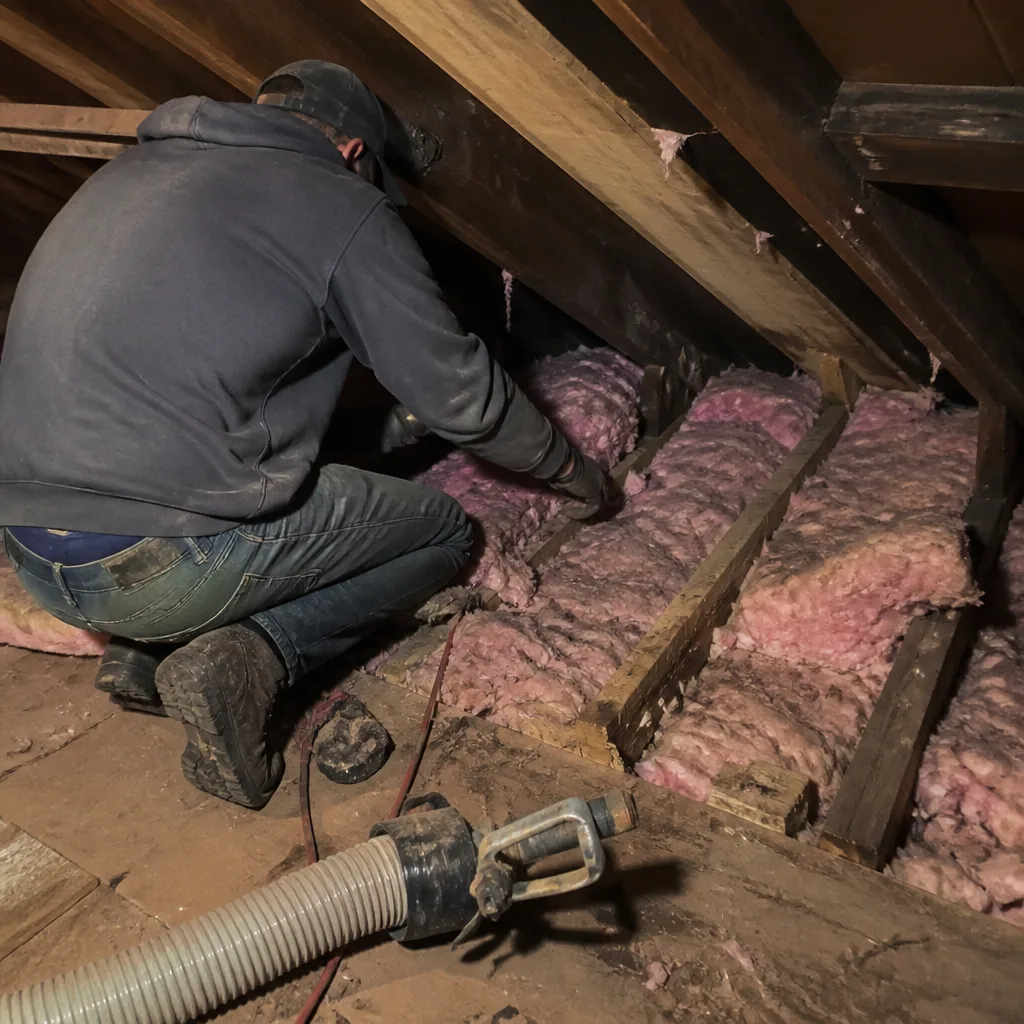 Before
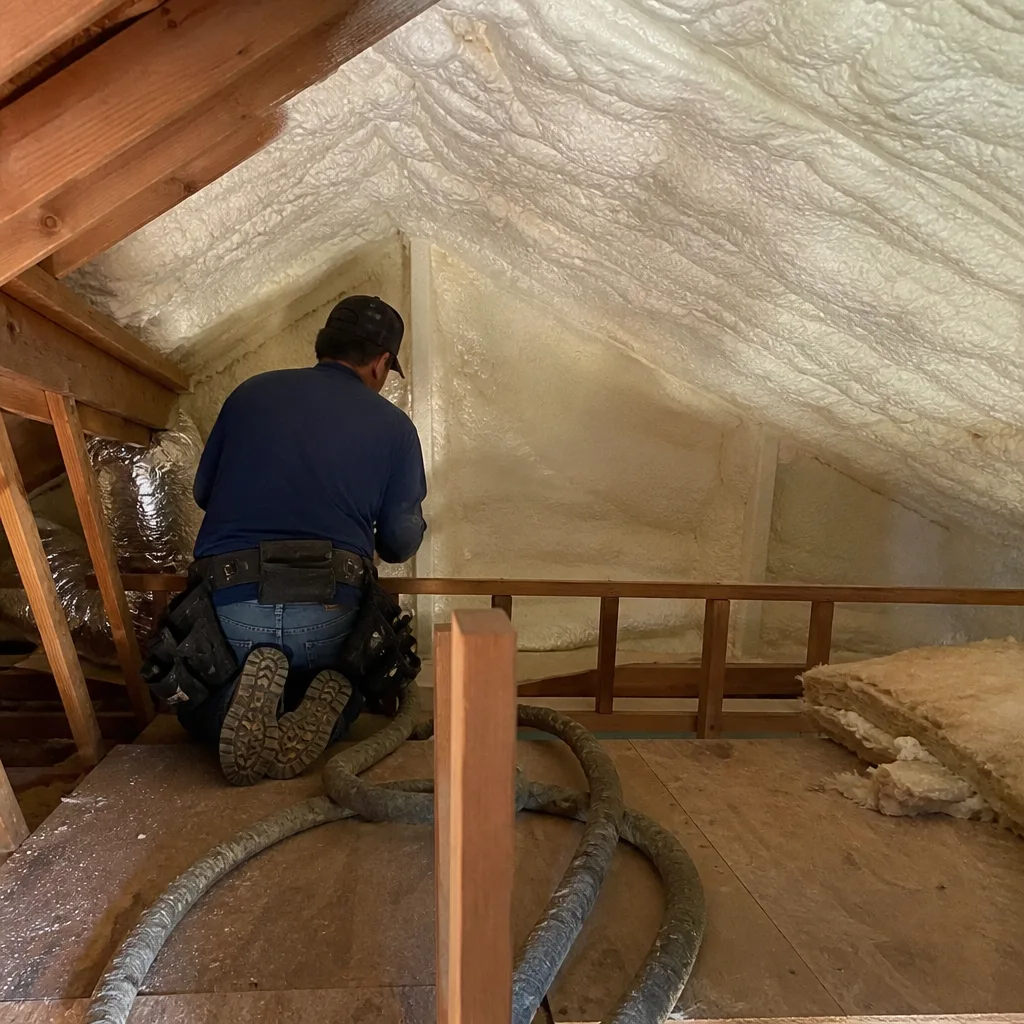 After
AfterReplacement Cost & What’s Included
| Scope | Westminster Price Range | What’s Included |
|---|---|---|
| Spot repair (1-2 bays, air seal + patch) | $850 - $1,400 | Removal of failed foam, two-part seal of top plates and penetrations, compatible foam patch, photo record |
| Partial re-insulation (attic floor, R-38 blown) | $2,800 - $4,200 | Air sealing with blower-door verification, removal of settled/compacted fill, new blown fiberglass to settled depth, before-and-after CFM50 readings |
| Full conditioned attic (rafter spray + air seal) | $4,200 - $5,400 | Complete removal, HFO closed-cell at 3″ minimum, all bypass sealing, blower-door test, written scope, 365-Day Done Right Promise |
The spread depends on three things: how much existing material we pull out, how many penetrations need sealing (every can light adds 20-30 minutes), and whether your attic has safe decking for crew access. We give you a written price before any work starts, Haven Standard Clause 1, and that price includes the Documented Photo Record you’ll receive at walkthrough. No add-ons after we start.
DIY or Call Us?
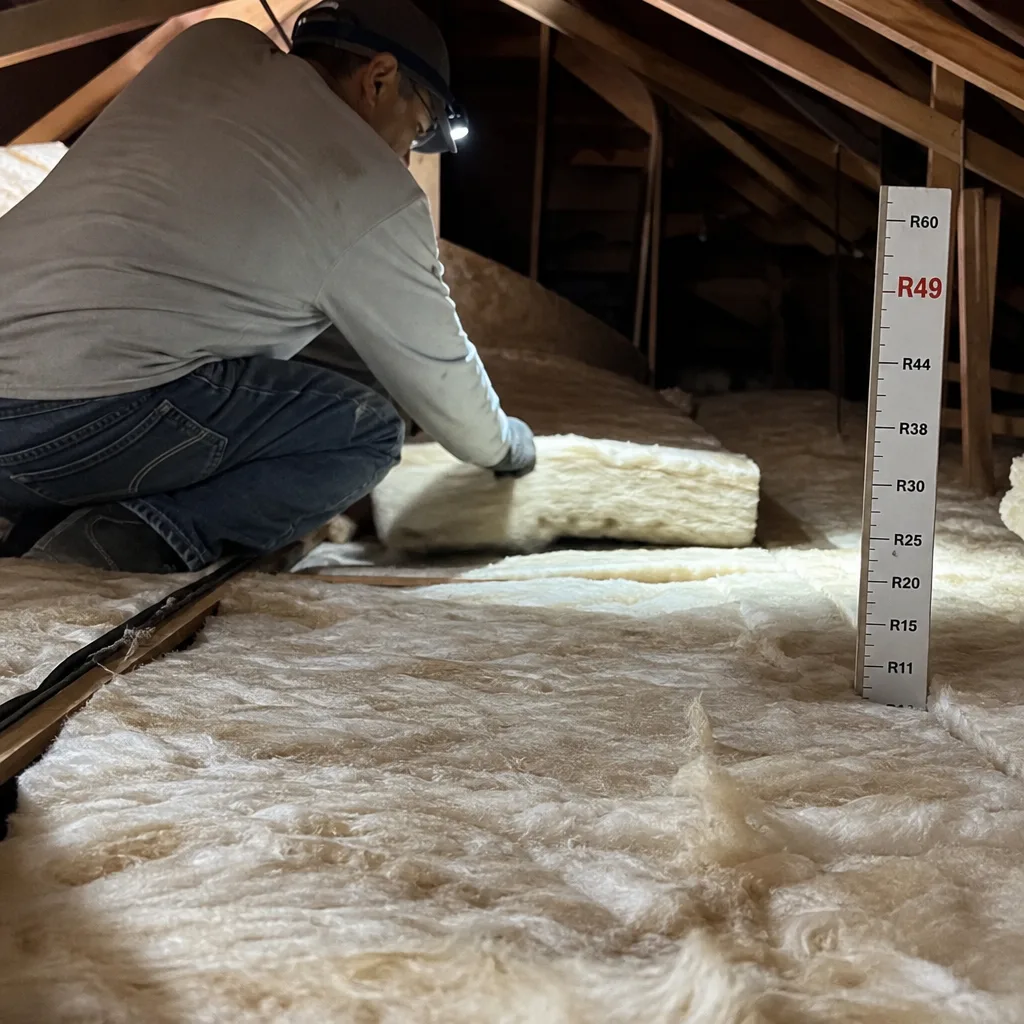
Here’s what you can safely check yourself: shine a flashlight into your attic hatch and look for obvious gaps around chimney chases, dropped soffits, or where wires enter the space. Note any damp spots, pest debris, or insulation that’s visibly below the top of your joists. Take photos. That’s useful information, and we’ll review them when you call.
What you shouldn’t do: spray foam is a two-part chemical reaction that generates heat and toxic vapor during cure. The DIY kits at hardware stores rarely mix at the correct 1:1 ratio, and we’ve been called to Westminster homes where off-ratio foam never cured, or where the homeowner coated a live can light and created a fire risk. More critically, you can’t air-seal effectively without a blower-door test to find the leaks you can’t see. Seal the bypasses first. The R-value on the bag is only real if the air has nowhere else to go. Call (562) 526-6978 and we’ll give you a free second opinion on any estimate you’ve already received.
FAQs
Closed-cell foam in a vented attic typically holds its R-value for 25-30 years if the roof deck stays dry; open-cell lasts 15-20 before shrinkage becomes measurable. Westminster’s combination of marine humidity and summer heat cycling accelerates open-cell degradation by roughly 20% compared to drier inland counties. Call (562) 526-6978 if your foam is past 12 years and you’re seeing symptoms - estimates are free.
Spot repairs work when the failure is isolated: a single rafter bay with shrinkage, or a section where a roof leak compromised the foam. We cut back to sound material, seal the substrate, and patch with compatible foam. If the failure is widespread settling, contamination, or multiple bypass leaks, partial or full replacement is the only fix that passes a blower-door test. Call (562) 526-6978 and we’ll show you the photos so you can decide.
Most attic floor jobs in Westminster finish in one day: crew arrives at 7 AM, removal and air sealing complete by early afternoon, blown fill installed and depth-probed by 4 PM. Conditioned attic conversions with rafter spray take two days to allow proper cure time between lifts. We text you when the crew is en route, and you get the photo record and blower-door numbers before we pack up.
We stock compatible open-cell and closed-cell formulations, plus blown fiberglass and mineral wool, on our Westminster-area trucks. We don’t stock Demilec-branded product specifically; we’re an independent service provider with no affiliation to the manufacturer. What we carry matches or exceeds Demilec’s published R-value and density specs, and we can start most jobs the day you approve the written price. Call (562) 526-6978 to confirm truck stock for your specific scope.
Written by Wes Okafor, Owner & Lead Insulation Technician, Topside Attic Insulation Westminster at Topside Attic Insulation Westminster, serving Westminster and nearby areas.