
Icynene Vapor Barrier Installation: The Westminster Owner’s Guide
Most Icynene vapor barrier installations in Westminster homes run between $1,800 and $3,400 for a complete crawl space or attic application, depending on square footage and whether existing material needs removal first. We stock Icynene-compatible vapor barrier membranes in 6-mil, 10-mil, and 15-mil thicknesses on every truck serving Westminster, and we can typically inspect and begin work same-day. Homeowners usually discover the problem when they notice musty odors returning after a dry winter, find condensation pooling on the barrier surface, or spot mold spotting on framing that was supposed to stay dry.
Which Icynene Models This Applies To
Icynene produces vapor barrier materials as standalone membrane systems rather than model-numbered components, so matching the right product means checking what was originally installed and what your building envelope actually needs. The Icynene LD-C-50 vapor barrier membrane is the most common specification we encounter in Westminster homes built between 2005 and 2020, particularly in the tract developments east of Beach Boulevard where crawl space encapsulation was part of the original energy package. We also see the heavier Icynene MD-C-100 specified in coastal-adjacent properties where salt air and higher groundwater tables demand thicker material.
To identify what you have, look for the printed roll marking along the membrane edge, typically showing “Icynene” plus a thickness code and ASTM E1745 Class A, B, or C rating. Class A is the vapor-retarder specification required by California Title 24 for conditioned crawl spaces in Westminster’s climate zone. If the original installer used a generic poly sheet without ASTM classification, it was never up to code for this application. We carry both OEM Icynene membrane and a Johns Manville equivalent that meets the same ASTM spec at a lower per-square-foot cost. For most Westminster jobs, the JM equivalent performs identically; we only specify OEM when the homeowner is maintaining a builder warranty that explicitly requires it.
Signs Your Icynene Vapor Barrier Installation Is Failing
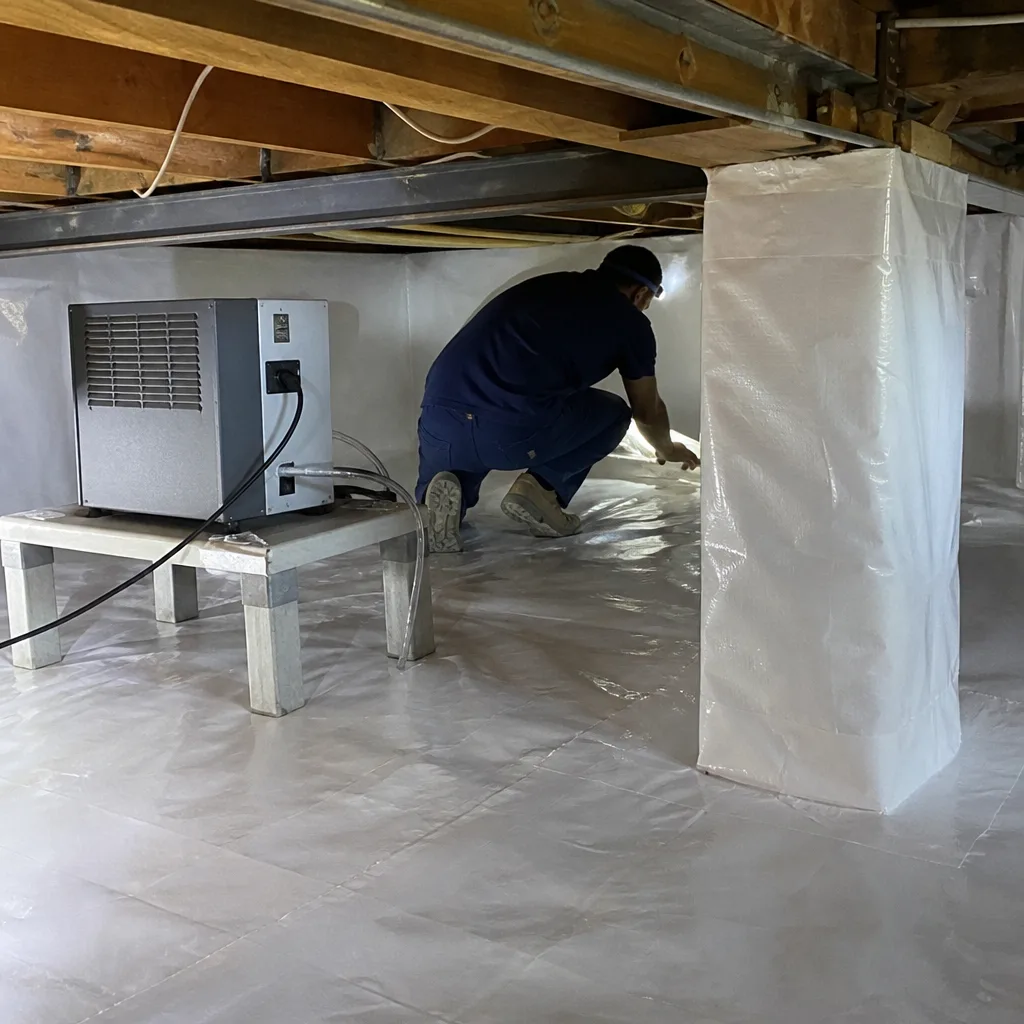
- Condensation beads on the membrane underside. This means the seal at perimeter walls or piers has separated, letting warm moist air hit the cooler surface. In Westminster’s spring months when marine layer moisture is highest, this shows up first along the north-facing foundation walls.
- Musty odor returning after previous elimination. A working vapor barrier blocks the soil moisture that feeds crawl space mold. When the smell comes back, the barrier has torn at seams or pulled from the sill plate, typically where the original installer used staples instead of pressure-sensitive tape or mastic.
- Sagging or ponding on the barrier surface. Groundwater is getting through or evaporating up faster than the barrier can shed it. We see this in Westminster’s older neighborhoods near Little Saigon where clay-heavy soil holds water and original 6-mil barriers have degraded to effective 3-mil thickness.
- Mold spotting on wood framing above the barrier. The barrier is no longer blocking vapor diffusion, or it was never sealed to the walls to create a continuous envelope. Icynene’s system depends on full perimeter adhesion; gaps at corners and piers are the usual failure points.
- Increased energy bills with no other explanation. A compromised vapor barrier lets moist air into conditioned space, making your HVAC work harder. We’ve measured blower-door readings that worsened by 800 CFM50 or more when crawl space encapsulation failed and the floor became a leakage path.
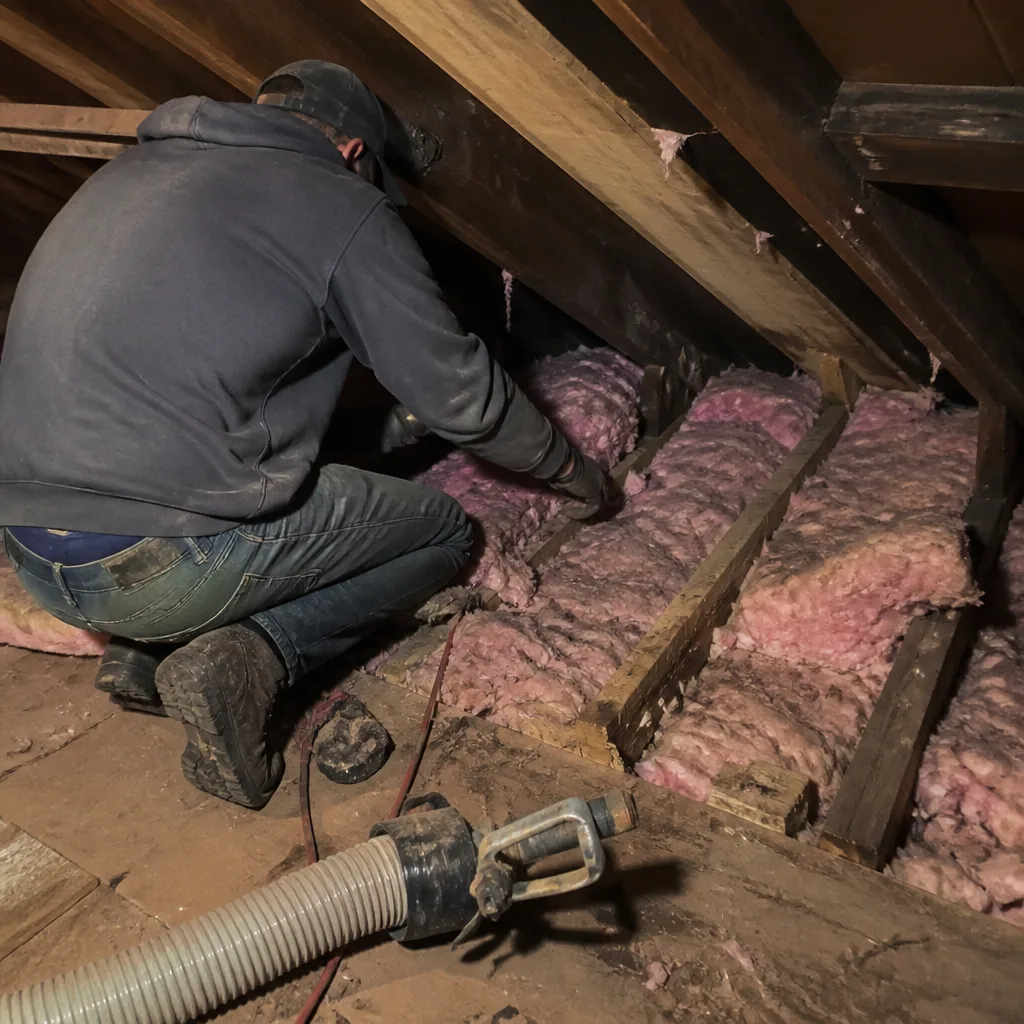 Before
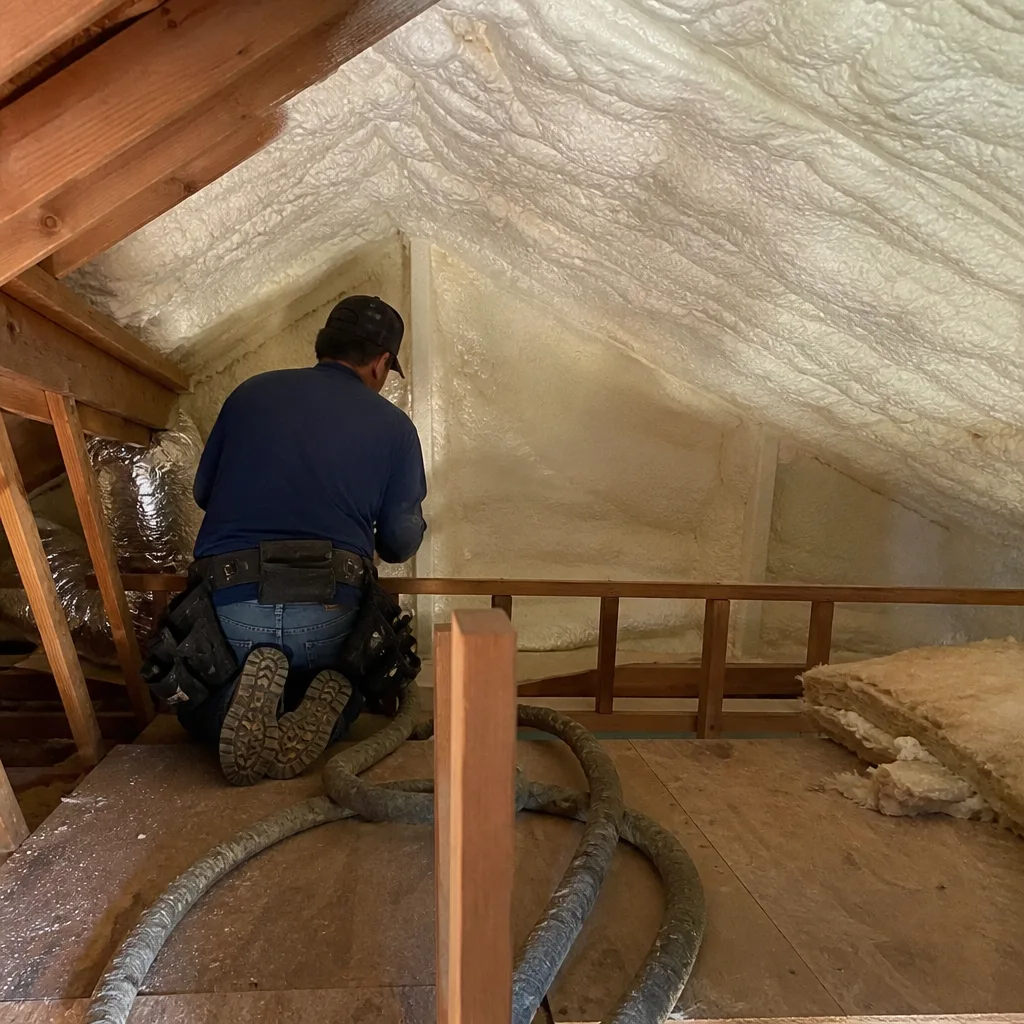 After
AfterReplacement Cost & What’s Included
For a typical Westminster crawl space of 1,200 to 1,800 square feet, complete Icynene vapor barrier replacement runs $2,200 to $3,400. Smaller utility crawl spaces under 800 square feet start around $1,800. The range depends on three factors: whether we remove and dispose of existing degraded material, how many piers and interior walls require custom cutting and sealing, and whether the original foundation vents need sealing to convert to an unvented conditioned crawl space per current Title 24 standards.
Every installation includes the membrane material, pressure-sensitive seam tape, mechanical fastening at perimeter walls, and a final seal inspection with a smoke pencil to verify no bypasses. We photograph every stage for the Documented Photo Record you receive at completion. Under our 365-Day Done Right Promise, if any seam lifts or perimeter seal fails within that window, we return and repair at no charge. The written scope and written warranty are delivered before any work starts, per Haven Standard Clause 1.
DIY or Call Us?
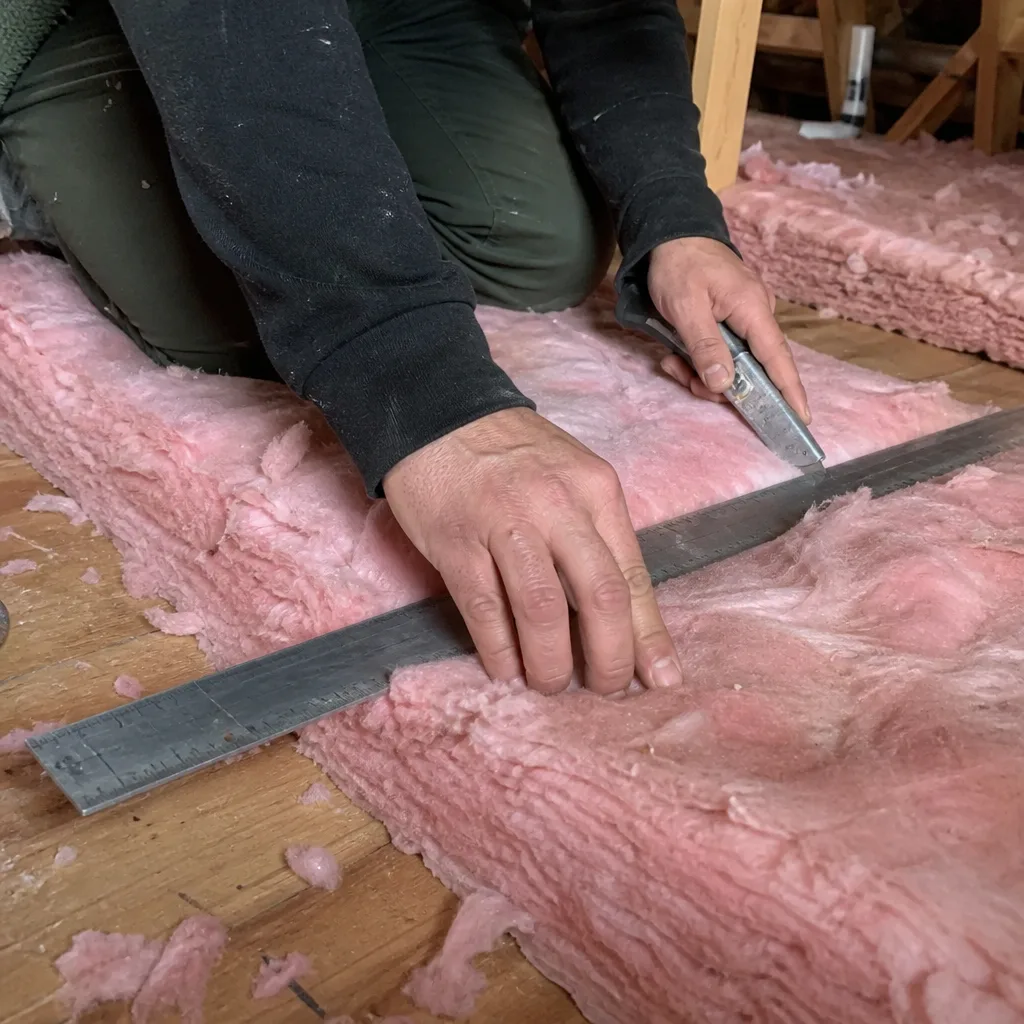
A homeowner can safely inspect their own crawl space vapor barrier with a flashlight and knee pads. Look for the printed markings to confirm what material was installed, check seams for lifted tape, and note any tears or punctures. What you cannot safely or effectively do is install a replacement that meets code. Crawl space work involves confined-space entry, sharp foundation hardware, and proper overlap and sealing techniques that determine whether the barrier actually stops vapor or just lays on the ground. In Westminster’s climate, a poorly sealed DIY barrier often fails within 18 months when summer heat drives moisture upward through gaps.
We do not recommend attempting this as a weekend project. The material cost alone for quality membrane and tape approaches $800 to $1,200 for a typical crawl space, and without proper subfloor preparation and perimeter sealing, that investment is largely wasted. Call (562) 526-6978 and we’ll inspect, measure, and provide a written price before any work starts. Same-day appointments are usually available.
FAQs
In Westminster’s mild coastal climate, a properly installed Icynene vapor barrier typically lasts 15 to 20 years before material degradation becomes significant. The bigger variable is installation quality: barriers with properly sealed seams and perimeter adhesion outlast those with stapled or untaped edges by a wide margin. We’ve replaced barriers in Westminster homes that failed in 7 years because the original installer skipped the wall sealing step. Call (562) 526-6978 for an inspection if you’re unsure of your remaining service life.
Small punctures or tears under 6 inches can be patched with compatible pressure-sensitive tape if the surrounding material is still supple and the damage is isolated. Multiple tears, brittle material that cracks when handled, or seam failures across more than 20 percent of the surface mean full replacement is the only lasting fix. We carry patch kits on our trucks for minor damage, but we will not patch material that is clearly near end of life. Call (562) 526-6978 and we’ll tell you honestly which category you’re in.
Most complete Icynene vapor barrier replacements in Westminster are finished in one working day, typically 4 to 6 hours for a standard crawl space. Larger or more complex spaces with numerous piers, HVAC ductwork to work around, or existing material requiring removal may extend to a second day. We schedule a hard arrival time, not a window, and text when the technician is en route. The written scope you receive beforehand specifies the expected duration for your particular space.
We stock Icynene-compatible vapor barrier membrane in 6-mil, 10-mil, and 15-mil thicknesses on every truck serving Westminster, plus the seam tape, mastic, and mechanical fasteners required for a complete installation. We do not wait on material orders for standard jobs. If your application requires an unusual specification, we will tell you during the initial inspection and provide a firm timeline before you commit. Call (562) 526-6978 to schedule.
Written by Wes Okafor, Owner & Lead Insulation Technician, Topside Attic Insulation Westminster at Topside Attic Insulation Westminster, serving Westminster and nearby areas.