
Rockwool Crawl Space Encapsulation: The Westminster Owner’s Guide
Rockwool crawl space encapsulation in Westminster typically runs $3,200-$5,800 installed for a standard 1,200-square-foot crawl, and we can usually start within 48 hours of your call. Most homeowners discover their encapsulation has failed when they notice musty odors rising through floor registers or see insulation batting sagging below joists - both signs that the vapor barrier or air-sealing layer has compromised. We stock Rockwool-compatible vapor barriers, seam tapes, and mechanical fasteners on every truck, so you’re not waiting on a special order while your subfloor takes on moisture.
Which Rockwool Models This Applies To
Rockwool does not manufacture a dedicated “crawl space encapsulation system” under its own brand. What Westminster homeowners typically have is Rockwool Comfortbatt or Comfortboard installed between joists, paired with a separate polyethylene vapor barrier on the ground and piers. The encapsulation failure is usually in the barrier system - 6-mil or 10-mil polyethylene, seam tape, or the mechanical fastening that holds it to walls and piers - not the mineral wool itself.
To identify what you’re working with, check the kraft-paper facing on any exposed batts for the Comfortbatt density rating (3.5 inches for 2×10 joist bays, 5.5 inches for 2×12). The vapor barrier should be stamped with its mil rating along the edge fold. If you see 6-mil poly with cloth-backed tape at the seams, that’s the older spec we replace most often in Westminster’s 1950s-1980s tract housing near Westminster Boulevard and Brookhurst Street. The 10-mil reinforced product with butyl-rubber seam tape holds up better in our clay-heavy soils, which shift seasonally and stress wall attachments.
We do not use proprietary Rockwool-branded barrier products - none exist for this application. Our replacement spec matches ASTM E1745 Class A vapor retarder standards, which exceeds what most original installations used. Topside Attic Insulation Westminster is an independent service provider, not affiliated with Rockwool. We also stock Reflectix radiant barrier products for hybrid systems where summer heat gain through the crawl is the primary concern.
Signs Your Rockwool Crawl Space Encapsulation Is Failing
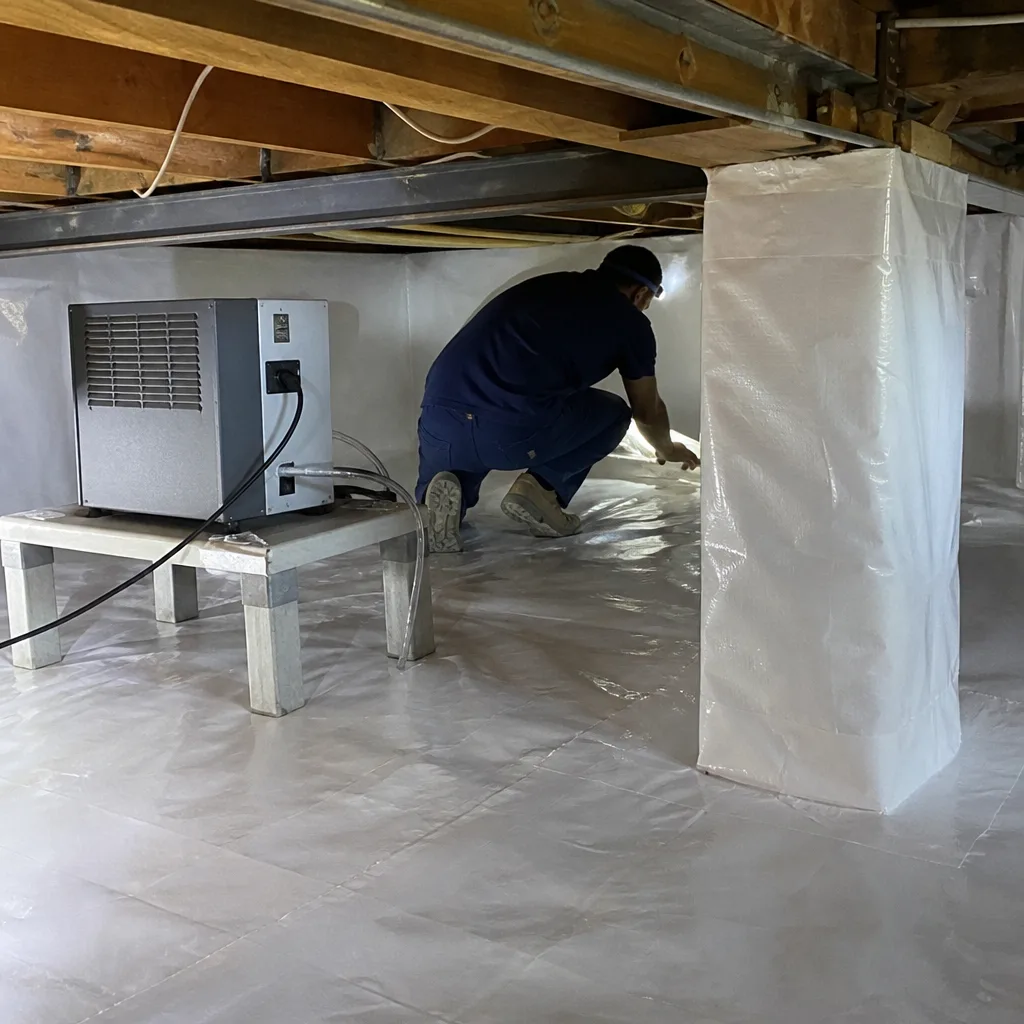
- Musty smell that intensifies after rain. Westminster gets most of its annual rainfall between December and March, and failed seam tape lets groundwater vapor migrate past the barrier. The Rockwool batts wick that moisture and hold it against the subfloor. If your crawl smells like a basement in February, the poly layer has separated at a seam or torn at a pier.
- Insulation batting sagging below joists. Rockwool is denser than fiberglass and shouldn’t sag unless saturated. When it drops, the weight of absorbed moisture has overcome the friction fit or wire fasteners. We see this most in crawl spaces with original 6-mil poly that degraded after 8-12 years of soil contact.
- Increased humidity readings upstairs. A crawl space above 70% relative humidity will push moisture through the subfloor, even with finished flooring above. If your indoor humidity climbs 10-15% in winter without other changes, the encapsulation envelope has a breach.
- White efflorescence on foundation walls. This salt deposit means liquid water is getting through the barrier and evaporating at the concrete surface. It’s common in Westminster’s older neighborhoods where the original poly was cut to fit around piers rather than sealed continuously.
- Pest activity in the crawl. Gaps in vapor barrier seams create access highways for rodents and insects. Rockwool itself is pest-resistant - mineral wool doesn’t provide food - but the gaps in encapsulation do provide shelter and pathways into the structure.
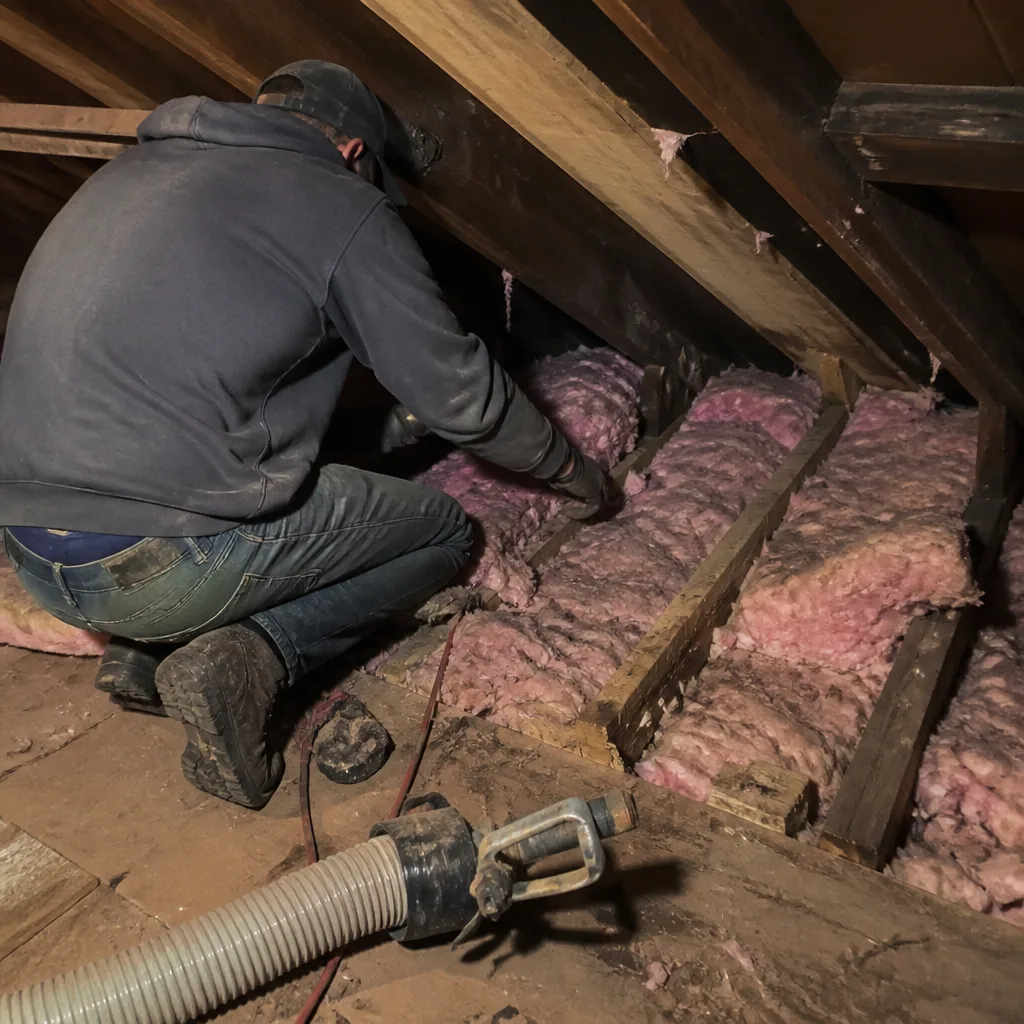 Before
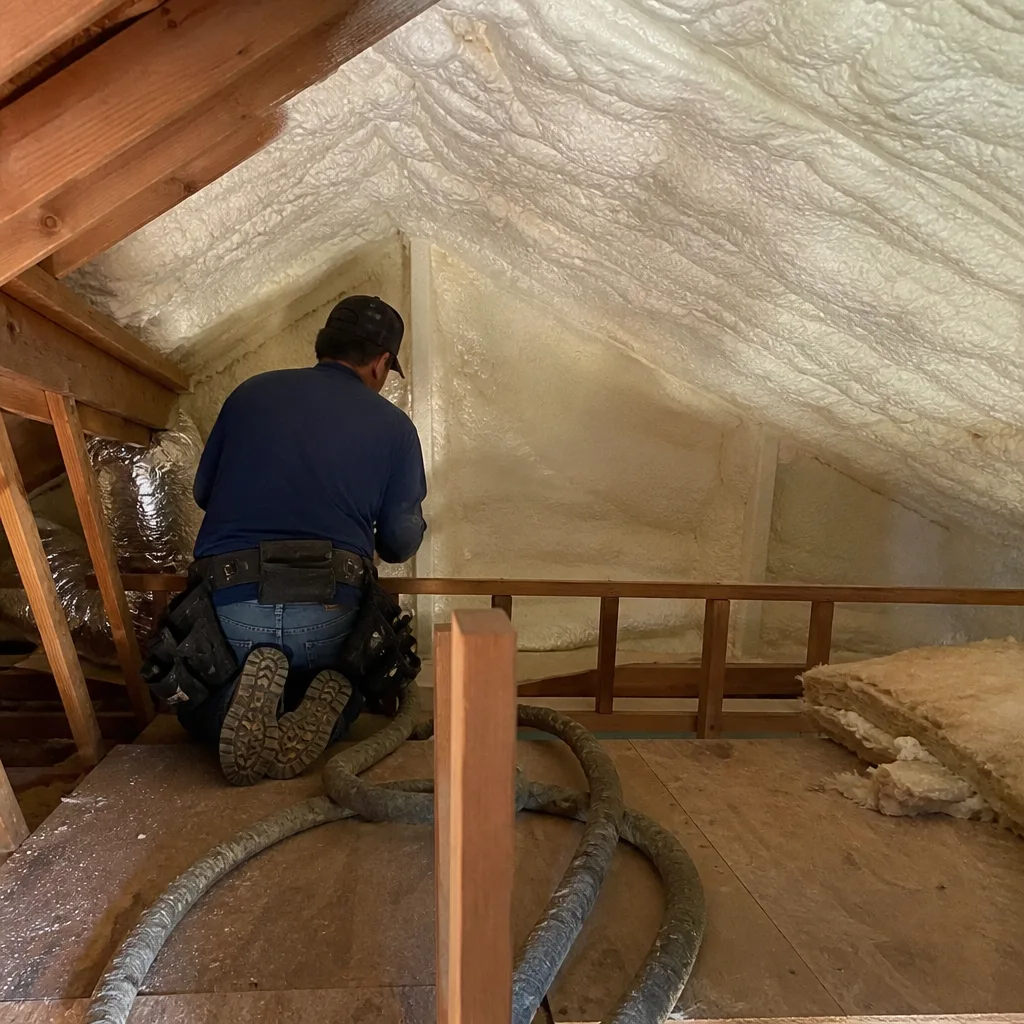 After
AfterReplacement Cost & What’s Included
Most full Rockwool crawl space encapsulation replacements in Westminster run $3,200-$5,800 for a 1,000-1,500 square foot crawl. The range depends on three factors: whether we can salvage existing Rockwool batts (dry, properly fitted Comfortbatt stays; wet or compressed material comes out), how many piers and foundation penetrations require custom cutting and sealing, and whether the original 6-mil poly needs full removal or if sections are still adherent.
Our price includes removal of failed materials, installation of 10-mil reinforced polyethylene with butyl-rubber seam tape, mechanical fastening to walls and piers, and re-securing or replacing Rockwool batts as needed. Every job gets a written scope and written warranty before work starts - Haven Standard Clause 1 - plus a Documented Photo Record showing seam details and settled measurements. We also provide before-and-after blower-door readings when the crawl connects to conditioned space through bypasses, so you can verify the air-sealing result in a single number.
Seal the bypasses first. The R-value on the bag is only real if the air has nowhere else to go.
DIY or Call Us?
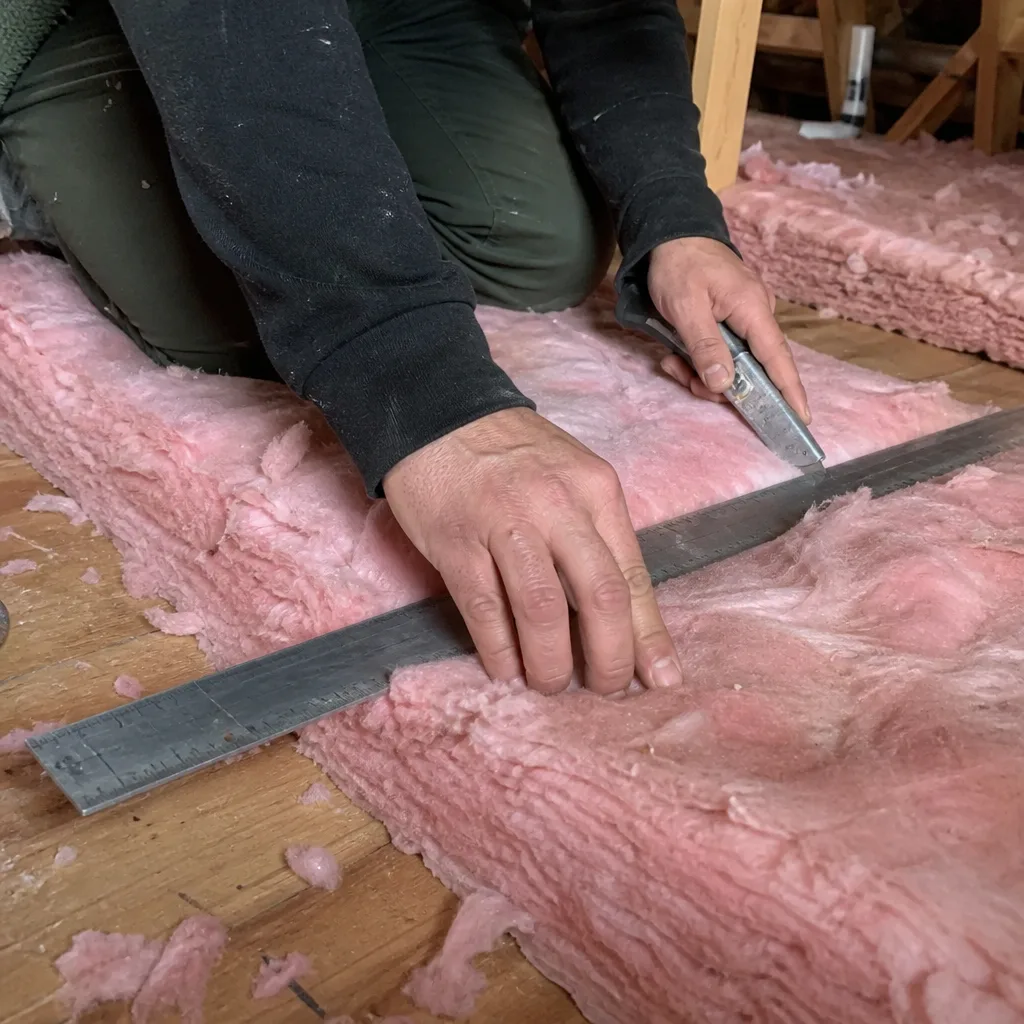
There’s a clear line between what a homeowner can check and what requires a crew. You can safely verify the mil rating on your existing poly, photograph sagging insulation for documentation, and check your crawl space humidity with a $15 sensor. What you should not attempt: crawling under a pier-and-beam structure with compromised structural members, handling degraded poly that may contain rodent waste, or cutting and sealing new 10-mil poly around gas lines and electrical conduits.
The actual risk in DIY encapsulation is not dramatic - no high-tension springs or live electrical panels - but the failure mode is invisible. A missed seam or a pier cut that gaps in summer soil movement lets moisture in for years before you smell it. By then you’re looking at subfloor replacement, not just poly. Wes Okafor’s position, formed over two decades running crews across Orange County, is that adding new barrier over unsealed bypasses and unaddressed pier gaps is like putting a thick coat on a screen door. Call (562) 526-6978 and we’ll read your situation with you - free second opinion on any written estimate you already have.
FAQs
Properly installed 10-mil reinforced poly with butyl-rubber seam tape lasts 15-20 years in Westminster’s climate, though clay soil movement can stress wall attachments after year 10. The original 6-mil poly we remove from 1970s-1990s homes typically failed between 8 and 12 years. Call (562) 526-6978 for an exact assessment of your remaining service life - estimates are free.
Spot repairs work only if the existing poly is 10-mil or thicker, the damage is limited to one or two seams, and the Rockwool batts beneath are dry and at full thickness. If your poly is 6-mil, has multiple tears, or the insulation below shows compression or moisture staining, partial repairs trap moisture and accelerate hidden decay. We won’t quote a repair that we expect to fail - Haven Standard means we document why replacement is the honest recommendation.
A typical Westminster crawl space - 1,200 square feet with standard pier spacing - takes one crew one full day to complete, including material removal, surface prep, new poly installation, and Rockwool re-securing. Larger crawls or those with active water management needs (sump pump, interior drainage) may extend to a second day. We schedule start dates within 48 hours of written approval.
Yes. Every truck carries 10-mil reinforced poly, butyl-rubber seam tape, mechanical fasteners for concrete and wood substrates, and replacement Comfortbatt in standard joist depths. We do not stock 6-mil poly - we won’t install it. For Reflectix hybrid systems or specific Rockwool Comfortboard densities, we confirm specs by text before dispatch so the crew arrives with the exact material.
Written by Wes Okafor, Owner & Lead Insulation Technician, Topside Attic Insulation Westminster at Topside Attic Insulation Westminster, serving Westminster and nearby areas.