
Rockwool Attic Insulation: The Westminster Owner’s Guide
Rockwool attic insulation installed in Westminster homes typically runs $2.80 to $4.20 per square foot for batts and $1.90 to $3.10 for loose-fill, with most complete attic jobs landing between $3,200 and $5,800 depending on accessibility and whether air sealing is needed first. We stock both Rockwool Comfortbatt and Comfortbatt R-30 and R-38 batts on our Westminster truck, and we can usually inspect and quote same-day. Most Westminster owners figure out something’s wrong when their upstairs bedrooms won’t cool below 78 degrees even after the AC runs all afternoon, or when they pull back a corner of existing insulation and find it’s compressed to half its labeled thickness.
Which Rockwool Models This Applies To
Rockwool’s residential attic line breaks down into three families, and getting the match right matters because the densities and friction fits differ.
Comfortbatt is the batt most common in Westminster attics installed between 2010 and 2020. It comes in R-15, R-23, R-30, and R-38, with widths cut for 16-inch or 24-inch framing. The R-30 and R-38 are the attic standards here. Check the black print on the foil facing, or the ink-jet code on the un-faced edge, which reads something like “CB3.5-16” for 3.5-inch, 16-inch width.
Comfortbatt Fire & Sound is the denser variant, usually R-30 at 6.25 inches. It’s less common in attics but shows up in Westminster townhomes where the attic doubles as a sound buffer between units. The weight is the tell: about 1.8 pounds per square foot versus 1.2 for standard Comfortbatt.
Granulated Rockwool is the loose-fill blown product, sometimes marketed under older “Roxul” branding in pre-2018 installs. It blows at 0.6 to 0.8 pounds per cubic foot, which is heavier than fiberglass loose-fill. If your existing loose-fill feels gritty and doesn’t compress when pinched, it’s likely this.
Topside Attic Insulation Westminster is an independent service provider, not affiliated with Rockwool. We source through standard distribution channels alongside Owens Corning, Johns Manville, and Knauf. For most Westminster retrofits, we match density and R-value rather than chasing OEM branding, since Rockwool’s mineral wool performs similarly across equivalent specs.
Signs Your Rockwool Attic Insulation Is Failing
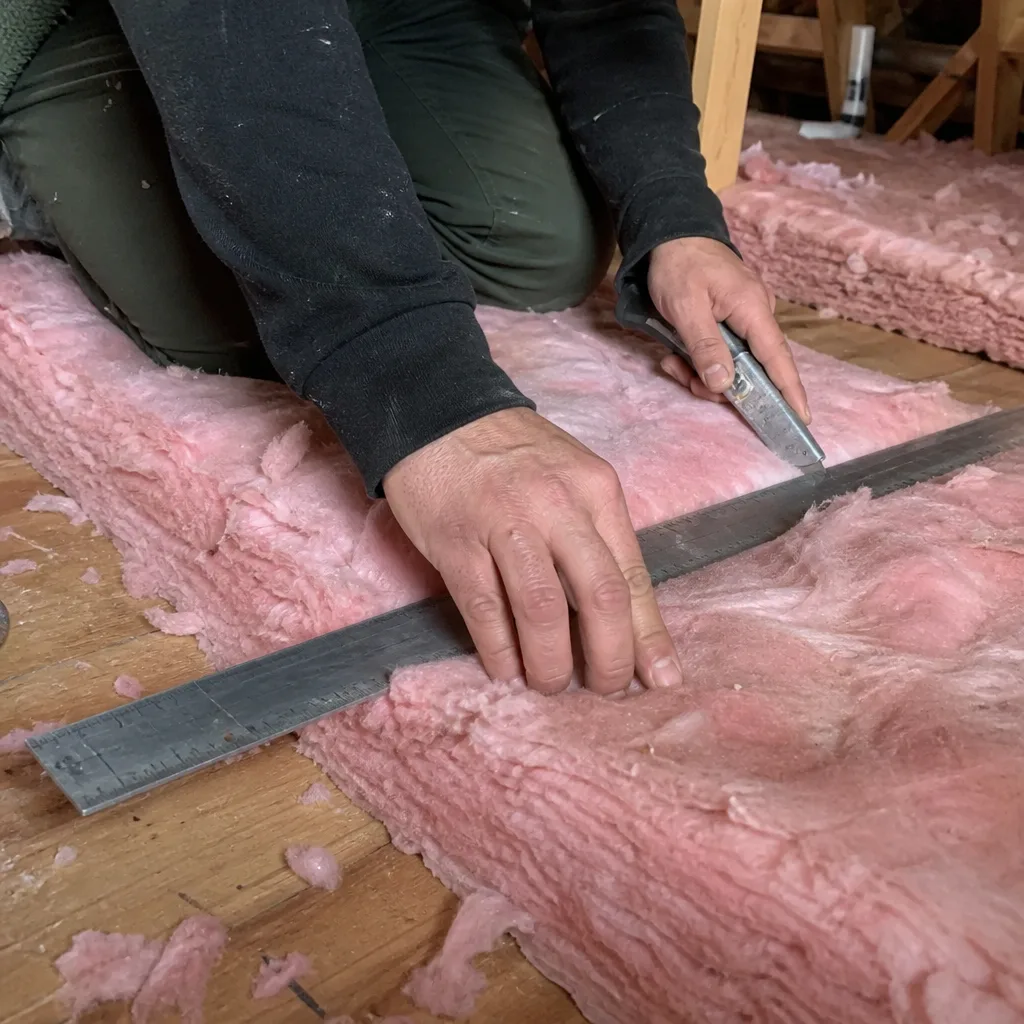
- Hot second-floor rooms that the AC can’t pull down. Rockwool doesn’t degrade chemically, but it settles. In Westminster’s dry heat, we’ve measured original R-38 Comfortbatt compressed to R-19 or less after fifteen years of foot traffic, storage, and rodent activity. The fibers are still there; the trapped air gaps aren’t.
- Visible gaps along top plates and around penetrations. Rockwool batts are friction-fit. When they shrink from repeated humidity cycling, or when installers cut them short to begin with, you get thermal bypasses. We see this especially in Westminster’s 1960s ranch-style homes where the original batts were hand-cut around electrical junction boxes.
- Insulation that looks dark or dirty on the top surface. Clean Rockwool is yellow-brown. Dark streaks mean air is moving through it, carrying dust from the attic. This is the signature of an unsealed bypass underneath. The insulation is filtering your attic air, which is backwards.
- Ice damming or moisture staining on ceiling drywall. Rockwool is hydrophobic, so it won’t hold water like cellulose. But if warm, humid interior air leaks past it into the attic, you get condensation on the sheathing. Westminster’s mild winters mean less ice dam risk than the Midwest, but we still see stained drywall in homes where bathroom vents terminate in the attic instead of through the roof.
- Energy bills climbing year-over-year with no rate change. Rockwool’s mineral wool doesn’t off-gas or rot, so the material itself is fine. What’s failed is the assembly: settled batts, displaced loose-fill, or air leaks that bypass it entirely. We compare current blower-door readings to the original construction and usually find the envelope has loosened by 30 to 50 percent.
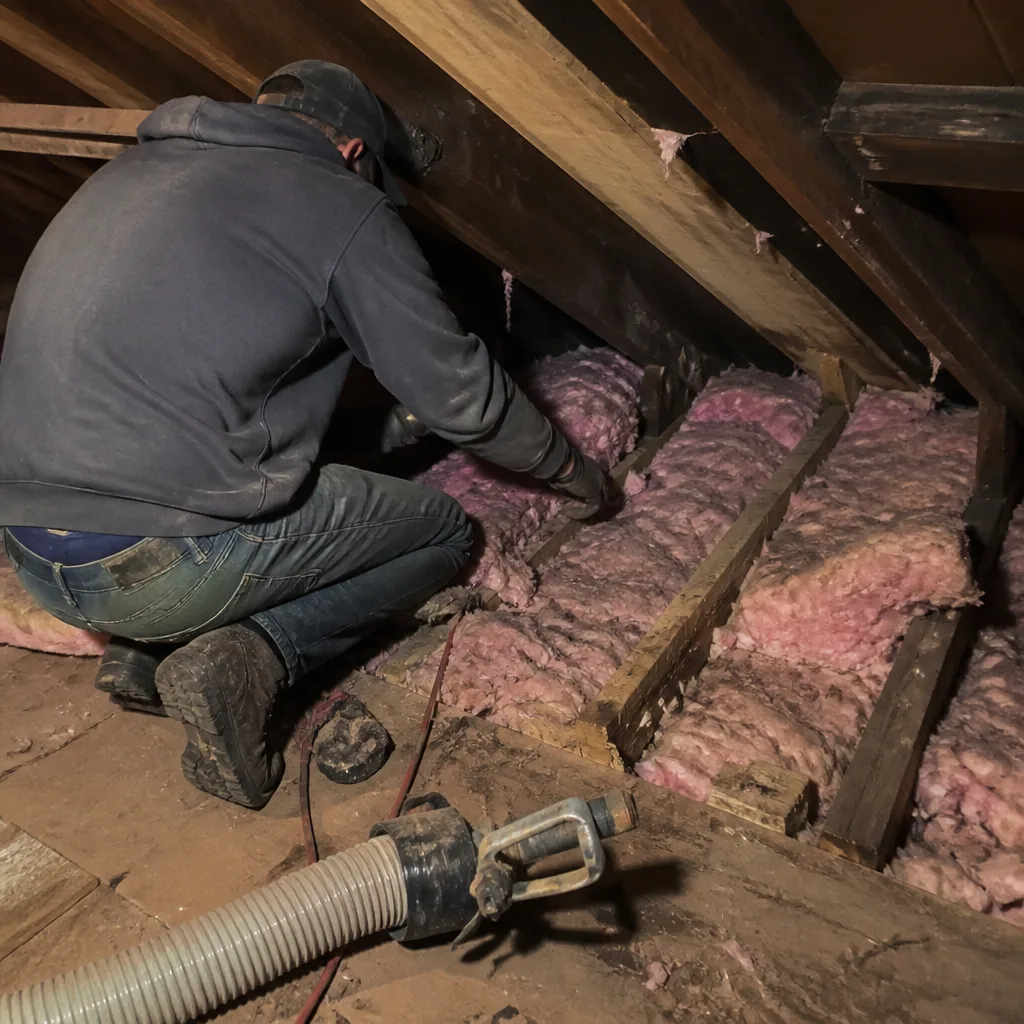 Before
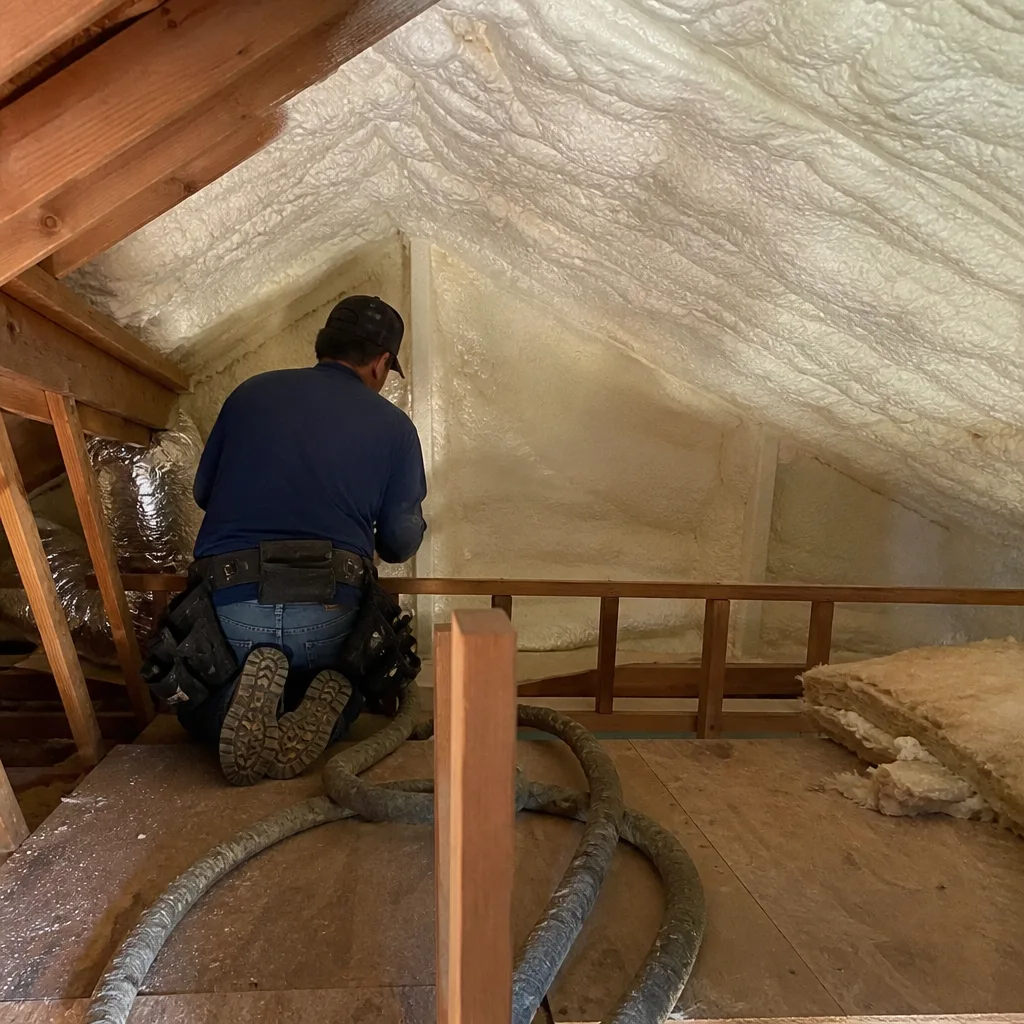 After
AfterReplacement Cost & What’s Included
Most Rockwool attic jobs in Westminster run between $3,200 and $5,800 for a typical 1,200 to 2,000 square foot attic. Here’s how that breaks:
| Component | Price Range |
|---|---|
| Rockwool Comfortbatt R-30 or R-38 (materials) | $1.40 - $2.10 / sq ft |
| Air sealing: top plates, can lights, penetrations | $800 - $1,600 (typical attic) |
| Labor: removal, disposal, installation | $1.20 - $1.80 / sq ft |
| Blower-door test (before and after) | Included |
The wide range comes down to access. A Westminster single-story with a scuttle hole and clear attic floor is at the low end. A two-story with a tight crawl-hatch, HVAC ducts running through the attic, or active rodent damage pushes toward the high end. We don’t price until we’ve seen it.
Every job closes with a Written Price Before Any Work Starts under Haven Standard Clause 1, a Documented Photo Record of settled depths and sealed bypasses, and before-and-after blower-door numbers so you can verify the air-sealing result. The 365-Day Done Right Promise covers all completed work.
DIY or Call Us?
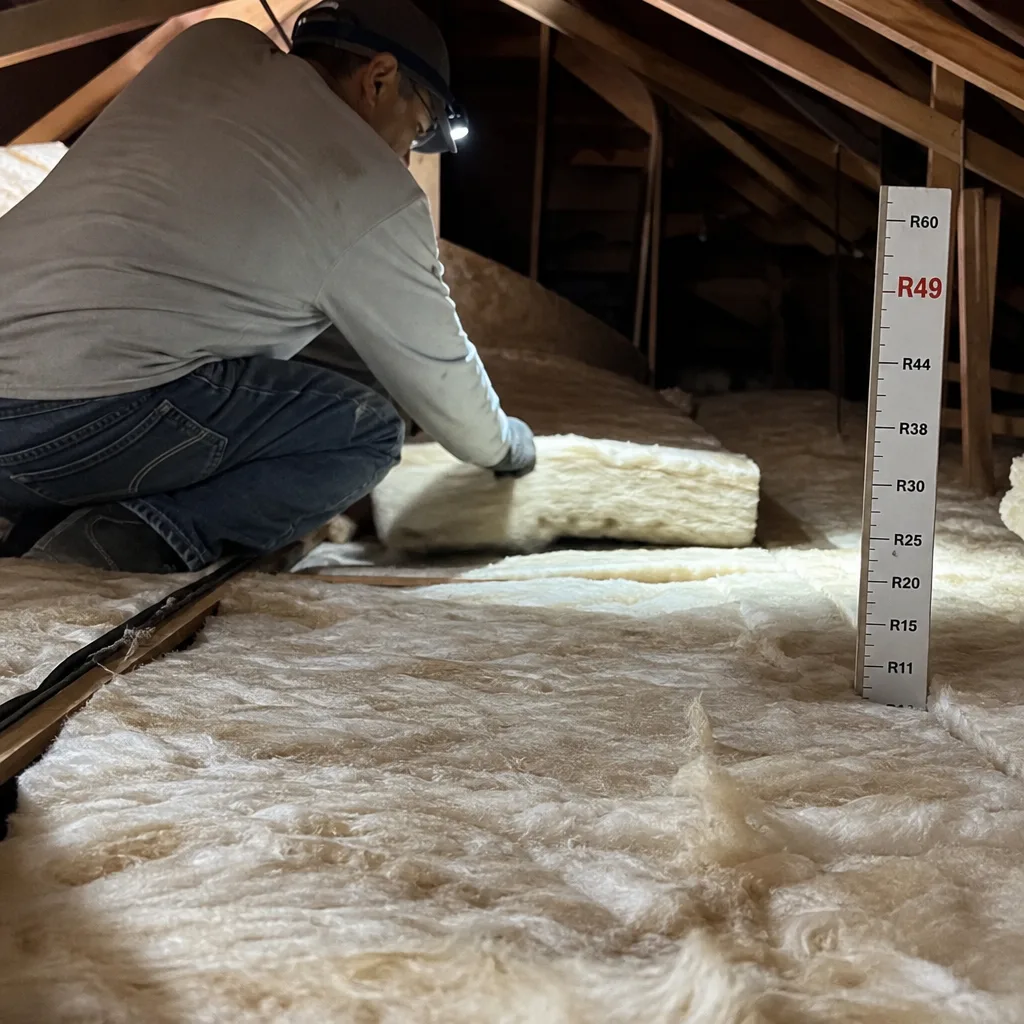
There’s no high-tension danger here like a garage door spring, but there are still ways DIY goes wrong.
What you can safely check: Pull back insulation at two or three attic hatches and read the printed R-value and thickness. Measure the actual depth with a tape measure. If the labeled R-30 batt is sitting at 4 inches instead of 7.25, it’s compressed and underperforming. Look for dirty streaks, which signal air movement. Note any gaps wider than a quarter-inch around fixtures or framing.
Where DIY fails: Rockwool is heavier than fiberglass, about twice the density per R-value. Standard attic flooring won’t support storage loads over loose-fill Rockwool without compression. More critically, most Westminster attics we’ve inspected have unsealed top plates and open chase ways that bypass whatever insulation sits on the attic floor. Adding new Rockwool over those leaks is what Wes Okafor calls “putting a thick coat on a screen door.” The R-value on the bag is only real if the air has nowhere else to go.
We also see homeowners install vapor barriers on the wrong side, or block soffit vents with batt ends, which traps moisture. If you want a second opinion on your own assessment, bring us a competing quote. We’ll read it with you. Call (562) 526-6978.
FAQs
The mineral wool itself is effectively permanent; it doesn’t rot, mold, or off-gas. What fails is the installation assembly. In Westminster’s dry climate, we’ve seen original 1980s Rockwool still performing at labeled R-value in undisturbed attics. In attics with storage traffic, rodent activity, or unsealed bypasses, effective performance drops by year 12 to 15. The material is fine; the air gaps are gone. Call (562) 526-6978 and we’ll measure what you’ve actually got.
Spot repair works if the existing Rockwool is clean, dry, and still springy. We can add loose-fill to top off settled areas, or patch batt gaps with new pieces cut to fit. But if the failure is air bypassing underneath, adding insulation without sealing first wastes money. Most Westminster jobs we quote end up partial removal, full air sealing, then new material to spec. We won’t know which category you’re in until we inspect.
A typical Westminster single-story attic, including removal, air sealing, and new Rockwool install, takes one to two days. Two-story homes with complex HVAC routing or limited attic access run two to three days. We finish with a blower-door test and photo documentation before we leave. Same-day quotes are available.
We keep Comfortbatt R-30 and R-38 in 16-inch and 24-inch widths on our Westminster truck, and we pull loose-fill from local distribution with a 24- to 48-hour lead time if your job calls for it. Most quotes we write Monday are ready to schedule by Wednesday. Call (562) 526-6978 to check current stock.
Ready to see what your attic is actually doing? Call (562) 526-6978 for a free estimate. We’ll inspect, measure, and give you a written price before any work starts. Every job gets a Documented Photo Record, and on applicable work, before-and-after blower-door numbers so you can verify the result yourself.
Written by Wes Okafor, Owner & Lead Insulation Technician, Topside Attic Insulation Westminster at Topside Attic Insulation Westminster, serving Westminster and nearby areas.