
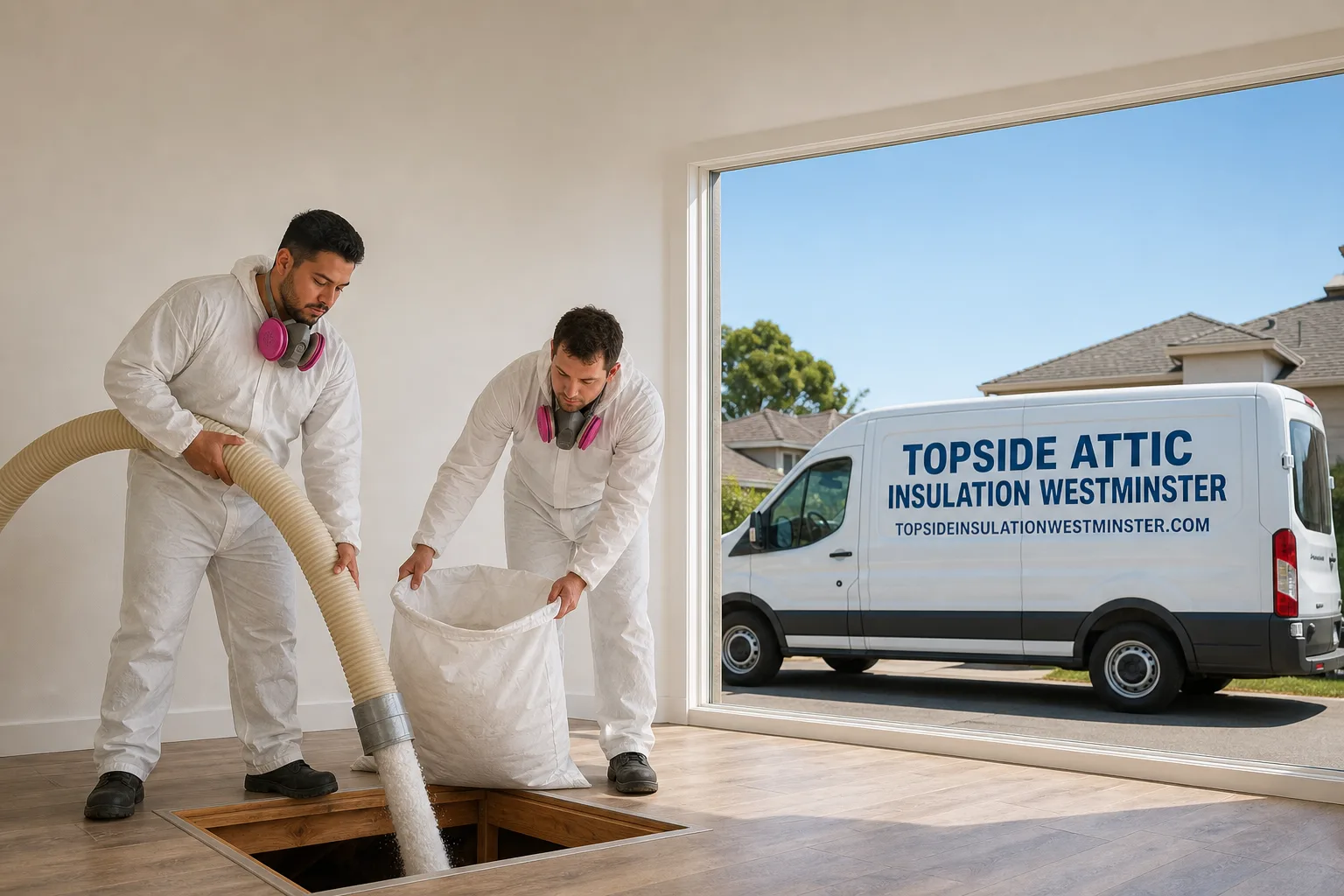
Fast, Reliable Attic Insulation Across Costa Mesa
Most attic insulation jobs in Costa Mesa run $2,800-$6,500 depending on square footage, existing conditions, and whether air sealing is needed first. Our crews are typically on-site within 24-48 hours for standard bookings, and same-day emergency service is available when attic moisture or extreme heat loss demands it. Dispatch and scheduling run through our Los Angeles office, but the trucks serving Costa Mesa are stocked daily with Owens Corning and Johns Manville materials so we don’t lose a day to parts runs. Call (562) 526-6978 for a written price before any work starts.
Why Topside Attic Insulation Westminster Is Costa Mesa’s Preferred Attic Insulation Company
We’ve sealed and insulated more than 9,000 homes since 2016, and a significant share of that work has been in Costa Mesa’s post-war tract neighborhoods where the building stock creates very specific problems. Our Costa Mesa customers leave reviews that mention the same things: the crew showed up on time, the written price matched the final invoice, and the photo documentation showed exactly what changed in their attic.
Response time to Costa Mesa averages same-day or next-day for standard calls. Emergency calls, like attics with active moisture damage or insulation compromised by rodents, get prioritized. Our technicians are background-checked and uniformed; you’ll get a text with the technician’s name when they’re en route.
What separates our work in Costa Mesa is that we know the local failure patterns before we arrive. We know that Mesa Verde’s flat-roofed 1960s homes were built with minimal or no attic insulation, that the marine layer pulls moisture through unsealed penetrations, and that Santa Ana wind events can spike those same attics past 140°F. That local knowledge changes what we specify, not just how fast we get there.
Our Attic Insulation Services in Costa Mesa
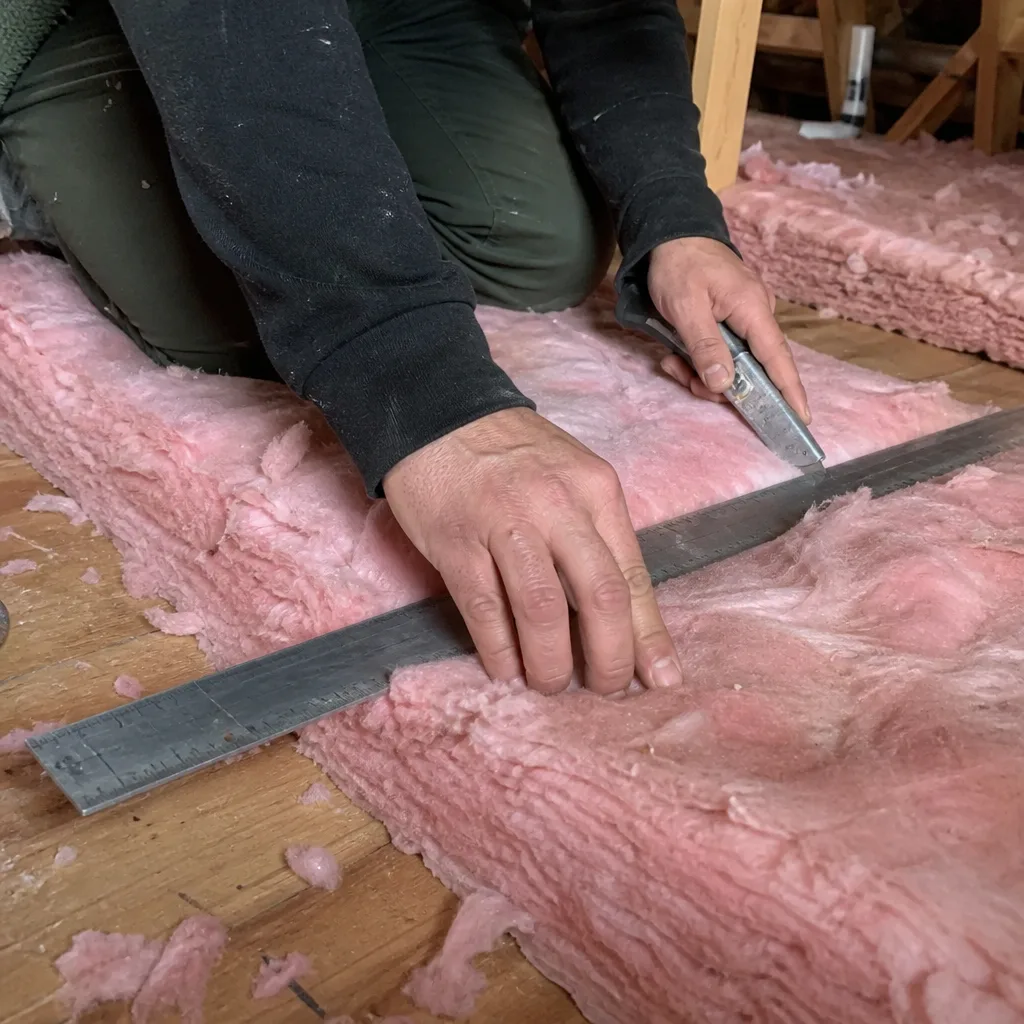
Attic Insulation Top-Up
Top-ups are the most common call we get in Costa Mesa, especially in the 1950s-70s tracts near the 405/55 interchange where the original insulation was thin to begin with and has settled or compressed over decades. But we’re selective about which attics qualify for a simple top-up. If the existing batt facings are moisture-stained from marine-layer condensation, or if blown-in has clumped and lost R-value, adding new material on top just buries the problem. Our crew inspects first. When the substrate is sound, we’ll add blown-in fiberglass, typically GreenFiber or Owens Corning, to reach R-38 or R-49 depending on your Title 24 compliance needs. When it’s not sound, we’ll tell you why and show you the photos.
Attic Baffles & Ventilation Prep
Low-pitch roofs are everywhere in Mesa Verde and the South Coast corridor, and they create a ventilation problem that standard insulation crews often miss. Without baffles, also called vent chutes, insulation gets blown or shifted into the eave vents during Santa Ana wind events, blocking airflow and creating hot spots that degrade the assembly from above. We install corrugated plastic or foam baffles at every eave before insulating, sized to maintain a clear 1-inch ventilation channel even at the shallow angles common in Costa Mesa’s 1960s flat-roofed stock. This is not an upsell. It’s a prerequisite for any attic we work on that has soffit vents.
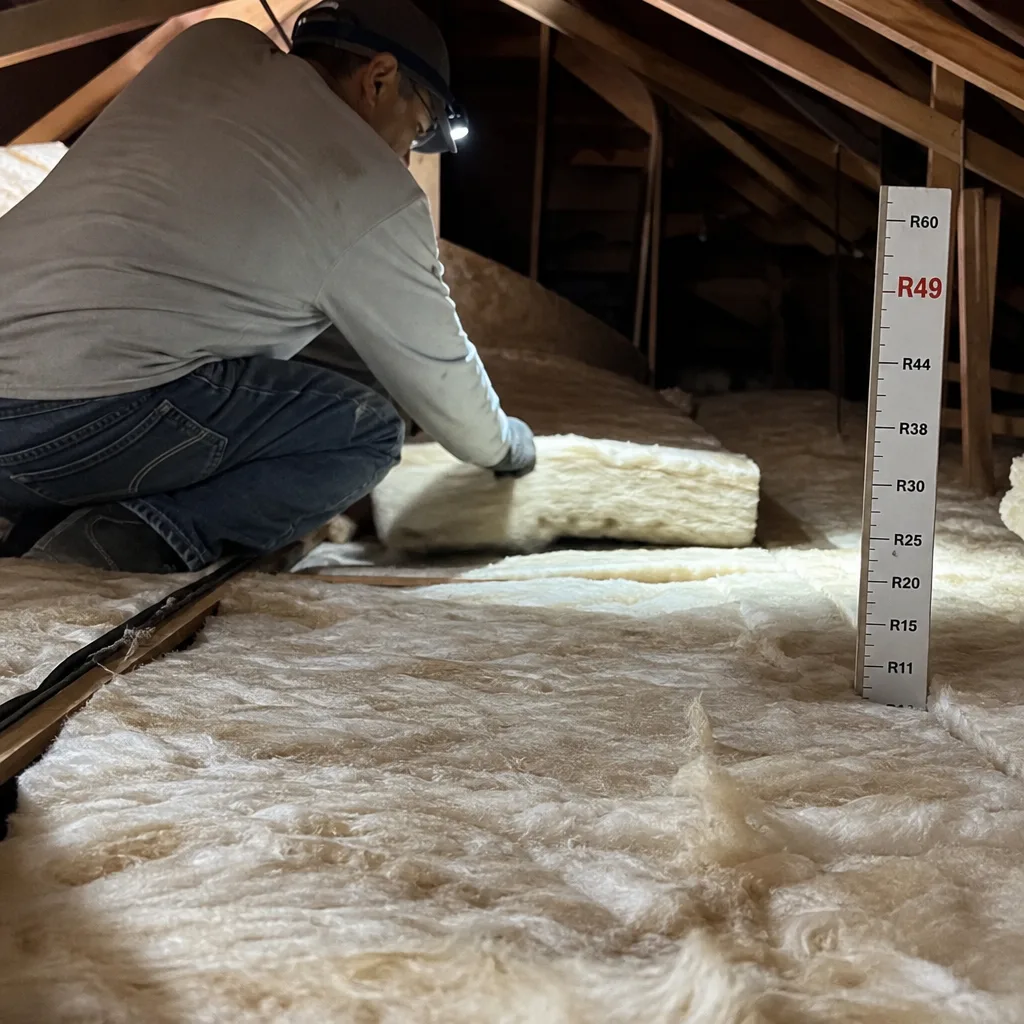
Attic Insulation Replacement
Full replacement is what we recommend when the existing insulation is moisture-damaged, rodent-compromised, or simply too thin and poorly distributed to justify a top-up. In Costa Mesa, this happens most often in homes that have never been re-insulated since original construction, or in properties where previous owners added insulation without air sealing first. Our replacement process starts with removal of the old material, then air sealing of all top plates, recessed light housings, and penetrations, then installation of new insulation to current code. Every replacement job gets before-and-after blower-door numbers so you can see the actual air-leakage reduction, not just a promise.
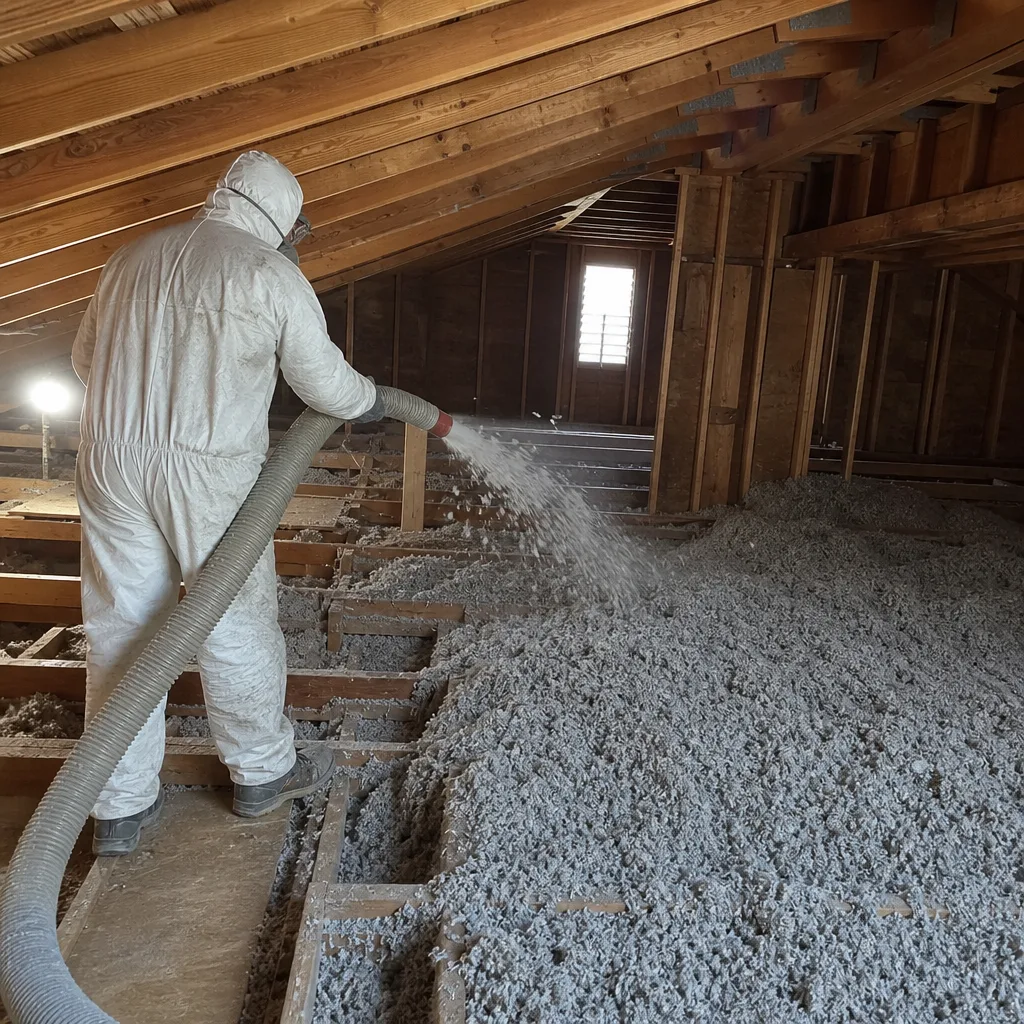
Blown-In Attic Insulation
Blown-in fiberglass is our default specification for most Costa Mesa attics because it fills irregular joist bays and around obstructions better than batts, and because we can dial the density to achieve target R-values without overloading older ceiling structures. We source from Owens Corning, Johns Manville, and Knauf, depending on availability and the specific performance characteristics your attic needs. For homes with active moisture management concerns, we’ll specify a vapor-aware assembly rather than standard blown-in alone.
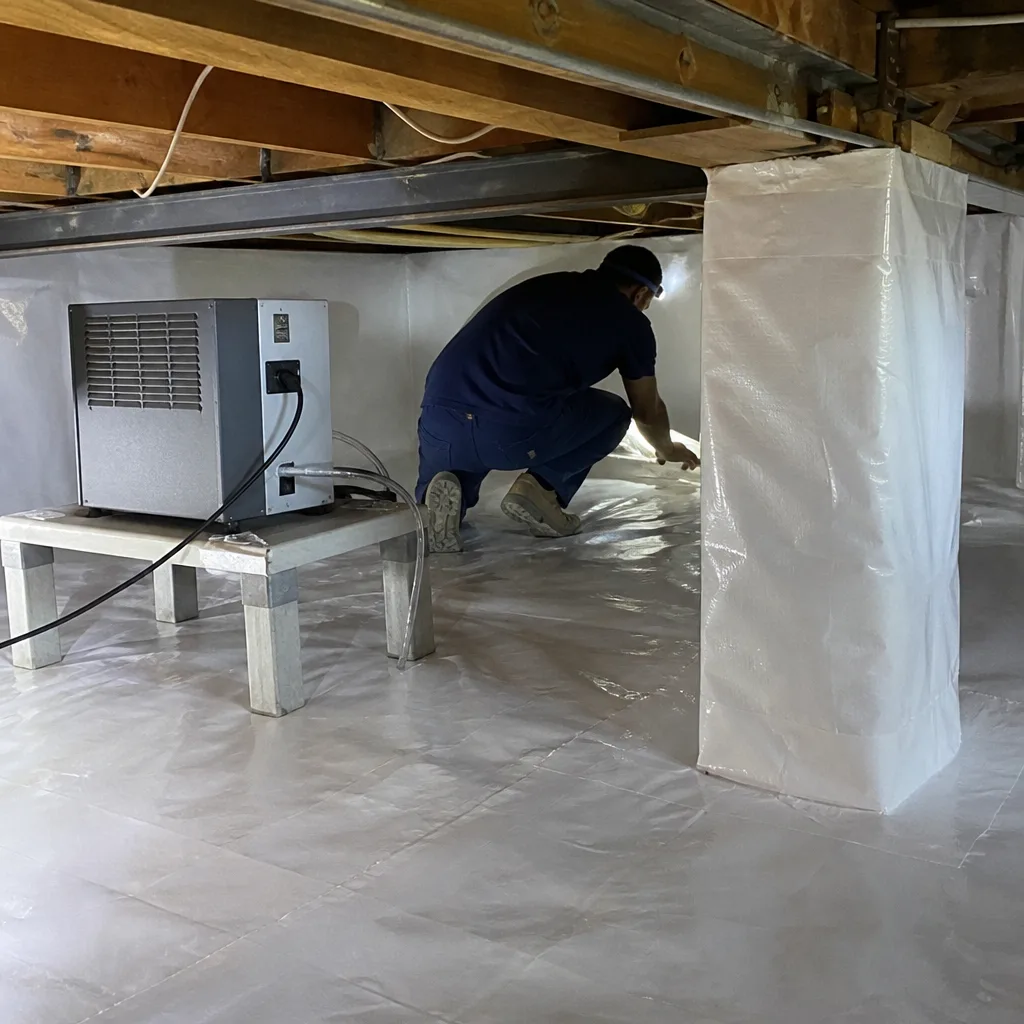
Attic Batt Insulation
Batt insulation still has a place in Costa Mesa, particularly in attics with regular joist spacing and minimal obstructions where precise R-value per inch matters, or in combination with air sealing where batts can be cut to fit around sealed penetrations. We use unfaced batts when we’re adding to an existing layer, and kraft-faced only in assemblies where the facing won’t be exposed to the heat spikes that degrade paper facings in Santa Ana conditions.
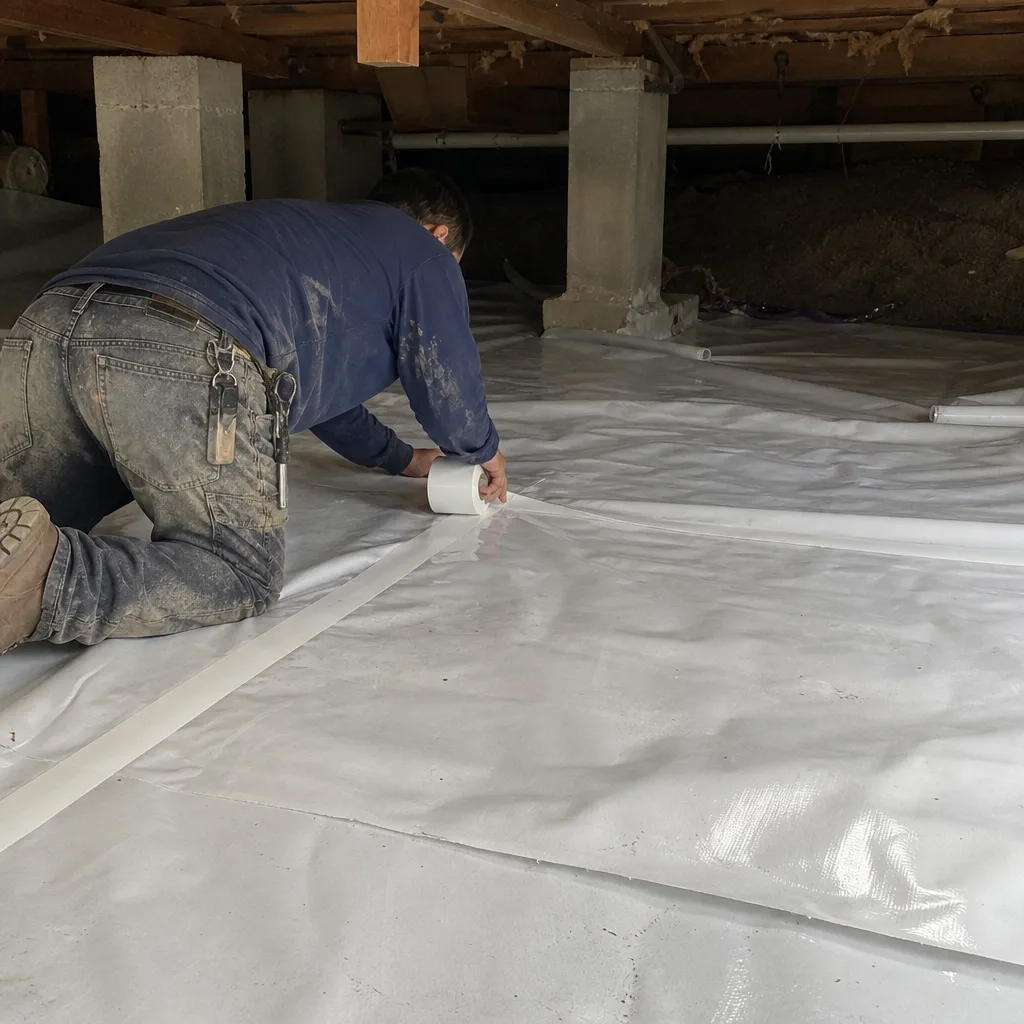
What happens when you call
- 1
A real person answersNo phone trees - you reach a local pro.
- 2
You get an upfront price rangeHonest numbers before anyone is dispatched.
- 3
A background-checked tech heads outLicensed & insured, dispatched right away.
- 4
You approve before work beginsNothing starts until you say go.
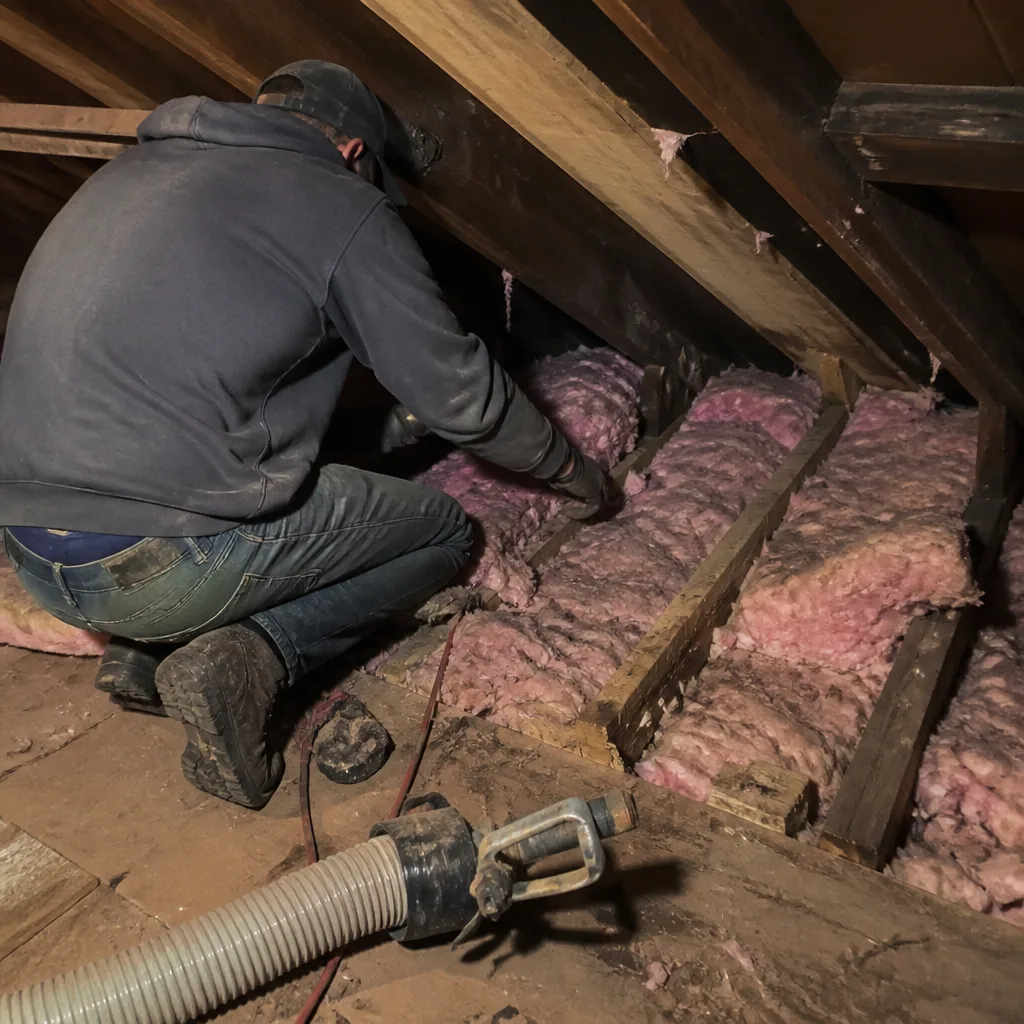 Before
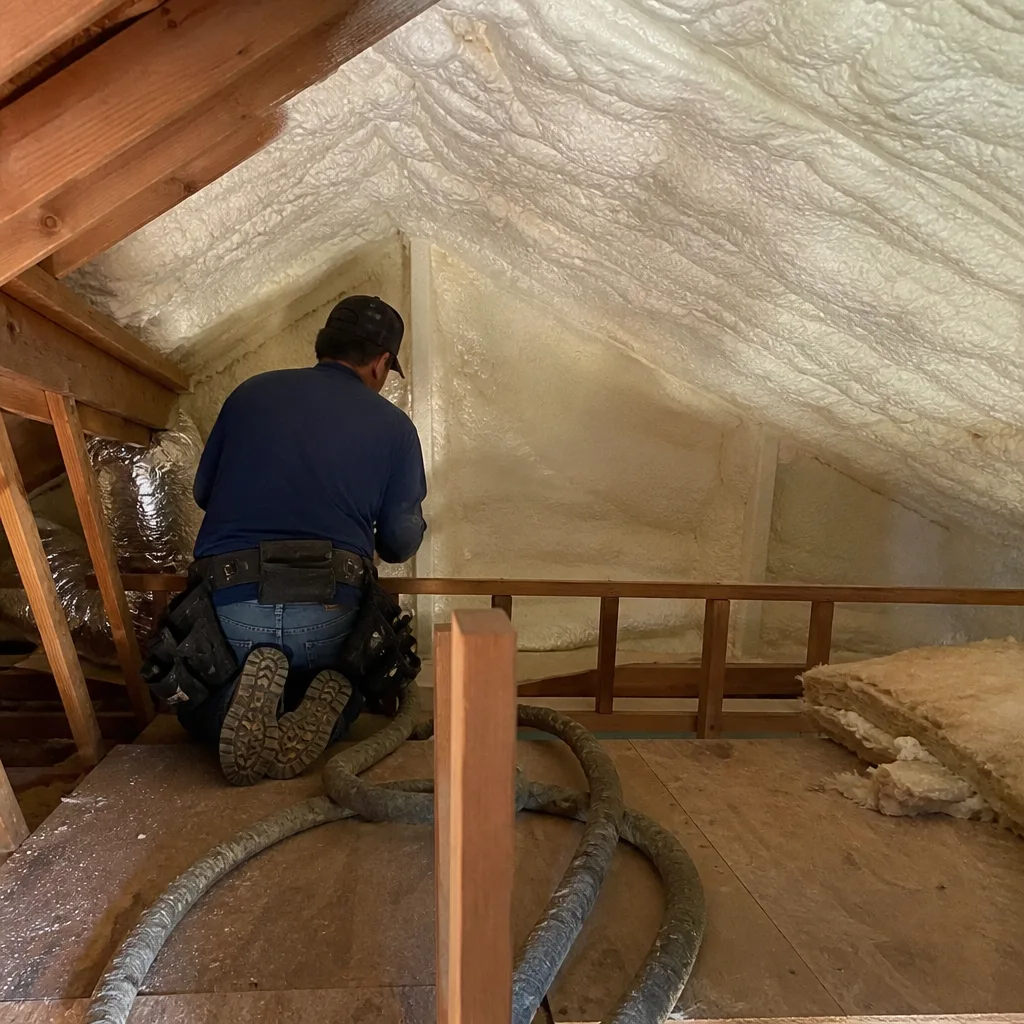 After
AfterTrusted Brands We Service in Costa Mesa
We stock Owens Corning, Johns Manville, and Knauf insulation products on our Costa Mesa trucks, along with the baffles, sealants, and hardware needed for a complete assembly. No proprietary lock-in means we specify what performs for your specific attic, not what moves a particular product line. Our crews carry corrosion-resistant fasteners and hardware appropriate for coastal-zone installations, because standard hardware degrades faster in Costa Mesa’s salt-air environment. Turnaround on most standard jobs is one day; larger replacements or homes requiring extensive air sealing may run two.
Common Attic Insulation Problems We See in Costa Mesa Homes
- Moisture-stained batt facings in Mesa Verde’s flat-roofed 1960s homes. The marine layer pulls damp air through unsealed top plates and can lights, wicking into fiberglass batts from below. The facing peels, the batt sags, and R-value drops by 30% or more before the homeowner notices any interior symptom.
- Blown-in insulation drifted away from eaves during Santa Ana wind events. Without baffles, loose-fill material migrates across low-pitch roofs and leaves bare spots at the perimeter where heat transfer is worst. We find this constantly in homes near the 405/55 interchange that were insulated without proper vent prep.
- Kraft or foil facings degraded by 140°F+ attic spikes in October. The same facings that face moisture from below get cooked from above when Santa Ana winds turn Costa Mesa attics into ovens. Separated facings expose bare insulation to heat and rodent traffic, accelerating failure from both directions.
- Original 1950s-70s tract homes with essentially bare attics. Developers in Mesa Verde and the South Coast corridor operated under the assumption that “SoCal doesn’t need insulation,” leaving 2×4 walls and attics well below current Title 24 minimums. Re-roofing or addition permits now trigger mandatory upgrades, and the gap between old construction and current code is substantial.
Pricing for Attic Insulation in Costa Mesa, CA
| Service | Typical Range in Costa Mesa |
|---|---|
| Attic Insulation Top-Up (1,200-1,800 sq ft) | $2,800-$4,200 |
| Attic Insulation Replacement with Air Sealing | $4,500-$6,500 |
| Attic Baffles & Ventilation Prep (add-on) | $600-$1,200 |
| Blown-In Attic Insulation to R-38, full install | $3,200-$5,400 |
What moves a job toward the higher end: active moisture damage requiring substrate repair, extensive air sealing of recessed lights and top plates, rodent damage remediation, or compliance-driven Title 24 upgrades where documentation must be submitted to the city. What keeps it lower: sound existing substrate, simple rectangular attic geometry, and straightforward access. Every job gets a written price before any work starts, no exceptions. Free second opinion on any written estimate from another contractor. Call (562) 526-6978 for your specific number.
We Also Serve Cities Near Costa Mesa
Our crews work throughout central Orange County, including Attic Insulation calls from Fountain Valley, Newport Beach, Santa Ana, and Huntington Beach. The same coastal-zone expertise, the same written-price-first process, the same documented photo record on every job.
Serving Costa Mesa, CA - Our Local Coverage Area
We’re based in the Costa Mesa area and know this community well. Use the map below to see our service coverage - if you’re nearby, we can almost certainly help.
FAQs - Attic Insulation in Costa Mesa
Costa Mesa sits in a climatic zone that creates two opposing failure modes in the same attic. June marine-layer moisture pulls damp air through unsealed penetrations, wicking into batt facings and clumping blown-in from below. October Santa Ana winds spike attic temperatures past 140°F, cooking that same insulation from above. The solution is air-sealing first, then a vapor-aware insulation assembly rated for both moisture resistance and high-temperature stability, not just adding more bags of standard material. Call (562) 526-6978 for a written assessment of which failure mode is dominant in your specific attic.
Yes. Costa Mesa enforces California Title 24 energy code, and re-roofing or addition permits typically trigger mandatory insulation upgrades to current R-value minimums, which are significantly higher than what was installed in 1950s-70s construction. Our crew handles the compliance documentation as part of the job scope, including the blower-door verification required for some permit types. Bring us your permit paperwork; we’ll read it with you and build the insulation scope to match.
Sometimes, but only after inspection. If the existing material is bare, uncompressed, and shows no moisture staining or rodent activity, a top-up to R-38 or R-49 is straightforward. If the original fiberglass is stained, clumped, or degraded, adding new material on top traps the problem and accelerates failure. Our crew documents the existing condition with photos before recommending either a top-up or full replacement. The written price covers whichever path we agree on.
Baffles maintain a clear ventilation channel between your insulation and the roof deck, preventing blown-in material from migrating into soffit vents when Santa Ana winds pressurize the attic. On low-pitch roofs common in Mesa Verde, there’s minimal vertical space for error; without baffles, insulation drifts away from eaves within one or two wind events, creating bare spots where heat transfer peaks. We install baffles as standard on any Costa Mesa attic with soffit ventilation, not as an optional add-on.
We specify corrosion-resistant fasteners, galvanized hangers, and stainless-steel inspection hatch hardware for all Costa Mesa installations. Standard steel hardware that might last decades inland shows surface corrosion within a few years here. The hardware matters because degraded fasteners compromise access hatches, pull-down stairs, and mounted equipment, creating safety and access issues long after the insulation itself is performing. Our Documented Photo Record includes a hardware-condition note so you have a baseline for future inspection.
Written by Wes Okafor, Owner at Topside Attic Insulation Westminster, serving Costa Mesa since 2016.